Published August 24, 2026, 23:56 by the Triops.me Editorial Team · Back to Articles
Scutosaurus: The Permian Tank That Outlived Its Predators
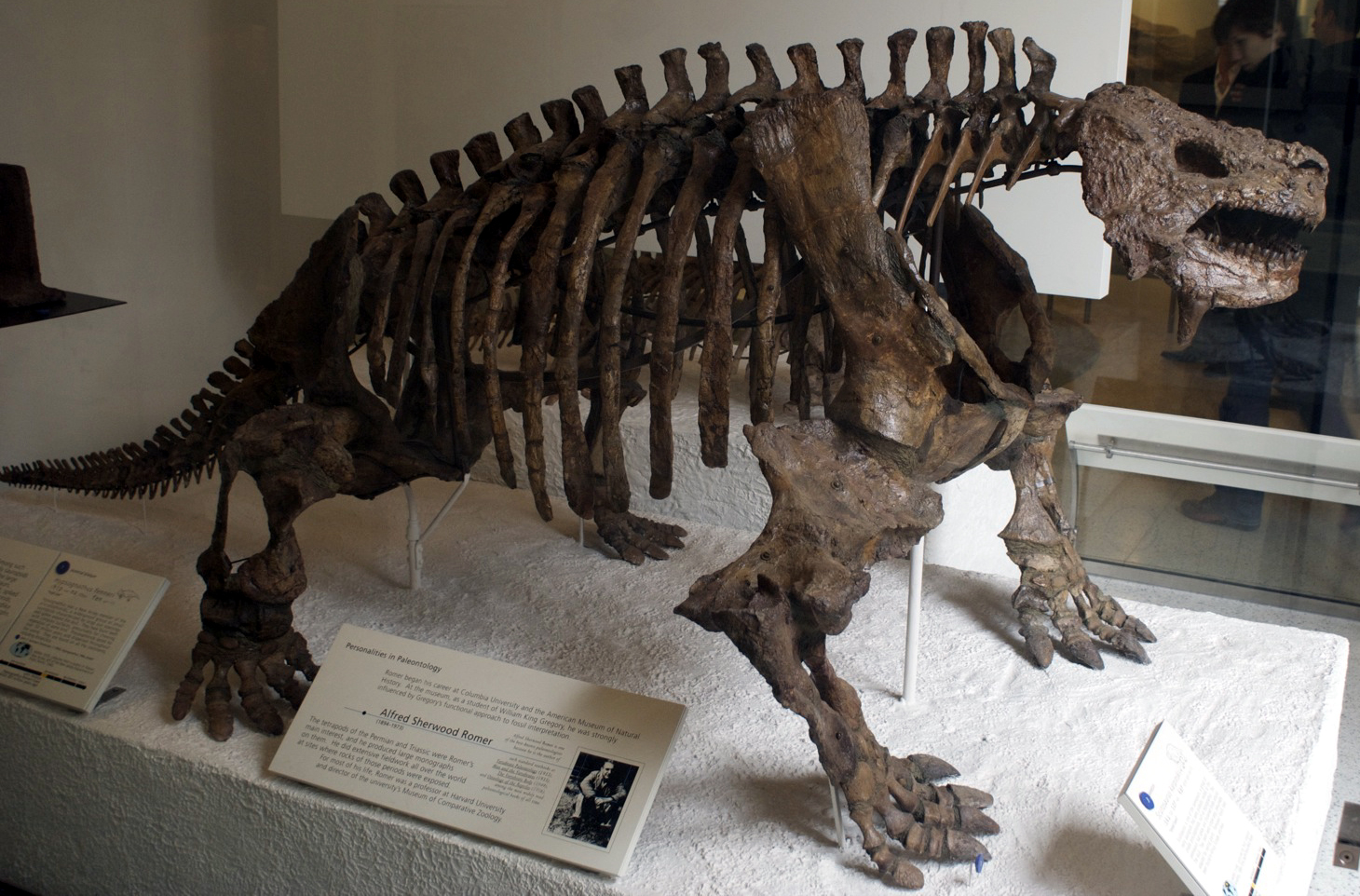
Long before dinosaurs ruled the Earth, there were creatures that looked like they had been designed by a medieval arms manufacturer. One of the most striking was Scutosaurus, a heavily armored herbivore that roamed the floodplains of what is now European Russia during the Late Permian period, roughly 254 to 252 million years ago. Despite its name, which means "shield lizard," Scutosaurus was not a lizard at all. It was a pareiasaur, a member of a group of early reptiles technically classified as parareptiles, a lineage completely separate from the dinosaurs that would come much later.
At roughly 2.5 to 3 meters long and weighing up to 1,160 kilograms, Scutosaurus was one of the largest land animals of its time. Its body was stocky and barrel-shaped, supported by short, powerful limbs that splayed outward in a sprawling gait. Every inch of its hide was covered in rough, bony plates called osteoderms, each featuring a central boss surrounded by smaller bumps. These osteoderms gave Scutosaurus a truly tank-like profile, turning what would otherwise be soft tissue into a suit of natural armor that no predator could easily bite through.
A Face Built for Battle
What made Scutosaurus truly distinctive, even among other pareiasaurs, was its head. The skull was massive relative to the body and bristling with bony protrusions, ridges, and small horn-like structures. The most prominent features were the large, flat bosses on the cheeks and jaw, which flared outward like exaggerated cheekbones. These weren't just decorative. The heavy ossification around the skull served as armor for the face itself, and the powerful neck muscles that anchored to the rear of the skull suggest that Scutosaurus could deliver forceful blows or resist a predator's grip with surprising strength.
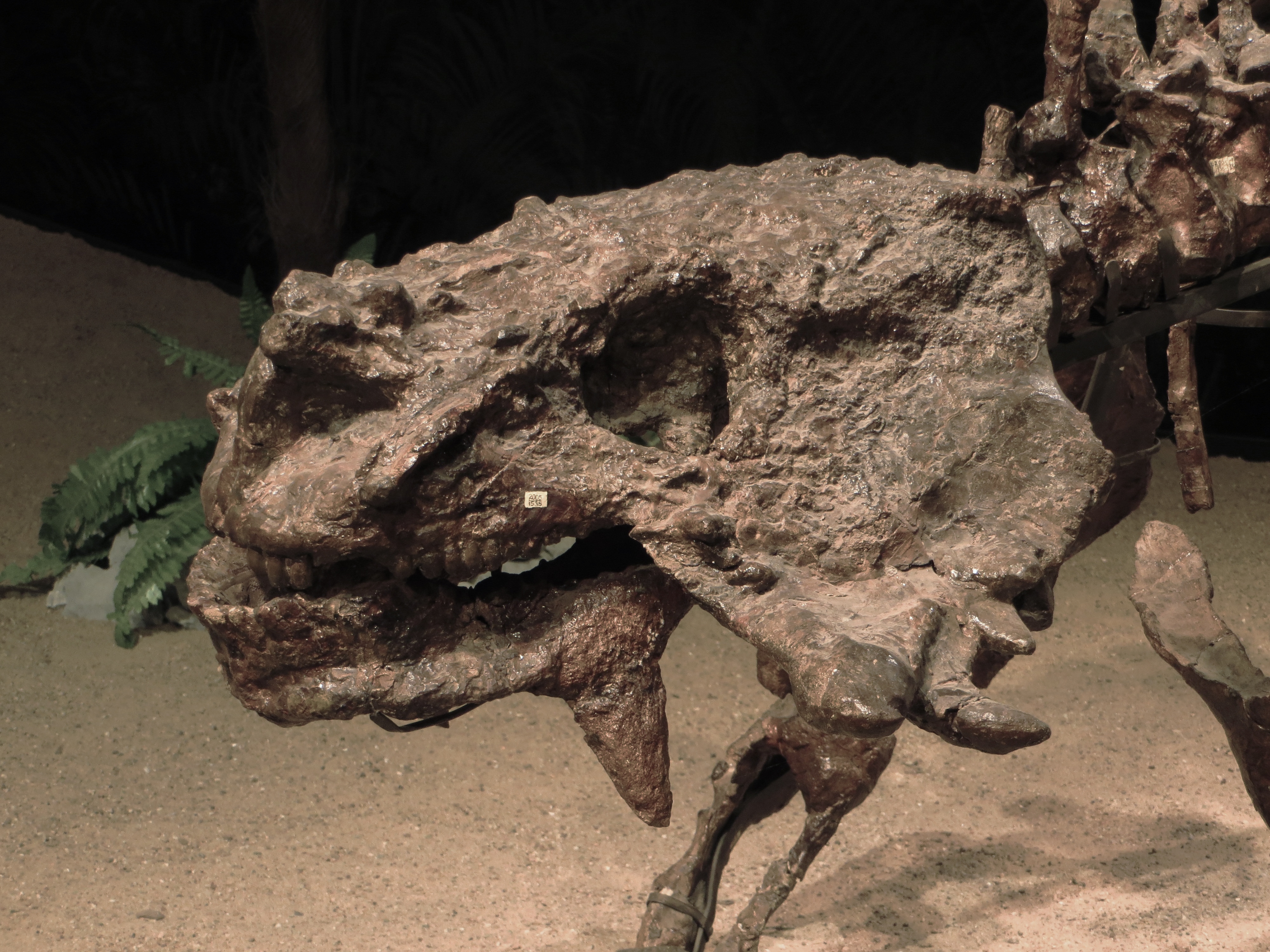
The teeth were flat and leaf-shaped, perfectly adapted for shearing through tough, fibrous plant material. Unlike the pointed teeth of its predators, Scutosaurus had a dental battery built for grinding, not gripping. Analysis of the skull structure suggests a powerful bite force for an herbivore, likely needed to process the hard, drought-resistant vegetation of its arid habitat. Scutosaurus did not live in a lush paradise. The Late Permian climate in what is now the Russian interior was semi-arid, with seasonal rainfall and long dry spells that made food scarce for much of the year.
Life in a Harsh World
The environment Scutosaurus inhabited was a mosaic of river floodplains, dry woodlands, and seasonal lakes. Fossil sites near the Mezen River and along the Belaya River preserve dense bonebeds of Scutosaurus, sometimes containing dozens of individuals. These mass accumulations suggest that Scutosaurus may have gathered near water sources during dry seasons, much as modern elephants congregate around shrinking waterholes in the African savanna.
Living in such an environment meant Scutosaurus had to be mobile despite its bulk. Its limb proportions indicate it was not a slow, lumbering slug but rather a steady, persistent walker capable of covering long distances between food and water sources. The sprawling gait was energy-efficient for long-distance travel, and the heavy armor, while adding weight, provided essential protection in a landscape full of predators that had no trouble keeping up.
Scutosaurus was not alone in its world. Its contemporaries included a diverse cast of Permian life: the large amphibian Prionosaurus, smaller reptiles like Chroniosaurus, and the vast invertebrate fauna that filled the floodplain ecosystems. But none of these were as numerous or as ecologically significant as Scutosaurus itself, which appears to have been one of the dominant herbivores of the Late Permian Russian ecosystems.
Hunted by Gorgonopsids
The Permian was a world of formidable predators, and Scutosaurus had every reason to be armored. Chief among its threats were the gorgonopsids, a group of synapsids (more closely related to mammals than to reptiles) that were the apex predators of the Late Permian. The most fearsome of these was Inostrancevia, a massive predator measuring up to 3.5 meters long, armed with enormous, sabre-like canine teeth that could penetrate the tough hides of large herbivores.
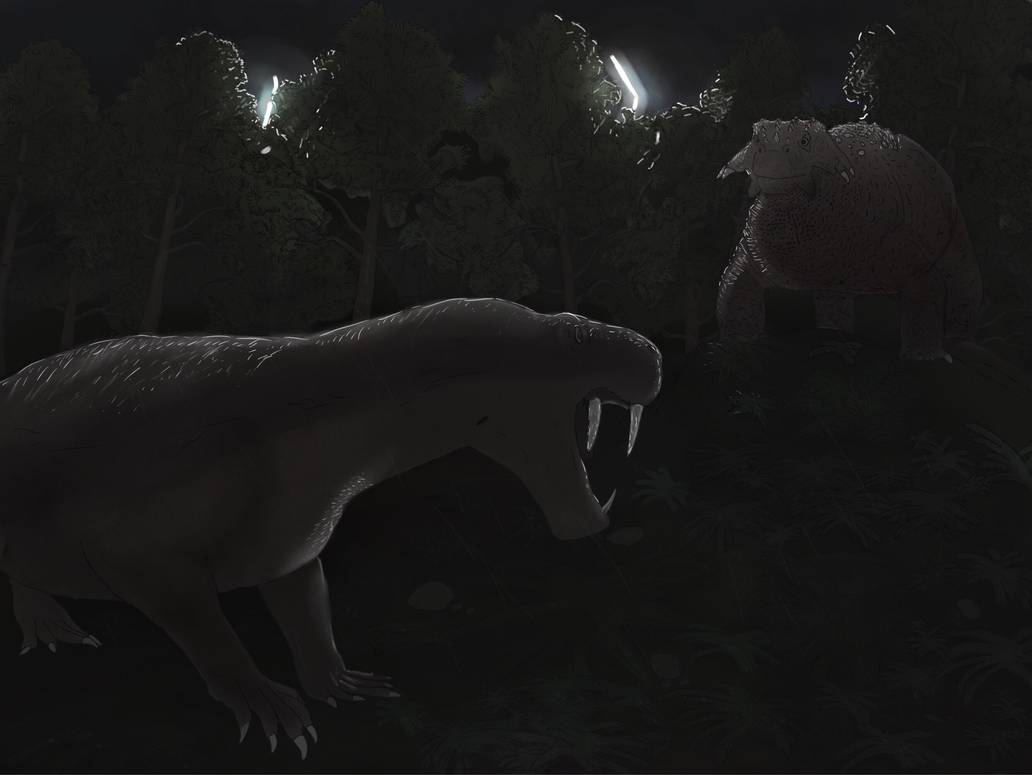
Fossil evidence directly links these two animals. Bones of Scutosaurus and Inostrancevia have been found in the same geological layers, and some Scutosaurus specimens show bite marks consistent with gorgonopsid teeth. The relationship between predator and prey was an evolutionary arms race: as Inostrancevia developed larger, more efficient killing teeth, Scutosaurus evolved thicker armor and more robust skulls. The osteoderms were not just passive defense. The spines and bosses likely made Scutosaurus a difficult and painful meal, discouraging all but the most determined predators from attacking a healthy adult.
Young or sick individuals would have been far more vulnerable, and gorgonopsids likely targeted them preferentially. The mass death assemblages of Scutosaurus found at several Russian sites may partly reflect predator activity, with weakened individuals picked off during droughts when the animals congregated in large, stressed groups near dwindling water sources.
A Vanishing World
Scutosaurus lived right up to the edge of the greatest catastrophe in the history of complex life. The Permian-Triassic extinction event, approximately 252 million years ago, wiped out an estimated 90 to 95 percent of all marine species and roughly 70 percent of terrestrial vertebrate species. Scutosaurus did not survive it. Neither did Inostrancevia, nor any of the other pareiasaurs. The entire ecosystem that Scutosaurus had dominated was obliterated in a relatively short geological timeframe, likely driven by massive volcanic eruptions in what is now Siberia that triggered runaway greenhouse warming, ocean acidification, and widespread oxygen depletion.
But while Scutosaurus itself vanished, its story offers important lessons about the resilience of armored herbivores. The body plan it perfected, heavy armor plus powerful jaws plus herd behavior, has been independently reinvented many times since. Ankylosaurs, glyptodonts, and even modern armadillos all echo the same evolutionary strategy: when predators are relentless, build a fortress and walk through it.
Scutosaurus reminds us that the Permian world was every bit as dramatic as the age of dinosaurs, filled with equally bizarre and impressive creatures. It was a world of sabre-toothed mammal relatives, giant amphibians, and armored tanks that would not look out of place in a science fiction novel. And while that world ended catastrophically, the evolutionary principles it demonstrated, defense through armor, strength through numbers, persistence through harsh environments, remain as relevant today as they were 252 million years ago.