Published October 31, 2026, 18:10 · by the Triops.me Editorial Team · Back to Articles
Sharks Are Older Than Trees
There were sharks before there were trees. It sounds like a joke, but the fossil record is firm on it. The oldest shark-like scales are roughly 450 million years old, while the first forests of true trees did not spread across the land until about 385 million years ago. Sharks watched the continents turn green. They were already ancient when the first dinosaurs hatched, and they had already survived three mass extinctions before Tyrannosaurus rex drew its first breath. A shark swam past the earliest creatures crawling out of the sea, cruised beneath the giant dragonflies of the coal swamps, and slid through the aftermath of the disaster that killed nearly all life on Earth. The lineage came close to ending more than once. It never did. This is how one of nature's plainest body plans became her longest-running success story.
The First Sharks
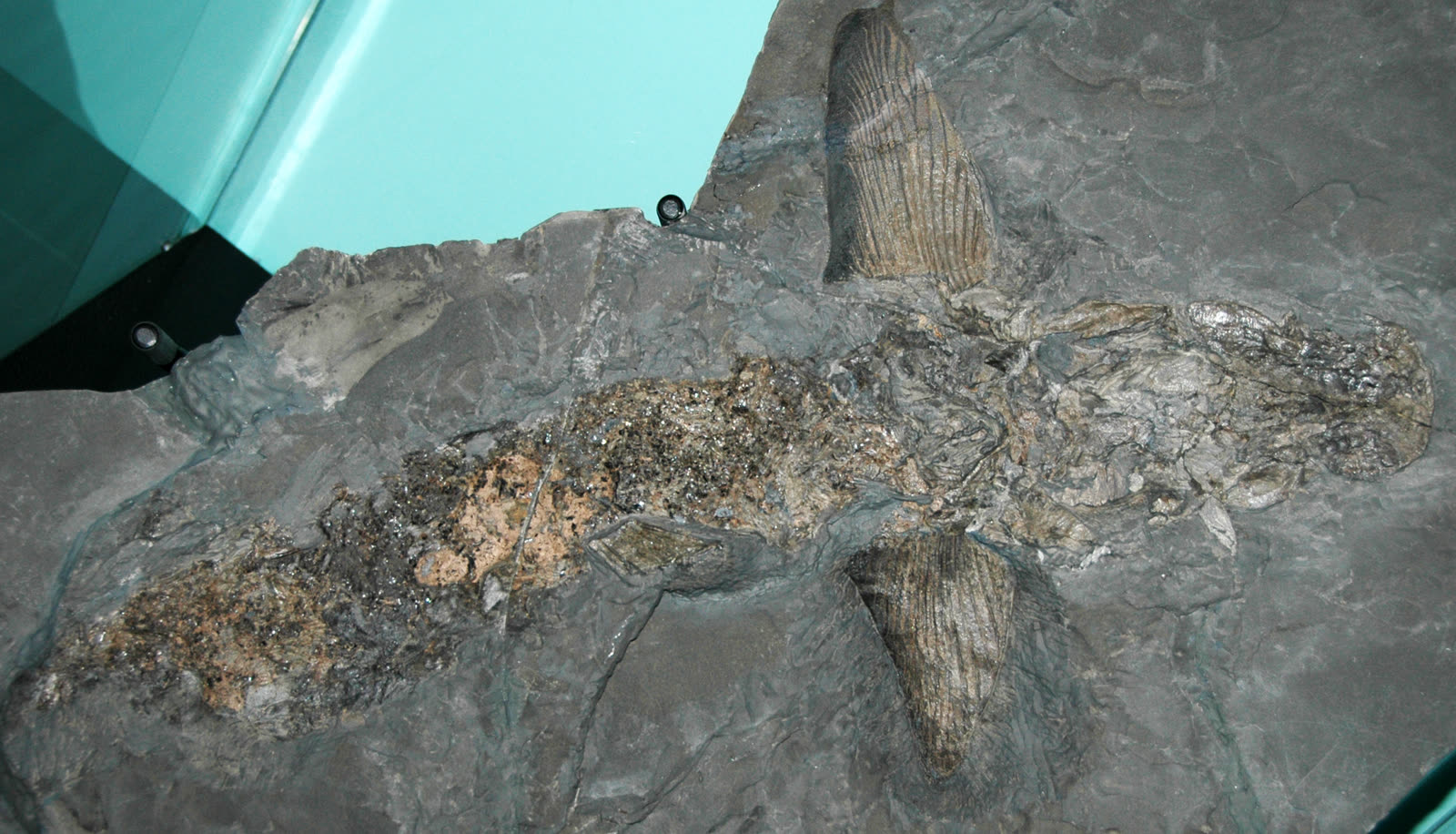
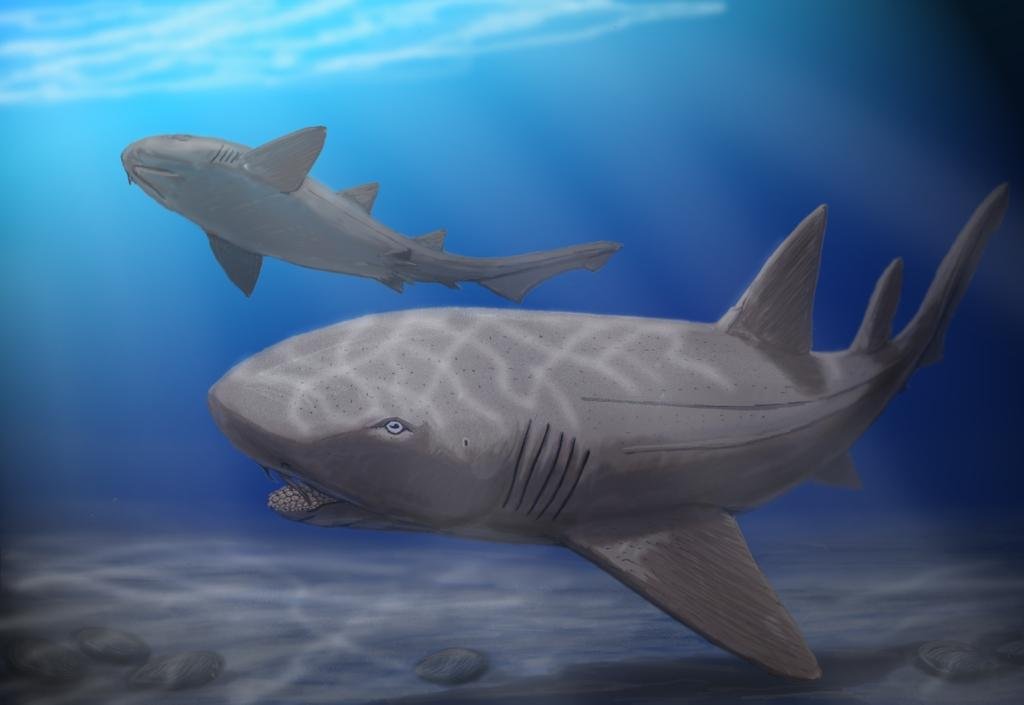
Because sharks have no bones, their oldest fossils are not skeletons but tiny teeth and scales. Isolated scales from Ordovician rocks, around 450 million years old, may be the first hints of the group, though scientists can't be certain what animal wore them. The picture sharpens in the Devonian period. A shark called Doliodus, about 400 million years old, is one of the first we know from more than loose teeth. Then comes the star of the early record: Cladoselache, found in magnificent detail in the Cleveland Shale of Ohio, some 370 million years ago. These fossils preserve soft tissues, even stomach contents. Cladoselache was a streamlined hunter about one to two metres long, chasing fish through seas that covered North America. Strangely, it seems to have lacked the claspers that modern male sharks use to reproduce, so how it bred remains a genuine mystery.
A Golden Age of Weird Fins
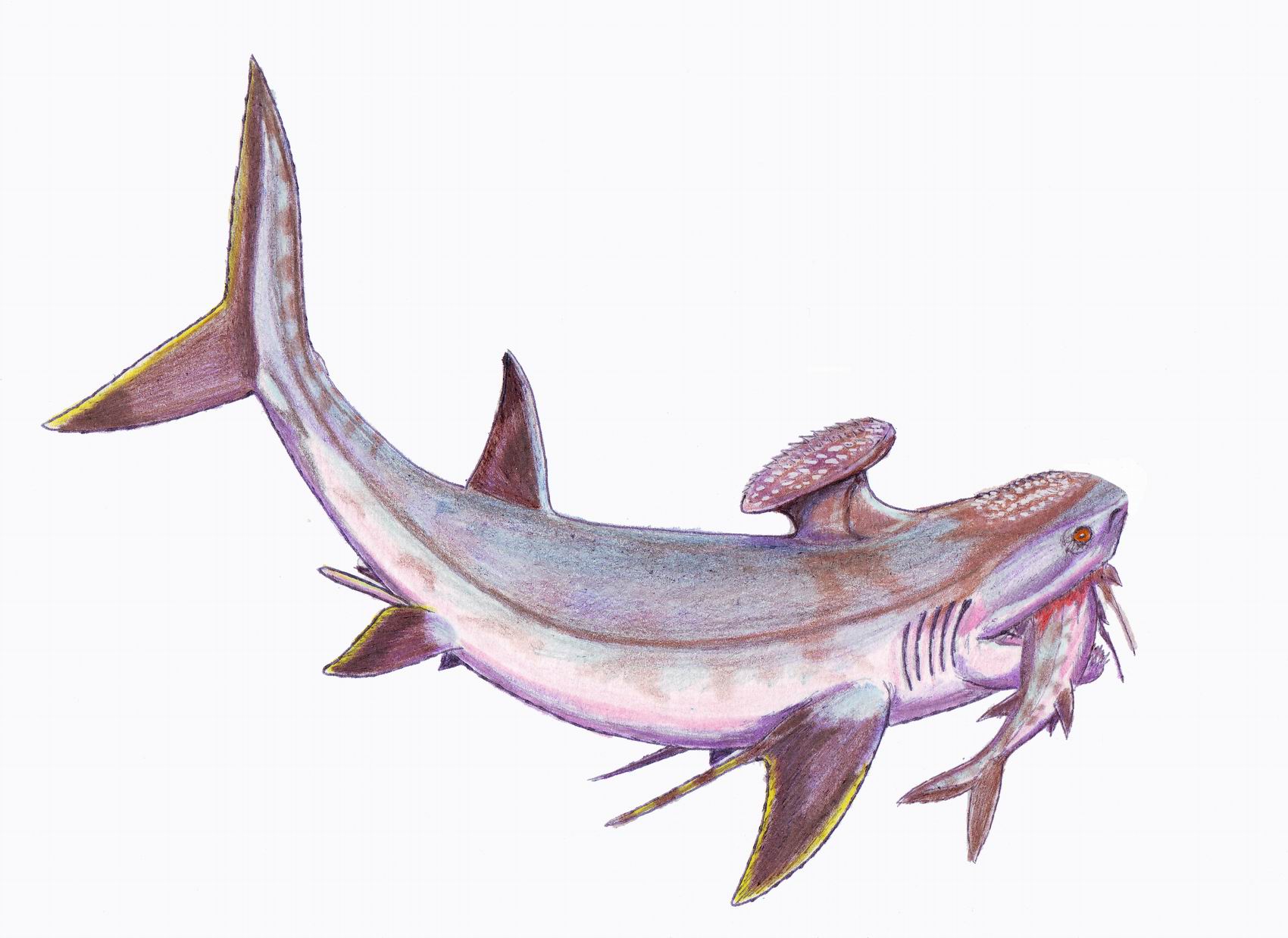
When the Devonian ended in catastrophe and most of its fish died out, the sharks that survived inherited empty seas. The Carboniferous period that followed is sometimes called the golden age of sharks, and it produced some of the strangest shapes in the group's history. Stethacanthus grew an ironing-board-shaped fin on its back, topped with tiny teeth, that no one fully understands. Others bore swords over their eyes or long, eel-like bodies. Some even left the sea entirely: Orthacanthus was a freshwater predator cruising the coal swamps of Europe and North America, patrolling waterlogged forests where amphibians were the biggest animals on land.
Surviving the Five Great Die-Offs
Sharks are one of very few vertebrate lineages that sailed through all five major mass extinctions. It was never comfortable. The extinction at the end of the Devonian, 359 million years ago, cut shark diversity to a shadow of what it had been. The end-Permian disaster, 252 million years ago, erased perhaps 96 percent of marine species and left the oceans nearly lifeless, yet enough sharks endured to rebuild.
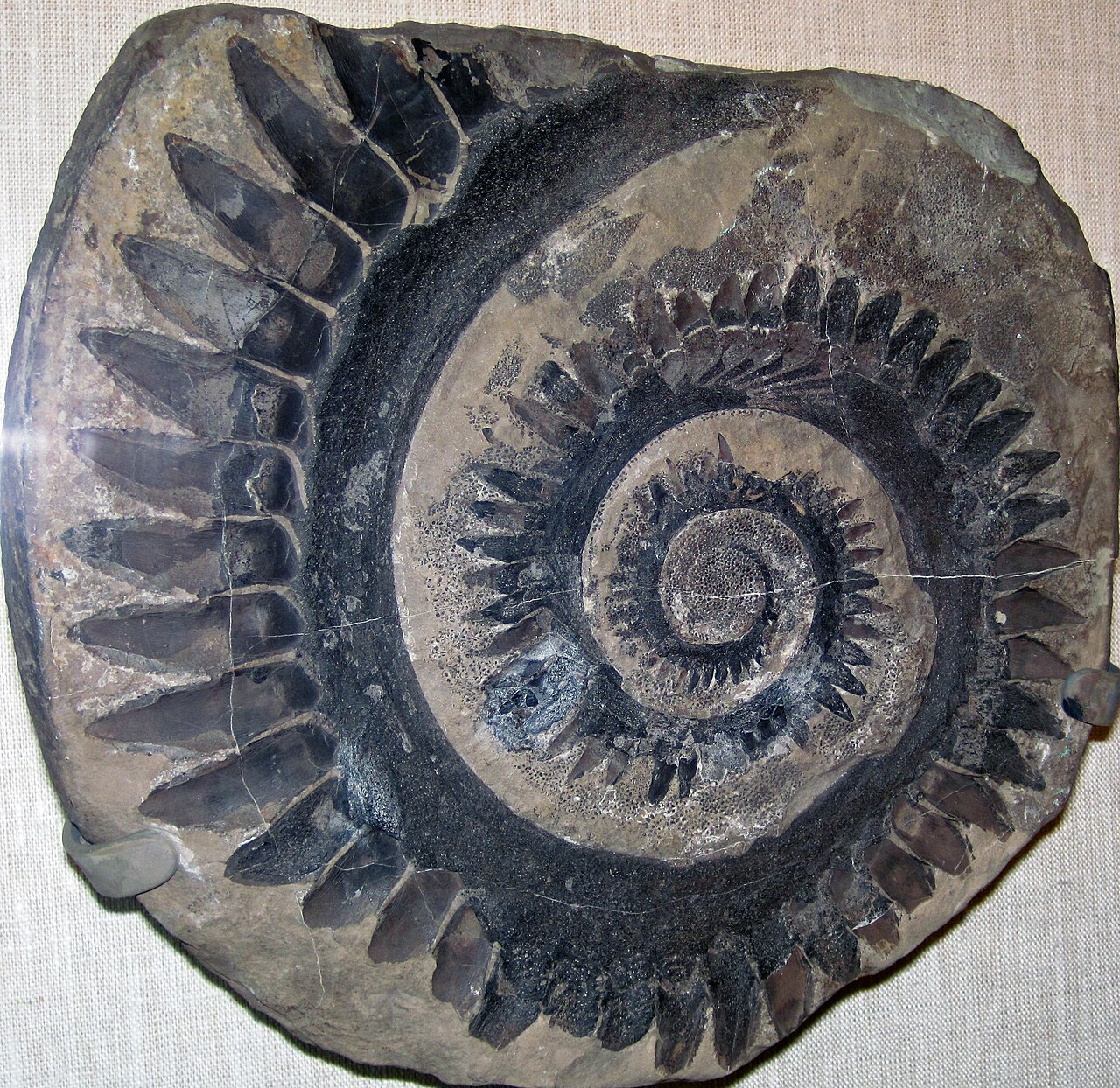
Nobody knows for sure what their secret was, since the survivors left no explanation. The best guesses point to the same quiet advantages: an unfussy diet that included scavenging, a range of habitats from rivers to the open sea, and small, fast-maturing populations that could recover from the edge. A skeleton of cartilage is light and cheap to run, and teeth that replace themselves forever are the ideal equipment for lean times. Even the weirdest experiments kept trying. Helicoprion, a Permian shark, grew a spiral buzzsaw of teeth in its lower jaw, a design no animal has matched since.
The Giants Come Back
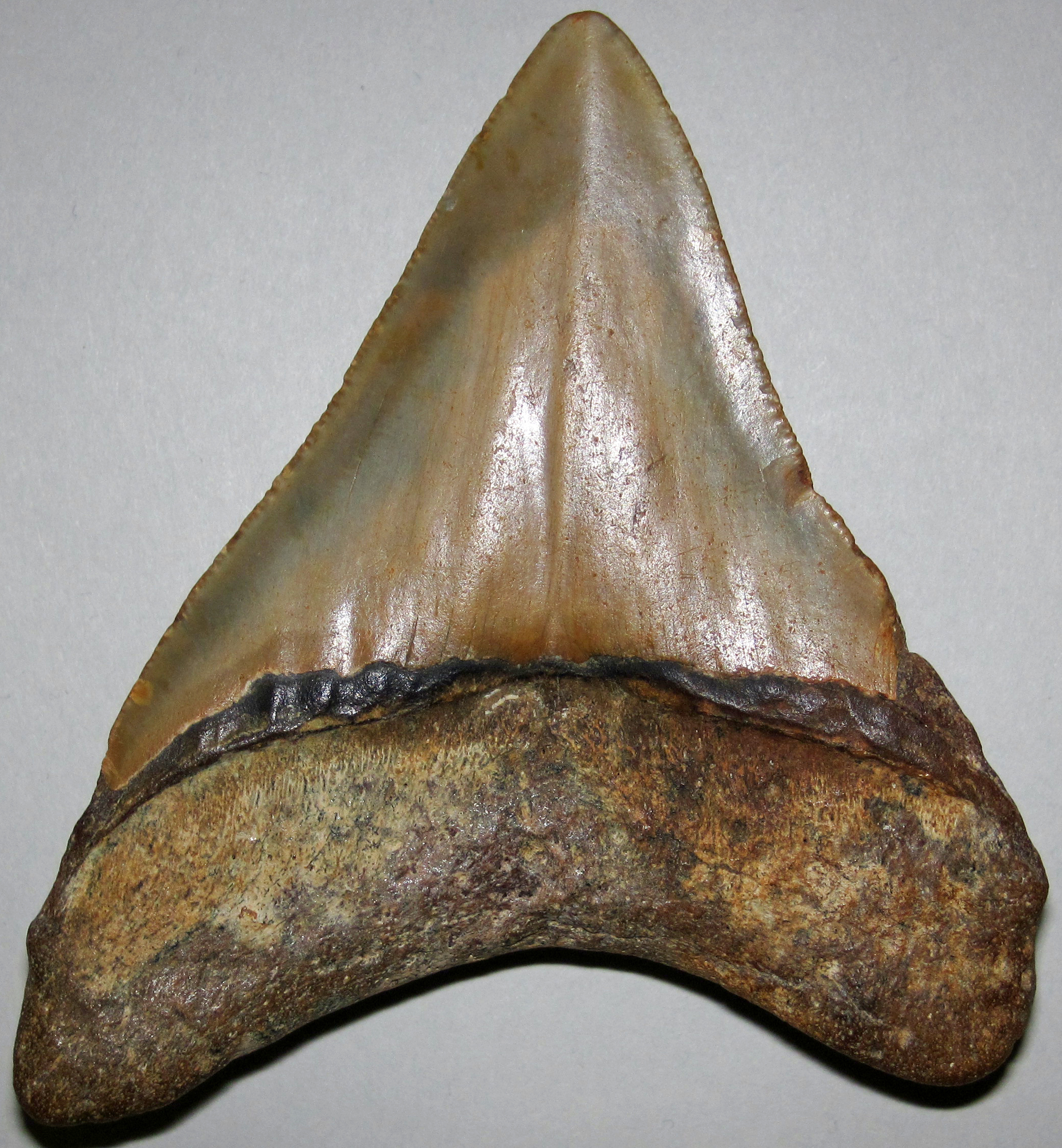
Recovered lineages tend to dream big. In the Cretaceous seas, Ptychodus grew to perhaps 10 metres while crushing clams with pavements of blunt teeth, and sharks shared the water with mosasaurs and plesiosaurs. When the asteroid ended the age of dinosaurs, the great marine reptiles vanished, and the sharks outlasted them too. In the emptied oceans, whales spread and diversified, and one shark rose to hunt them: Megalodon, which appeared about 23 million years ago and may have exceeded 15 metres, the largest predatory fish that ever lived. It vanished around 3.6 million years ago as oceans cooled and whale herds changed, leaving only its enormous teeth behind.
Sharks Today
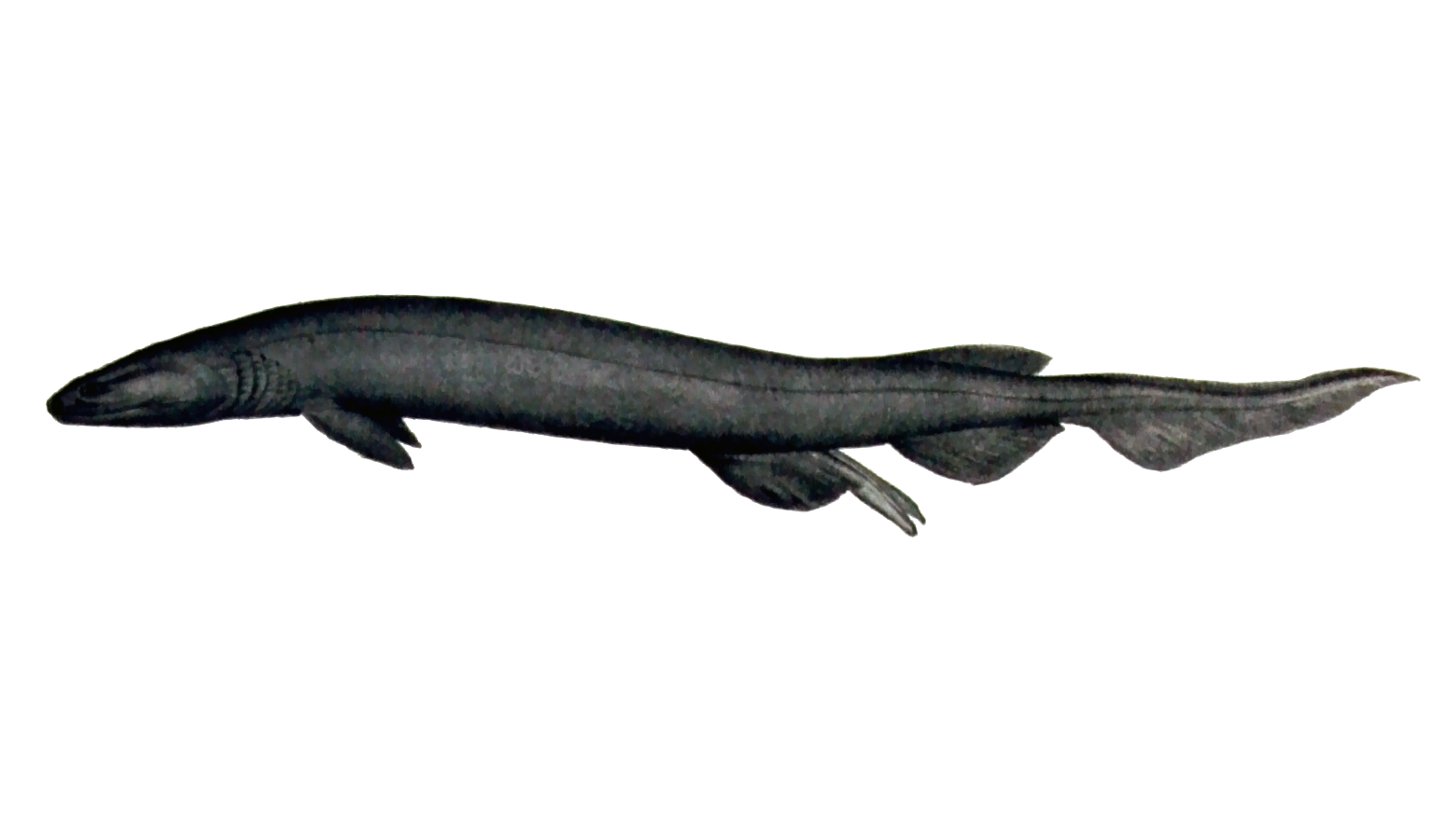
More than 500 shark species patrol the world's water right now, from the dwarf lanternshark, which fits in a hand, to the whale shark, which can pass 12 metres. Some look exactly like their ancestors. The frilled shark, with around 300 backward-curving teeth in eel-like jaws, has changed so little over tens of millions of years that scientists use it as a window into the past. But the qualities that carried sharks through asteroids and volcanic apocalypses, patience and slow, careful breeding, are worthless against modern fishing nets. Recent estimates suggest that fishing kills close to 80 million sharks a year. After half a billion years, the greatest survivor in the sea finally faces a predator it cannot outwait.
What Sharks Share with Triops
We have a soft spot for endurance champions here, and the branchiopods, the group that includes Triops, are sharks' only real rivals for staying power. Branchiopods have existed for at least 500 million years, and Triops itself has barely changed in over 200 million. The two lineages survived the same five extinctions with opposite strategies. The shark stayed big and mobile, sliding into deep water to wait out disasters. The tadpole shrimp went the other way, shrinking into puddles and sleeping out catastrophe inside eggs that can wait decades in dust. Both bets paid off. Neither the oceans nor the puddles have ever managed to get rid of them.
Further reading on this site: the anvil-finned Stethacanthus, the saw-jawed Helicoprion, the colossal Megalodon, shell-crushing Ptychodus, swamp-dwelling Orthacanthus, and how Triops survived five mass extinctions too.