Published August 23, 2026, 11:48 by the Triops.me Editorial Team · Back to Articles
Smilodon: The Saber-Toothed Cat That Ruled the Ice Age
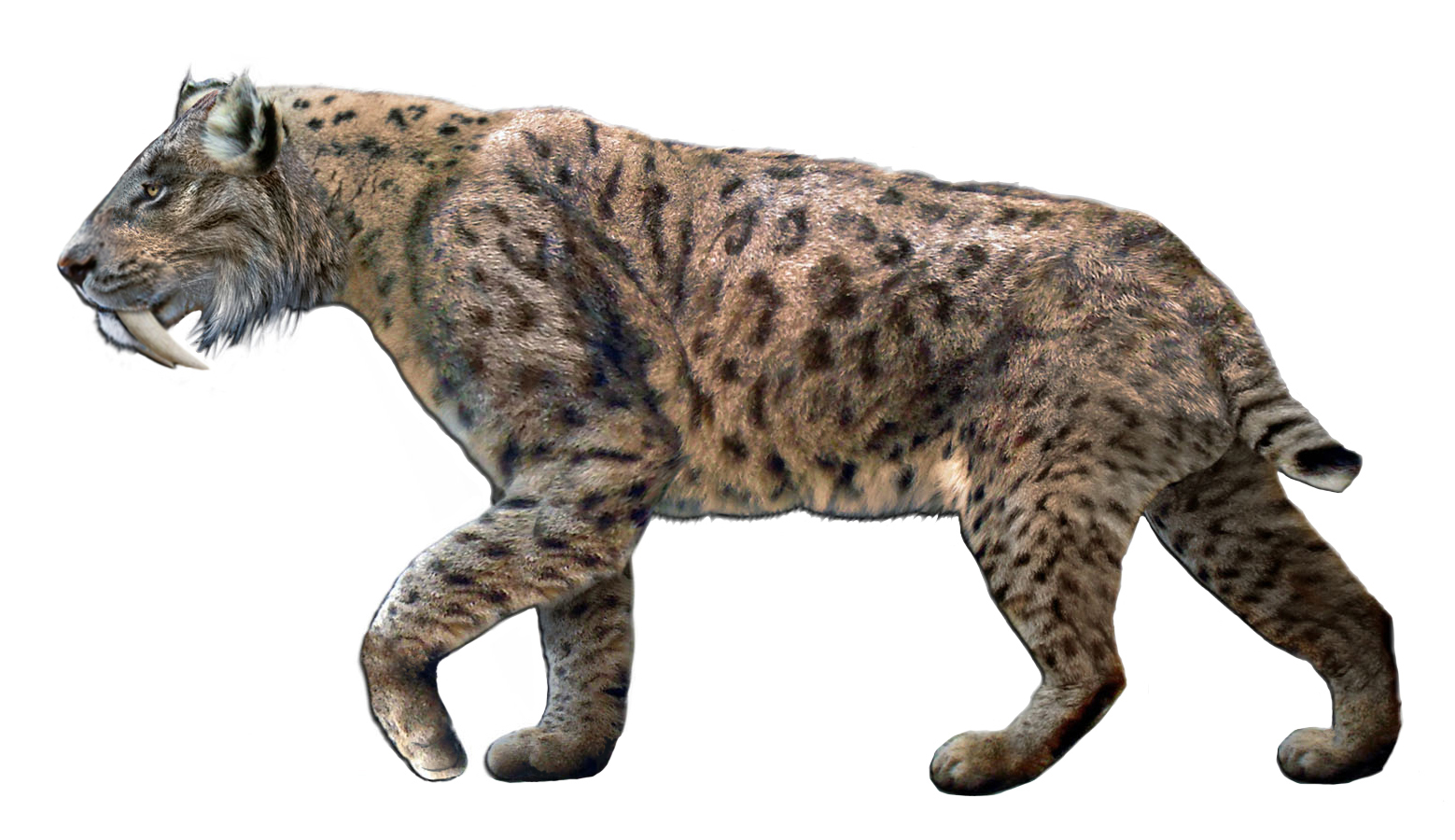
For over two million years, a predator with dagger-like canine teeth up to 28 centimeters long roamed the Americas, from the frozen tundra of Alaska to the grasslands of Argentina. Smilodon, commonly called the saber-toothed tiger, was one of the most successful and fearsome predators the world has ever seen. Yet despite its fame, this animal was not a tiger at all, and its story is far more complex than most people realize.
Named in 1842 by Danish naturalist Peter Wilhelm Lund from fossils discovered in Brazilian caves, the name Smilodon comes from the Ancient Greek words smile (scalpel) and odontos (tooth). Lund's original species name, populator, meant "the destroyer." Few prehistoric animals have earned such an ominous title, and fewer still have deserved it more.
Not a Tiger at All
One of the most persistent misconceptions about Smilodon is that it was a type of tiger. Despite the nickname "saber-toothed tiger," Smilodon was not closely related to tigers or any modern cat. It belonged to the extinct subfamily Machairodontinae, which diverged from the ancestors of living cats around 20 million years ago. Modern big cats like tigers, lions, and leopards belong to the subfamily Pantherinae, an entirely separate lineage.
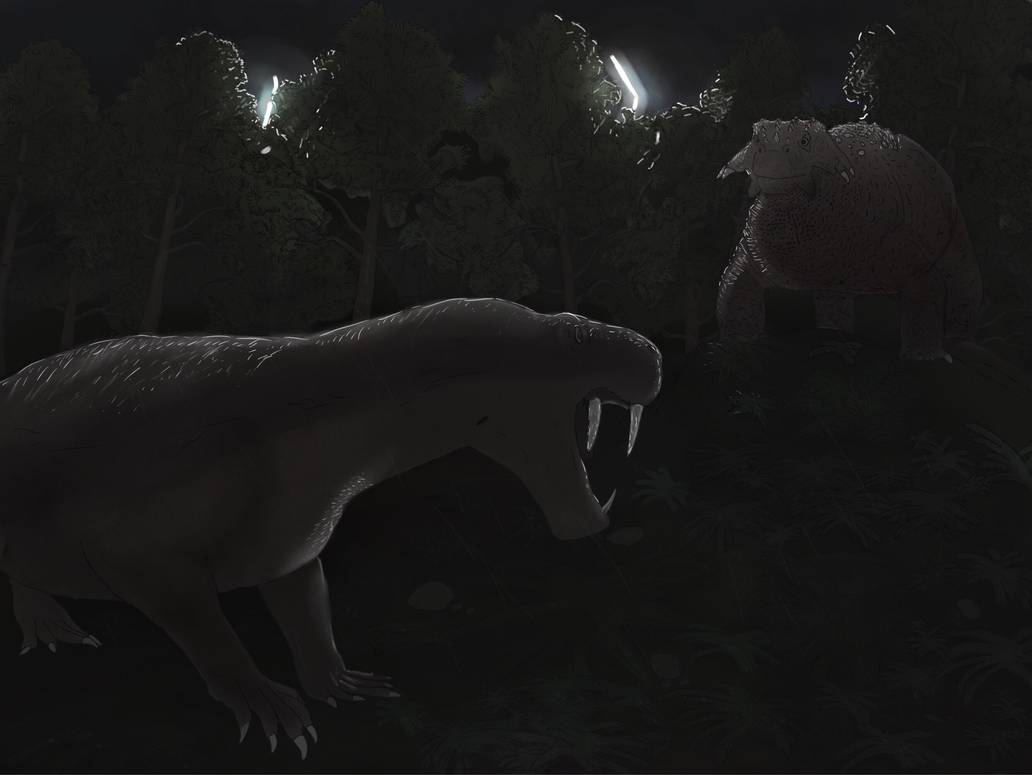
The "saber-tooth" body plan, with elongated upper canine teeth, evolved independently in at least five different groups of predatory mammals, including gorgonopsids (mammal-like reptiles from the Permian), nimravids (false saber-toothed cats), and even a marsupial, Thylacosmilus. This remarkable convergent evolution shows just how effective the saber-tooth strategy was across hundreds of millions of years of Earth history.
Three Species, One Legacy
Three species of Smilodon are recognized today, each representing a different stage in the genus's evolutionary history. S. gracilis, the earliest and smallest species, weighed between 55 and 100 kilograms and lived from about 2.5 to 1.5 million years ago. It was likely the ancestor of the two later species and probably evolved from an earlier saber-toothed cat called Megantereon.
S. fatalis, the most commonly found species, was substantially larger, weighing 160 to 280 kilograms. It stood about 100 centimeters at the shoulder and measured roughly 175 centimeters in body length. This is the species most famously associated with the La Brea Tar Pits in Los Angeles, where hundreds of individuals have been recovered since excavations began in 1875. It lived from about 1.6 million to 11,000 years ago across North America.
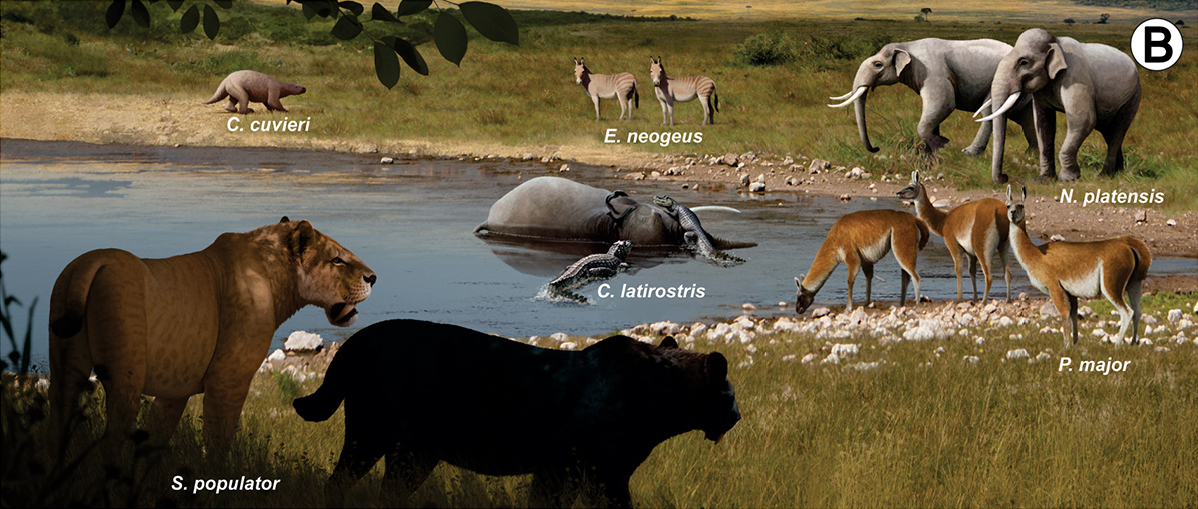
The largest species, S. populator, was a South American giant that could weigh anywhere from 220 to 470 kilograms, making it one of the largest felids that ever lived. It stood 120 centimeters at the shoulder and was the last surviving member of the genus, persisting until about 10,000 years ago. This species evolved after the Great American Biotic Interchange, when North and South America connected and faunas mixed.
Built for the Kill
Smilodon was built very differently from modern big cats. Its forelimbs were exceptionally powerful and muscular, far more robust than those of a lion or tiger. This was no accident. Smilodon needed strong arms to wrestle and pin down its prey before delivering a killing bite with those delicate canines.
Speaking of those canines, they were not designed for crushing bone. The saber teeth were slender, somewhat flattened, and surprisingly fragile. Studies of tooth wear and breakage patterns show that Smilodon avoided biting into hard material. Instead, the canines were precision instruments, designed to deliver deep, slashing wounds to the throat or belly of prey, severing blood vessels and causing rapid blood loss. The jaw could open to an astonishing 120 degrees, far wider than any modern cat, allowing those long teeth to clear the lower jaw and sink into flesh.
The La Brea Tar Pits
The La Brea Tar Pits in Los Angeles have yielded the single largest collection of Smilodon fossils anywhere in the world. Natural asphalt seeps trapped animals that ventured too close, preserving their bones in remarkable detail. More than 2,000 individual Smilodon fatalis specimens have been recovered from this site, providing an unparalleled window into the biology and behavior of these cats.
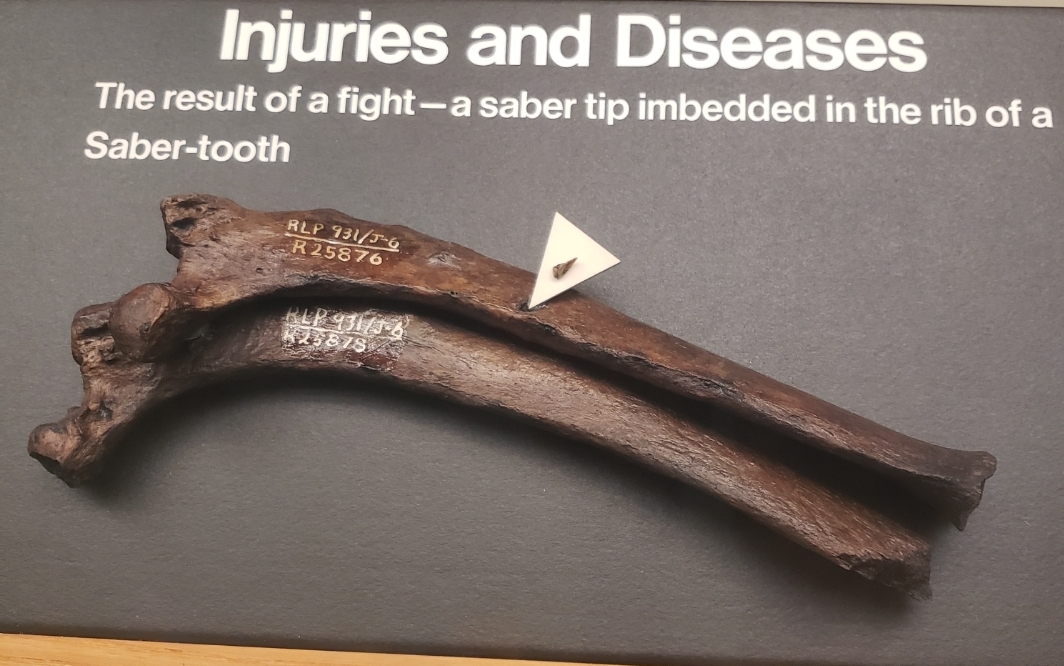
One of the most revealing discoveries from La Brea is the high prevalence of healed injuries among Smilodon fossils. Many individuals show evidence of broken and mended bones, particularly in the forelimbs and vertebrae. These injuries are consistent with the stresses of wrestling large, struggling prey. The sheer number of healed injuries suggests that Smilodon was social enough that injured individuals were cared for by the group while they recovered, a behavior seen in modern lions but not in solitary cats.
The tar also preserved something else remarkable: the last meals. Analysis of stomach contents and isotopic signatures from Smilodon bones reveals a diet dominated by large herbivores, including ancient bison, horses, camels, and ground sloths. These were all animals that required cooperative effort or extraordinary individual strength to bring down.
Social or Solitary?
Whether Smilodon hunted alone or in groups has been debated for decades. The evidence points in both directions. The healed injuries at La Brea suggest social behavior, as a solitary predator with a broken leg would likely starve. However, isotopic analysis shows that some individuals had slightly different diets, which could indicate solitary hunters with personal territories rather than cooperative pack hunters sharing the same prey.
The current scientific consensus leans toward a flexible social structure, perhaps similar to modern cheetahs or mountain lions, where individuals sometimes hunt alone and sometimes tolerate or cooperate with others. The dense, bushy habitats that Smilodon likely preferred would have favored ambush hunting, whether solo or in small groups.
The End of an Era
Smilodon disappeared roughly 10,000 years ago as part of the end-Pleistocene extinction event that wiped out most of the large animals across the Americas. The causes were likely multiple and intertwined. Climate change at the end of the last Ice Age transformed habitats, replacing the open woodlands and parklands Smilodon favored with denser forests or more open grasslands.
The arrival of human hunters in the Americas may have accelerated the decline, both by competing for the same large herbivores and by directly hunting Smilodon itself. As the megafauna prey base collapsed, Smilodon, with its highly specialized anatomy and reliance on large kills, could not adapt quickly enough. Its massive canines, once its greatest asset, became a liability when the large, slow prey they were designed for vanished.
Recent research published in the Journal of Evolutionary Biology suggests that the decline of saber-toothed cats was part of a much longer evolutionary story. The entire Machairodontinae subfamily had been slowly declining in diversity for millions of years before the final extinction event. Smilodon was simply the last survivor of a lineage that had been losing ground to modern cats for a very long time.
Legacy in Ice and Stone
Today, Smilodon is one of the most recognizable prehistoric animals in the world. It is the official state fossil of California, a testament to the La Brea discoveries. Complete skeletons are displayed in museums across the Americas, from the Natural History Museum of Los Angeles County to the American Museum of Natural History in New York.
Pop culture has kept Smilodon in the public imagination, from the saber-toothed cat in Ice Age to the Ice Age zone at various theme parks. But the real animal was far more fascinating than any fictional version. It was a highly specialized predator, perfectly adapted to a world of giant prey and open woodlands, that thrived for over two million years before the world changed beneath its paws.
In a sense, Smilodon's story mirrors that of many extinct megafauna, including the trilobites and ammonites we explore elsewhere on this site. Specialization brings success in stable times, but becomes a trap when conditions shift. The creatures that survive mass extinctions are almost never the most specialized. They are the generalists, the adaptable, the unglamorous survivors. Smilodon, for all its terrifying beauty, was simply too specialized for the world it helped create.