Published 2026-09-18 · by the Triops.me Editorial Team · Back to Articles
The Solnhofen Limestone: Jurassic Snapshots in Stone
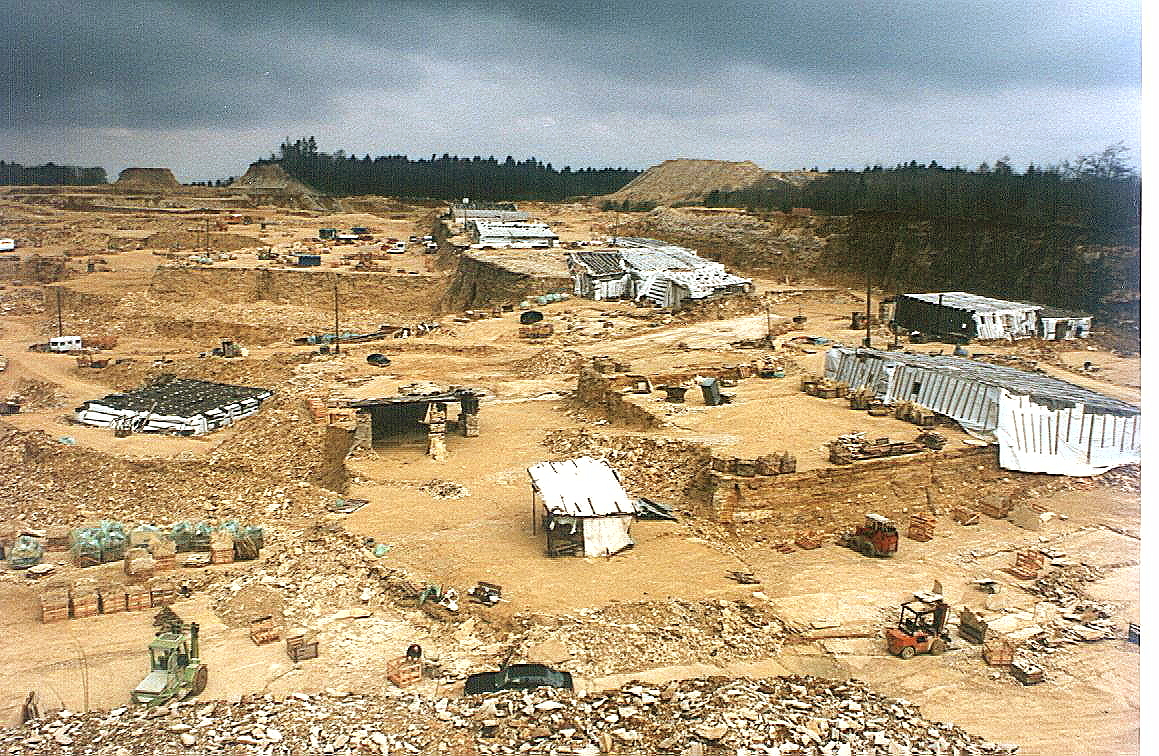
In the hills of Bavaria, a quiet region of southern Germany, workers have quarried fine white limestone for centuries. The stone was prized for something completely unrelated to fossils: it was smooth enough to etch with acid, which made it perfect for printing. The lithography industry that grew up around Solnhofen helped put words and pictures on paper across Europe.
Then the slabs started talking. Splitting a block to make a printing plate might reveal the delicate wing of a dragonfly, a fish frozen mid-swim, or in one world-changing case, a feather and then a skeleton with feathers on it. The Solnhofen Limestone turned out to be one of the greatest fossil sites on Earth, a window into a Late Jurassic lagoon about 150 million years old.
A lagoon where time stood still
The key to Solnhofen's perfection is that its environment was hostile to normal decay. During the Late Jurassic, southern Germany sat near sea level in a warm subtropical climate. Behind barrier reefs lined with sponges and corals lay shallow, still lagoons. Rivers rarely reached them, so fresh water and nutrients arrived only occasionally, and the water became so salty that few large animals could live in it for long.
At the lagoon bottom, oxygen ran out almost completely. No worms stirred the mud, no scavengers grazed on carcasses, and no bacteria had enough oxygen to break things down quickly. When an animal died in the open sea or on the reef and drifted or fell into a lagoon, it sank into fine lime mud that settled around it like a soft, sealing blanket. The result is a fossil record that does not just show bones. It records feathers, wing membranes, muscles, ink sacs and even the tracks animals left on the mud.
Fossil sites with this level of detail are rare enough that scientists give them a special name, Lagerstätten, and Solnhofen is among the most famous of them all.
Archaeopteryx: the feather that started an argument
In 1861, quarry workers near Langenaltheim split a slab and found something nobody expected: a single fossil feather with a clear central shaft and fine branching barbs. A year later, a whole animal appeared nearby, and it was not easy to classify. It had wings and feathers like a bird, but teeth, a long bony tail and clawed fingers like a small reptile.
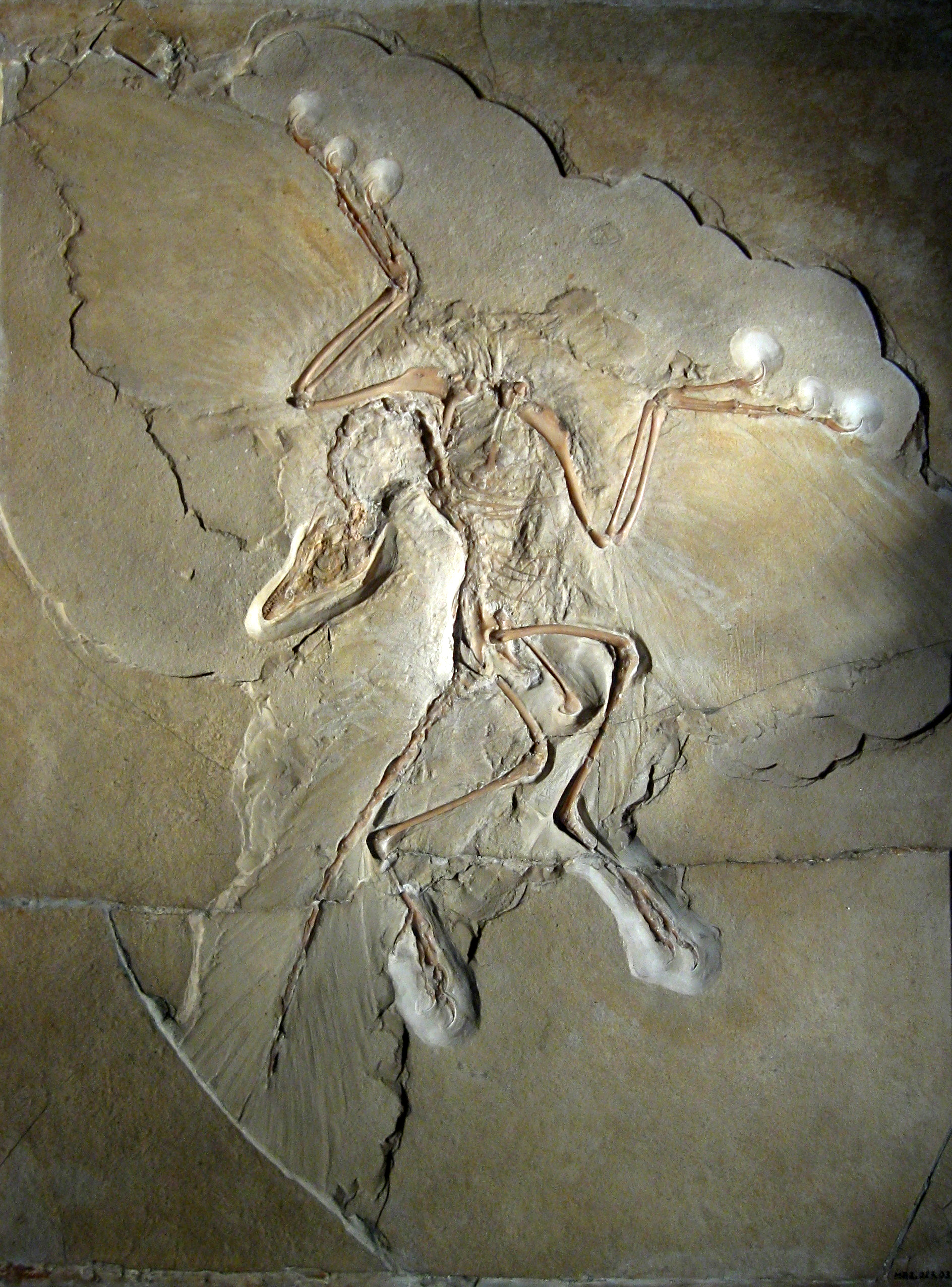
That animal became Archaeopteryx, and the timing could not have been stranger. Charles Darwin had published On the Origin of Species only two years earlier, and here was a creature that seemed to straddle the line between reptile and bird, arriving as a physical exhibit for his argument. Today Archaeopteryx is recognised as a small feathered dinosaur closely related to the first birds, and roughly a dozen specimens have been found, most of them at Solnhofen. The finest, the Berlin specimen, is one of the most valuable fossils in existence.
Compsognathus: the first little dinosaur
Another Solnhofen resident caused its own quiet revolution. Compsognathus was a two-legged predator about the size of a turkey, and the nearly complete skeleton found in the 1850s was the first small dinosaur ever discovered with much of its body intact. For decades it was cited as the smallest known dinosaur, and a lizard found inside its stomach region confirmed it ate prey whole, bones and all.
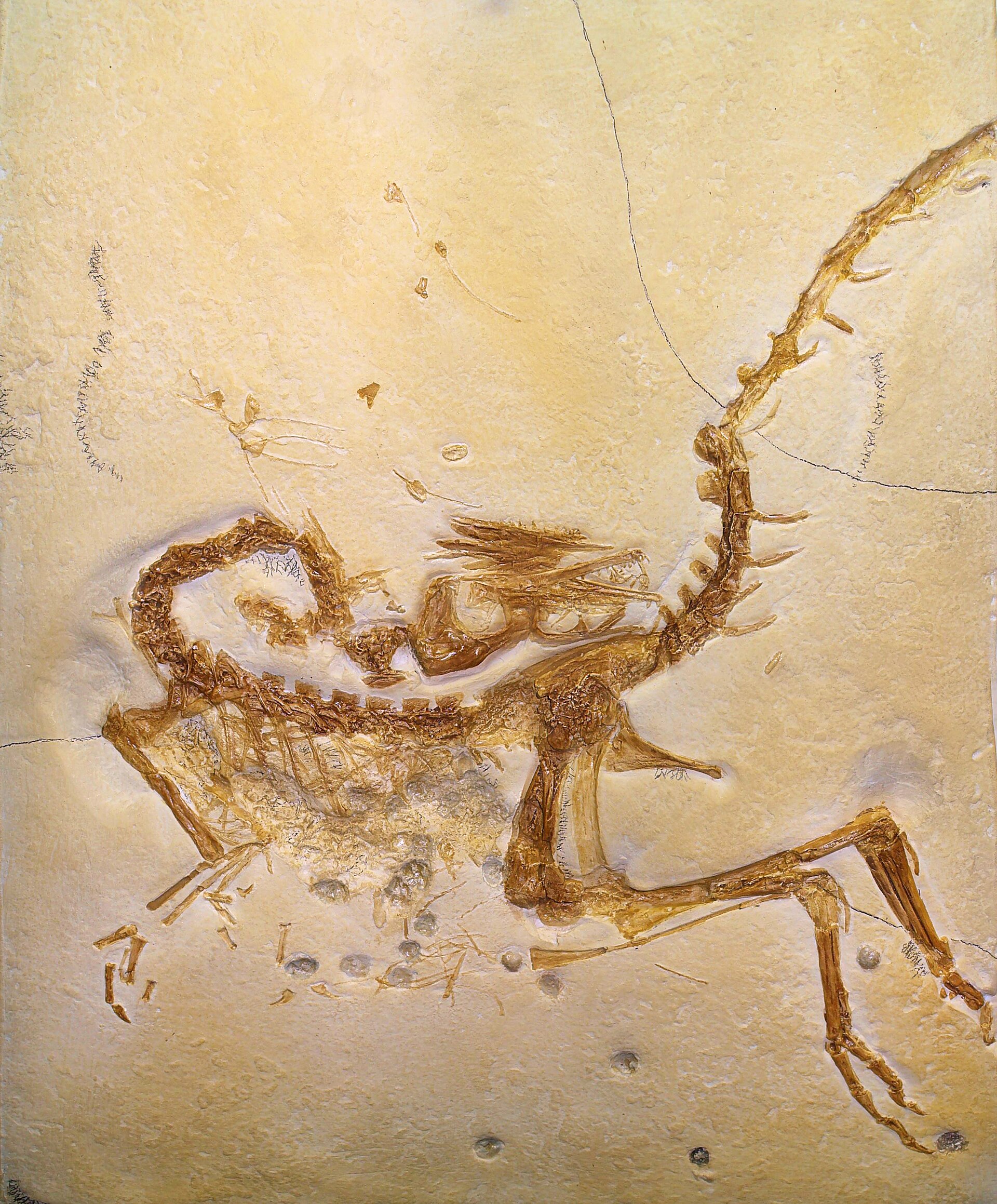
Its importance goes beyond its size. Compsognathus belongs to the theropods, the same group that later gave rise to birds, and its discovery at the same site as Archaeopteryx gave early palaeontologists two pieces of one story: the hunter and its feathered relative, preserved in rock from the same lagoon.
Pterodactylus: the first named flying reptile
Decades before either dinosaur was found, Solnhofen yielded the very first pterosaur ever described. Unearthed in the 1770s and named Pterodactylus in 1809, it baffled early naturalists, who suggested it might be a sea creature or a flying mammal. Only later did scientists accept that the Mesozoic world had its own flying reptiles, animals with wings made of skin stretched on a hugely elongated finger.
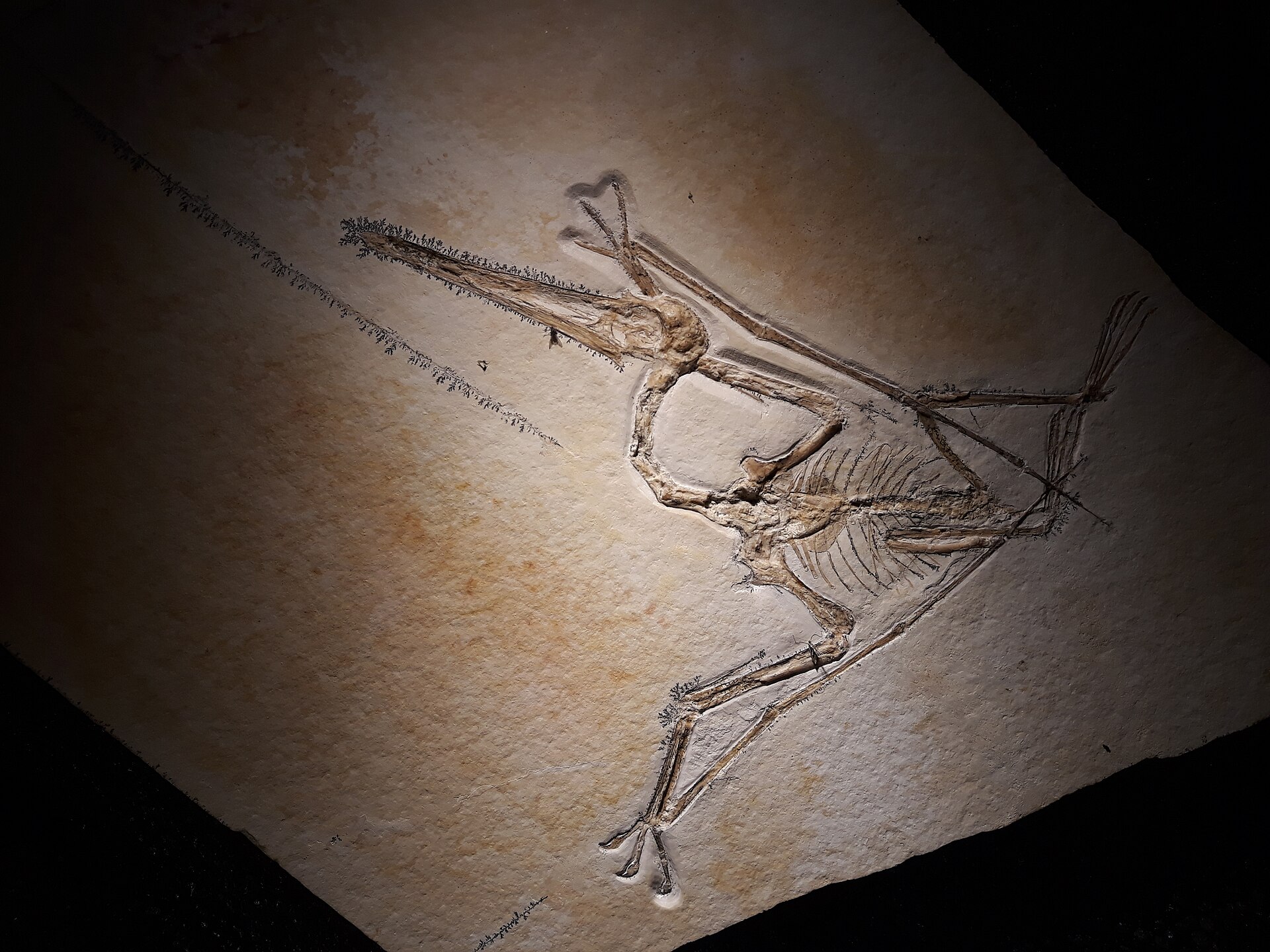
The Solnhofen slabs preserved pterosaurs in extraordinary detail, including the soft wing tissue itself. Adult Pterodactylus were small, with wingspans under a metre, and dozens of specimens show a full growth series from tiny juveniles onward, something almost no other fossil site can offer.
The everyday animals of the lagoon
What makes Solnhofen special is not only its celebrities. The same slabs record ordinary Jurassic life with forensic clarity. Jellyfish, animals that almost never fossilise, appear as faint prints where they stranded on the mud. Squid-like belemnites lie with their ink preserved. Fossil ammonites drift between fish such as Leptolepis, which swim in schools.
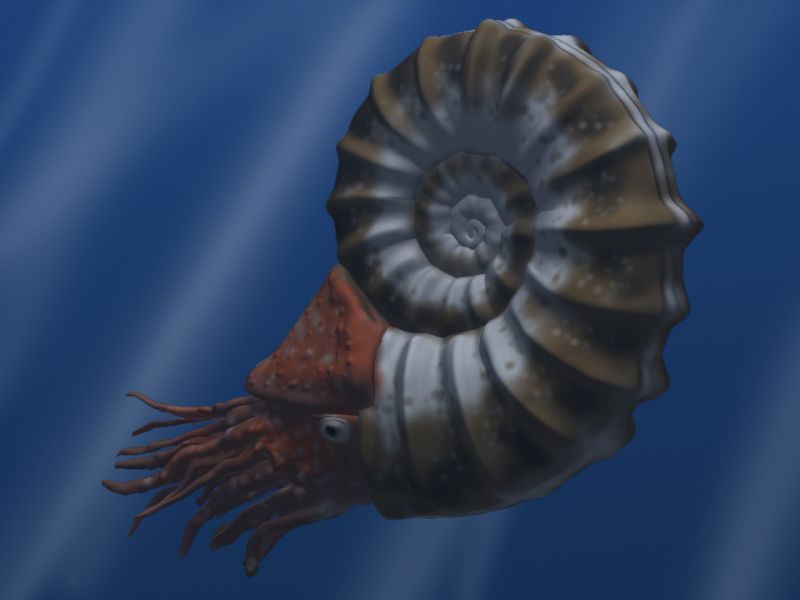
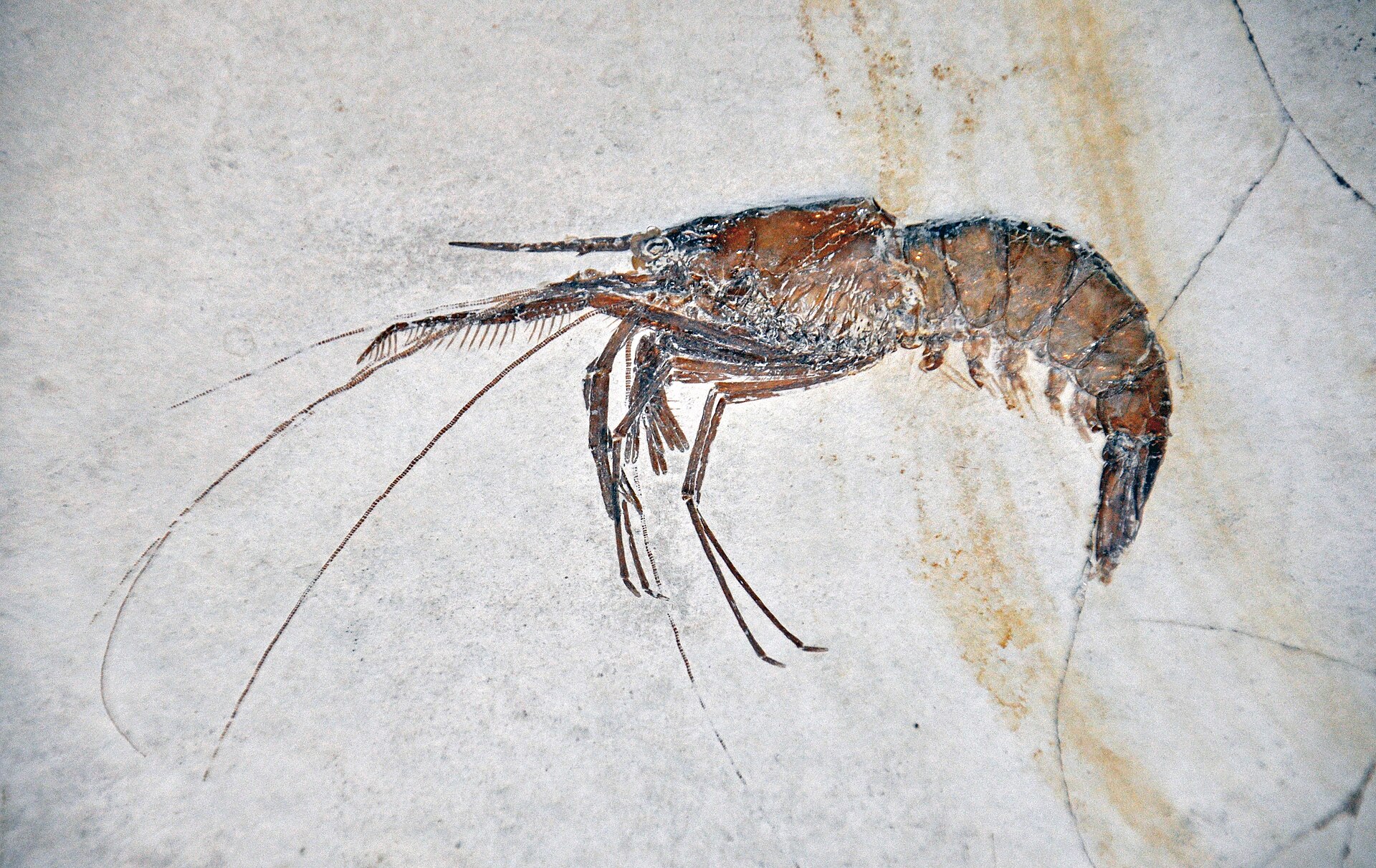
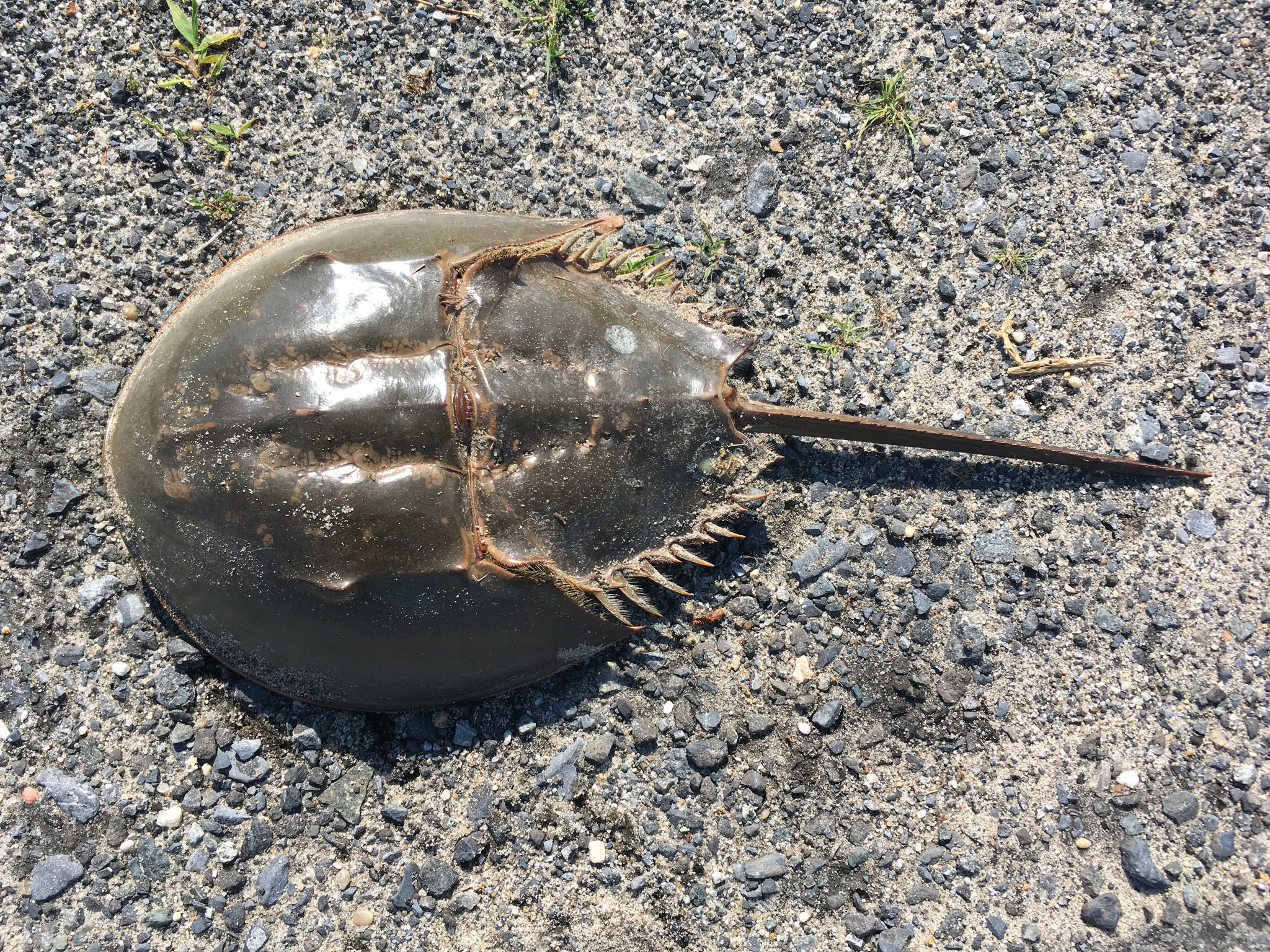
Crustaceans are everywhere, including the long-clawed shrimp Aeger tipularius, whose delicate legs and antennae survived because nothing on the lagoon floor was left to eat them. Feather stars, relatives of the crinoids covered elsewhere on this site, float through the slabs in tangled groups. And in one of the most touching fossils in palaeontology, horseshoe crabs are preserved at the end of long winding trails, having died exhausted at the end of tracks they printed in the mud more than 150 million years ago. Those trails and their makers link Solnhofen directly to the horseshoe crab story we have told before, and to the same mud-dwelling world where triops-like crustaceans have always thrived.
Why Solnhofen still matters
The Burgess Shale in Canada showed us the strange dawn of animal life in the Cambrian, complete with soft-bodied wonders. Solnhofen does the same job for the age of dinosaurs, catching the Jurassic seas and skies in mid-motion. It gave science the first bird, the first little theropod and the first pterosaur, all from the same couple of lagoons, and it keeps giving: new specimens are still pulled from active quarries today.
The quarries are quieter than they once were, and printing stone is a niche trade now. But every fresh slab split in the Bavarian sun is still a potential page from a book written in lime mud, one where even a jellyfish or a footstep counts as a headline. Few places on Earth let us watch the past so closely, and fewer still let us do it from a rock that once printed the morning news.