Published September 02, 2026, 13:49 · by the Triops.me Editorial Team · Back to Articles
Stethacanthus: The Anvil-Headed Shark of the Carboniferous
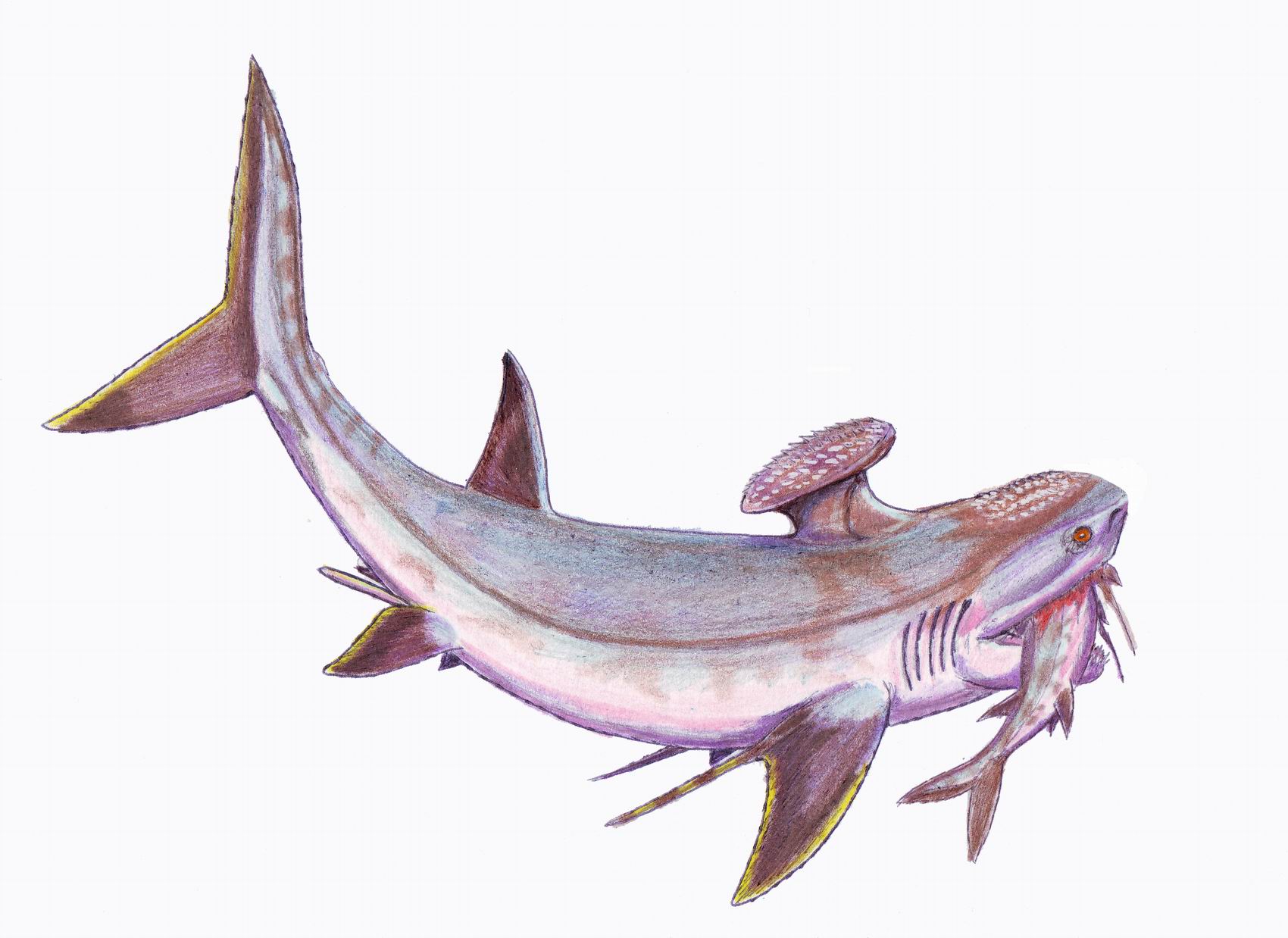
Deep in the Carboniferous seas, 340 million years ago, a strange shark prowled the ocean floor. It was roughly the size of a modern reef shark, about one and a half to three meters long depending on the species, but no living shark today would look anything like it. Its name was Stethacanthus, and it carried a structure on its back that has puzzled paleontologists ever since its first fossils were found in the 1870s.
The name Stethacanthus comes from the Ancient Greek stēthos, meaning chest, and akanthos, meaning spine or thorn. That is a fitting description. Rising from where most sharks have a simple triangular dorsal fin, Stethacanthus bore a flat-topped, anvil-shaped structure bristling with rows of tiny spikes. Nothing alive today has anything remotely similar.
The Spine-Brush Complex
Scientists call this peculiar structure the spine-brush complex. It consists of a tall dorsal spine made of trabecular dentine, the same material found in the teeth and spines of modern sharks and rays. Sitting on top of this spine is the brush, a flat shelf covered in up to nine rows of large denticles, or skin teeth, all pointing forward. Beneath the surface, the brush contains parallel membranous tubules made of globular calcified cartilage.
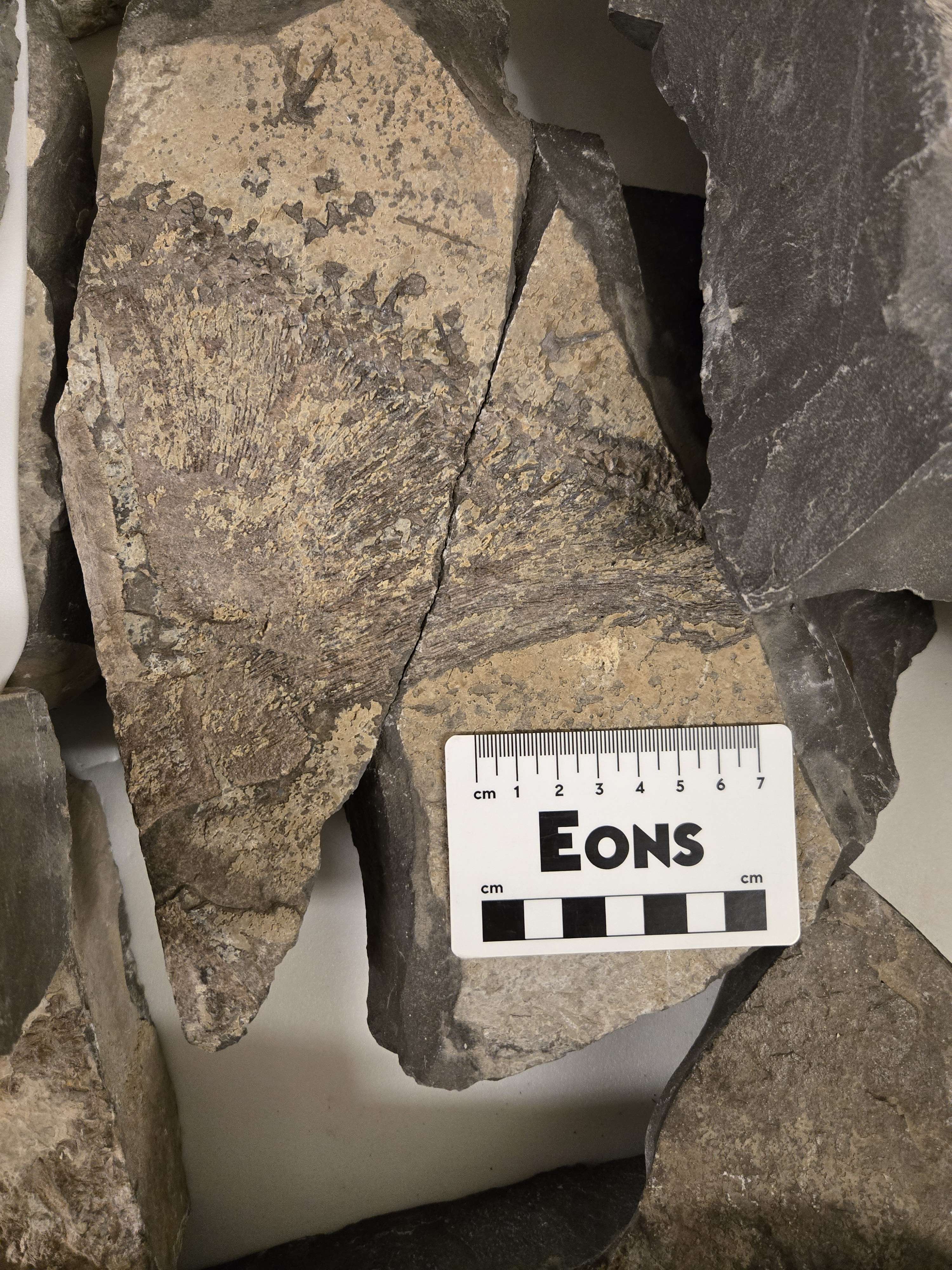
Remarkably, the spine-brush complex has only been found in male Stethacanthus specimens, and only in those that appear to have reached sexual maturity. No female with this structure has ever been identified, though it remains possible that females had a smaller version that simply did not preserve well. This strong sexual dimorphism has led researchers to propose that the spine-brush complex played a role in courtship or mating, much like the elaborate display structures seen in some modern birds or fish.
Another leading theory suggests the complex was a defense mechanism. When combined with the forward-pointing denticles on the top of the head, the anvil-shaped structure may have created the illusion of a much larger animal's open mouth, potentially deterring would-be predators. Some researchers have even proposed that the tubules inside the brush could have been inflated, similar to erectile tissue in humans, making the entire structure puff up to an even more intimidating size.
More Than Just a Fin
Stethacanthus was unusual in more ways than one. Its pectoral fins were equipped with an extra structure that paleontologists call a fin whip, a long metapterygial extension containing at least 22 small cartilage segments that stretched well past the pelvic fins. The purpose of these whips is not fully understood, but they may have played a role during mating or provided some advantage in maneuvering along the sea floor.
The teeth of Stethacanthus tell their own story. They were cladodont, meaning each tooth had a broad base supporting one large central cusp flanked by two pairs of smaller accessory cusps, five cusps in total. This arrangement was common among Paleozoic sharks but unusual compared to the blade-like teeth of modern predatory sharks. Combined with the creature's relatively small fin size, many paleontologists believe Stethacanthus was a slow-moving bottom dweller, snapping up brachiopods, crinoid ossicles, and other small marine organisms rather than chasing down fast prey.
A Global Fossil Record
The story of how we came to know Stethacanthus is itself a cautionary tale about the challenges of working with fragmentary fossils. When paleontologist John Strong Newberry first described the genus in 1889, he had nothing to work with but isolated spines. He initially believed these spines were part of the pectoral fins, a misunderstanding that persisted for decades. Complete skeletal remains proved extremely rare, and it was not until 1974 that Richard Lund formally defined the family Stethacanthidae based on a broader set of anatomical characteristics.
Since then, specimens have been found across four continents. The richest deposits come from the Bear Gulch Limestone of Montana, where hundreds of Stethacanthus individuals have been recovered, many in extraordinary states of preservation. Fossils have also been unearthed in Scotland, Russia, China, and Western Australia, painting a picture of a genus that was once widespread across the world's oceans. The geographic spread suggests that Stethacanthus may have been migratory, and the concentration of specimens in the Bear Gulch area hints at ancient breeding grounds.
A Living Relative?
While Stethacanthus belongs to an entirely extinct order called Symmoriiformes, its closest living relatives are the chimaeras, also known as ratfish or ghost sharks. These deep-sea fish are themselves ancient lineages, first appearing in the Paleozoic, and they still carry echoes of the body plan that Stethacanthus refined. Modern chimaeras have similarly reduced dorsal fins and elongated pectoral structures, though none approach the bizarre proportions of the spine-brush complex.
Stethacanthus lived from the Late Devonian through the end of the Carboniferous, a span of roughly 84 million years. It survived at least one major extinction event, the Hangenberg event at the Devonian-Carboniferous boundary, before finally disappearing around 299 million years ago, just before the Permian period began. In terms of sheer longevity, Stethacanthus endured far longer than the age of the dinosaurs, which lasted about 165 million years. It is a reminder that the oceans of the Paleozoic were every bit as strange and diverse as the terrestrial worlds that followed.
What Can We Learn?
Creatures like Stethacanthus challenge our assumptions about what a shark can be. When we think of sharks, we picture sleek, torpedo-shaped predators like great whites and makos. But the Paleozoic seas were home to an astonishing range of body plans, many of which have no modern equivalents. The spine-brush complex of Stethacanthus is a testament to the creativity of evolution, a solution to a problem that no longer exists in any modern ecosystem.
For prehistoric life enthusiasts, Stethacanthus is a reminder that some of the most interesting chapters in the history of life are hidden in the details of obscure fossils, waiting to be reassembled by patient paleontologists. The Carboniferous world that Stethacanthus inhabited was a planet of giant forests, abundant oxygen, and thriving marine ecosystems. Understanding creatures like this helps us piece together how oceans work, how species persist through environmental upheaval, and how the rules of survival change when the world shifts beneath your fins.