Published 2026-09-10 · by the Triops.me Editorial Team · Back to Articles
Stromatolites: The Oldest Living Monuments
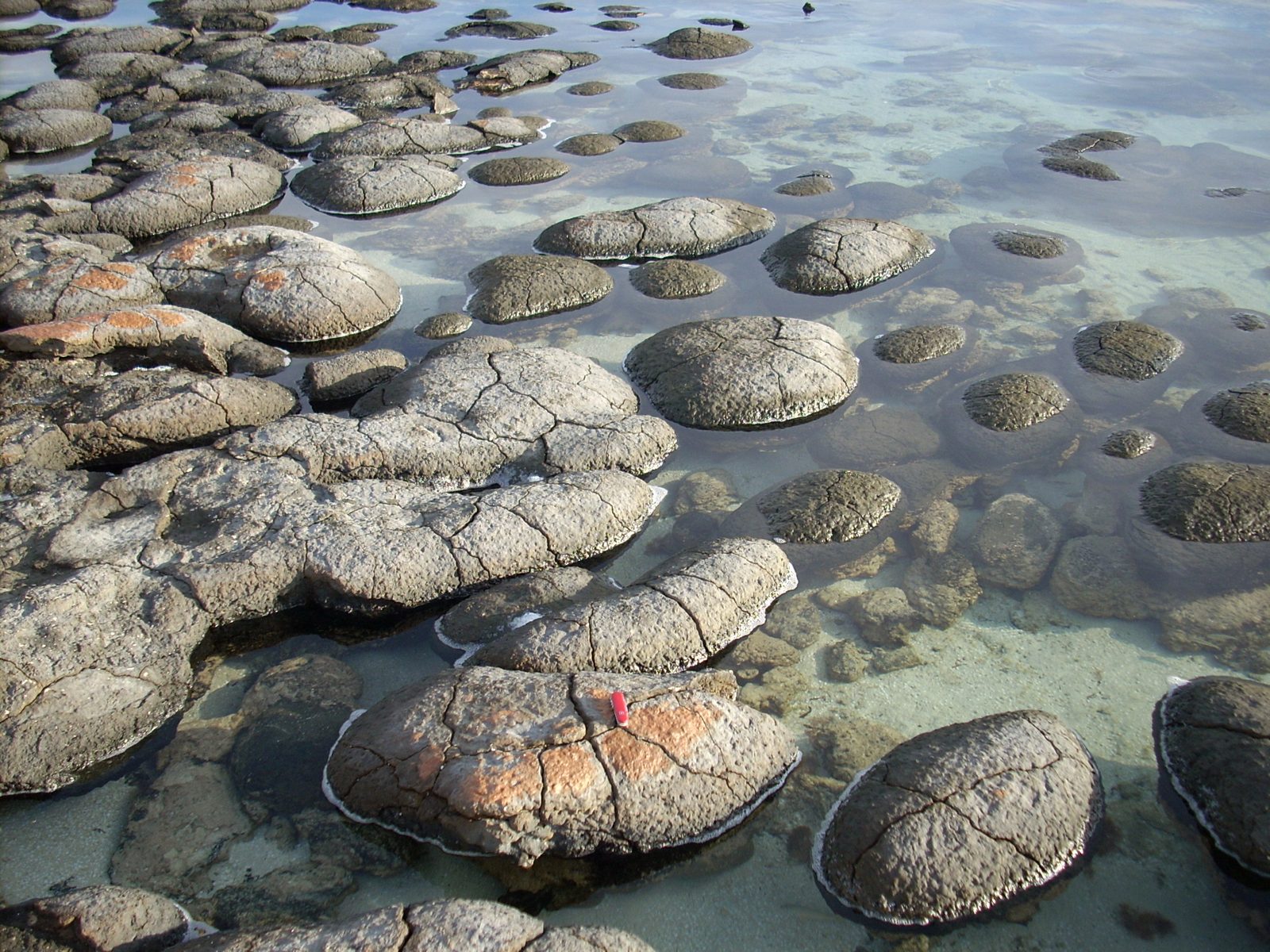
Triops are famous for surviving five mass extinctions, but even the hardiest shield shrimp is a newcomer compared to what grows in the shallows of Shark Bay, Western Australia. There, in water too salty for most grazing animals, sit dome-shaped rock columns built by living microbes. These are stromatolites, and they are the closest thing we have to a living window on the origin of life. The oldest stromatolite fossils are about 3.48 billion years old. To put that in perspective: the last common ancestor you share with a Triops lived roughly 600 million years ago. Stromatolites were already ancient monuments when the first animals appeared.
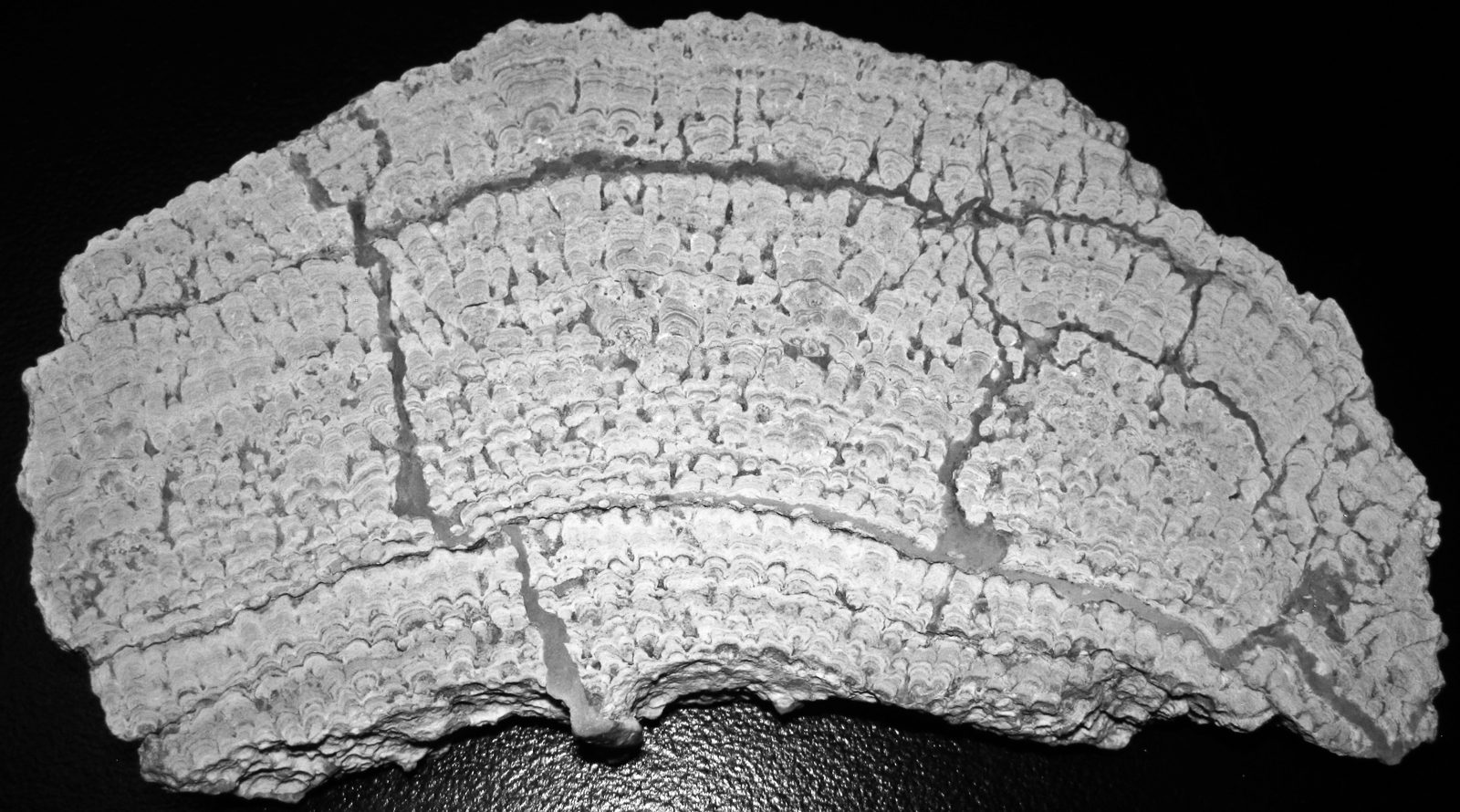
A stromatolite is not a single organism. It is a structure, built layer by layer by communities of microbes, especially cyanobacteria. Sticky mats of these bacteria trap grains of sand and silt carried by the tide, and their own calcium carbonate adds more material. The microbes slowly migrate upward through the accumulating sediment to stay in the sunlight, and the result is a laminated dome or pillar that grows just millimeters per year. Each fine layer is a page in a diary, and the oldest diaries stretch back further than any other fossil record on Earth.
The oldest fossils we have
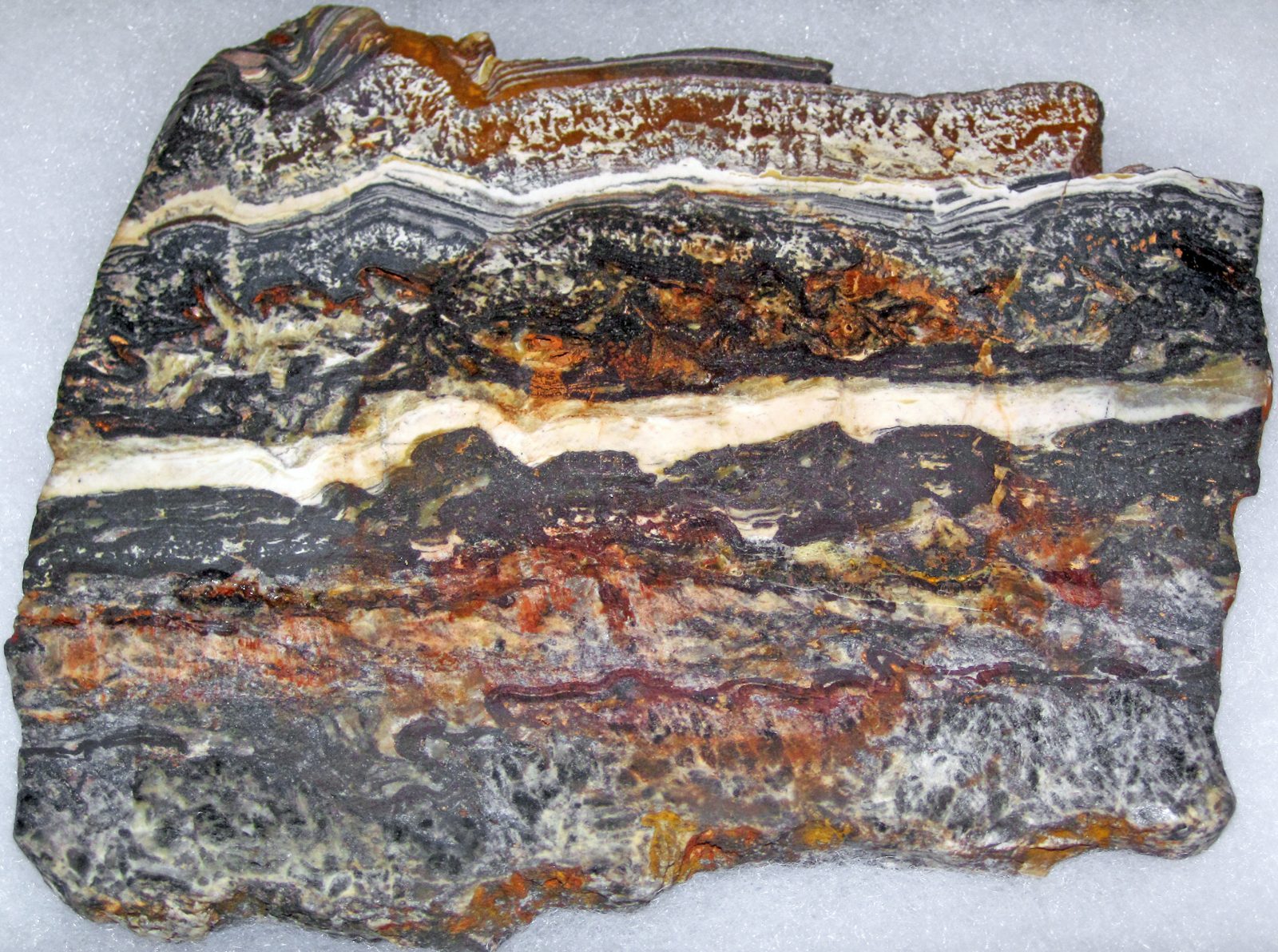
The strongest early candidates come from the Dresser Formation in the Pilbara region of Western Australia, where stromatolite-like structures in rock dated to about 3.48 billion years ago were laid down in ancient volcanic hot springs and shallow seas. The nearby Strelley Pool Formation, around 3.4 billion years old, preserves cone-shaped mounds whose layered interiors look strikingly like modern microbial domes. Scientists debate some of these structures, because purely chemical processes can mimic the wavy layering of life. But when fossils, chemical fingerprints of photosynthesis, and modern analogues all line up, the case for ancient microbial builders gets very hard to dismiss.
What is certain is that for roughly two billion years, stromatolites and their microbial mats were not just surviving, they were running the planet. Early cyanobacteria invented oxygenic photosynthesis, releasing oxygen as waste. For ages that oxygen was soaked up by dissolved iron and volcanic gases, rusting the oceans and settling to the seafloor in banded iron formations. Then, about 2.4 billion years ago, the sinks filled and oxygen finally began to accumulate in the atmosphere. This Great Oxidation Event, driven largely by stromatolite-building microbes, was one of the most dramatic transformations in Earth's history. It poisoned much of the anaerobic life of the time, but it made possible every oxygen-breathing creature since, including you and every Triops.
The great decline
For most of the Precambrian, stromatolites were everywhere, building reefs and shallow-water carpets across the globe. Then their diversity began to fall. The most likely reason is a familiar one: predators. As animals evolved in the late Precambrian and exploded in diversity during the Cambrian, grazing creatures learned to eat microbial mats. Snails and other grazers rasp away at algal lawns the way a lawnmower attacks grass, and a mat that is constantly grazed can never build a mound. By the Paleozoic era, stromatolites had retreated to the margins, surviving in places too salty, too hot, or too turbulent for grazers to follow.
It is the same story, in slow motion, that plays out in a temporary pool. Ephemeral waters suit Triops because fish cannot persist there to eat them. Hamelin Pool suits stromatolites because the water is nearly twice as salty as the open ocean, and the microbes that would graze them cannot handle it. Survival, whether fast or slow, often comes down to finding a place where your enemies cannot.
Alive and building today
The most famous living stromatolites grow at Hamelin Pool in Shark Bay, where the domes can reach a meter tall and several centuries old. Cut off from the ocean by sea grass banks and concentrated by intense evaporation in an arid climate, the bay's water is a microbial paradise and a grazer's nightmare. Thrombolites, the clotted cousins of stromatolites, grow in Lake Clifton further south. Similar communities survive in the Bahamas, in hot springs like those of Yellowstone, and around alkaline lakes and deep-sea vents across the world. Wherever conditions shut out grazers, the ancient builders get back to work.
Fossil stromatolites are found on every continent. The Green River Formation of Utah and Wyoming preserves lake-dwelling domes from the Eocene, about 50 million years old, that show the same classic layering in cross section. Some paleontologists have even proposed microbial origins for structures on Mars, and stromatolite-like layering is exactly the kind of evidence future missions will look for, because if microbes ever lived on Mars, mound-building mats are among the most likely fossils they would leave.
Two strategies for deep time
Stromatolites and Triops represent opposite ends of the survival spectrum, and both work. A stromatolite conquers deep time by outliving change: it grows slowly, tolerates almost anything, and changes its lifestyle almost never. The microbes building Hamelin Pool domes today are doing nearly what their ancestors did three and a half billion years ago. A Triops does the opposite: it lives fast, dies young, and leaves its future to a dust of eggs that can wait decades in dry mud for the next rain. One survives by being patient, the other by being ready.
But there is a quiet parallel too. Both thrive on disturbance and exclusion. Triops need pools that dry out and kill their predators; stromatolites need waters too extreme for grazers. Neither is a competitor in the classic sense. They are specialists in worlds other species cannot use. That may be the deepest lesson the fossil record offers: persistence is not about being the strongest, it is about being the one still standing when conditions turn hostile for everyone else.
So the next time you watch a Triops churn through a freshly flooded pool, remember that it is sharing a planet, and a survival strategy of sorts, with builders older than animals, older than oxygen, older than almost everything. The stromatolites were here first, they have never really left, and given a patch of hostile water, they are still building.