Published August 19, 2026, 01:58 by the Triops.me Editorial Team · Back to Articles
Tanystropheus: The Reptile With the Absurdly Long Neck
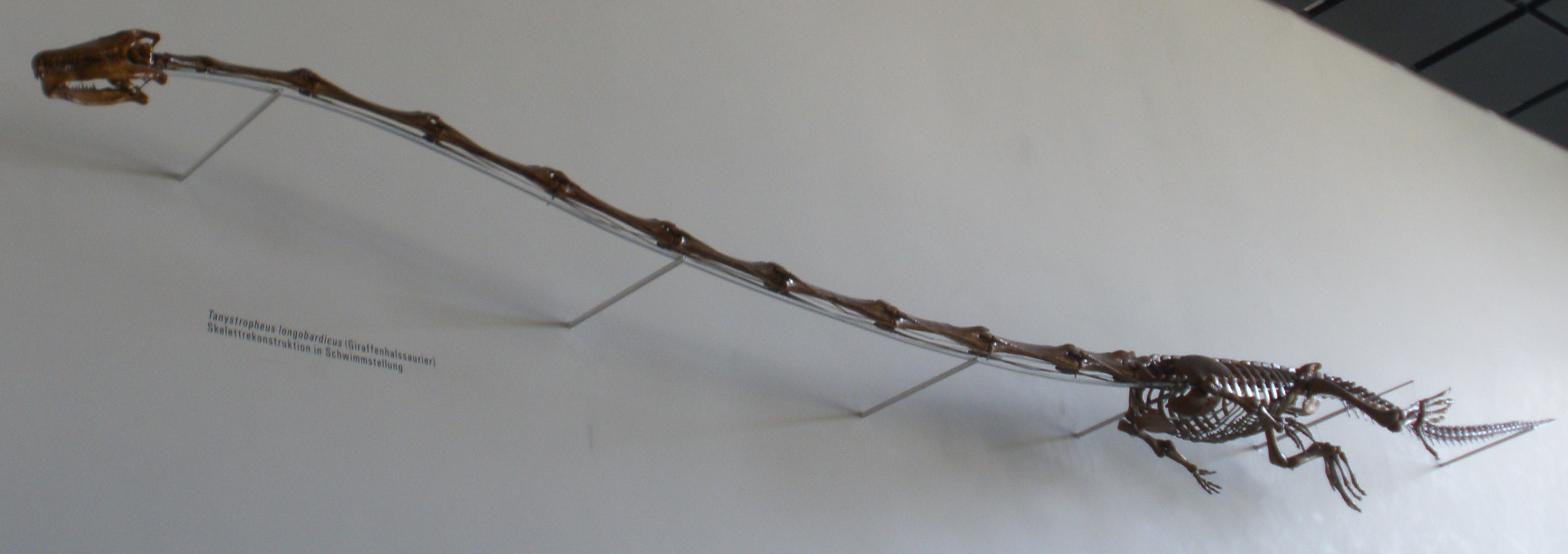
In the shallow tropical seas of the Middle Triassic, roughly 240 million years ago, a reptile patrolled the waterways with a body plan so strange that paleontologists initially thought it was a flying creature. Tanystropheus had a neck so long it defied logic, its 13 elongated vertebrae stretching further than its torso and tail combined. For over a century, this animal baffled scientists, who debated whether it lived on land or in water, whether it was a pterosaur or a lizard, and whether its ridiculous neck was a liability or a superpower.
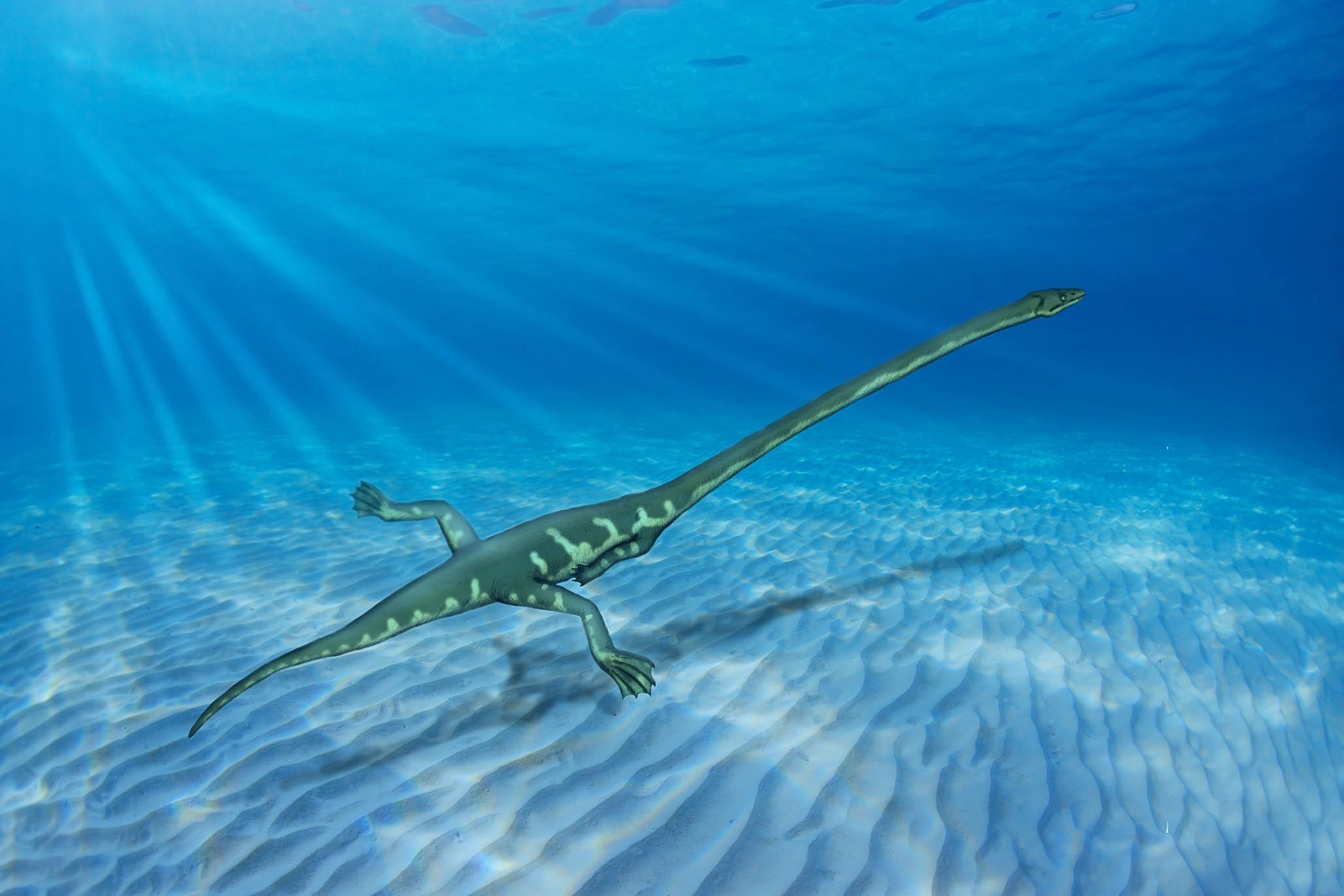
The answer, pieced together through decades of fieldwork and a landmark 2020 study, is that Tanystropheus was a semi-aquatic ambush predator, perfectly adapted to lurking in the shallows and striking at fish with its extended neck like a biological harpoon. It represents one of evolution's most creative experiments in body design, a lineage that pushed the limits of vertebrate anatomy before vanishing entirely by the Late Triassic.
A Name Mistaken for Wings
The story of Tanystropheus begins with confusion. In 1886, Italian paleontologist Francesco Bassani described a fragmentary fossil from Monte San Giorgio, a limestone ridge straddling the Italy-Switzerland border. The specimen bore unusual tricuspid teeth and elongated bones that Bassani interpreted as wing finger bones of a pterosaur. He named it Tribelesodon longobardicus, a name that would stick for over 40 years.
It was not until the late 1920s, when University of Zurich paleontologist Bernhard Peyer began systematic excavations at Monte San Giorgio, that the truth emerged. The so-called "wing bones" were actually neck vertebrae, and Tribelesodon was a long-necked land reptile, not a flying pterosaur at all. The fossils were reassigned to the genus Tanystropheus, named by Hermann von Meyer in 1855 for similarly elongated vertebrae found in Germany. Tragically, the original holotype specimen was destroyed during the Allied bombing of Milan in World War II.
Monte San Giorgio itself is a UNESCO World Heritage Site, famous for its Besano Formation lagerstätte, which preserves a snapshot of a Late Anisian to Early Ladinian marine ecosystem. The site has yielded hundreds of Tanystropheus fossils, including nearly complete skeletons, making it one of the best-described non-archosauriform reptiles of the Triassic.
Two Species, One Ridiculous Neck
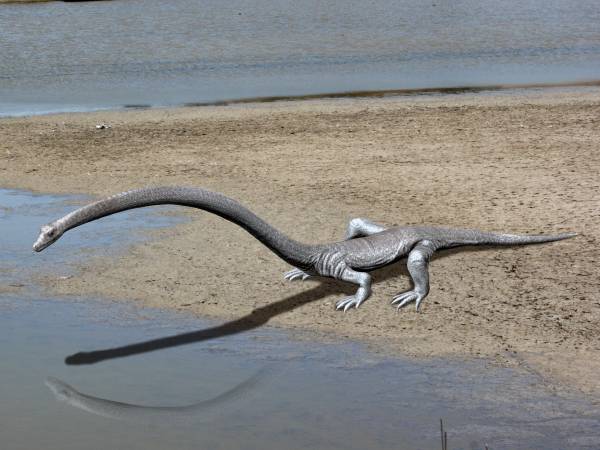
A 2020 study by Spiekman and colleagues revealed that Monte San Giorgio's Tanystropheus fossils actually represent two distinct species, not just size variants of one. The smaller species, T. longobardicus, reached about 2 meters (6.6 feet) in total length and possessed three-cusped teeth at the back of its jaws, suited for gripping slippery fish. Histological analysis of one specimen confirmed it was a fully grown adult despite its small size, ruling out the possibility that small fossils were simply juveniles.
The larger species, named T. hydroides after the Hydra of Greek mythology, was a dramatically bigger animal. Adults reached an estimated 5 to 6 meters (16 to 20 feet) in length, with the neck alone accounting for roughly half that span. T. hydroides had a broader skull armed with large, interlocking curved fangs at the front, strikingly reminiscent of the dentition found in later plesiosaurs. This convergence suggests both groups faced similar selective pressures when hunting aquatic prey.
Despite its impressive length, Tanystropheus was remarkably lightweight. Mass estimates for a 3.6-meter individual range from roughly 33 to 75 kilograms (73 to 165 pounds), far lighter than a crocodile of similar length. The neck was stabilized by long cervical ribs and tendons that kept it rigid without adding excessive weight, an engineering solution that allowed the animal to extend its neck horizontally without it drooping into the water.
Ambush Predator of the Shallows
For decades, paleontologists debated whether Tanystropheus was primarily terrestrial or aquatic. Its limbs lacked the pronounced adaptations seen in fully aquatic reptiles like plesiosaurs, yet its neck was too stiff and unwieldy for efficient terrestrial locomotion. The 2020 study settled the debate with a nuanced picture: Tanystropheus was an animal equally at home on shore and in the water, but its hunting strategy depended on water.
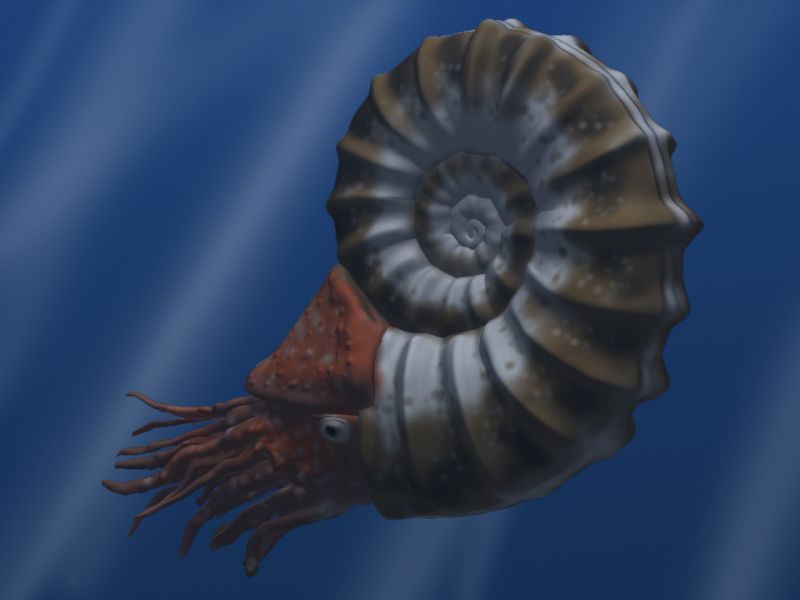
Imagine a Middle Triassic coastline. Shallow, warm seas lap against muddy banks dotted with small archosaur reptiles and early dinosaurs. Beneath the surface, small fish dart among ammonites and early branchiopod crustaceans, the same group that includes modern Triops. Hidden among the rocks and sediment, a Tanystropheus lies still, its body concealed, only its neck and head breaking the surface at an angle. A fish swims within range, and the neck swings laterally in a quick arc, the three-cusped teeth clamping onto the prey before it can escape.
This ambush strategy explains the stiffness of the neck. Unlike the flexible necks of plesiosaurs, which could sweep in broad arcs, Tanystropheus relied on lateral movement from a fixed position. The rigid neck acted as a lever, concentrating force at the skull for a rapid, precise strike. The musculature of the hindlimbs and tail base was powerful enough for short bursts of active swimming, but the animal's primary mode was patient stillness.
Global Distribution, Triassic Extinction
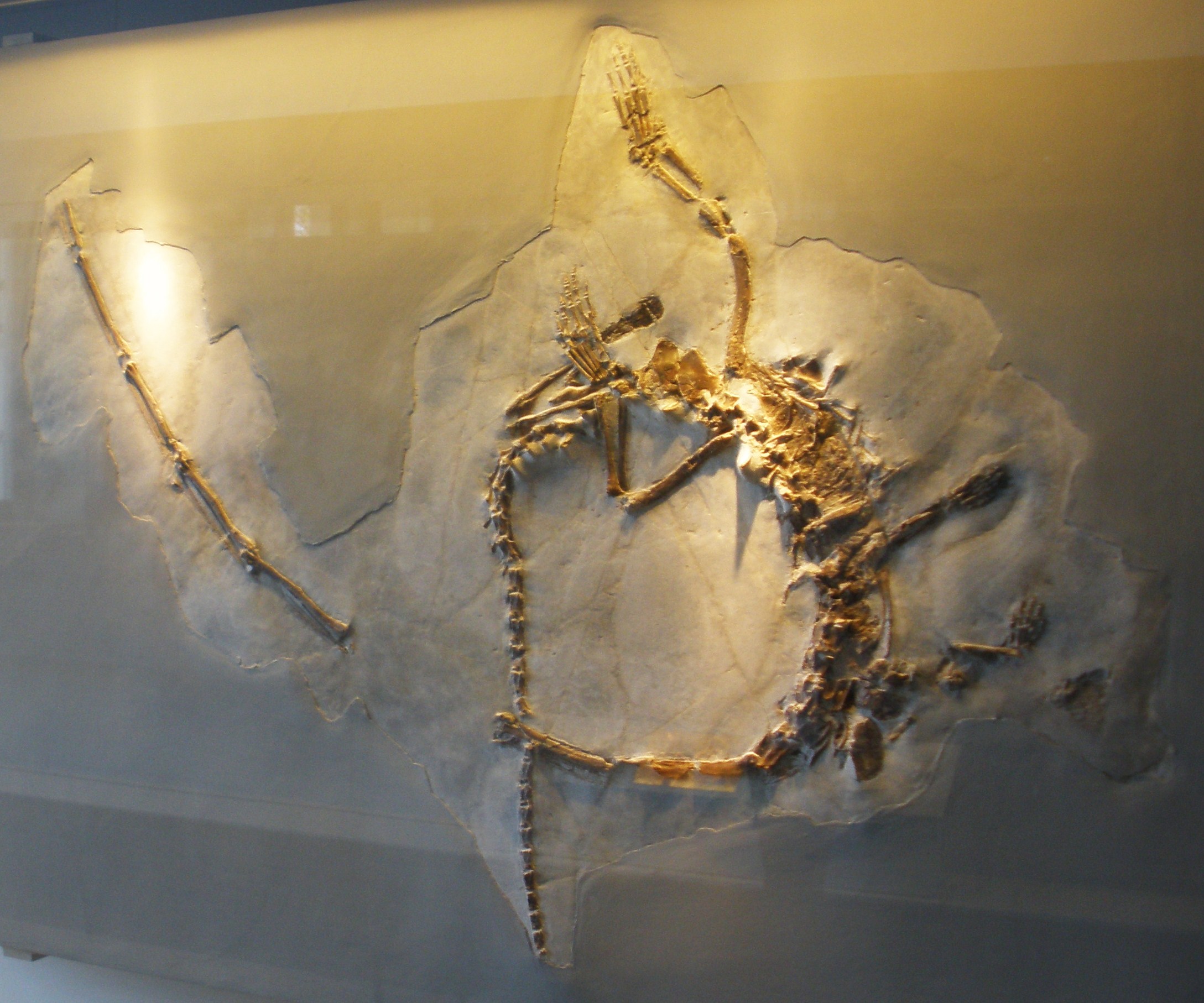
While Monte San Giorgio remains the richest source of Tanystropheus fossils, the genus had a surprisingly wide distribution. Over 500 specimens have been recovered from a single bonebed near the village of Miedary in Poland, representing the largest known concentration of these animals. Fossils have also been found in China's Guizhou province, in the freshwater deposits of Nova Scotia, Canada, and in Israel's Makhtesh Ramon crater. This geographic spread confirms that Tanystropheus was a successful and widespread genus during the Middle Triassic.
The latest confirmed fossils date to the early Carnian stage of the Late Triassic, roughly 235 million years ago, after which the genus disappears from the fossil record. Some tantalizing reports from Petrified Forest National Park in Arizona describe possible Tanystropheus-like vertebrae from rocks as young as the Norian stage, around 220 million years ago. If authentic, these would indicate that a remnant population survived inland for millions of years after its marine relatives had vanished.
The extinction of Tanystropheus was likely driven by changing ocean chemistry and the rise of more advanced marine predators. As the Triassic progressed, plesiosaurs and ichthyosaurs diversified into the aquatic niches that Tanystropheus had occupied. Its strange body plan, once a competitive advantage, became a liability in a world that increasingly favored speed and agility over patient ambush.
A Living Legacy in Triassic Waters
The story of Tanystropheus reminds us that evolution does not always produce elegant solutions. Sometimes it produces bizarre, seemingly impractical designs that nonetheless work remarkably well for millions of years. In the same Triassic waters where Tanystropheus hunted, the ancestors of modern Triops were already thriving, their own ancient body plan proving even more durable than the long-necked reptile's. While Tanystropheus vanished by the end of the Triassic, Triops persists to this day, unchanged in fundamental form for over 200 million years.
Next time you hold a Triops egg in your hand, consider the world it comes from: a world of long-necked reptiles patrolling the shallows, of armored fish like Dunkleosteus in deeper waters, of early dinosaurs testing the land. The Triops in your tank is a survivor of that world. Tanystropheus, for all its spectacular strangeness, is not.