Published August 18, 2026, 15:05 by the Triops.me Editorial Team · Back to Articles
Tardigrades: The Indestructible Water Bears
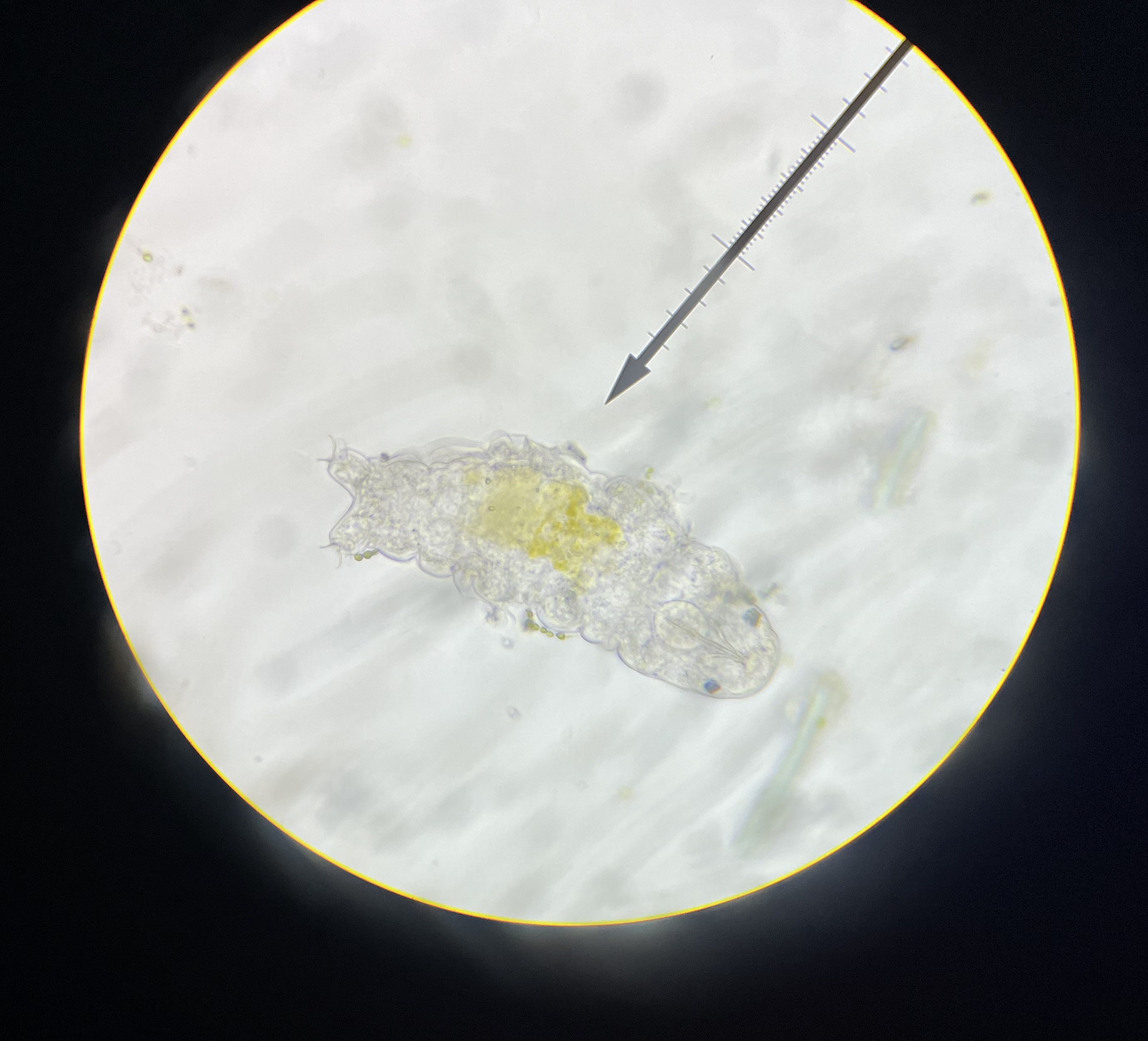
Somewhere between invisible and adorable lives a creature that defies everything we know about survival. Tardigrades, commonly called water bears or moss piglets, are microscopic animals measuring 0.1 to 1.5 millimeters long. They have eight stubby legs, a round body, and no skeleton. They look like tiny, wrinkled gummy bears walking through a droplet of water. And they are, by every measurable standard, the toughest animals on Earth.
First described by German zoologist Johann August Ephraim Goeze in 1773, tardigrades belong to the phylum Tardigrada. The name means "slow stepper," a reference to their lumbering gait. There are over 1,300 known species, found on every continent, from Antarctic moss beds to tropical rainforest canopies, from ocean sediments to the roofs of buildings in Tokyo.
Anatomy of a Microscopic Marvel
A tardigrade's body divides into a head and four trunk segments, each with a pair of claw-tipped legs. The mouth contains piercing stylets used to puncture plant cells, algae, and small nematodes, then suck out the contents. Despite their simplicity, tardigrades have a complete digestive system, a ventral nerve cord, and a brain-like cluster of neurons.
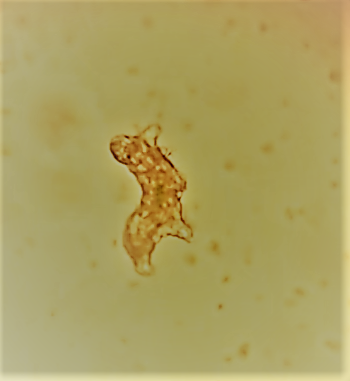
They shed their cuticle up to four times as they grow. Females lay eggs that hatch into miniature adults, bypassing any larval stage. A tardigrade is born looking like a tardigrade, and it dies looking like a tardigrade, albeit slightly bigger.
The Tun: Nature's Pause Button
The tardigrade's most extraordinary ability is cryptobiosis, specifically a state called tun formation. When conditions become intolerable, a tardigrade retracts its legs, curls into a compact barrel shape, and expels nearly all the water from its body. Its metabolism drops to less than 0.01% of normal. In this desiccated state, it becomes functionally immortal, not because it stops aging, but because there is no metabolism left to age.
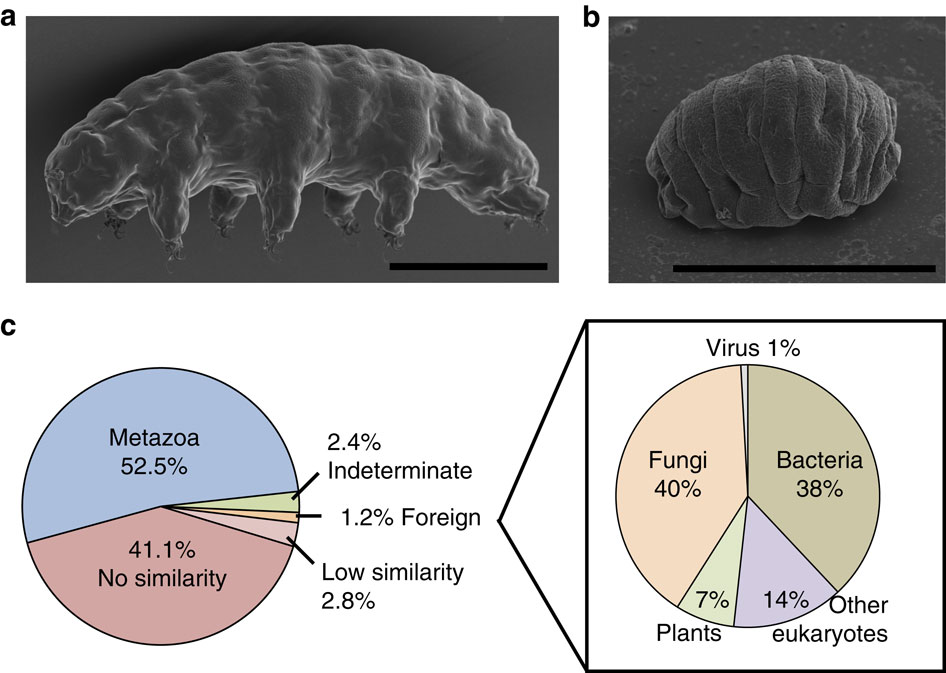
Scientists have revived tardigrades from tun states lasting decades. In 2007, tardigrades survived 10 days in the vacuum and radiation of outer space aboard a European Space Agency mission. Other experiments have shown them enduring temperatures from near absolute zero (-272 degrees Celsius) to above boiling (150 degrees Celsius), pressures six times greater than the deepest ocean trench, and radiation doses hundreds of times lethal to humans.
Species, Habitats, and Daily Life
The most studied species is Milnesium tardigradum, a predatory water bear found worldwide. Echiniscus species carry decorative spines and plates on their backs. Macrobiotus contains many common moss-dwelling species. Some marine tardigrades live in saltwater sediments and have never been observed in a tun state, suggesting their resilience is more nuanced than the popular narrative implies.
Tardigrades feed on plant cells, algae, bacteria, and small animals. They live in the thin film of water surrounding mosses, lichens, and soil particles. A single handful of forest moss can contain hundreds of individuals. Some females store sperm for months, laying fertilized eggs long after their last encounter with a male.
Tardigrades and Triops: Parallel Survivors
Triops and tardigrades share an unlikely kinship. Both are ancient lineages that survived multiple mass extinctions. Both rely on dormant life stages: Triops through desiccation-resistant eggs that wait years for rain, tardigrades through tun formation. But their strategies diverge. Triops eggs are multicellular capsules carrying a complete embryo. Tardigrade tun formation is a whole-body shutdown, reducing the organism to a state barely distinguishable from death.
Where Triops conquered the temporary pools of the Triassic, tardigrades colonized every wet microhabitat on the planet. Together, they represent two different answers to the same question: how do you survive when the world tries to kill you?
Why Tardigrades Matter
Tardigrades are not just curiosities. Their cryptobiosis mechanisms have implications for medicine, biotechnology, and astrobiology. The proteins that protect tardigrade cells during desiccation, called tardigrade-specific intrinsically disordered proteins (TDPs), are now being studied for their ability to stabilize vaccines without refrigeration. If tardigrade biology can be harnessed, it could transform how we store medicines in regions without reliable cold chains.
They also challenge our definitions of life and death. A tun-state tardigrade has no detectable metabolism, no movement, no response to stimuli. By every classical definition, it is dead. Yet add water, and within hours it walks again.
From a single drop of pond water to the vacuum of space, tardigrades have mapped the boundaries of animal survival. They are tiny, ubiquitous, and nearly indestructible. In the long history of life on Earth, few organisms have played the survival game as well as the water bear.