Published August 26, 2026, 22:19 by the Triops.me Editorial Team · Back to Articles
Terror Birds: South America's Feathered Apex Predators
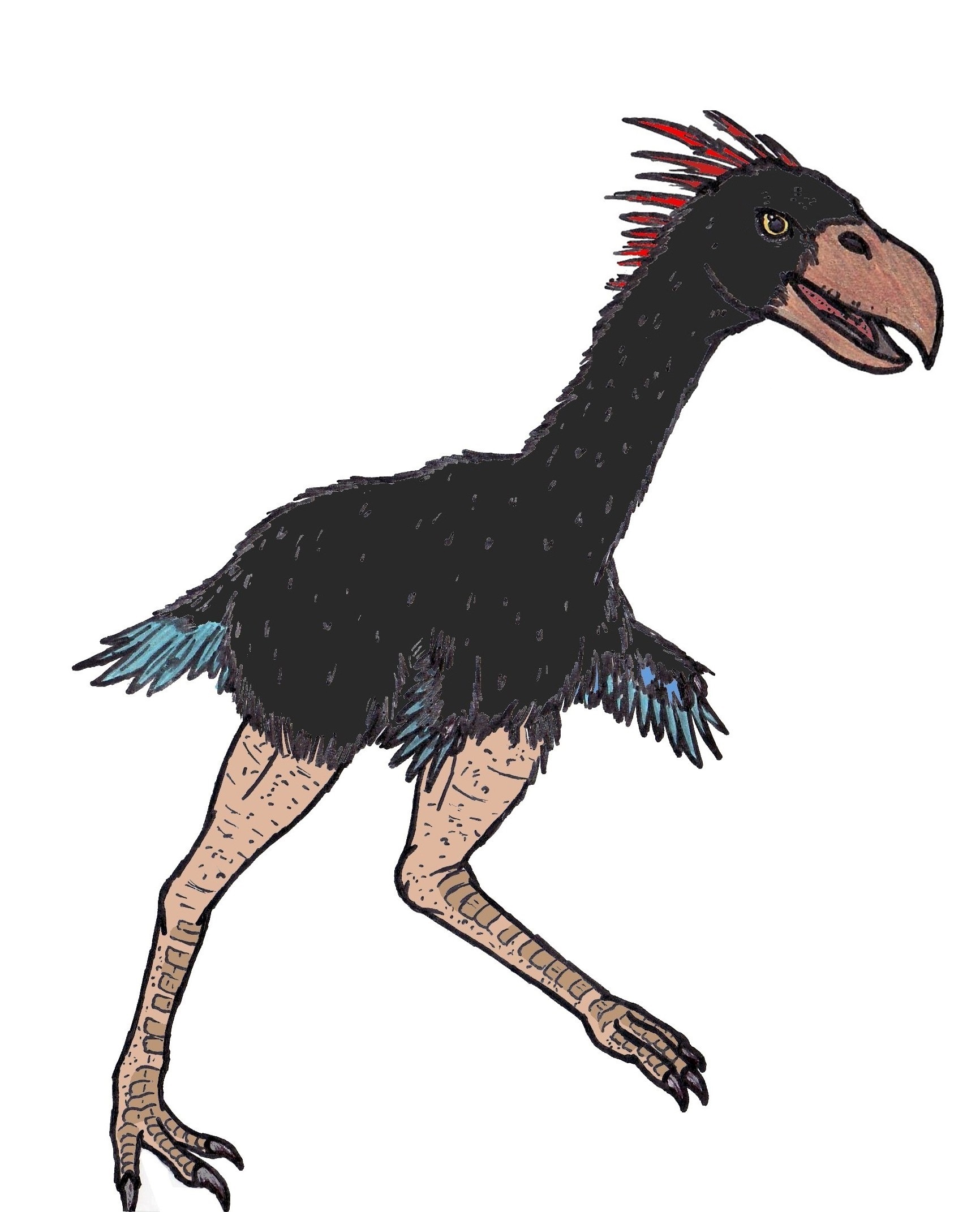
For roughly 60 million years, the largest predators in South America were not mammals, reptiles, or crocodilians. They were birds. The Phorusrhacidae, commonly known as terror birds, were a family of enormous, flightless, carnivorous birds that dominated the continent from the Paleocene through the Pleistocene. Standing up to three meters tall, with massive hooked beaks and powerful legs built for chasing down prey, these feathered hunters occupied a niche strikingly similar to the dromaeosaurid dinosaurs that had vanished 65 million years earlier.
The first terror bird fossil was discovered in 1887 in Argentina by Florentino Ameghino, who named the animal Phorusrhacos longissimus. Since then, over 15 species have been described across South America and, in one remarkable case, North America. Their fossils range from Patagonia to Florida, spanning a geological story that includes continental isolation, the rise of new ecosystems, and one of the most dramatic land bridge events in Earth's history.
Built to Kill
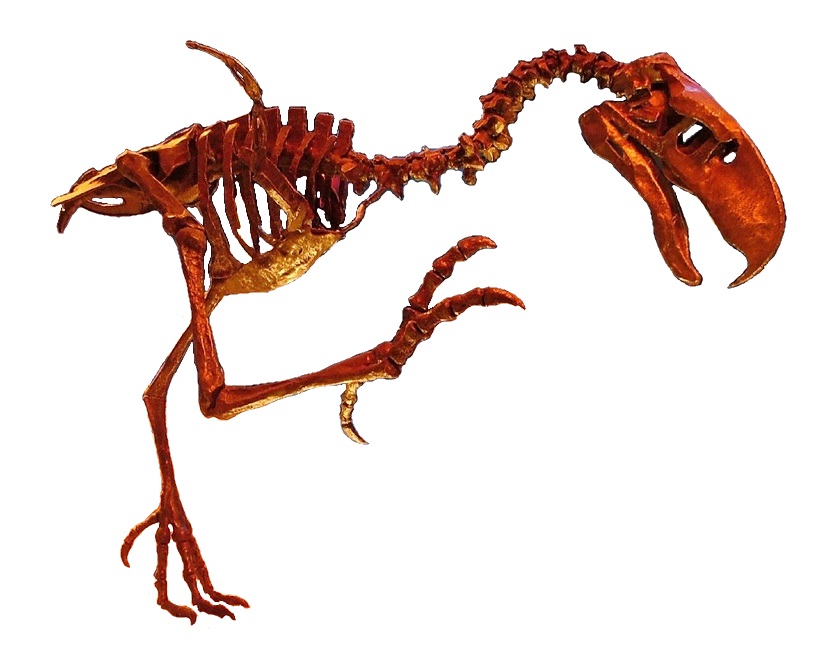
Terror birds were engineered for predation from head to toe. Their skulls, which could reach 60 centimeters in length, were dominated by a deep, laterally compressed beak that terminated in a sharp, hooked tip. Biomechanical studies suggest that the beak functioned like a hatchet. A terror bird would raise its head, then drive the beak downward with tremendous force, delivering a killing blow that could crush bone and pierce thick hide. CT scans of fossil skulls reveal internal strut-like structures that reinforced the beak against impact forces, much like the shock-absorbing architecture found in woodpecker skulls.
Their legs tell the rest of the story. Long, muscular, and ending in three-toed feet with reduced claws, terror bird legs were built for sustained running. Trackway evidence and limb proportions suggest that some species could reach speeds of 50 kilometers per hour, comparable to an ostrich. Unlike ostriches, however, terror birds used their legs offensively. Fossil evidence shows stress fractures on the tarsometatarsus consistent with powerful kicking, and it is widely believed that terror birds delivered devastating kicks to knock prey off balance before finishing them with the beak.
The Giants of the Family
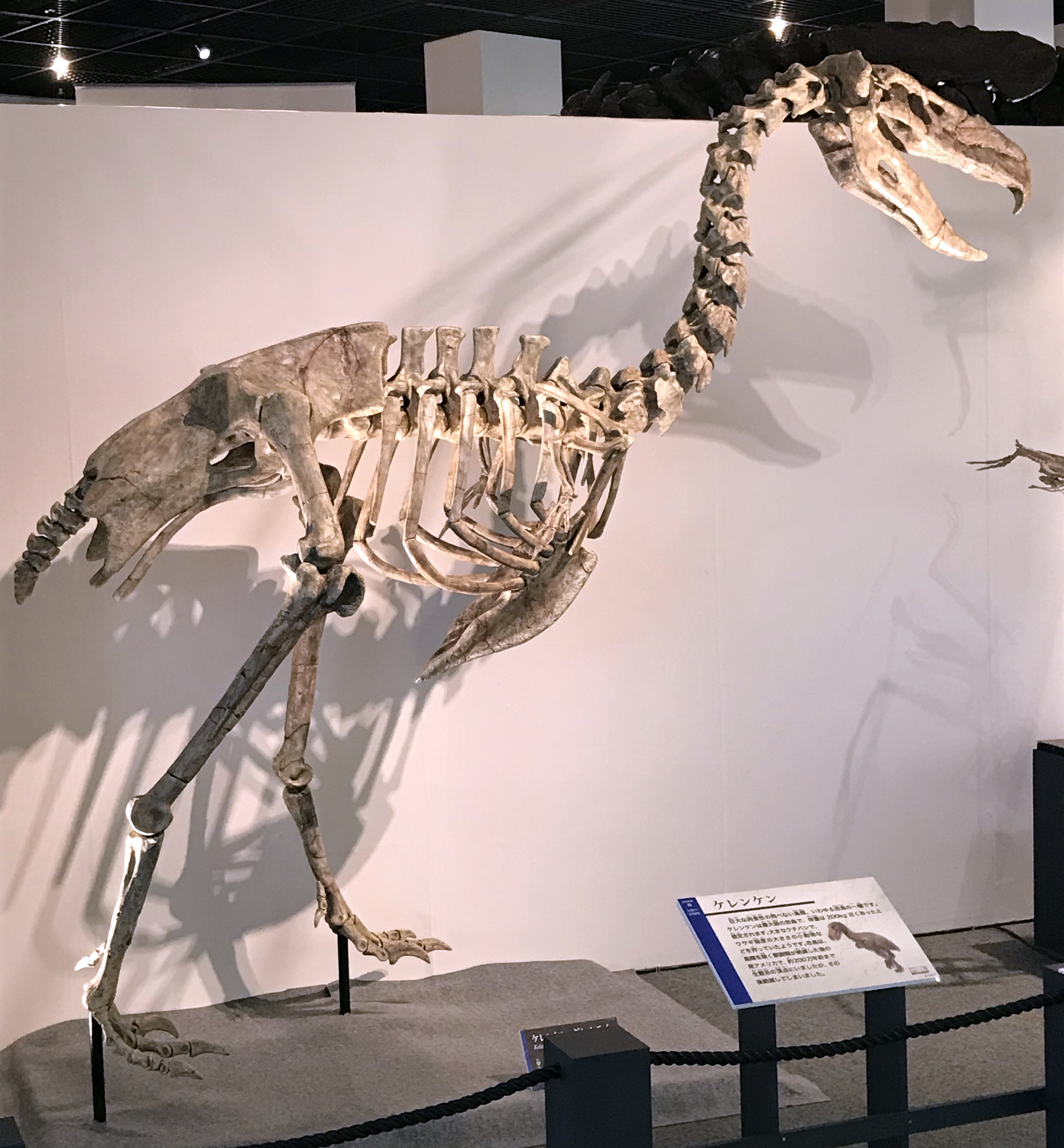
Not all terror birds were the same size, but the largest were genuinely terrifying. Kelenken guillermoi, described from a 2004 fossil find in Patagonia, holds the record for the largest skull of any known bird, living or extinct, at approximately 72 centimeters. Its overall height is estimated at around 3 meters, making it roughly the same height as a giraffe's shoulders. The sheer size of the skull and beak suggests that Kelenken could deliver bite forces exceeding those of any living land predator.
Phorusrhacos longissimus, the type species, was slightly smaller at around 2.5 meters tall but was likely the most widespread terror bird in Patagonia during the Miocene. Its fossils are found in abundance in the Santa Cruz Formation, suggesting it was a common member of its ecosystem. Meanwhile, Devincenzia pozzi, known from Uruguay and northern Argentina, reached similar dimensions and may have been a contemporary competitor.
Titanis walleri holds a special place in terror bird history. It is the only species known to have crossed from South America into North America, and its fossils have been found in Texas and Florida. Though smaller than its Patagonian cousins, at about 2.5 meters tall, Titanis was still a formidable predator. Its presence in North America demonstrates just how far these birds were willing to travel, and how competitive they were with placental predators like dire wolves and saber-toothed cats.
The Great American Interchange
The story of terror birds is inseparable from the Great American Interchange, one of the most significant biogeographic events of the Cenozoic. For most of the Age of Mammals, North and South America were separated by the Atlantic Ocean and the growing Isthmus of Panama. South America evolved its own unique fauna, including not only terror birds but also giant ground sloths, toxodonts, and notoungulates. When the land bridge finally formed approximately three million years ago, animals from both continents poured through.
Terror birds were among the South American emigrants. Titanis walleri reached the southern United States and may have coexisted with North American predators for hundreds of thousands of years. However, the interchange ultimately favored the northern arrivals. Placental carnivores, including canids, felids, and ursids, proved to be more adaptable and more efficient competitors. Terror birds vanished from North America by the early Pleistocene, and from South America by roughly 1.8 million years ago.
The Last Terror Birds
The extinction of terror birds was not instantaneous but rather a gradual retreat. In South America, they persisted in open grassland and savanna habitats long after forests had been altered by climate change. The youngest known terror bird fossils, from Argentina, date to the late Pleistocene, suggesting that these birds were still alive when early humans arrived on the continent. Whether hunting pressure from human hunters played a role in their final disappearance remains debated, but the combination of habitat loss, competition with invading mammals, and climate instability almost certainly sealed their fate.
Today, the closest living relatives of terror birds are the seriemas, small terrestrial predators found in the grasslands and open woodlands of South America. Standing about 80 centimeters tall, seriemas are impressive hunters in their own right, capable of killing snakes, lizards, and small mammals. They retain the powerful legs and aggressive temperament of their giant ancestors, though they lack the sheer size. Watching a seriema sprint across the pampas, one can almost imagine the ghost of a much larger bird, feathers ruffling in the wind, scanning the horizon for prey.
Terror Birds in Context
Terror birds remind us that evolution does not favor a single body plan for apex predation. Dinosaurs did it with scales and claws, mammals did it with teeth and speed, and birds did it with feathers and hatchet beaks. The fact that a lineage of birds could dominate an entire continent for 60 million years, outlasting multiple mass extinction events and competing with some of the most fearsome mammals ever to live, speaks to the remarkable adaptability of avian body plans. They are a testament to the idea that the most successful predators are not defined by what they are, but by what they can do.
For those interested in the broader story of prehistoric South America, terror birds are just one chapter. The continent's unique evolutionary history produced some of the strangest and most impressive animals the world has ever seen, from armored toxodonts to giant glyptodonts. Each of these creatures played a role in an ecosystem unlike anything found elsewhere on Earth, a world where birds could be kings and mammals were still finding their footing.