Published 2026-09-19 · by the Triops.me Editorial Team · Back to Articles
Thylacosmilus: South America's Marsupial Saber-Tooth
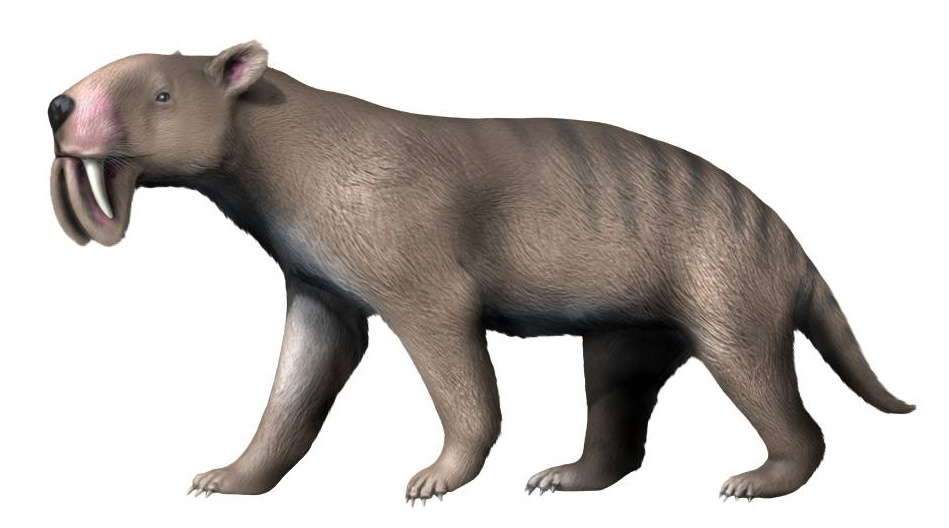
Picture a sabertoothed predator. Chances are you pictured Smilodon, the famous saber-toothed cat of the Ice Age. But on the other side of the world, separated from the cats by more than 160 million years of evolution, another animal grew the same fearsome blades. Its name was Thylacosmilus atrox, and here is the twist: it was not a cat, not even remotely. This South American predator belonged to the metatherians, the group that includes today's marsupials. It was, roughly speaking, a pouched saber-tooth, and it may be the most striking case of convergent evolution in the entire fossil record.
A Saber-Tooth by Any Other Family Tree
Thylacosmilus lived during the Late Miocene and Pliocene epochs, roughly 9 to 3 million years ago, roaming the open woodlands and grasslands of Argentina. Fully grown adults likely weighed around 80 to 100 kilograms, comparable to a modern jaguar. The first fossils were described in 1934, and mounted skeletons now stand in major museums from Buenos Aires to New York.
Its relatives, the sparassodonts, were South America's dominant carnivorous mammals for most of the Cenozoic. For tens of millions of years, that continent sat as an island, cut off from North America. In isolation, its predator guild evolved along its own path: no dogs, no bears, no cats. Instead, metatherians filled those roles, producing wolf-like hunters, bear-like omnivores and, in Thylacosmilus, a sabertooth.
Those Teeth Were Something Else
The sabers of Thylacosmilus were not merely big canines. They were unlike the teeth of any other predator. The upper canines were enormous, flattened, curved blades, and their roots ran far back over the top of the skull, in some specimens almost touching behind the eyes. Even stranger, the teeth stayed open at the root and grew continuously throughout the animal's life, like a rodent's incisors. No other known sabertooth did this.
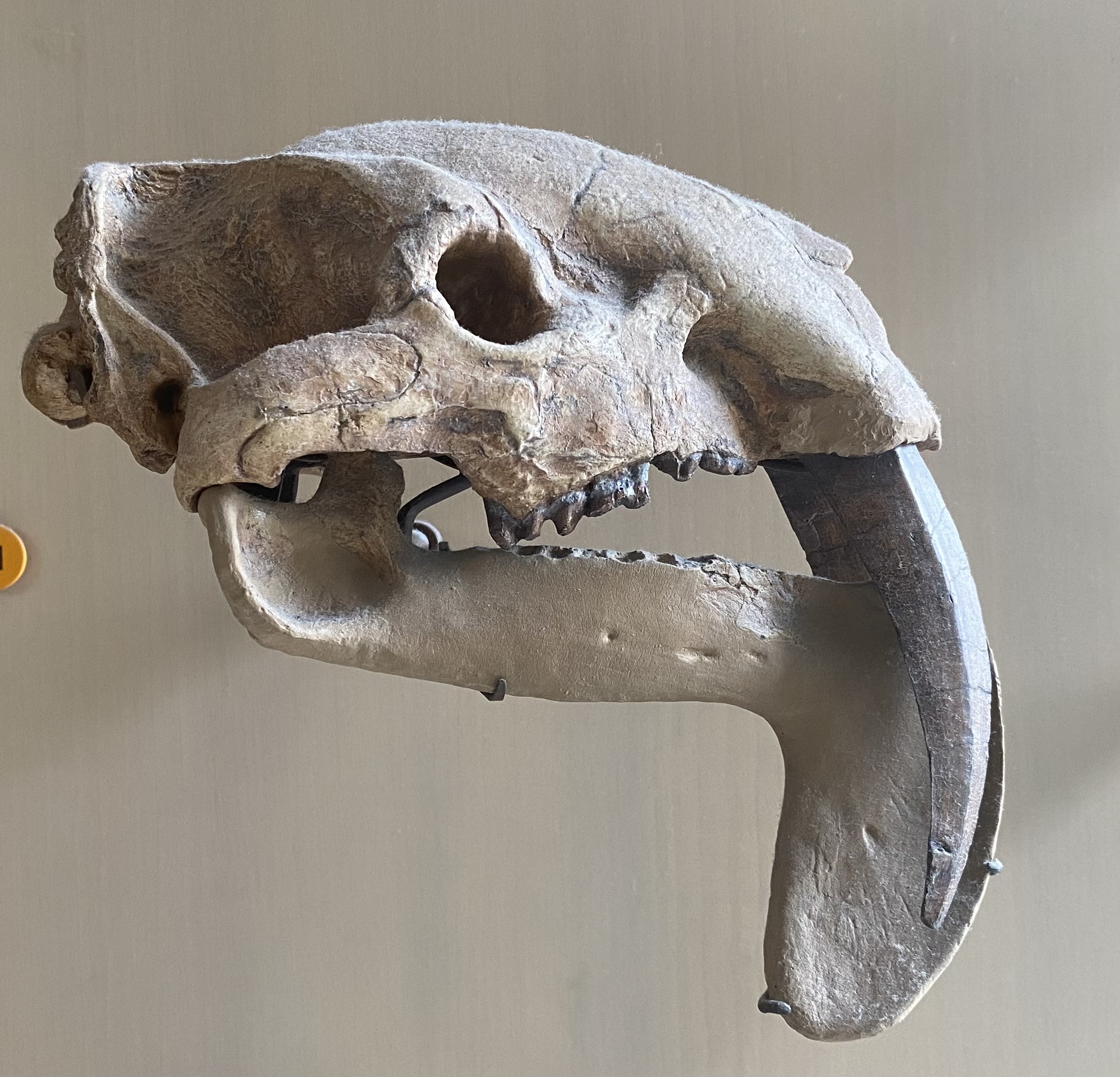
To protect these delicate blades when the mouth was closed, the lower jaw carried a pair of downward-pointing bony flanges, like built-in sheaths. The skull itself was remarkably short and deep, and computer simulations of its bite show something surprising: Thylacosmilus had a weak bite force for its size, far weaker than a big cat's. Instead of biting prey to death, it probably used powerful neck muscles to drive its sabers downward in a slicing stroke, pinning prey with its forelimbs and opening wounds no animal of the era could survive. Researchers call this a canine-shear bite, and it marks Thylacosmilus as a true specialist rather than a generalist.
Its eyes tell another story. The orbits were small, and the huge canine roots crowded the skull so much that vision was likely poorer than in a modern cat. Compensating, the inner ear suggests keen hearing and, along with a good sense of smell, Thylacosmilus probably hunted by ambushing prey at close range, much like today's stealth predators.
Three Saber-Tooths, Zero Family Ties
Here is where it gets fascinating for anyone who loves this site's running themes. Thylacosmilus was one of at least three entirely unrelated lineages that independently evolved saber teeth. The gorgonopsids, such as Inostrancevia, were Permian synapsids, distant relatives of mammals that died out 250 million years ago, long before true mammals existed.
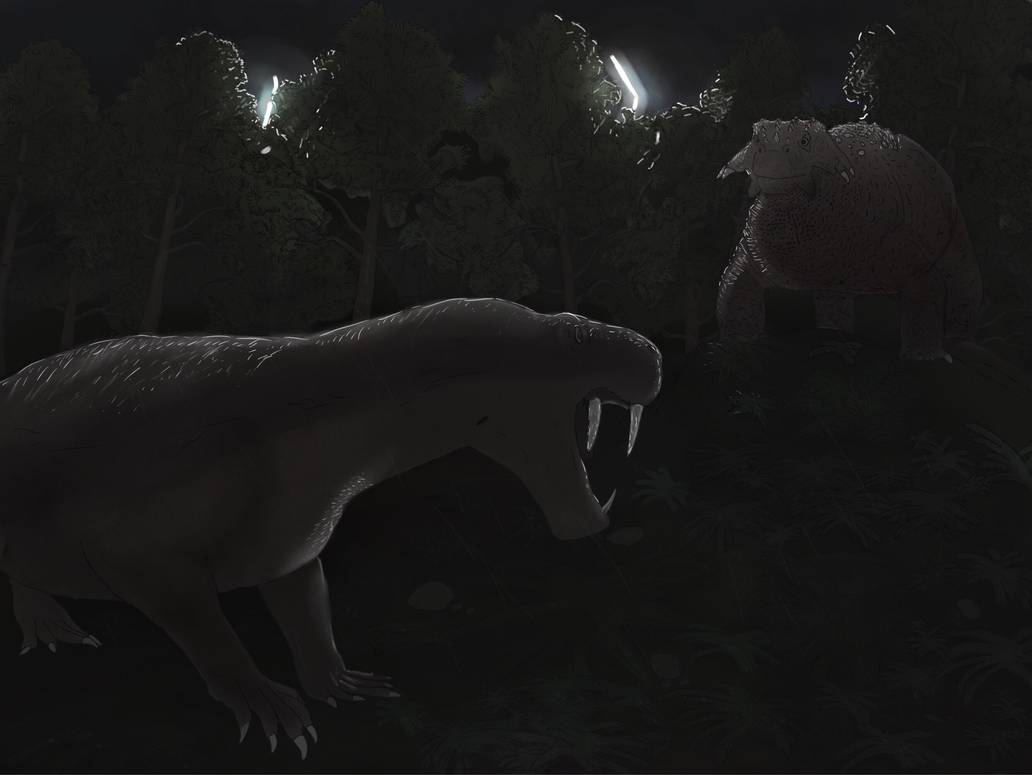
Then came the placental saber-toothed cats, including Smilodon and Megantereon, which stalked the Americas and Eurasia. And in between, on an isolated island continent, the metatherian Thylacosmilus arrived at the same solution. Elongated upper canines, protective jaw flanges, a shortened skull, robust forelimbs and a neck-driven killing bite: all of these features evolved three separate times, in three separate branches of the tree of life.
Evolutionists call this convergent evolution, and the sabertooth body plan is one of its textbook examples. The shape works. Long, thin blades slice through hide and flesh with minimal effort, dispatching large prey quickly and precisely. When the same blueprint keeps reappearing in unrelated animals, it tells us something profound about the physics of predation: there are only so many good ways to be an ambush hunter of big herbivores, and evolution will find them, again and again.
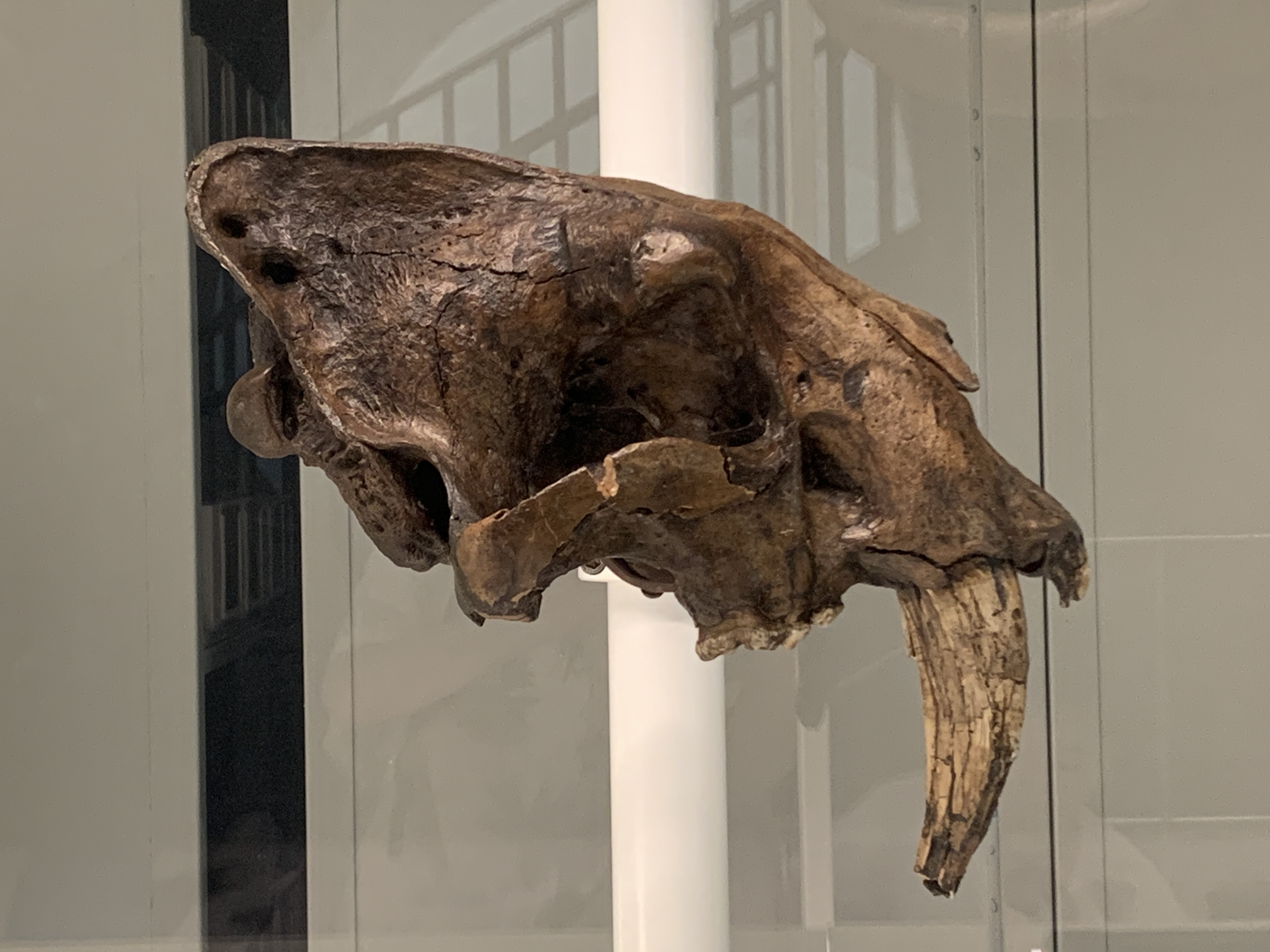
For comparison, the placental Smilodon above shares the long sabers but lacks the ever-growing roots and jaw flanges of Thylacosmilus. The two animals never met, which makes the resemblance even more remarkable. It is the product of parallel experiments conducted on different continents.
The End of an Island World
Thylacosmilus vanished around 3 million years ago, right around the time the Isthmus of Panama rose and connected the two Americas. The Great American Biotic Interchange followed, with placental mammals flooding south. The traditional story says sparassodonts lost out to the incoming northern carnivores, and there is some truth to that, since large sparassodonts disappeared from the fossil record at about this time.
But the details are murkier than a simple tale of conquest. Thylacosmilus appears to have declined before the first big sabertoothed cats reached South America, and climate-driven changes to its open-country habitats may have played a role. Its extreme specialization, those marvelous but high-maintenance blades, may have made it a vulnerable specialist in a changing world. Whatever the exact cause, an entire branch of the carnivorous mammal tree ended with it, leaving no descendants and no modern analogues.
Why It Still Matters
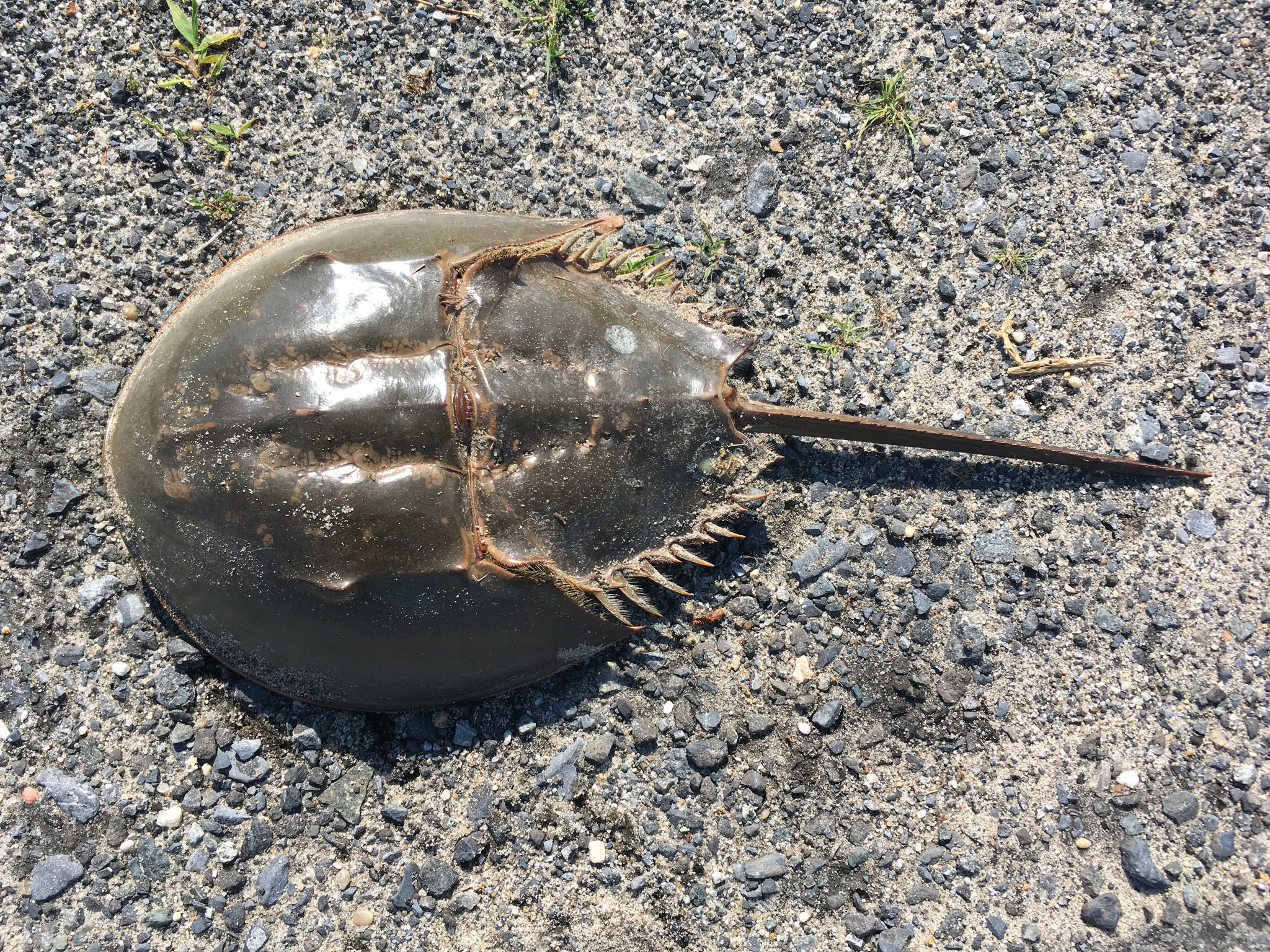
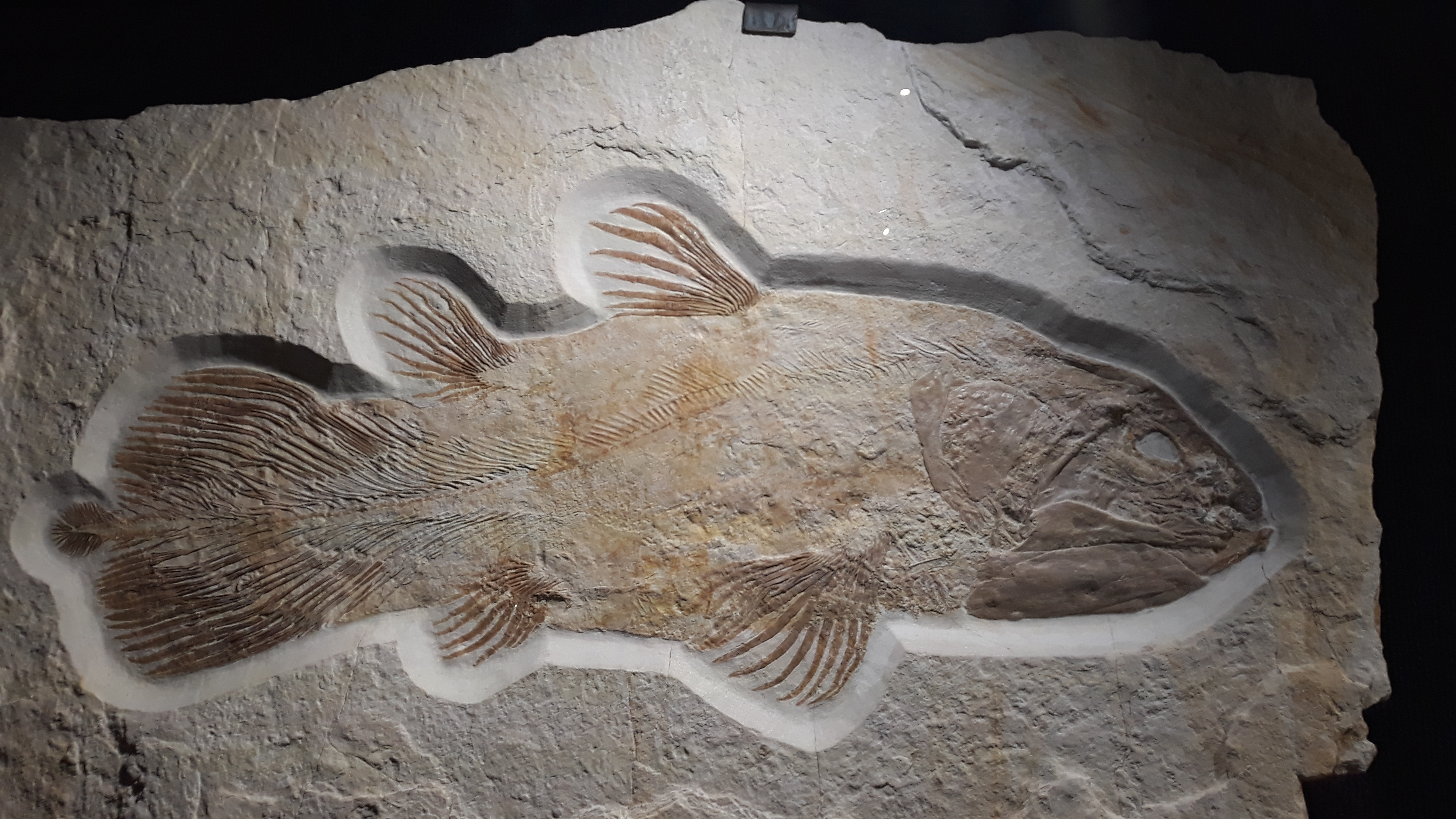
Thylacosmilus is a reminder that the history of life is full of reruns. Just as Triops has survived five mass extinctions by mastering the ephemeral pool, and just as horseshoe crabs and coelacanths carry ancient body plans into the present, Thylacosmilus shows evolution reinventing a winning design from unfamiliar parts. A pouched, saber-fanged, neck-powered predator with poor eyesight and endless teeth sounds like something from a fantasy novel. It was real, it dominated its world for millions of years, and it will never exist again.
The next time a museum label introduces a sabertooth, take a closer look at the skull. If the canines run back over the brow and the jaw carries a pair of bony sheaths, you may be looking at South America's strange answer to the cats: proof that nature writes its best stories twice.