Published September 01, 2026, 12:04 by the Triops.me Editorial Team · Back to Articles
The Tiger Salamander: Nature's Pause Button
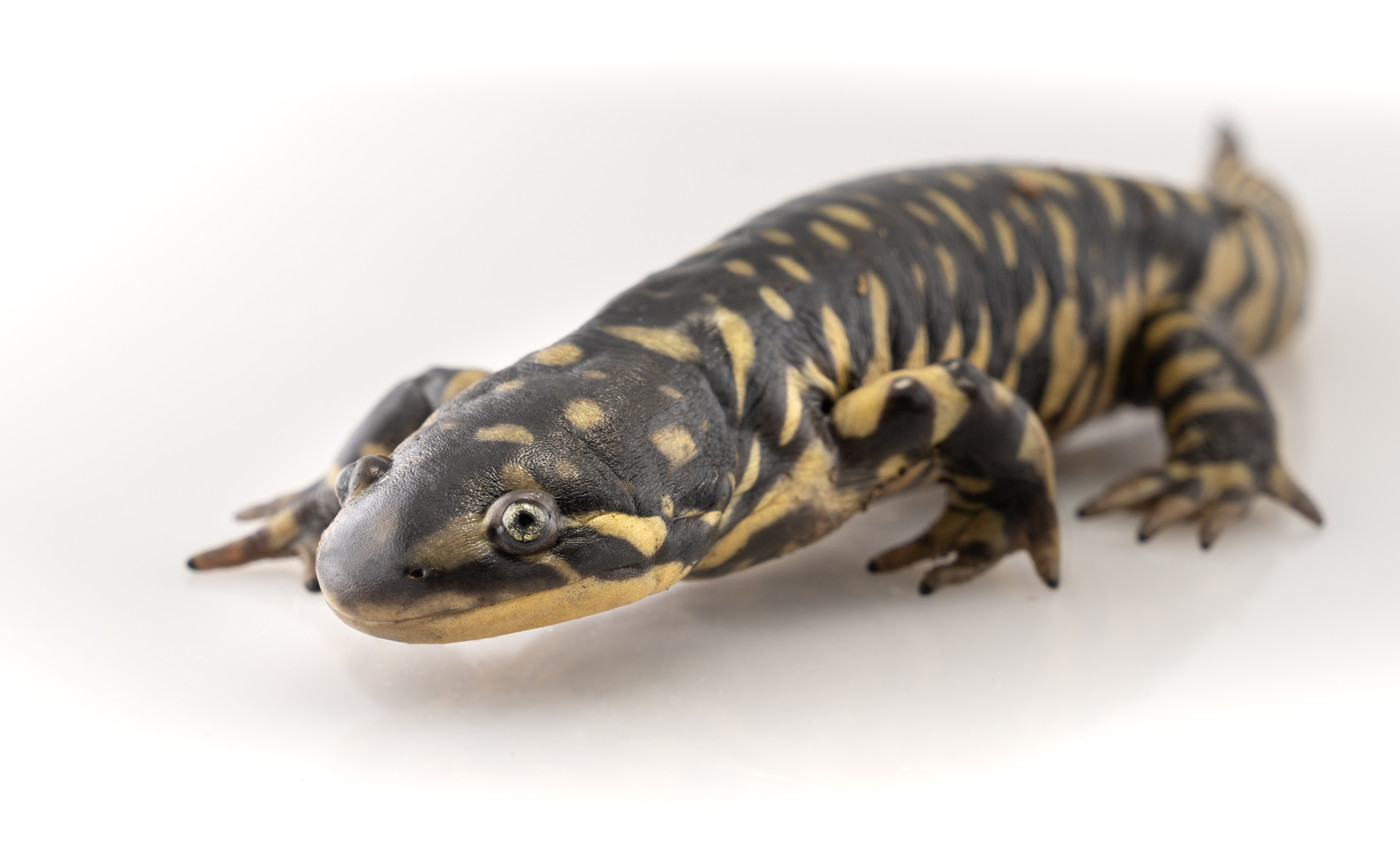
Most animals follow a single developmental path: egg, juvenile, adult. The tiger salamander (Ambystoma tigrinum) has a trick that no dinosaur ever mastered. It can pause its own metamorphosis, remaining in its larval form indefinitely, growing larger and larger while still breathing through feathery gills. This ability, called neoteny, makes the tiger salamander one of the most remarkable survivors on Earth, and one of the closest living links to ancient amphibian body plans that predate the dinosaurs by over 100 million years.
Fossils of the order Caudata, to which all salamanders belong, date back to the early Jurassic, roughly 190 million years ago. But molecular clock estimates push the origins of salamander-like amphibians deep into the Permian period, over 250 million years ago. That means salamander ancestors walked the Earth before the Triassic Period began, before the first dinosaurs appeared, and before the great Permian-Triassic extinction reshaped all life on the planet. The tiger salamander, in its broad outlines, looks remarkably similar to those ancient ancestors: a stout body, a wide flattened head, a thick tail, and four short, sprawling legs.
A Life in Two Worlds
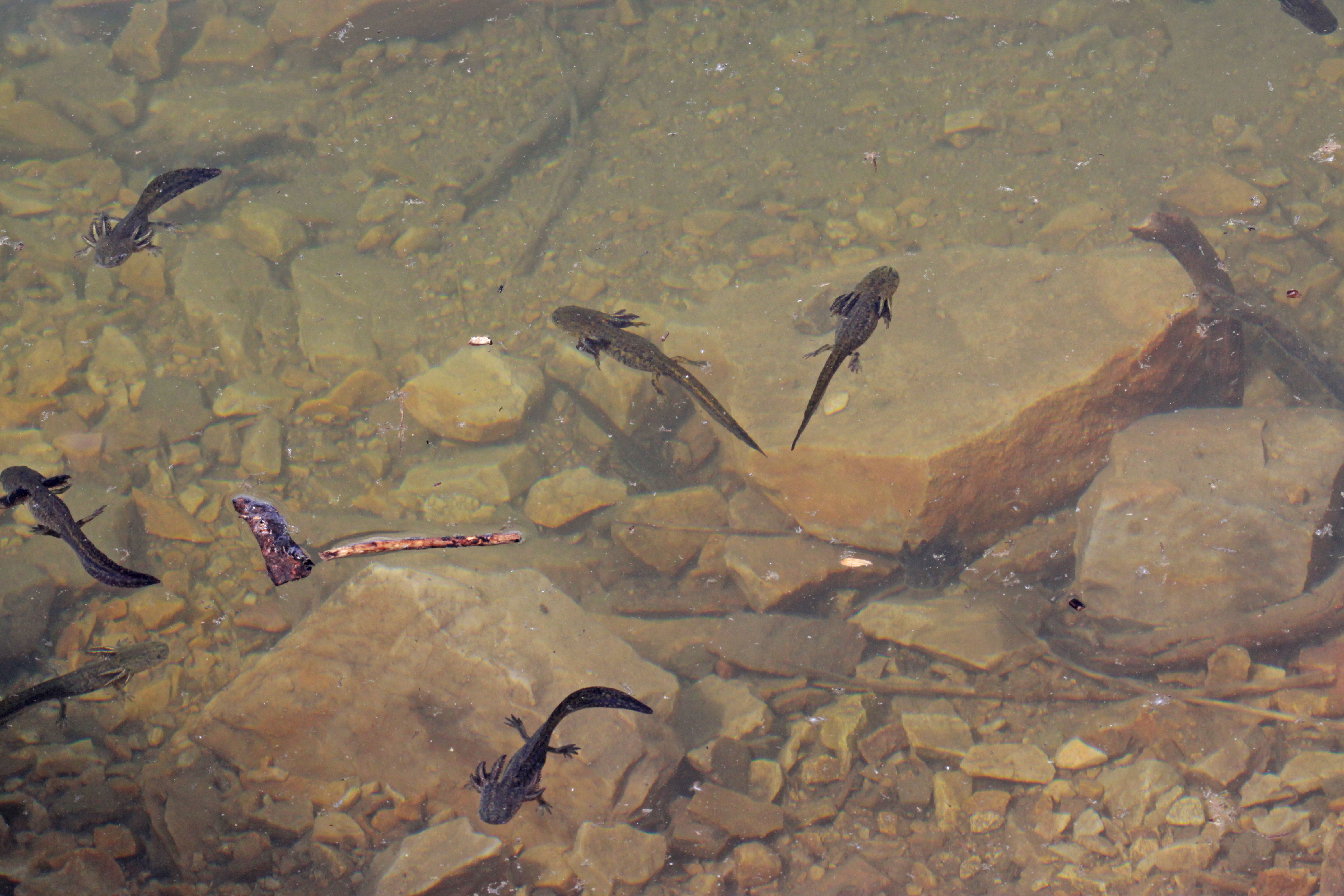
Under normal conditions, tiger salamanders follow a two-phase life cycle. Females lay up to 1,800 eggs in the warm, shallow waters of seasonal ponds and ditches across central and eastern North America. The eggs hatch into aquatic larvae that breathe through external gills and hunt aquatic invertebrates. After several months, the larvae undergo metamorphosis: their gills are absorbed, their skin thickens, and they emerge onto land as burrowing adults that spend most of their lives hidden underground.
But here is where the tiger salamander gets interesting. If environmental conditions are unfavorable, for instance, if the surrounding land is too dry or the water body is permanent and lacks seasonal drying pressure, the larvae may never complete metamorphosis. Instead, they remain aquatic, growing up to 45 centimeters in length, sometimes exceeding the size of their terrestrial adult counterparts. Some populations in the Great Plains and the American Southwest consist entirely of neotenic individuals that never leave the water.
Neoteny: The Evolutionary Escape Hatch
Neoteny is not unique to tiger salamanders, but the species demonstrates its evolutionary implications better than almost any other animal. The axolotl (Ambystoma mexicanum), a close relative that diverged only a few million years ago, takes neoteny to its extreme: wild axolotls never metamorphose at all, retaining their gills, tail fin, and aquatic lifestyle throughout their entire lives. By studying tiger salamanders and axolotls side by side, biologists have been able to study the genetic switch that controls metamorphosis, a mechanism governed primarily by thyroid hormones.
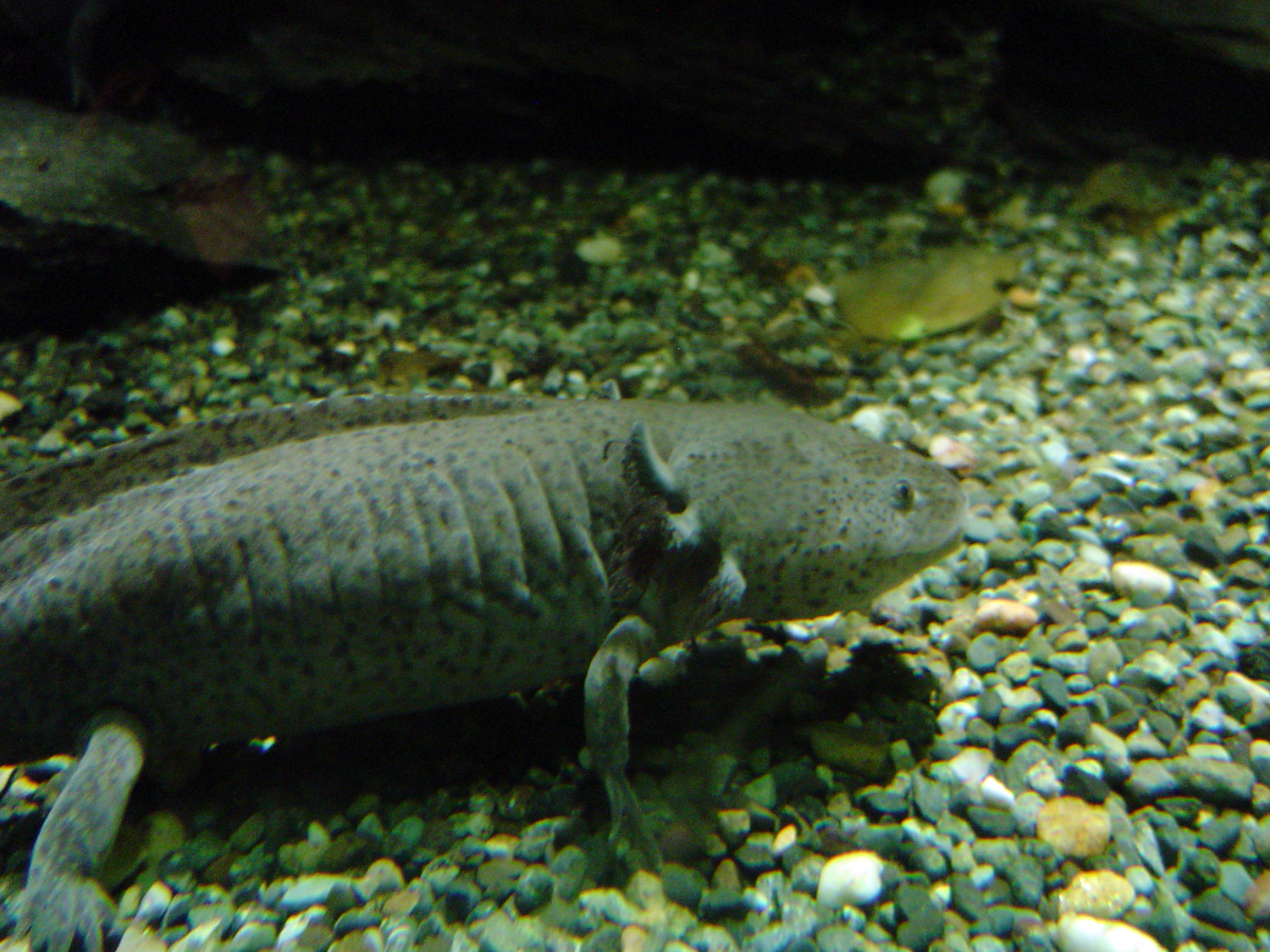
In tiger salamanders, this switch can be flipped on or off depending on the environment. Researchers have found that adding thyroid hormone to the water of neotenic tiger salamander larvae triggers metamorphosis in a matter of days. This flexibility is not a flaw in their biology. It is a survival strategy. In the arid regions of North America, seasonal ponds may dry up or persist for years. A salamander that is locked into a single developmental pathway is one drought away from death. A salamander that can stay aquatic when water is available and move onto land when it is not has twice the options.
The Barred Tiger Salamander and Regional Variation
The western subspecies, often classified as the barred tiger salamander (Ambystoma mavortium), is even more prone to neoteny than the eastern nominate species. In parts of New Mexico, Arizona, and Texas, barred tiger salamanders have formed entirely permanent aquatic populations. Some of these populations are estimated to be thousands of years old, their individuals persisting as larvae that never grow old in the conventional sense, maintaining the body plan of a juvenile while achieving the size and reproductive capability of an adult.
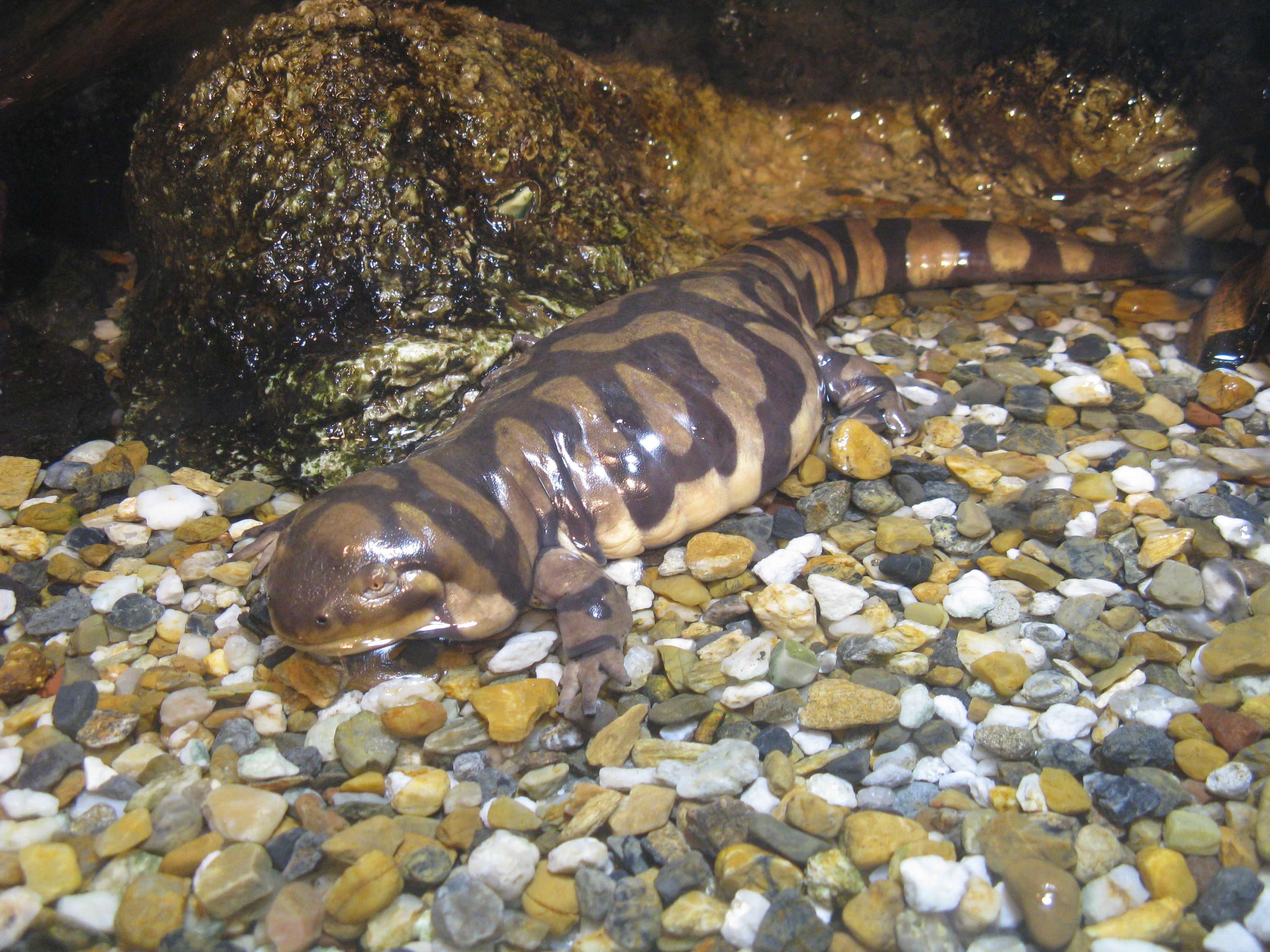
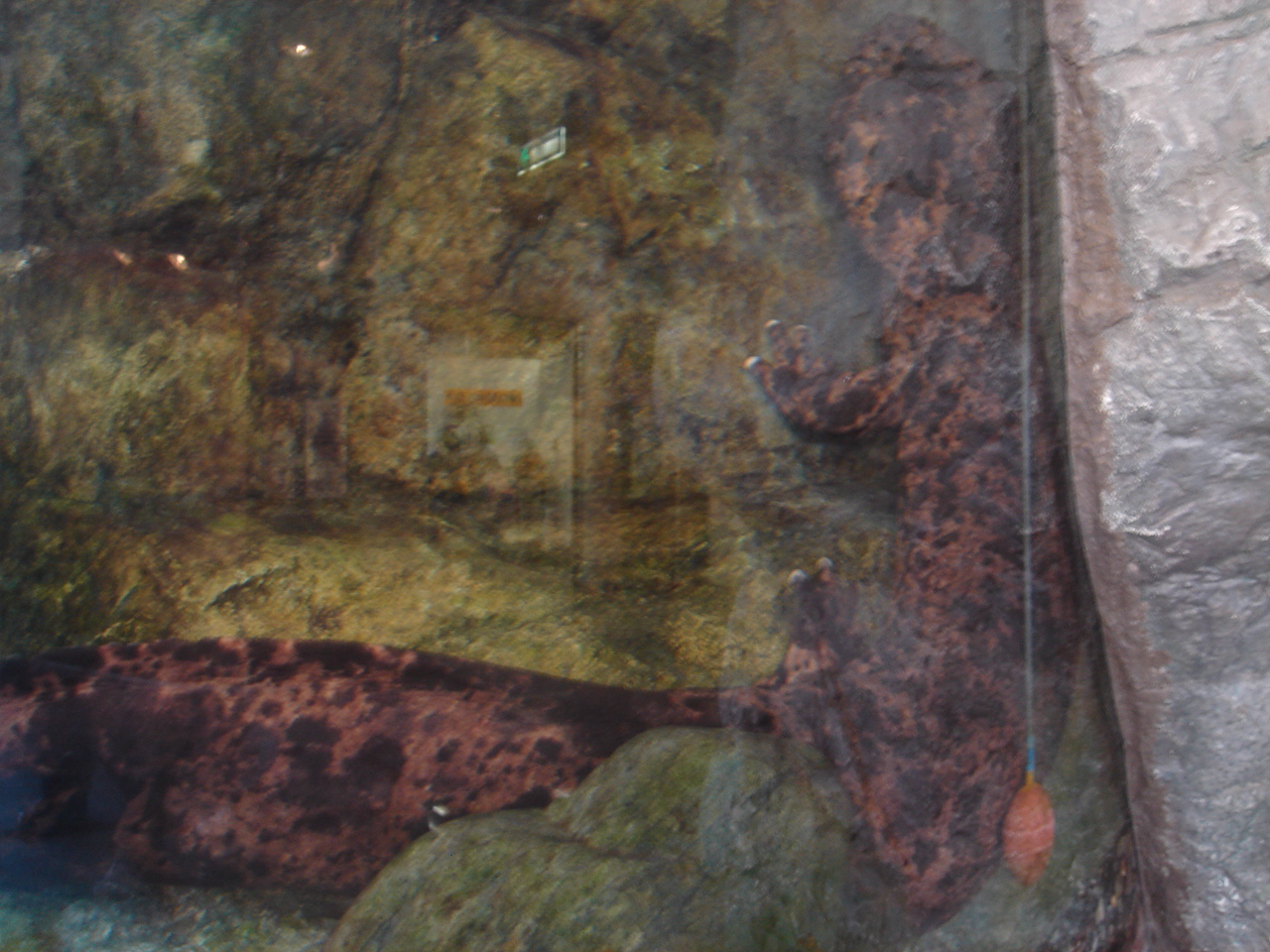
This phenomenon connects the tiger salamander directly to deep evolutionary time. The fossil record shows that neoteny has occurred independently across multiple salamander lineages, including the giant salamanders of Asia. The Japanese giant salamander (Andrias japonicus), which can reach 1.5 meters in length, is another ancient lineage that retains many larval characteristics into adulthood. These living fossils demonstrate that paedomorphosis, retaining juvenile traits, is not a minor curiosity but one of the most successful body plan strategies in amphibian history.
Ancient Body Plan, Modern Survival
Tiger salamanders are among the largest land-dwelling salamanders in North America, with adults reaching 35 centimeters. They are found from southern Canada to Mexico, in grasslands, forests, and agricultural regions. Their survival strategy is built on two pillars: burrowing and patience. Tiger salamanders spend up to 95% of their adult lives underground, emerging only during rainy nights to feed on insects, worms, and even small mice. They can survive in drought by burrowing deep into the soil and entering a state of dormancy.
The fossil record tells us that this combination of traits, burrowing behavior, broad dietary habits, and developmental flexibility, has been working for hundreds of millions of years. The Permian-Triassic extinction killed 90% of all species on Earth. The tiger salamander's ancestors survived it. The end-Cretaceous extinction wiped out the non-avian dinosaurs. The tiger salamander's ancestors survived that too. There is no reason to believe this species is in any hurry to change its approach now.
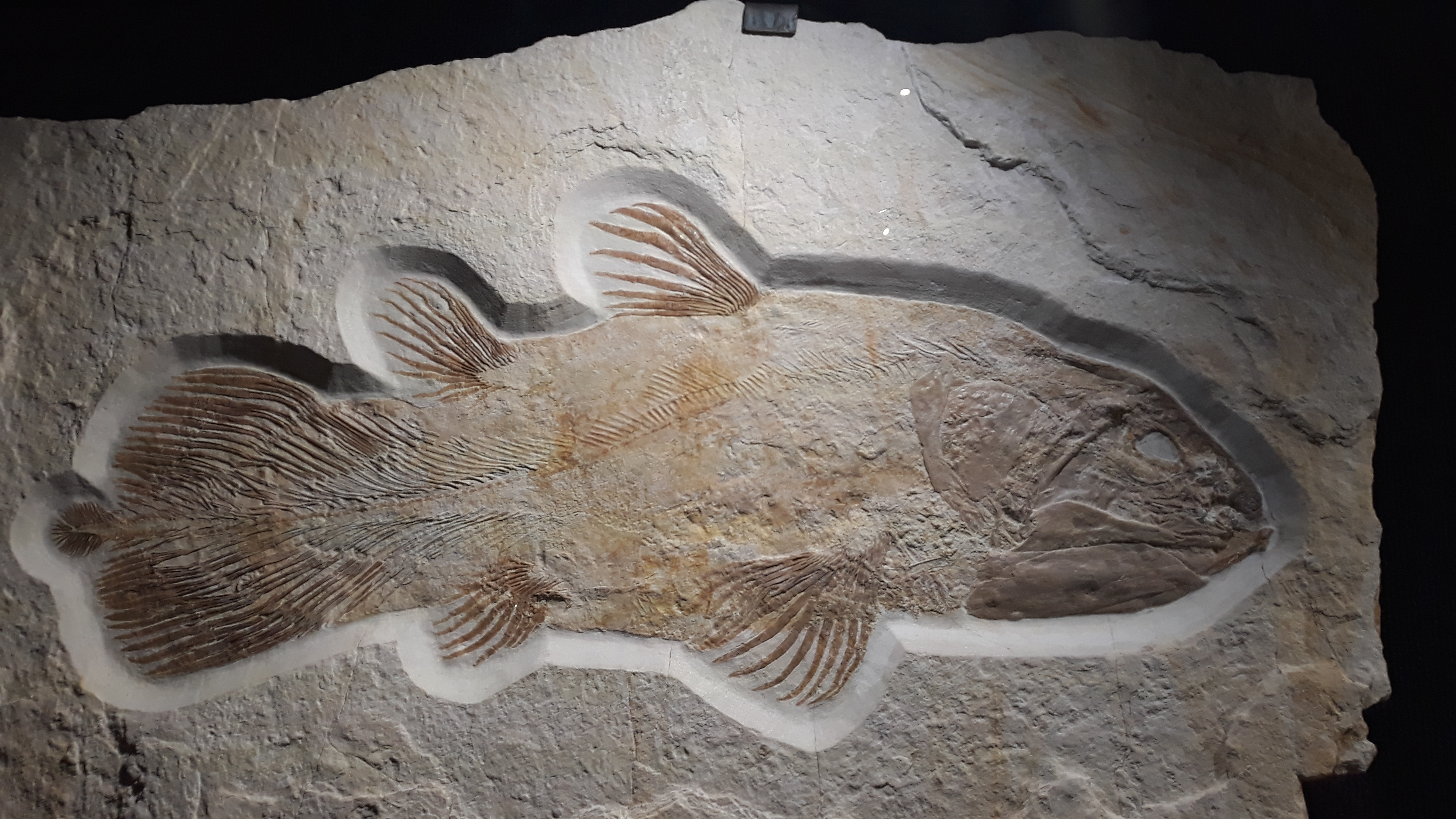
When we talk about living fossils, we often think of the coelacanth or the horseshoe crab, creatures frozen in time that seem unchanged since the Paleozoic. The tiger salamander deserves a place in that conversation. It is not just old. It is adaptable in ways that most ancient lineages are not. While Triops can survive desiccation through their remarkable eggs, the tiger salamander survives by holding its developmental cards close, ready to play a different hand depending on what the environment demands. That is not stasis. That is intelligence encoded in DNA, refined by 250 million years of evolutionary pressure, and it remains one of the most elegant survival strategies in the history of life on Earth.