Published August 29, 2026 by the Triops.me Editorial Team · Back to Articles
Titanoboa: The Largest Snake That Ever Lived
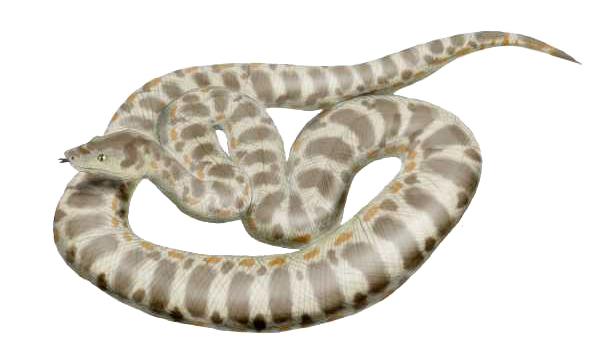
Sixty million years ago, in the sweltering swamps of what is now Colombia, a snake longer than a school bus glided through the world's first tropical rainforest. Its body was as wide as a grown man is tall. It weighed over a ton. And it was the most fearsome predator on the entire planet. This was Titanoboa cerrejonensis, the largest snake that has ever lived, and its discovery rewrote our understanding of what reptiles can achieve when the climate cooperates.
For roughly 37 million years, from the extinction of the dinosaurs at 66 million years ago until the rise of Megalodon around 23 million years ago, Titanoboa sat at the very top of the food chain. No land predator on Earth came close to matching its size during that extraordinary window of time.
Discovery in the Coal Mines of Colombia
The story of Titanoboa begins in the early 2000s at the Cerrejón coal mine in La Guajira, a department in northeastern Colombia. This vast open-pit operation was excavating through sedimentary rock layers deposited during the Paleocene epoch, and workers kept uncovering unusual fossils. The Smithsonian Tropical Research Institute, along with students from the University of Florida, organized a series of expeditions that ultimately recovered 186 Titanoboa fossils, including thoracic vertebrae, ribs, and eventually fragments of the skull and teeth.
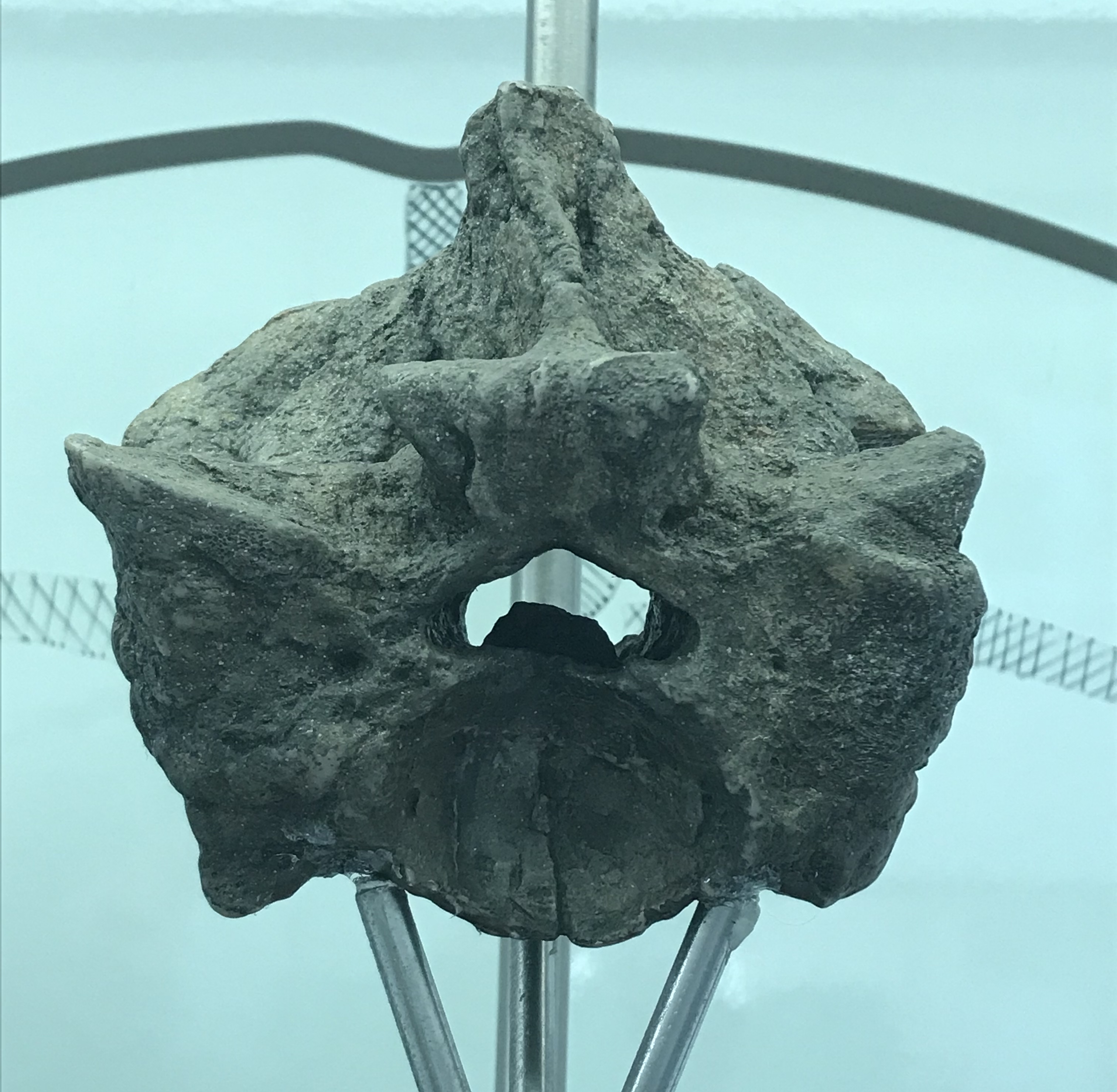
The vertebrae were the key. Snakes have dozens of vertebrae, and each one is a miniature blueprint of the animal's overall size. By comparing the size and shape of Titanoboa's vertebrae to those of living snakes, paleontologists were able to estimate the animal's total length and body mass with surprising precision. The species was formally named and described in 2009 by Jason Head and colleagues, and the name "Titanoboa" literally translates to "titanic boa."
The Cerrejón formation turned out to be something even more remarkable than a snake graveyard. The fossil-bearing sediments preserved remnants of a complete ecosystem, the oldest known evidence of a tropical rainforest in South America. Titanoboa shared this ancient jungle with early crocodilians, primitive turtles, giant freshwater fish, and a menagerie of small mammals. Together, these fossils painted a picture of a world recovering from the great extinction that killed the dinosaurs.
How Big Was It, Really?
The numbers are staggering. Estimates place Titanoboa at approximately 13 meters, or 42 feet, in length. It was roughly 1 meter, or 3 feet, wide at its thickest point. Its body mass is estimated at around 1,135 kilograms, or 2,500 pounds. To put that in perspective, the largest living snake, the green anaconda, tops out at about 6 meters and 200 kilograms. Titanoboa was more than twice as long and nearly six times as heavy.
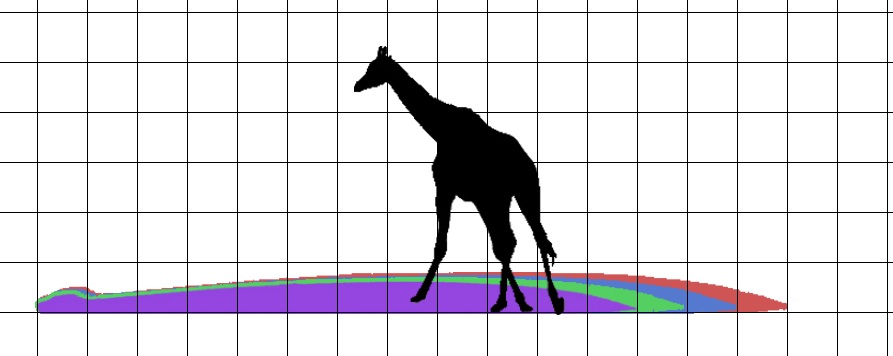
In 2012, the Smithsonian Institution unveiled a life-size recreation of Titanoboa in a Washington, D.C. train station. The model, stretching the full length of the station platform, gave visitors an immediate, visceral sense of the animal's scale. A snake that would have to squeeze sideways through a standard door frame is not something the human brain easily processes until it sees it rendered in full.
Why So Giant? The Climate Connection
The question that immediately puzzled scientists was straightforward: why don't snakes today grow this large? The answer lies in the fundamental biology of cold-blooded reptiles. Snakes are ectotherms, meaning their body temperature and metabolic rate are regulated by the environment rather than by internal heat production. At higher ambient temperatures, their metabolism runs faster, allowing them to process more food, grow larger, and sustain the enormous caloric demands of a massive body.
During the Paleocene, global temperatures were significantly warmer than they are today. The equatorial regions where Titanoboa lived may have been 5 to 6 degrees Celsius, or roughly 10 degrees Fahrenheit, hotter than modern tropical forests. At those temperatures, the metabolic ceiling that limits modern snake size simply did not apply. Titanoboa was not an anomaly. It was the logical outcome of a very hot planet and the evolutionary potential of the boid body plan.
This temperature-size relationship has also made Titanoboa a surprisingly useful tool for paleoclimatologists. The animal's estimated body mass places a lower bound on Paleocene equatorial temperatures. In other words, if the tropics had been cooler, Titanoboa could not have existed. The snake itself becomes evidence for the climate of its time.
Ambush Predator of the Ancient Swamps
Titanoboa was almost certainly an ambush predator, much like modern anacondas and boas. Its diet likely included the crocodilians, large fish, and turtles that shared its aquatic habitat. The Cerrejón fossils include crocodilian remains bearing bite marks consistent with a large constrictor, suggesting that Titanoboa did not limit itself to small prey.
Its hunting strategy would have been familiar to anyone who has watched a modern anaconda at work. Titanoboa likely spent much of its time partially submerged in warm, shallow water, its massive body concealed by vegetation. When prey came to the water's edge, the snake would strike with explosive speed, seize the animal in its jaws, and coil its enormous body around the victim in a vice-like constriction. For a snake of Titanoboa's size, even a full-grown crocodile would have offered little resistance once caught.
Its vertebrae suggest a powerful, muscular build optimized for constriction rather than speed. Unlike venomous snakes that rely on chemical weaponry, Titanoboa was a pure brute-force predator, relying on raw mass and muscle to overpower everything in its world.
The Bigger Picture: Life After the Extinction
Titanoboa's existence tells us something profound about life's capacity to recover. Just six million years after the asteroid impact that wiped out the non-avian dinosaurs, the tropics had regenerated an entire rainforest ecosystem, complete with a top predator that dwarfed anything the Mesozoic had produced. The speed of that recovery is remarkable and speaks to the resilience of tropical ecosystems even in the aftermath of catastrophic disruption.
Today, Titanoboa has no living descendant that approaches its scale. Modern boas and anacondas, while impressive in their own right, are constrained by cooler global temperatures and a different ecological landscape. But the basic blueprint remains. The constrictor body plan that produced the largest snake in Earth's history is the same one carried by the anacondas and boas that still haunt tropical waterways across the Americas.
Titanoboa is a reminder that the natural world has produced wonders far beyond what we see today. It took a volcanic, sweltering, post-apocalyptic planet to build a snake that could eat a crocodile, but nature delivered. And thanks to the coal miners of Cerrejón and the scientists who recognized what those strange vertebrae meant, we can picture it with startling clarity.