Published August 11, 2026, 17:19 by the Triops.me Editorial Team · Back to Articles
Trilobites: 300 Million Years of Arthropod Dominance
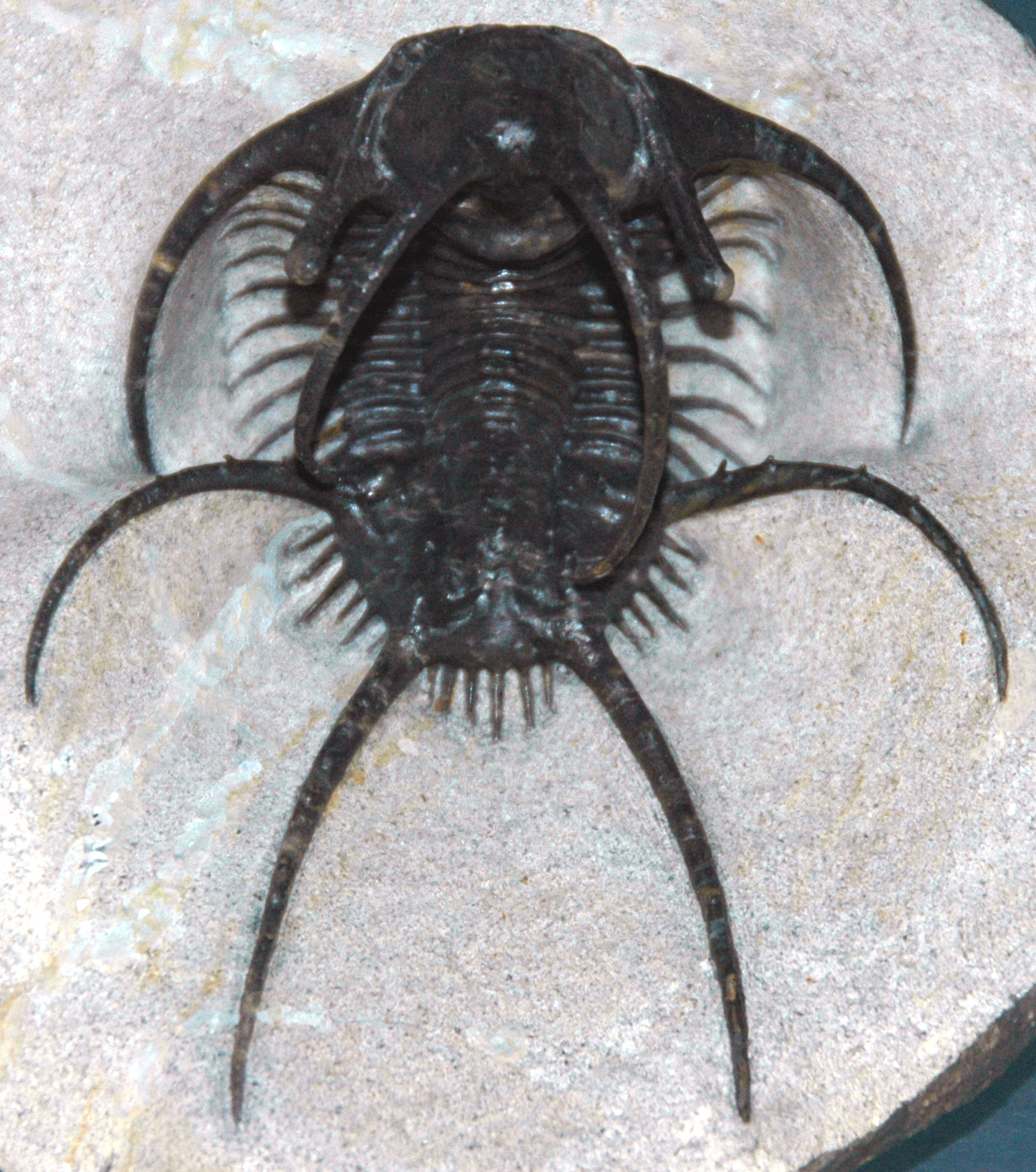
Before dinosaurs, before mammals, before even the first trees, trilobites were already thriving. These armored marine arthropods appeared roughly 520 million years ago in the early Cambrian and dominated ocean floors for an astonishing 300 million years. When they finally disappeared during the Permian-Triassic extinction 252 million years ago, they had diversified into over 20,000 described species, more than all living arthropod species combined.
Today, we know trilobites almost entirely from fossils. Their hard calcite exoskeletons preserved beautifully in sedimentary rock, giving paleontologists an unusually complete picture of their body plan. Each trilobite was divided into three longitudinal lobes and three transverse segments: a central axial lobe flanked by two pleural lobes, crossed by a cephalon (head), a thorax of articulating segments, and a pygidium (tail). This basic blueprint was so effective that it persisted across geological eras with only gradual refinement.
The First Complex Eyes
Perhaps the most remarkable innovation trilobites pioneered was the compound eye. While simpler light-sensitive organs existed before them, trilobites developed the first known visual systems built from calcite crystal lenses. Each lens was a single crystal of calcite, precisely shaped to focus light onto the underlying retina. Some species, like Phacops, had compound eyes with over 15,000 individual lenses per eye, giving them a nearly 360-degree field of vision in the murky seafloor environment.
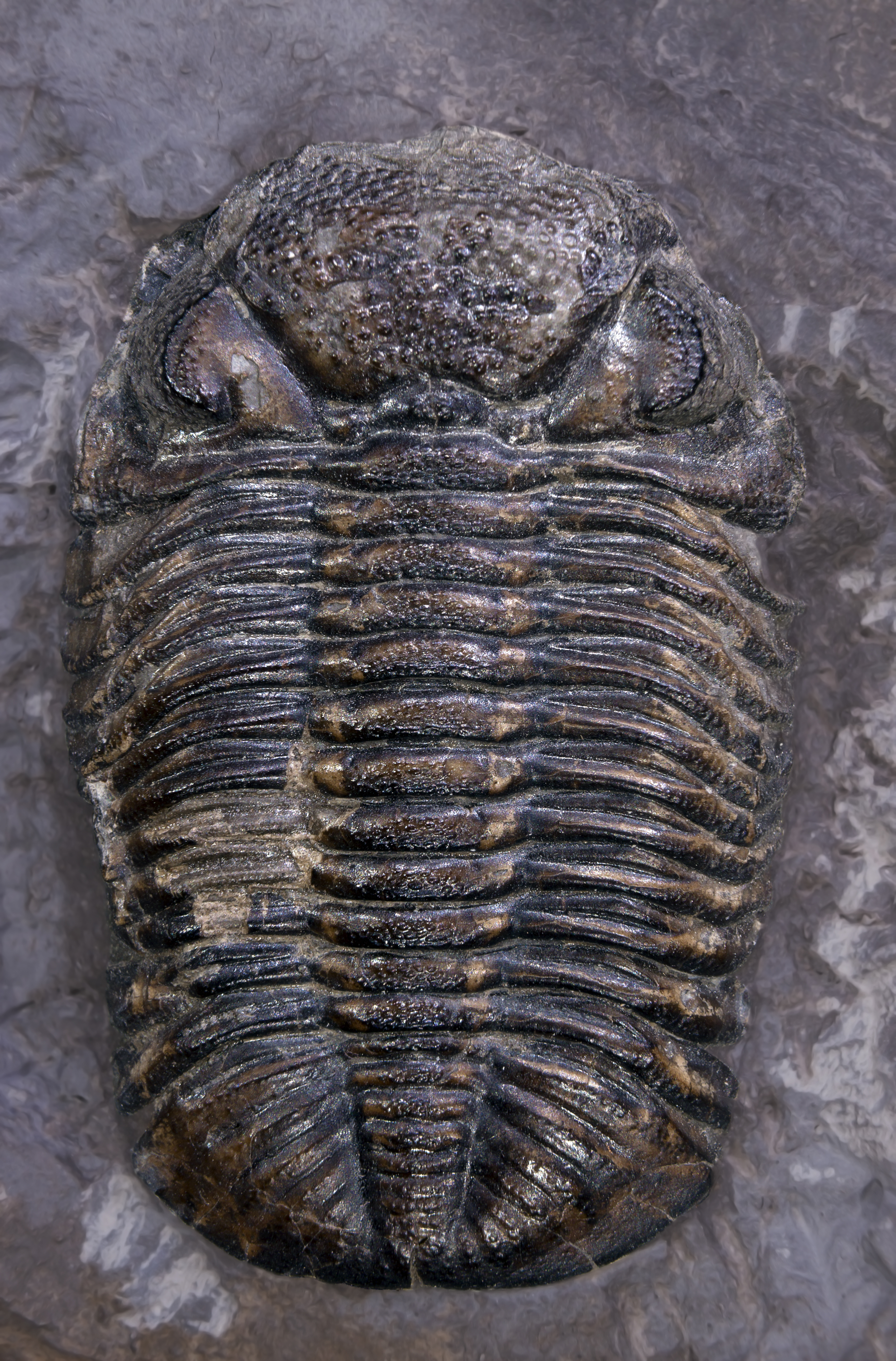
These eyes were built from a material unique in the animal kingdom. Most arthropod compound eyes use chitin for their lenses, but trilobites used calcite, the same mineral that makes up their exoskeleton. Because calcite is a crystal, its refractive properties are fixed by its atomic structure. Trilobite eyes solved the optical problem of calcite's double refraction by orienting each lens so that light entered along the crystal's optic axis, eliminating distortion. This is an engineering solution that human opticians did not develop until centuries later.
Size, Shape, and the Art of Survival
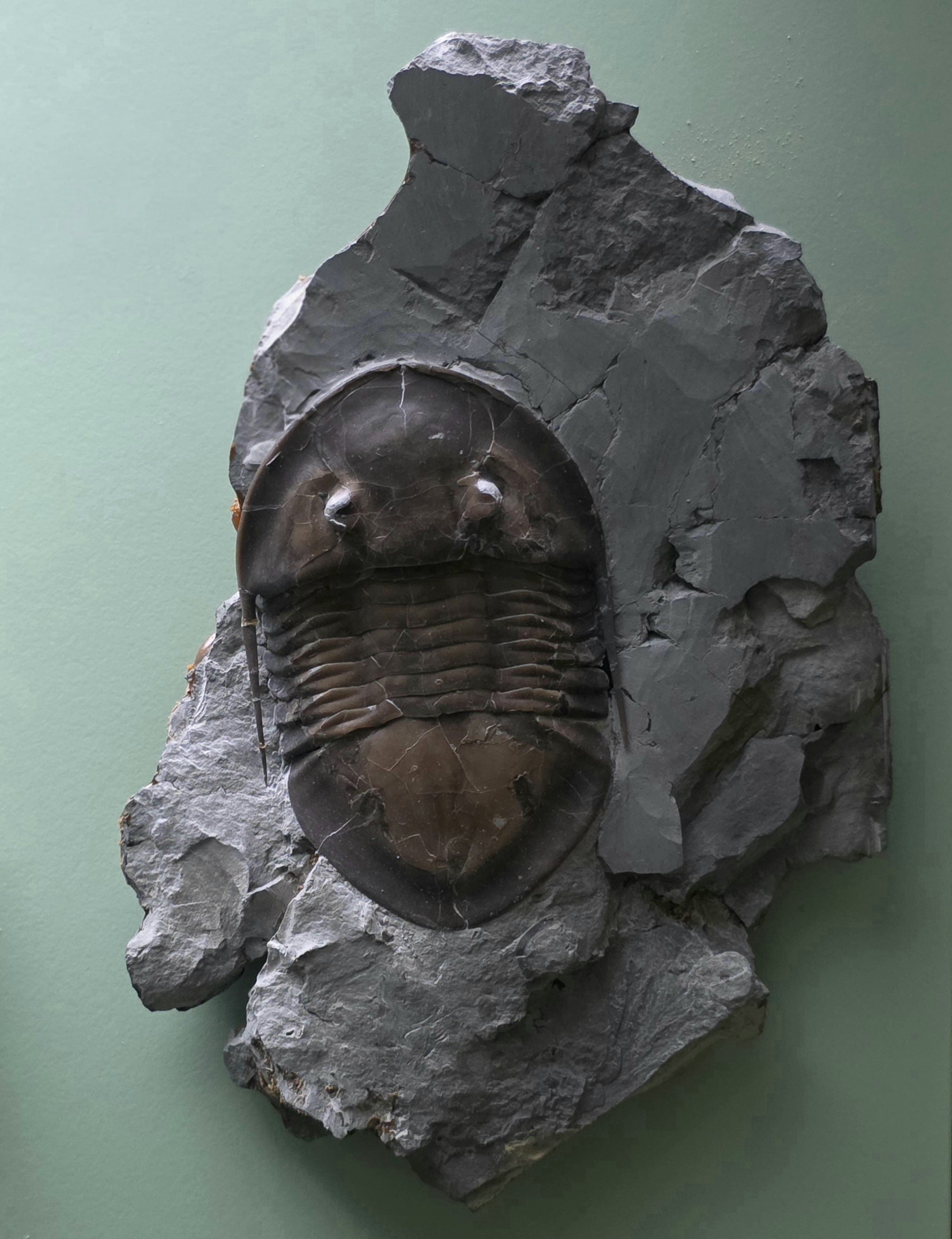
Trilobites ranged from a millimeter or two in length to over 70 centimeters in the case of Isotelus rex, one of the largest arthropods ever to have lived. Most species, however, were modest in size, scuttling across the seafloor like miniature armored tanks, feeding on organic detritus, small worms, or other tiny organisms buried in the sediment.
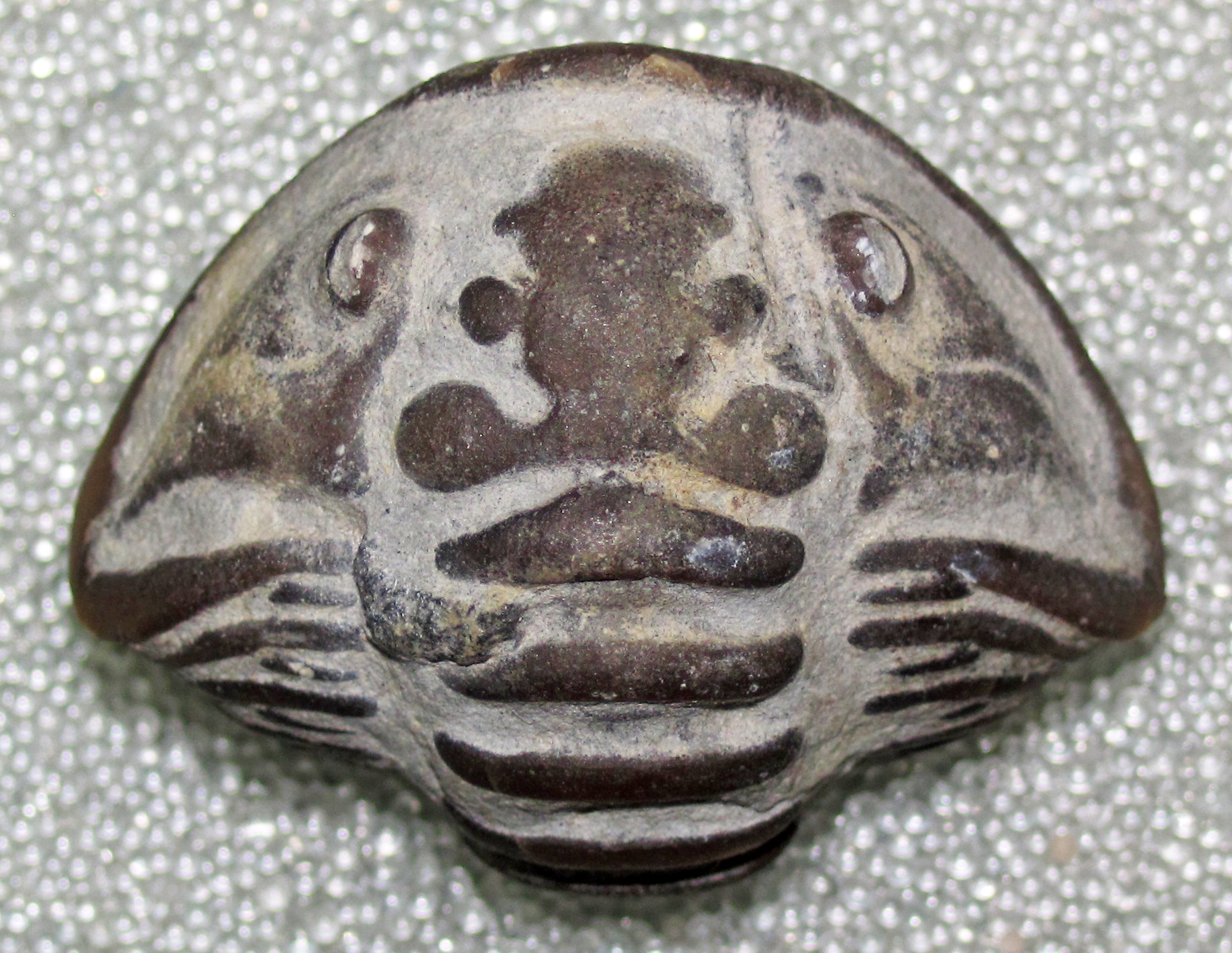
When threatened, many trilobites employed a defense strategy familiar to anyone who has seen a pill bug curl into a ball. By flexing their thoracic segments, they could roll into a tight sphere called enrollment, presenting only their hard outer shell to predators. The enrolled Flexicalymene fossils found in Ohio's Ordovician limestone are so perfectly spherical that early collectors mistook them for marbles. This same defensive behavior exists in modern crustaceans, demonstrating that the strategy was already effective hundreds of millions of years ago.
Trilobites and Triops: A Distant Kinship
While trilobites left no living descendants, their story resonates with anyone familiar with Triops. Both are arthropods with segmented bodies and hard exoskeletons. Both developed survival strategies centered on durability rather than speed. And both have roots in deep geological time. Triops, sometimes called tadpole shrimp, have a fossil record stretching back over 200 million years to the Triassic, making them one of the oldest living animal genera on Earth.
The parallel is striking but imperfect. Triops belong to the crustacean lineage, while trilobites represent an entirely separate arthropod branch that split off before either insects or crustaceans evolved. Their similarities are a case of convergent evolution, the tendency for unrelated organisms to develop similar solutions to similar environmental pressures.
Why Trilobites Matter
Trilobites are more than museum curiosities. Their fossils are index species, used by geologists to date rock formations worldwide. Their eye structure has inspired modern optical engineers studying metamaterials. And their evolutionary trajectory, a long, successful reign followed by a relatively sudden extinction, offers a cautionary tale about resilience and vulnerability in changing environments.
When we look at Triops today, we are seeing a distant echo of the same arthropod blueprint that made trilobites the most successful group of marine animals for three geological periods. The armored body, the segmented limbs, the compound eyes, these are ideas that evolution discovered hundreds of millions of years ago and never stopped refining.