Published August 09, 2026, 18:24 by the Triops.me Editorial Team · Back to Articles
Triops Anatomy: Inside the Body of a 200-Million-Year-Old Design
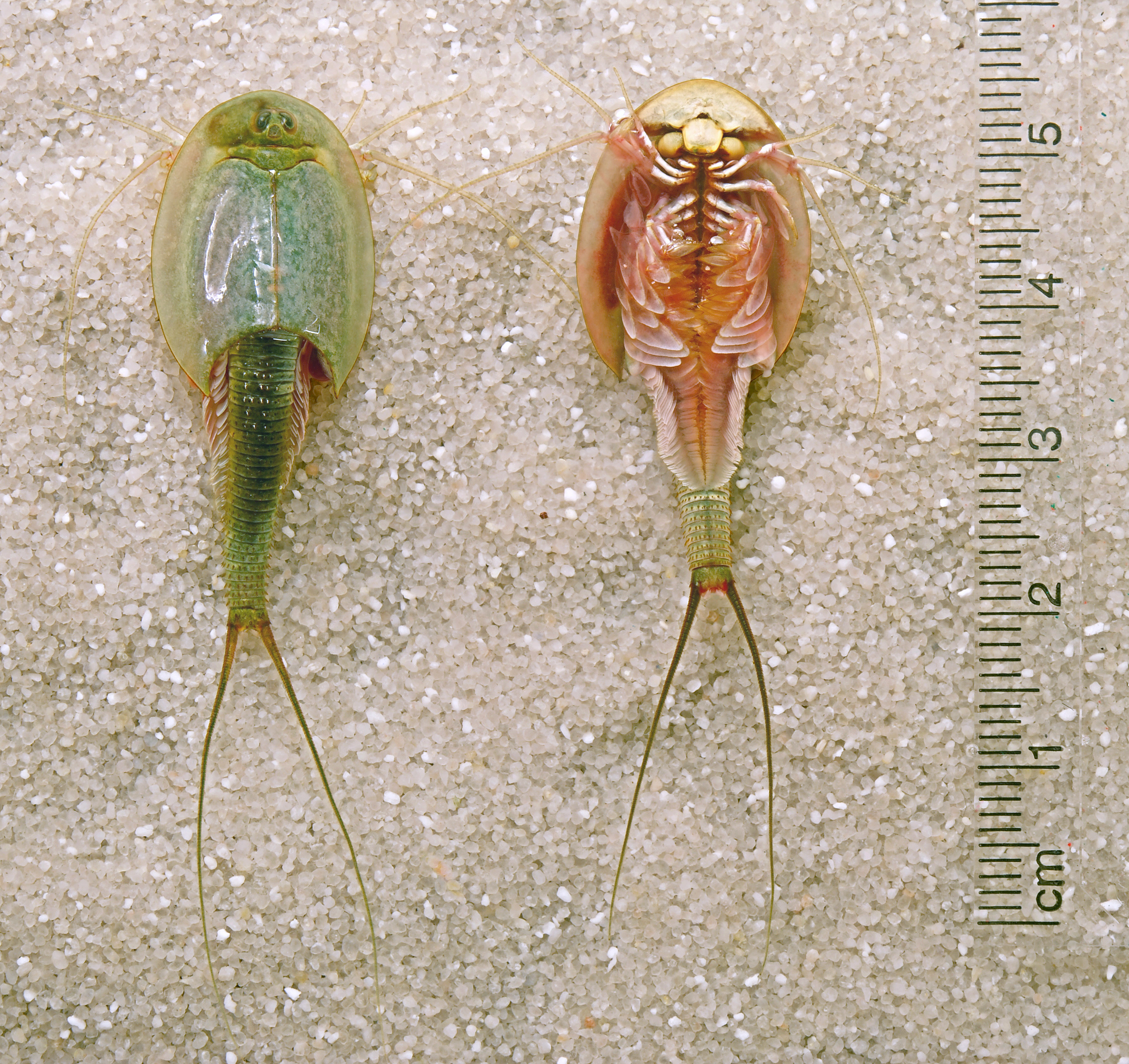
Triops are small freshwater crustaceans that have survived since the Triassic period, outliving the dinosaurs by over 140 million years. Flip one upside down and you will see a creature that looks almost alien: dozens of leaf-like legs beating in waves, a forked tail, and a wide head shield. Every part of this design serves a purpose refined by natural selection across deep time.
We explore each major body structure and understand why this body plan has remained virtually unchanged for hundreds of millions of years.
The Carapace: A Built-In Shield
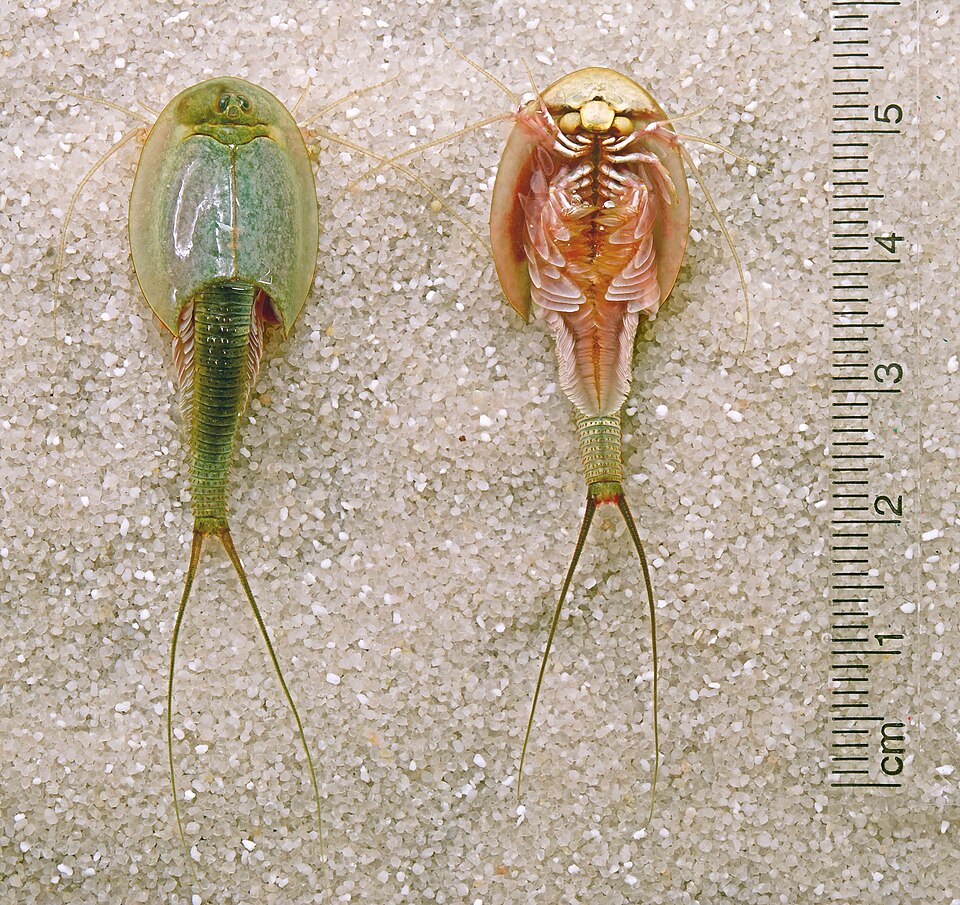
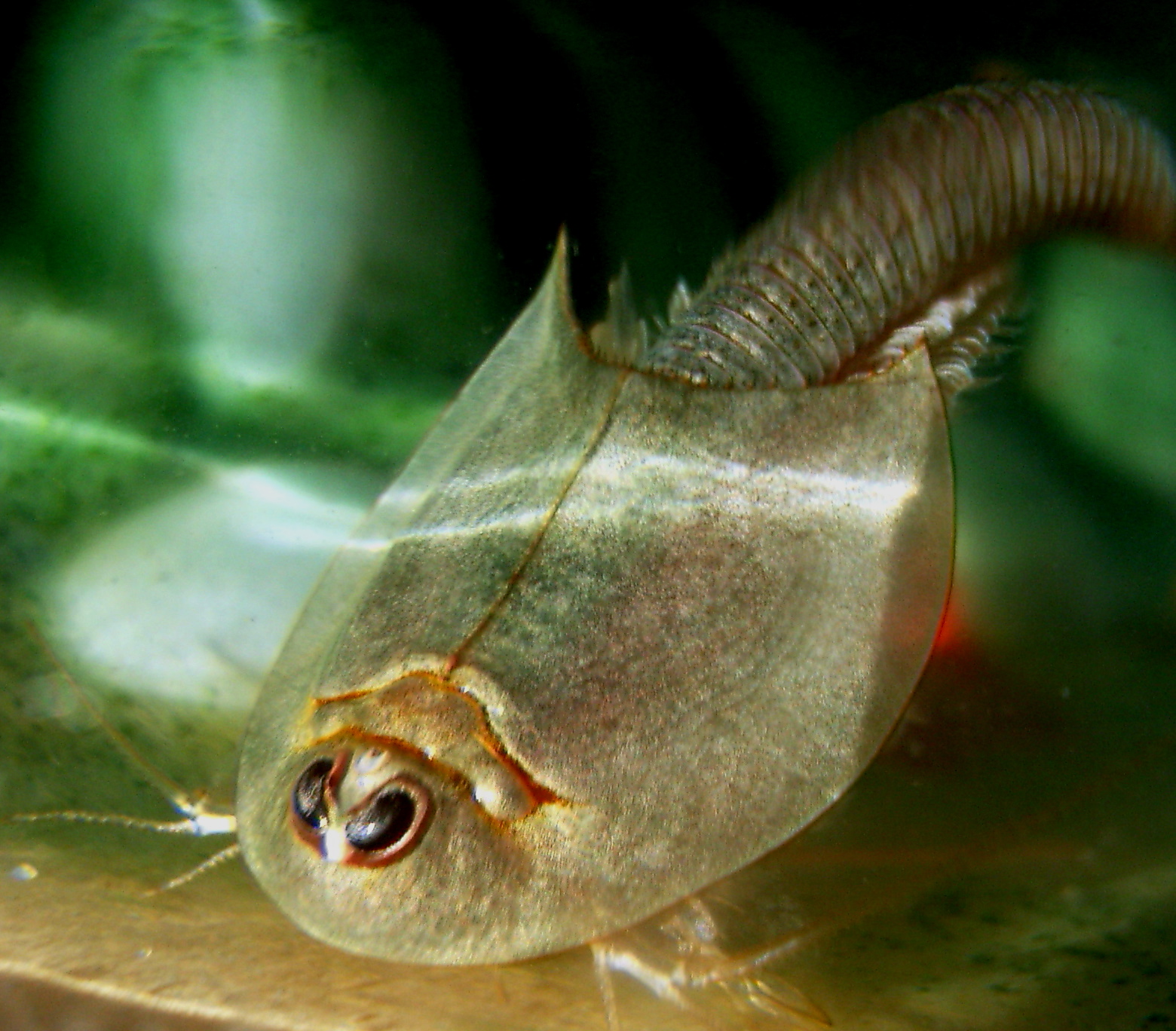
The most prominent feature is the carapace, a large, flat, horseshoe-shaped shell covering the head and front trunk. Made of chitin hardened with calcium carbonate, it does more than armour against predators. It acts as a hydrofoil for steering and protects the delicate gill-like appendages underneath from abrasion as the Triops digs through sandy substrates.
The shape varies between species. T. longicaudatus has a broader, more rounded shield, while T. cancriformis often displays a more angular outline. Fossil specimens from the Triassic show carapaces strikingly similar to modern animals, proof of how well this design has worked across geological time.
Three Eyes: The Name Says It All
The genus name Triops comes from the Greek for "three eyes," and for good reason. On the head sit two large compound eyes positioned laterally, with a small simple eye called the naupliar eye between and slightly behind them.
The compound eyes consist of hundreds of ommatidia, individual visual units that create a mosaic image of the surroundings. This gives Triops excellent motion detection, critical for avoiding predators in murky water. Unlike many crustaceans, Triops eyes are sessile, fixed directly to the head rather than on stalks.
The naupliar eye is a leftover from the larval stage, when it was the only visual organ, detecting light and dark but not forming images. It persists into adulthood and may help the animal sense light from above, keeping it oriented relative to the water surface.
The Phyllopodia: Legs That Do Everything
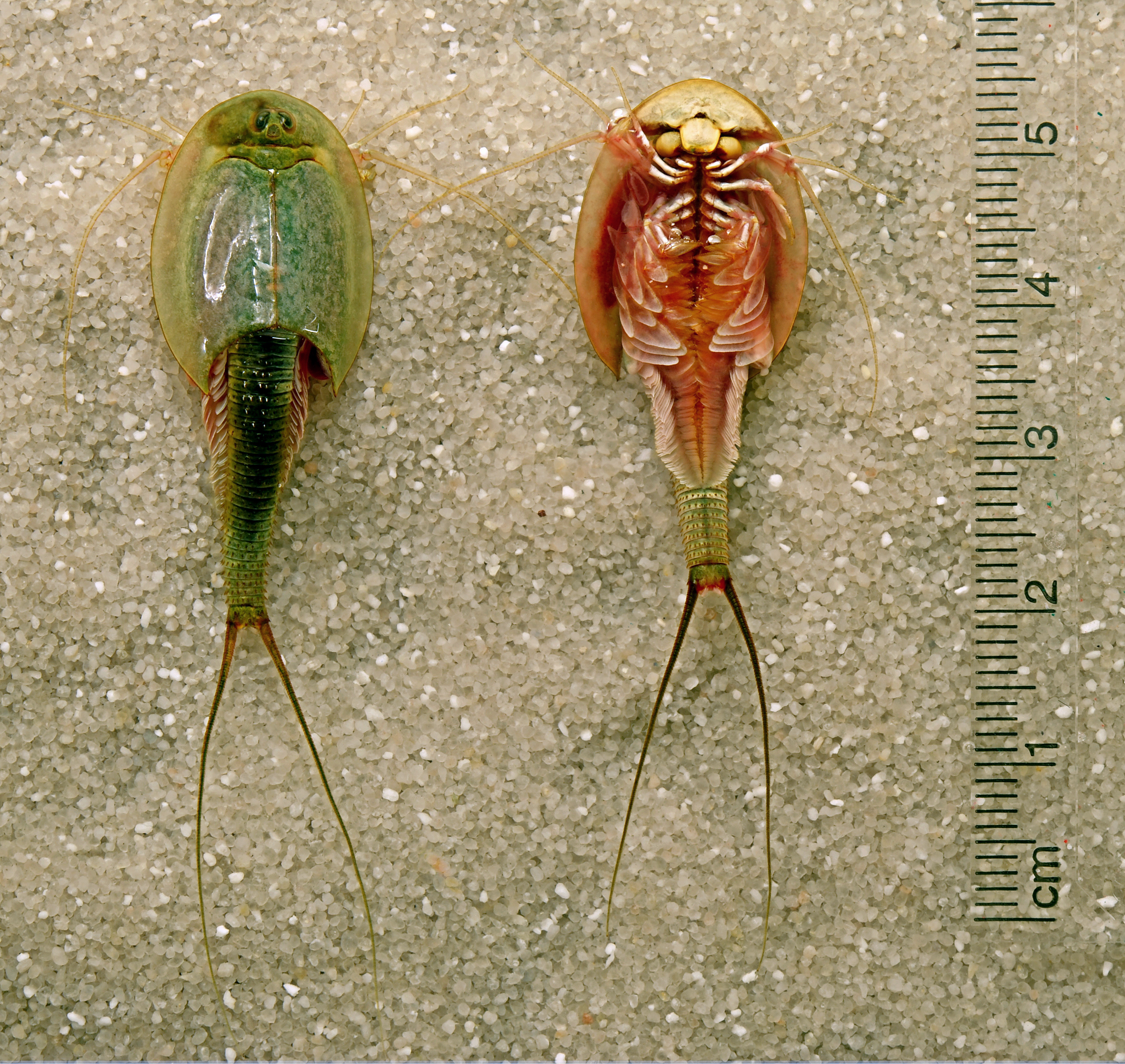
Flip a Triops over and the real spectacle begins. The underside is lined with pairs of flat, leaf-like appendages called phyllopodia, meaning "leaf feet." A typical adult may have between 35 and 70 pairs, depending on species and size.
Each phyllopod serves multiple functions at once. They are gills absorbing oxygen as they beat, swimming legs propelling the animal with wave-like strokes, filter-feeding tools generating currents that channel food particles toward the mouth, and crawling aids along the pond bottom.
This multitasking is key. In ponds that may dry up within weeks, separate systems for breathing, moving, and eating would be a luxury. The phyllopodia bundle all these functions into one structure, allowing Triops to grow from a newly hatched nauplius to a reproducing adult in as little as one to two weeks.
Head, Trunk, and Tail
Beneath the carapace, a compact head bears two pairs of antennae and well-equipped mouthparts. Strong mandibles crush plant material, shred detritus, and tear apart small prey. Triops are opportunistic omnivores, and their mouthparts handle everything from algae to mosquito larvae.
The trunk divides into an anterior section under the carapace and a posterior abdomen of ring-like segments called somites. The muscular abdomen is used for swimming by undulation, especially in early life stages. Along the ventral side runs a food groove carrying particles forward to the mouth like a conveyor belt.
The body terminates in a pointed telson bearing two long, forked projections called caudal rami. In T. longicaudatus these tail filaments can equal the body length. Covered with fine sensory hairs, they detect water movement and vibrations, alerting the animal to predators or nearby food.
Why This Design Lasted 200 Million Years
Every major structure serves multiple purposes. The carapace shields and streamlines. The eyes combine compound and simple vision. The phyllopodia breathe, swim, and feed simultaneously. The mouthparts handle a flexible diet. And the body develops rapidly enough for animals that must reproduce before their ponds evaporate.
Triops are not frozen in time. Genetic studies show their genomes have continued changing over millions of years. But the external architecture has stayed stable because it solves temporary pool life with extraordinary efficiency. When a design works this well, natural selection has little reason to overhaul it.
Triops anatomy is a masterclass in functional minimalism, a body that does more with less and has been doing so since before the first dinosaurs walked the Earth.