Published August 08, 2026, 19:10 by the Triops.me Editorial Team · Back to Articles
Triops Behavior: Feeding Frenzies, Burrowing, and Survival Tactics
When rain fills a dry depression in the earth, dormant eggs spring to life. Within hours, dozens of tiny creatures emerge, already resembling miniature adults. This is the life cycle of Triops, tadpole shrimp of the order Notostraca, survivors of roughly 360 million years of Earth's history.
The Feeding Frenzy
Triops are opportunistic omnivores. In the wild, they consume algae, detritus, mosquito larvae, small worms, and virtually any organic matter on the pool floor. In captivity, keepers report them eating everything from shrimp pellets to crackers. A temporary pool offers no guarantee of a balanced menu, so Triops evolved to eat whatever is available.
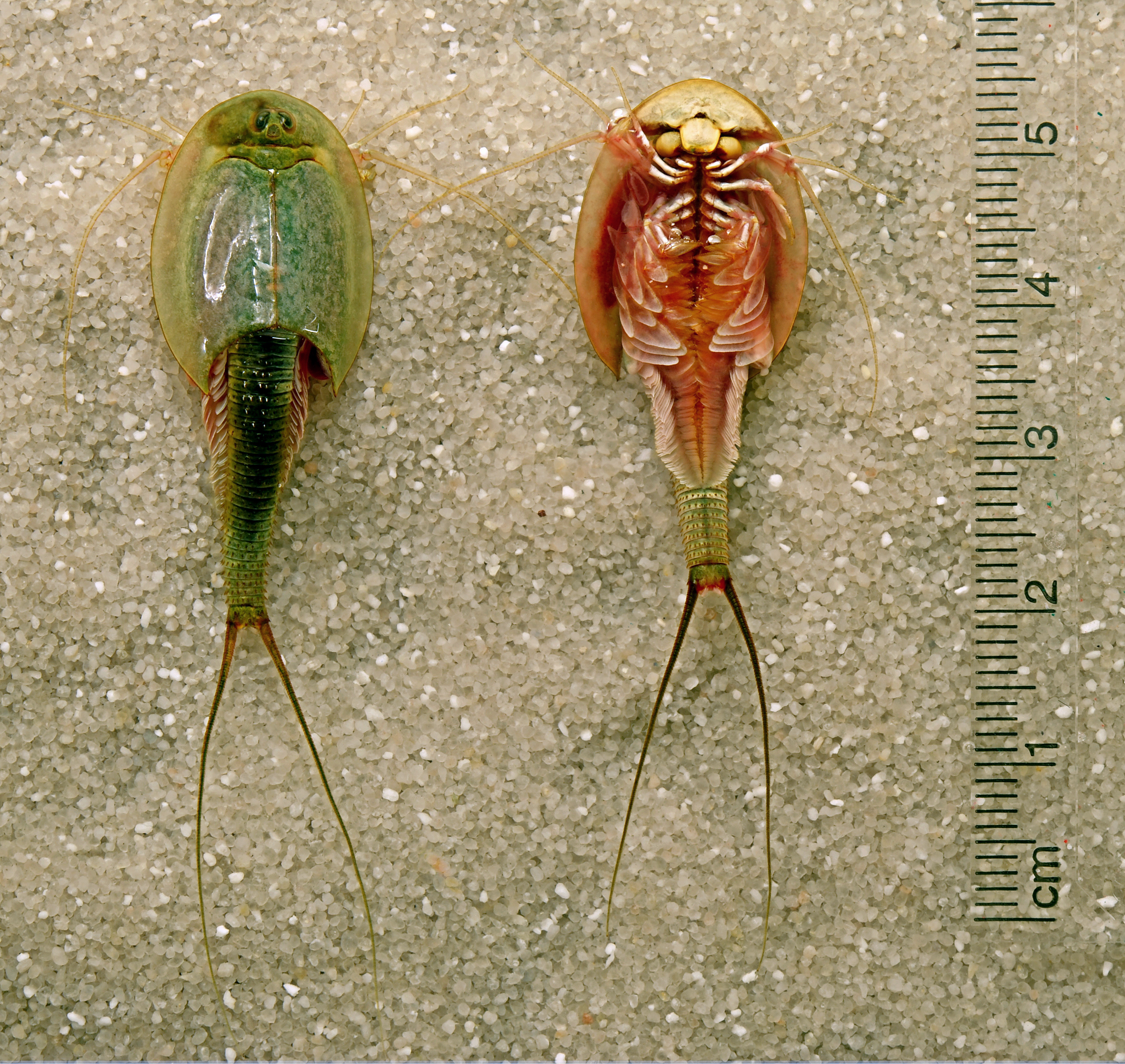
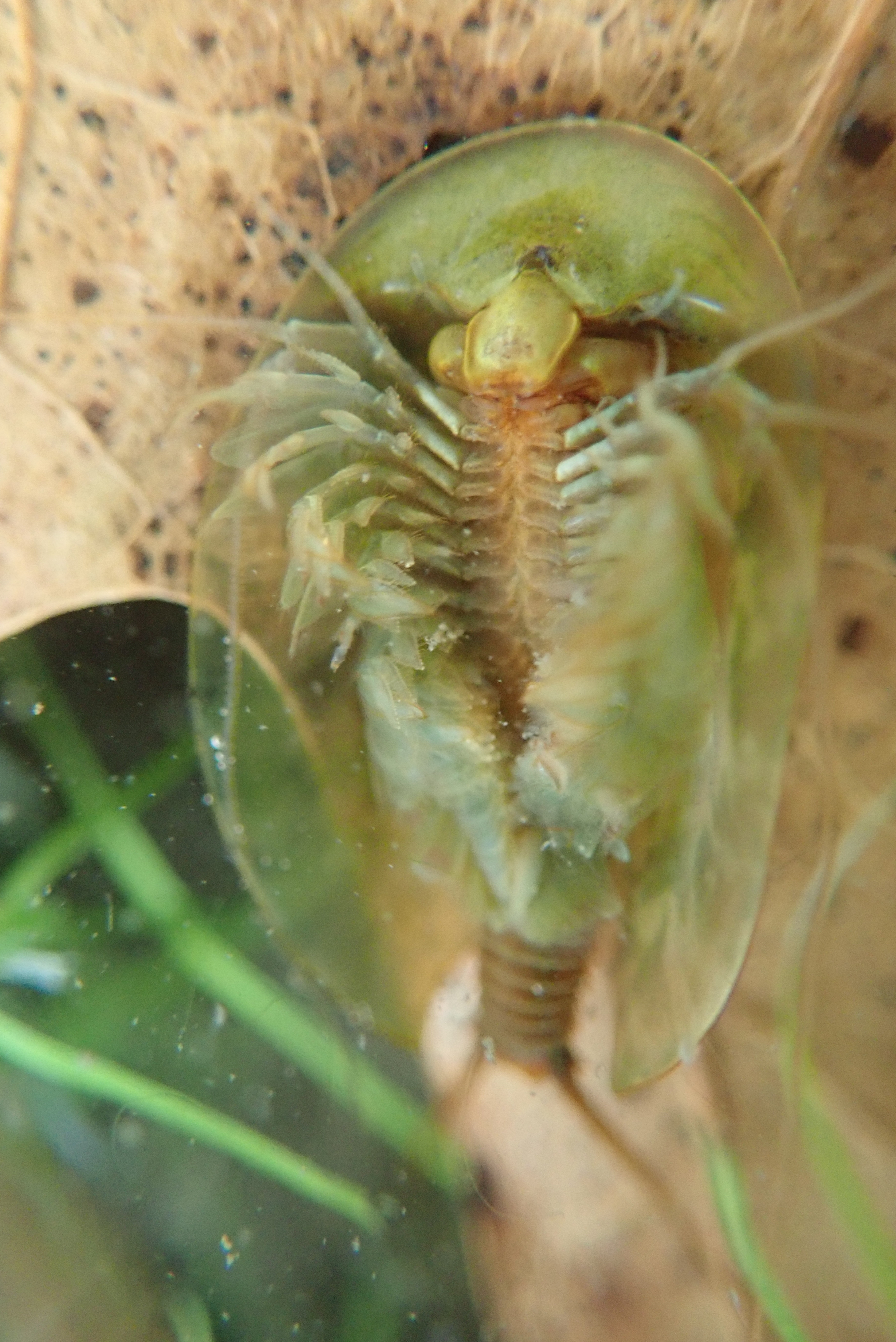
The feeding mechanism is elegant. Triops possess up to 70 pairs of flattened, leaf-like appendages called phyllopodia. These legs beat in a rhythmic wave, creating a current that draws water and suspended particles toward the mouth. Larger food items are caught by the front legs and passed to the mandibles. It is a living conveyor belt, processing sediment and extracting nutrition with remarkable efficiency.
When a fresh pool fills, the frenzy intensifies. Hatchlings compete for limited resources, growing at a furious pace. Within 24 hours, a newly hatched Triops already resembles a tiny adult. This explosive growth is essential: the pool may dry up in weeks, and each individual must reach reproductive maturity before the water disappears.
The Art of Burrowing
These crustaceans are vigorous diggers, constantly churning through sandy or muddy substrate. The behavior serves multiple purposes. Burrowing exposes buried organic matter and microorganisms for additional food. It helps Triops regulate their depth in the water column, moving to cooler layers when surface temperatures rise. Most importantly, burrowing distributes eggs throughout the sediment. Females deposit eggs into the substrate as they dig, spreading the next generation of dormant cysts widely rather than concentrating them in one vulnerable spot.
This burrowing instinct has consequences for humans. In California's rice paddies, Triops longicaudatus is considered a pest because their digging uproots young rice seedlings. The same behavior that secures their evolutionary future can devastate a season's crop.
Masters of the Temporary Pool
Every aspect of Triops behavior revolves around one challenge: their habitat is temporary. The vernal pools they inhabit fill with seasonal rain and then dry up completely. Triops cope with this uncertainty through a two-part strategy. Adults live fast and reproduce prolifically, with females producing hundreds of eggs over their roughly 90-day lifespan.
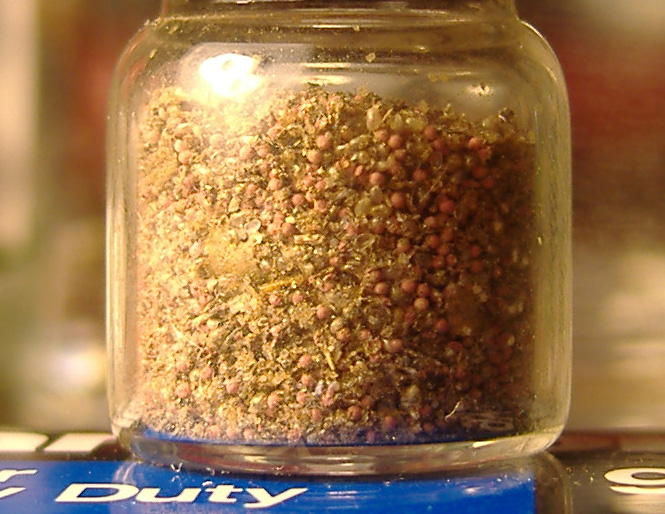
Those eggs enter extended diapause, a biological standby mode. Research shows Triops eggs tolerate temperatures up to 98 degrees Celsius (208 degrees Fahrenheit) for 16 hours, far beyond what adults can endure. Adults cannot survive above 34 degrees Celsius for a full day. The diapause is also precise: eggs will not hatch from a brief rain shower. The pool must fill deeply enough to signal conditions viable for a complete life cycle, preventing premature hatching that would doom a generation as water evaporates within days.
Physiological Resilience
Triops tolerate pH levels from 6 to 10, colonizing pools with widely varying chemistry. Some populations reproduce sexually, while others use parthenogenesis. Triops cancriformis shifts between strategies depending on latitude, sexual in the south, asexual in the north.
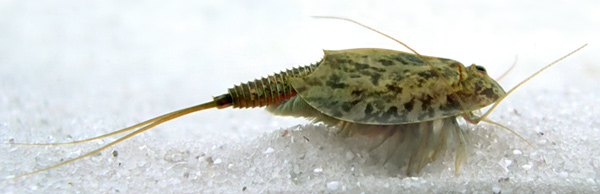
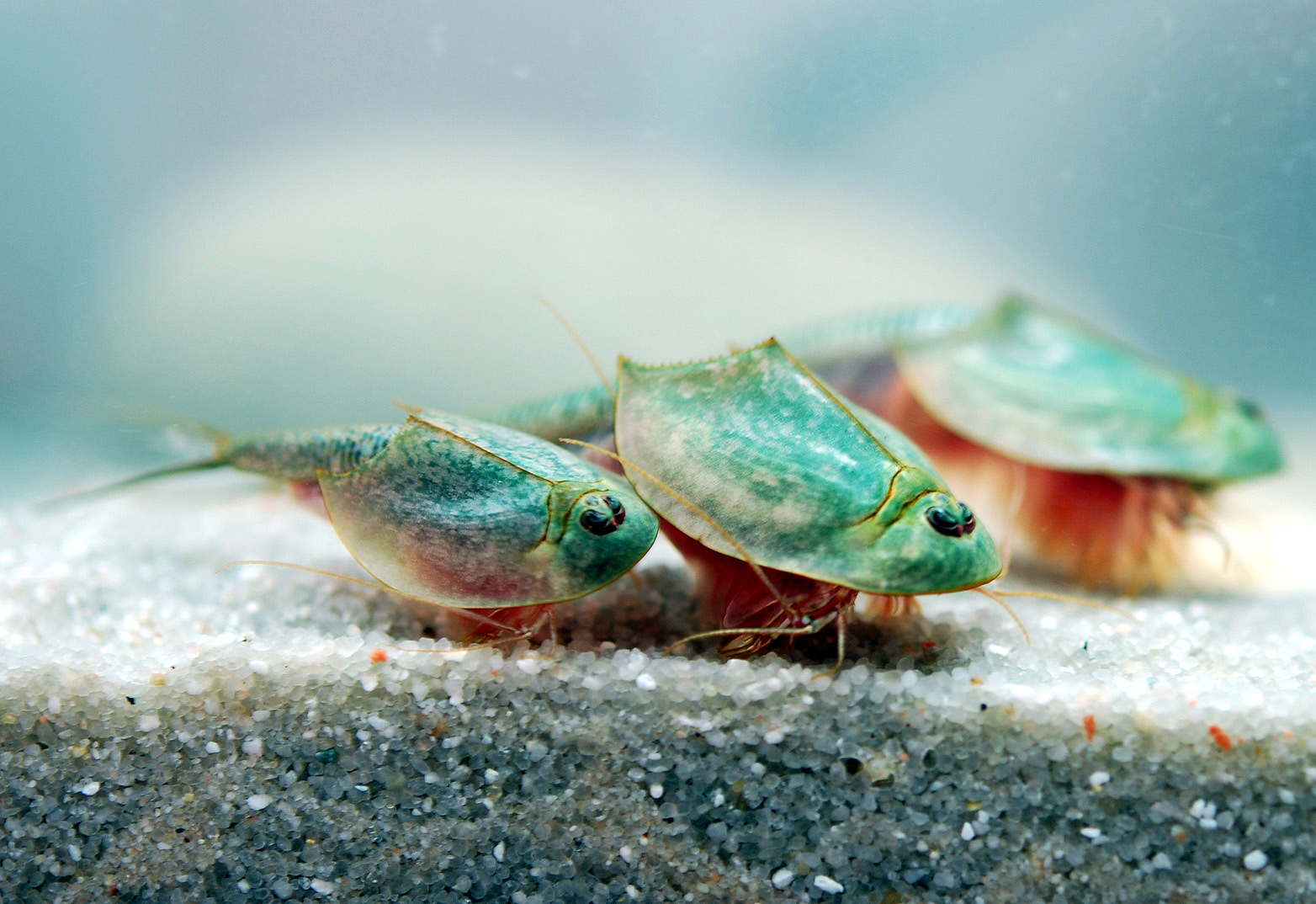
Their three eyes, which give the genus its name, include a naupliar ocellus positioned between the two compound eyes. This simple light-sensing organ, a relic of their larval stage, persists into adulthood and helps the animal orient in murky pool water.
Perhaps the most remarkable thing about Triops behavior is that it has remained essentially unchanged for hundreds of millions of years. The feeding frenzies, the desperate burrowing, the eggs lying dormant in cracked earth, waiting for rain that may come years later. These are not primitive habits. They are optimized solutions to a problem that has not changed since the Devonian period, and they work as well today as they did when the first notostracans scuttled across prehistoric mudflats.