Published August 10, 2026, 19:23 by the Triops.me Editorial Team · Back to Articles
Why Triops Live on Every Continent
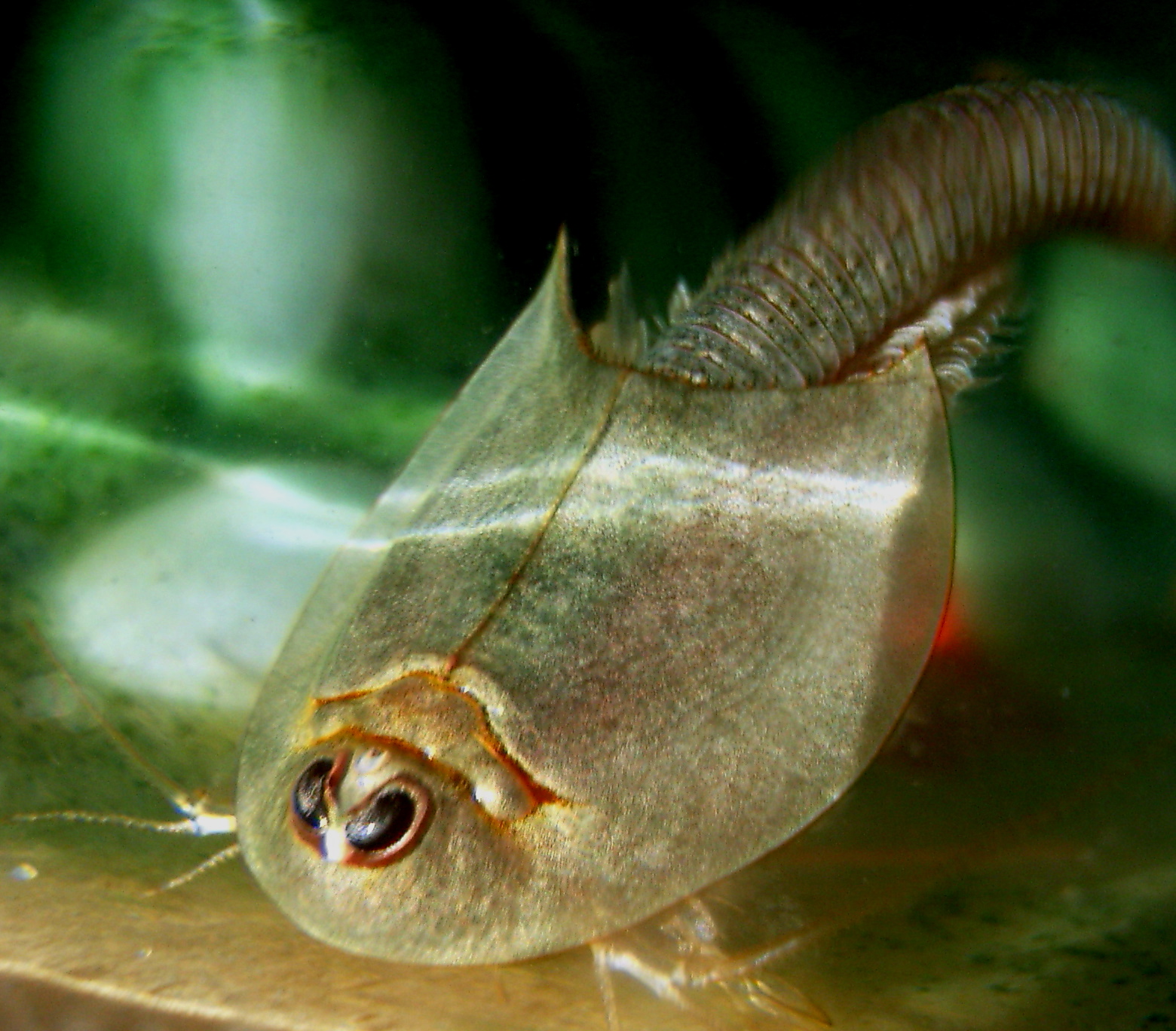
Most people assume that a creature unchanged for 250 million years must be rare, confined to some remote corner of the world. But Triops, the tadpole shrimp, shatter that assumption completely. They are found on every continent except Antarctica, from the deserts of Australia to the rice paddies of Japan, from temporary pools in Spain to roadside puddles in Kansas. How did a crustacean that first appeared before the dinosaurs manage to colonize the entire planet?
The answer involves deep time, dried mud, bird feet, and a survival trick so extreme that scientists once compared it to being frozen in amber for decades.
Starting From Pangea
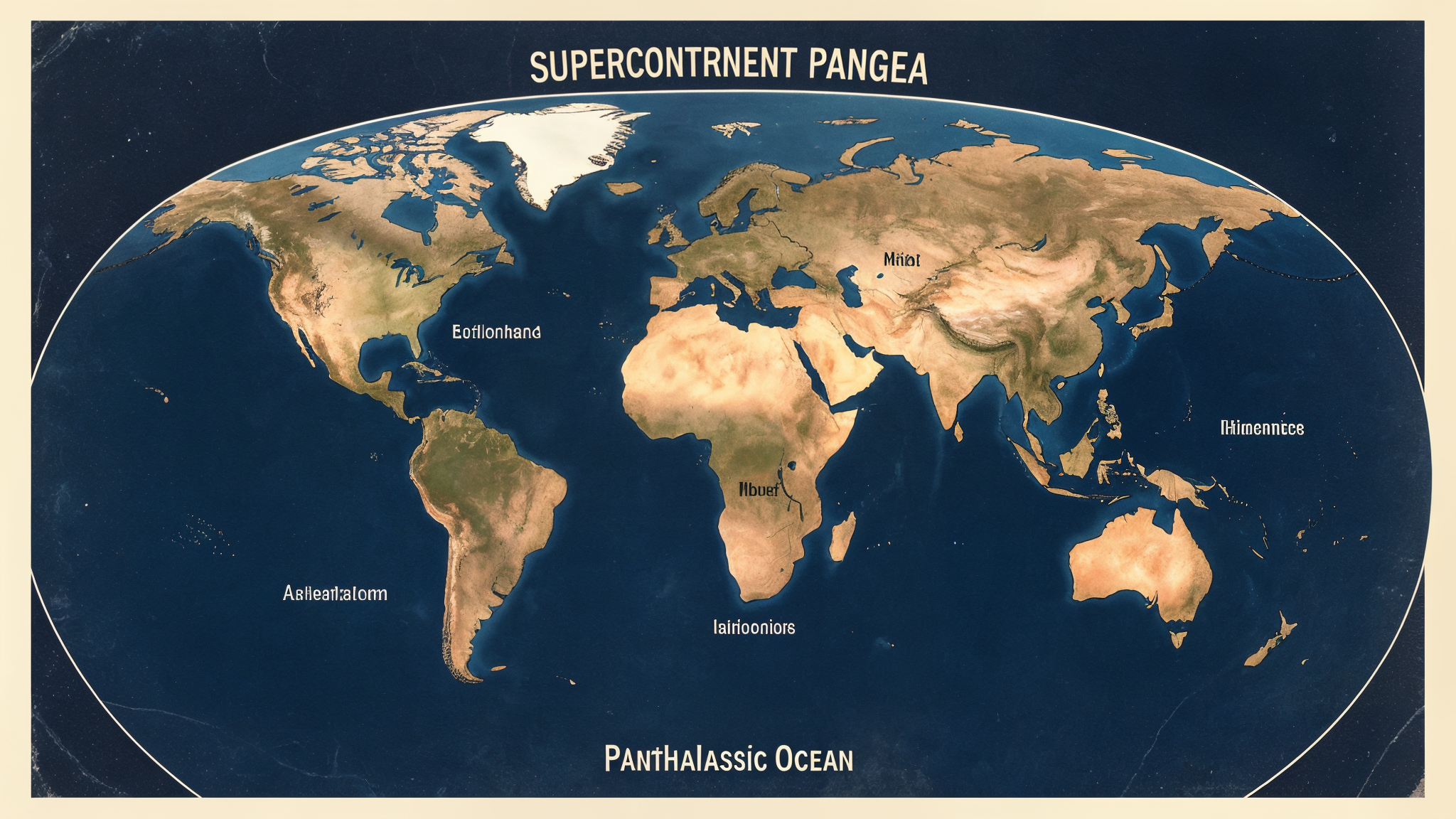
When Triops first appeared in the late Permian period, roughly 250 million years ago, Earth looked nothing like it does today. All the continents were fused into a single supercontinent called Pangea. A Triops living in what is now Morocco could, in theory, walk (well, swim) to the area that would eventually become China, because those lands were connected.
As Pangea began to break apart during the Triassic and Jurassic periods, Triops populations were carried on different continental fragments. This is how many ancient species spread across the globe, riding the slow drift of tectonic plates over millions of years. But continental drift alone does not explain how Triops ended up in so many isolated desert basins, alpine meadows, and temporary ponds that have never been connected by land.
The Egg That Crosses Oceans
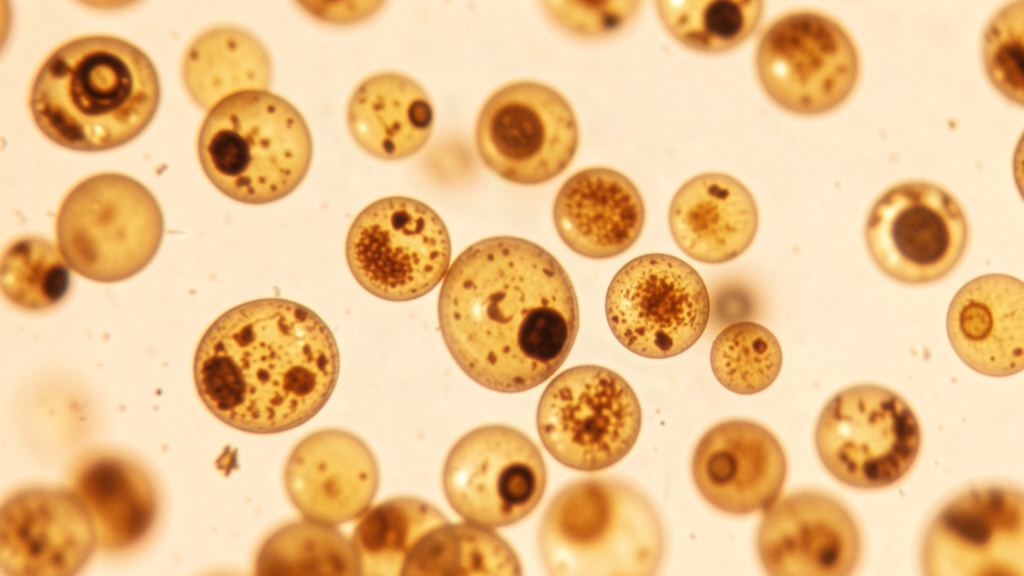
The real secret to the global spread of Triops is their eggs. Not the live, swimming adults, but the tiny resting eggs, called cysts, that females produce by the thousands. These cysts are barely visible to the naked eye, roughly half a millimeter across, and they are engineered by evolution for exactly one purpose: to survive the impossible.
Triops cysts can remain dormant for 20 years or more in dry soil, waiting patiently for rain. When water finally arrives, they hatch within hours. This is cryptobiosis, a state where metabolic activity drops to virtually zero. The eggs are so resilient that they can survive being frozen, boiled, exposed to UV radiation, and even soaked in alcohol. Scientists have successfully hatched Triops from eggs stored in museum drawers for over a century.
But the real biogeography magic happens because these eggs are so lightweight and durable. Wind picks them up from dried pool beds and carries them across vast distances. A single dust storm in the Sahara can lift millions of cysts into the atmosphere and deposit them hundreds of kilometers away. Researchers have found viable Triops cysts in air samples taken at altitudes above 3,000 meters.
Hitchhikers with Wings
Wind is not the only delivery service. Migratory birds are perhaps even more important. When a shorebird lands in a drying pool to drink, mud cakes onto its legs and feet. That mud contains dormant Triops cysts. When the bird flies to another continent and lands at its next stop, some of that mud falls off, and new Triops populations establish themselves thousands of kilometers from the parent colony.
Water currents play a role too. Flood waters can carry cysts downstream into rivers that eventually reach the sea. While Triops cannot survive saltwater as adults, their cysts can endure short exposure to brackish conditions. Storm surges and tsunamis have redistributed coastal Triops populations throughout history.
A Species on Every Continent
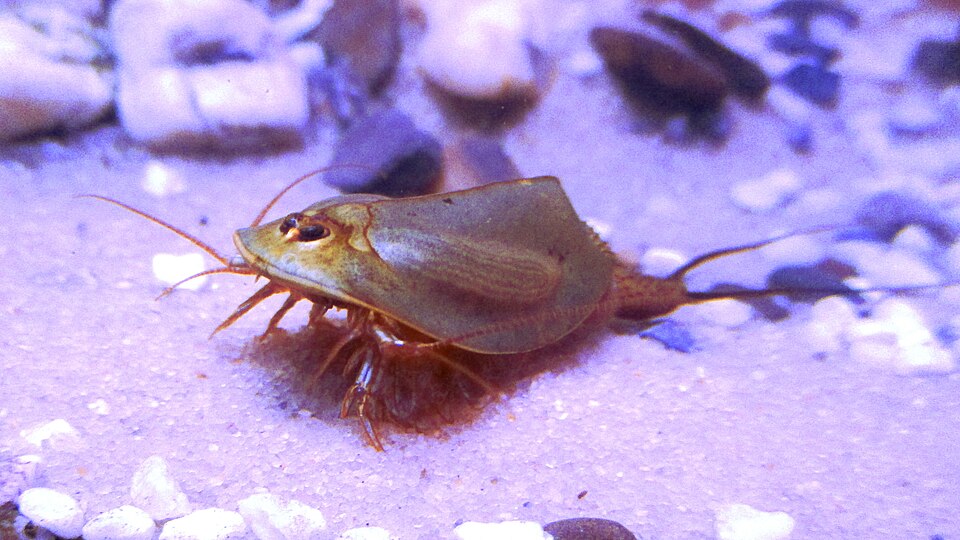
Triops is not a single cosmopolitan species. The genus contains around 15 recognized species, each adapted to different regions and climates. Triops cancriformis dominates Europe and parts of Asia, ranging from Britain to Japan. Triops longicaudatus is the most widespread species, found across North and South America, parts of Africa, and Australia. Triops australiensis is native to the Australian outback, where it thrives in some of the most arid landscapes on Earth.
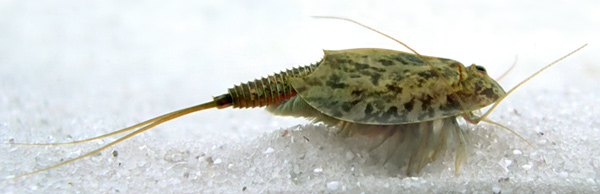
What is striking is that these species look almost identical despite being separated by oceans. The basic body plan, the three eyes, the fan-shaped tail, the armored carapace, all have remained essentially the same for hundreds of millions of years. Natural selection has preserved the Triops blueprint with remarkable fidelity, because it works. The combination of cryptobiotic eggs and a generalist feeding strategy means there is no pressure to change.
Ephemeral Pools: A Universal Habitat
The final piece of the puzzle is habitat. Triops do not need permanent lakes or rivers. They need temporary pools, puddles, rice paddies, or any shallow body of water that forms after rain and dries up within weeks. This type of habitat exists everywhere on Earth that gets seasonal rainfall. From the Sahel to the American Southwest, from Mediterranean scrubland to Mongolian steppe, ephemeral water is universal.
This is why Triops succeed where other aquatic animals fail. Permanent water bodies have fish, which eat Triops. But temporary pools dry out before fish can establish, creating a predator-free window where Triops can grow, reproduce, and lay their eggs before the water disappears. The pool dries, the eggs wait, and the cycle begins again. It is a strategy that has worked for longer than mammals have existed.
What This Tells Us About Life
The biogeography of Triops is not just a curiosity. It is a case study in how life spreads and persists. In an era of climate change, understanding how species colonize new habitats and survive extreme conditions matters more than ever. Triops show us that the combination of durability, dormancy, and opportunism can be more powerful than speed or size.
These little crustaceans did not conquer the world by being the strongest or the fastest. They conquered it by being the most patient. And in a planet where water is increasingly unpredictable, patience might be the ultimate survival skill.