Published August 10, 2026, 20:37 by the Triops.me Editorial Team · Back to Articles
Triops Color Guide: Why Tadpole Shrimp Come in Different Colors
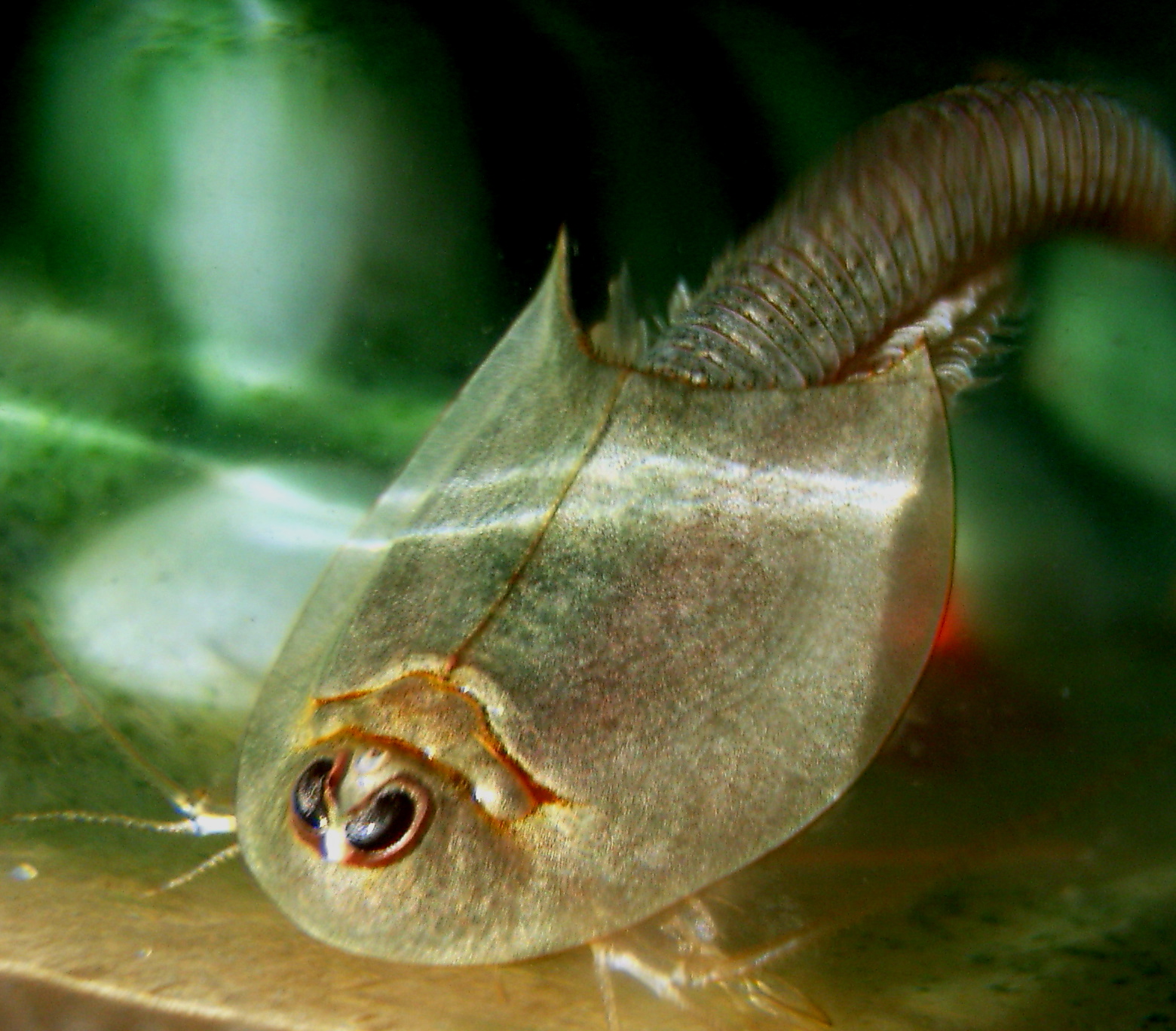
If you have ever raised Triops from a kit, you may have noticed something surprising: the tiny creatures that hatch do not all look the same. Some start out orange, others turn brown, and a few develop a striking reddish tint. The color of a tadpole shrimp is not random. It is shaped by genetics, diet, blood chemistry, and the environment the animal grows up in.
The Default Palette: Browns, Greens, and Grays
Most wild Triops fall within a muted spectrum of browns, grayish-yellows, and olive greens. This is not an accident. These creatures live at the bottom of shallow, temporary pools where the substrate is typically mud, silt, or decaying organic matter. A brownish carapace provides excellent camouflage against that backdrop, helping them avoid the birds and fish that prey on them.
Triops longicaudatus, the most common species, typically displays a mottled brown or grayish-yellow color. In clear water with low sediment, individuals can appear nearly translucent. Populations in murky desert pools tend to be darker than those in cleaner waters.
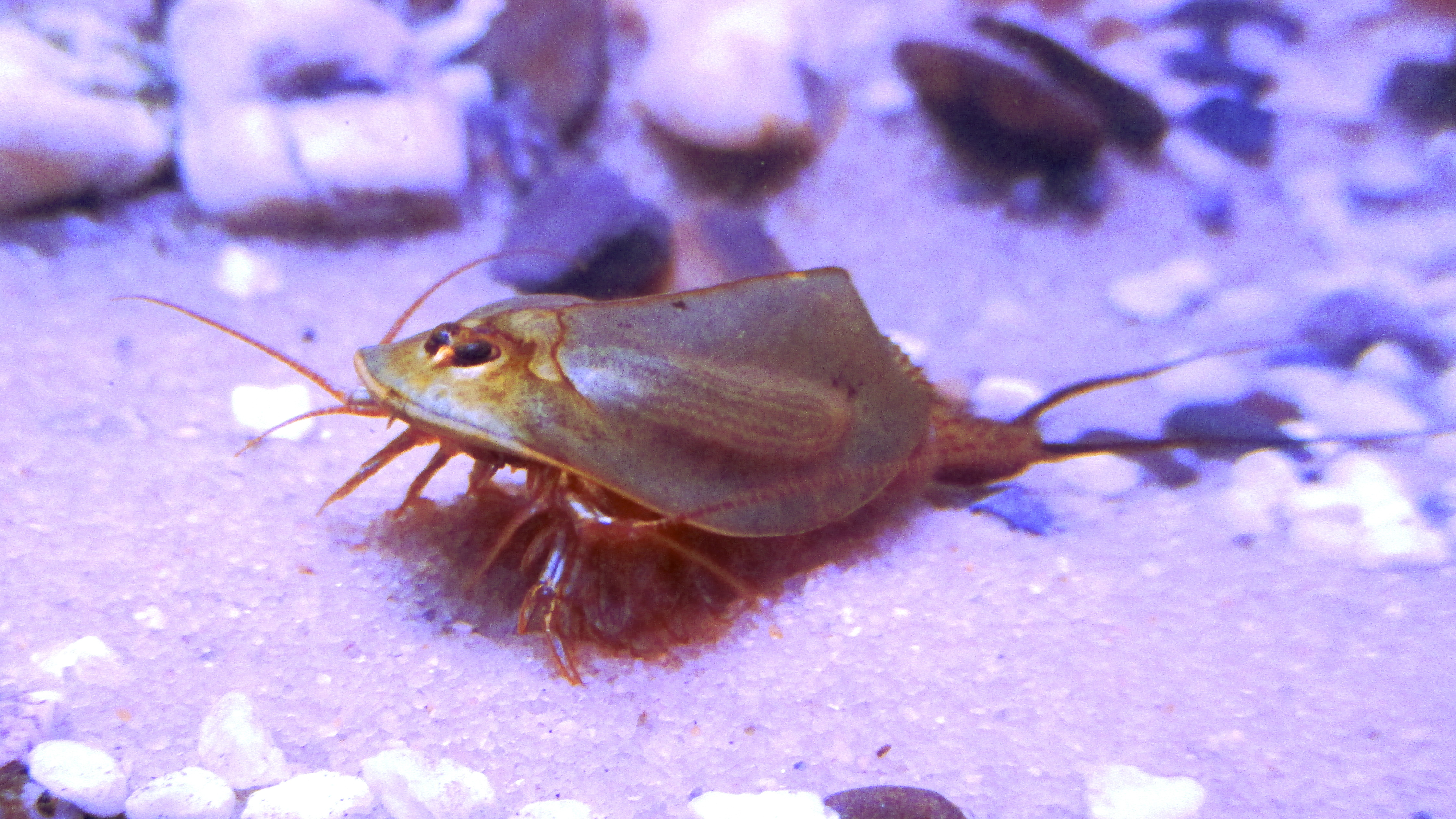
Triops cancriformis, the European species, pushes the palette into green territory. Specimens from northern Spain are frequently vivid green, linked to both their diet and the algae-rich pools they inhabit. The green fades in aquarium conditions with less plant material, confirming that environment drives the final shade.
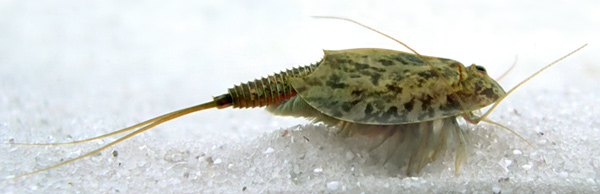
Triops granarius, found across Asia from China to Japan, tends toward a deep, dark brown. This species grows larger than its American cousin, reaching up to ten centimeters, and its heavier pigmentation may offer UV protection in the sun-exposed tropical pools where it thrives.
The Silver Sheen: Triops australiensis
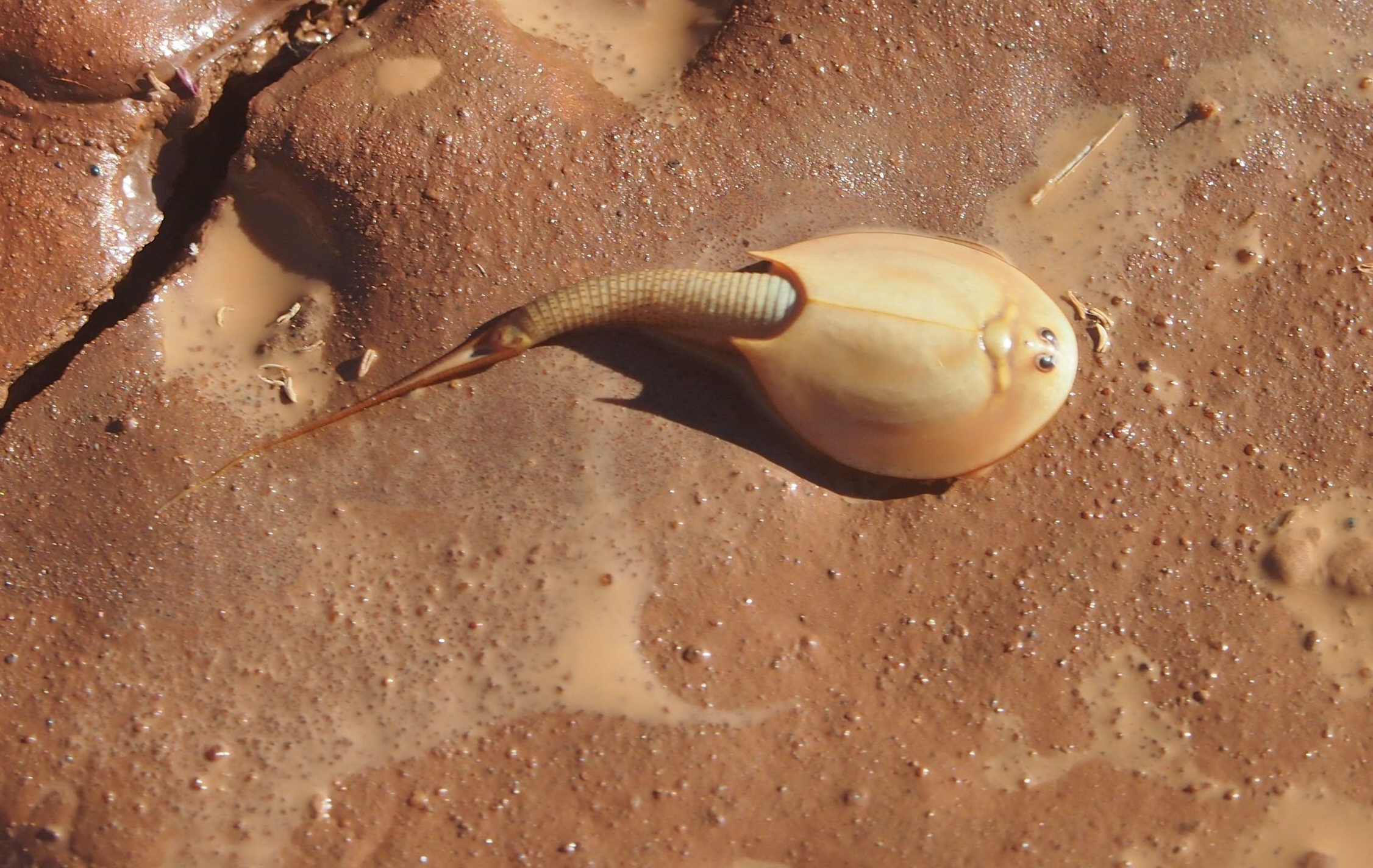
Australia produced something different. Triops australiensis ranges from silvery-gray to pale greenish, giving these shrimp an almost metallic appearance under bright light. Found across tropical Australia and Madagascar, this species grows faster than most other Triops, reaching adult size in days rather than weeks. The silvery sheen may reflect harsh sunlight in the shallow Outback pools where it thrives.
The Red Mystery: Hemoglobin and Albinism
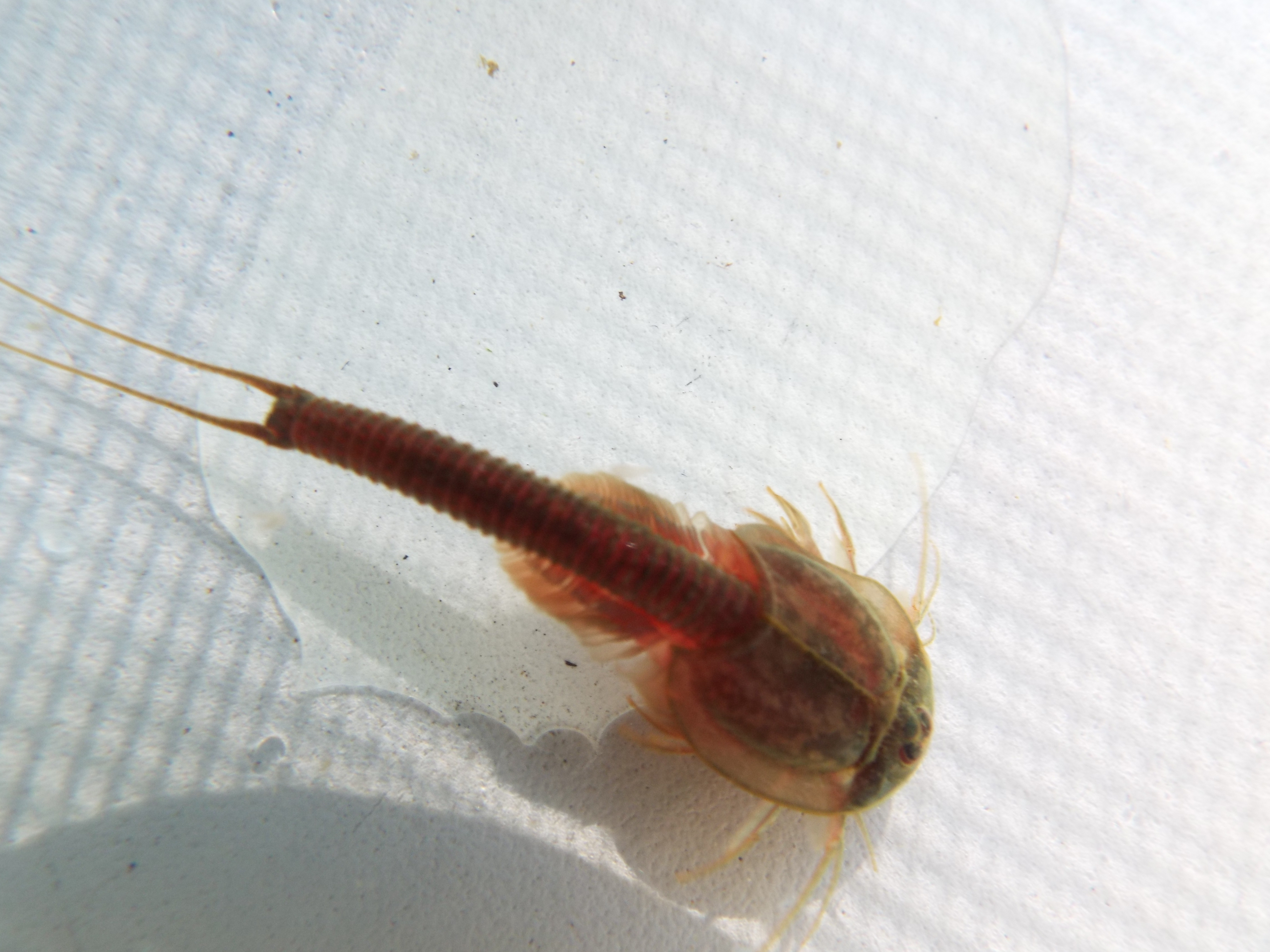
Perhaps the most dramatic variation is the red morph. Unlike the greens and browns, which come from dietary pigments, the red color in certain Triops is produced by their own blood. Triops use hemoglobin to carry oxygen, and in most species this pigment is hidden beneath the opaque carapace. But in albino variants, the shell is transparent, and the red hemoglobin shows right through.
The Triops longicaudatus "Red" variant is the best-known example. A genetic defect prevents normal pigment deposition, leaving the body clear enough for the crimson hemoglobin to become visible. This variant only exists in captivity. In the wild, a transparent body would be a death sentence. Even standard T. longicaudatus can turn pinkish when hemoglobin levels spike in low-oxygen water.
The Japanese Beni kabuto ebi, an albino form of T. cancriformis, shows the same phenomenon. Its reddish glow comes entirely from hemoglobin shining through a clear shell, making it one of the most visually striking Triops in the hobby.
Color Across a Lifetime
A Triops does not look the same from birth to death. Newly hatched nauplii are bright orange, a color from yolk reserves with nothing to do with hemoglobin or diet. Within hours they shed their first exoskeleton and begin developing adult coloration. After about seven days, the characteristic brown or greenish tone sets in.
As the animal matures, the carapace hardens and becomes more opaque, deepening the color. Algae-rich food pushes the shade toward green, while protein-heavy diets produce darker, brownish tones. Temperature matters too: Triops in warmer water often develop more intense pigmentation than those kept cooler.
Why Color Matters
For a creature that has survived unchanged since the Permian, color variation is not trivial. It is evidence of real adaptability. The ability to adjust pigmentation based on environment and diet gives Triops a survival edge in pools that change rapidly in temperature, clarity, and food supply. A brown shrimp in a muddy pool and a green one in an algae bloom are both doing the same thing: staying hidden long enough to reproduce before the water disappears.
That quiet flexibility, invisible to the naked eye, may be one reason these prehistoric survivors have outlasted every mass extinction the planet has thrown at them.