Published August 10, 2026, 21:39 by the Triops.me Editorial Team · Back to Articles
Triops Fossil Trackways: Reading Ancient Footprints in Stone
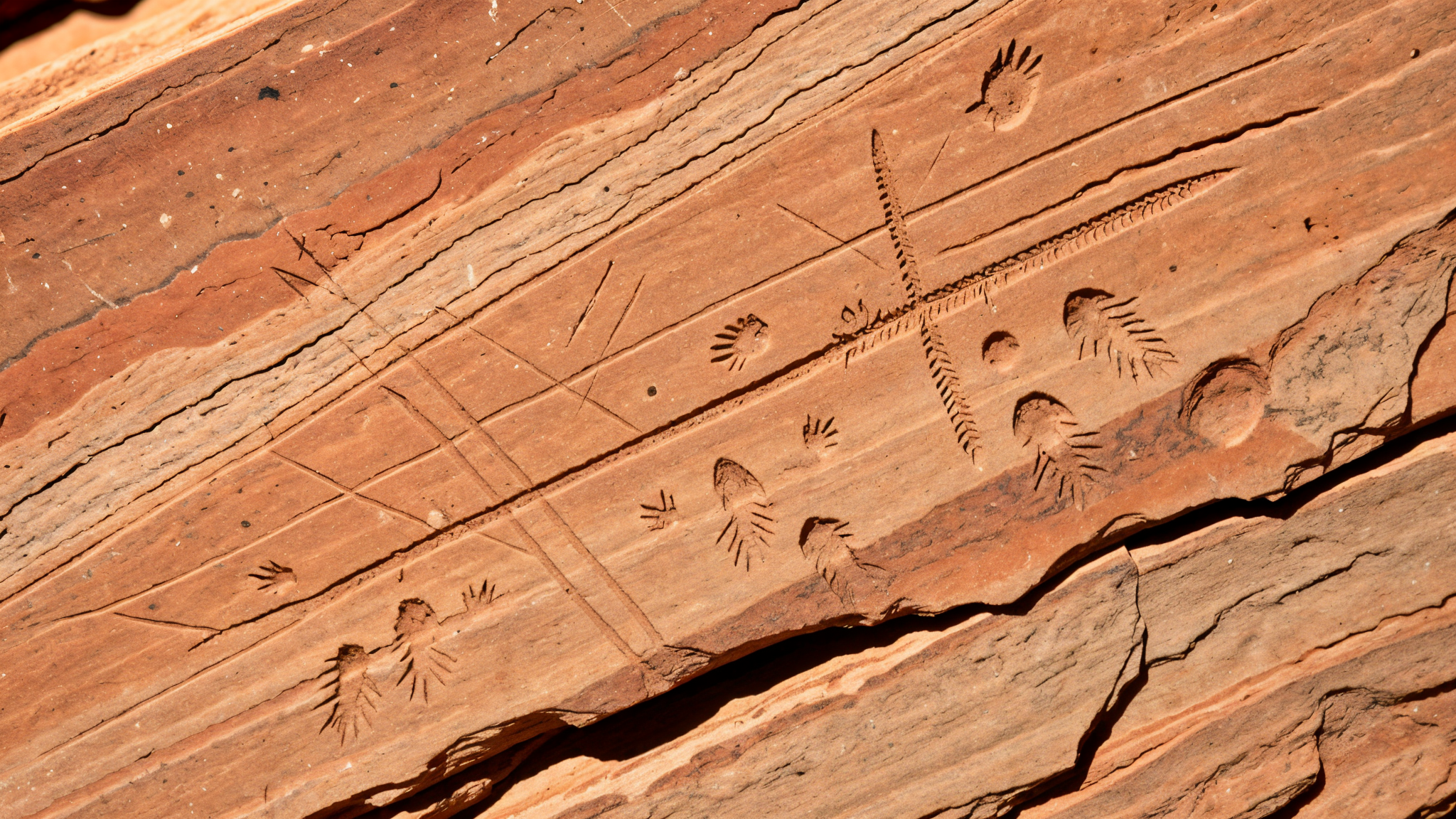
When most people picture fossils, they imagine bones and shells, the hard parts of animals that survived millions of years underground. But the fossil record holds another category of evidence that is often even more revealing: trace fossils, the preserved marks of ancient behavior. For Triops and their relatives, these traces tell a story that body fossils alone cannot.
The study of trace fossils falls under ichnology, from the Greek word ichnos, meaning "trace." Unlike a skeleton, which tells you what an animal looked like, a trace fossil tells you what an animal did. For a creature as secretive and ephemeral as Triops, these behavioral records are priceless.
Why Triops Leave Trackways
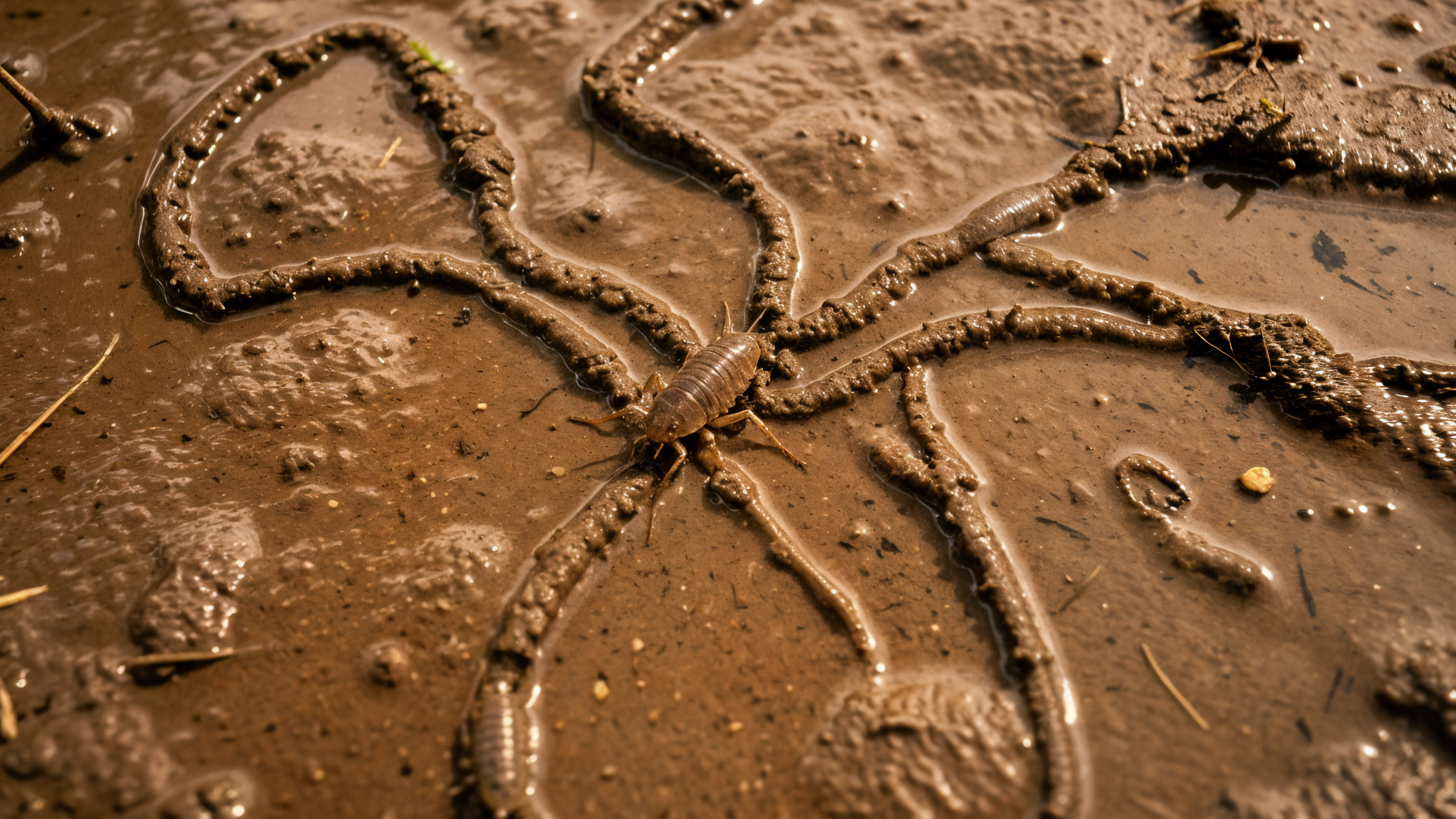
Triops spend most of their lives on the bottom of shallow pools, rummaging through sediment with their dozens of flattened legs. As they dig, they leave parallel scratch marks and tiny drag lines in the mud. When a pool dries out and bakes in the sun, those marks can harden into lasting impressions. Under the right conditions, sediment layers cover and preserve them for millions of years.
Modern Triops are prolific trackmakers. Researchers studying ephemeral pools in Australia and North America have documented the characteristic parallel groove pattern that Triops leave behind: trails typically 2 to 4 millimeters wide, straight to gently curving, marked by fine transverse scratches from the animal's leg tips. In dry Australian clay pans, Triops australiensis creates dense networks of criss-crossing trails as pools shrink, and when these pools are buried by wind-blown dust or seasonal floods, the trails become fossilized.
What a Trackway Looks Like in Stone
Ancient Triops trackways appear as sets of thin, roughly parallel lines etched into fine-grained siltstone or mudstone. They are classified under ichnogenera like Arenicolites for feeding traces or Diplichnites for walking traces, depending on their morphology. The most diagnostic feature is the leg span: because Triops have many pairs of walking legs arranged along their abdomen, their trackways show a distinctive wide band of fine, evenly spaced scratches rather than the single or double row of prints a vertebrate would leave.
Fossil trackways attributed to notostracan crustaceans have been found in rocks dating back to the Devonian period, roughly 360 million years ago. These are among the oldest evidence of these animals, predating any confirmed body fossils of the genus Triops by hundreds of millions of years.
Trackways vs. Body Fossils
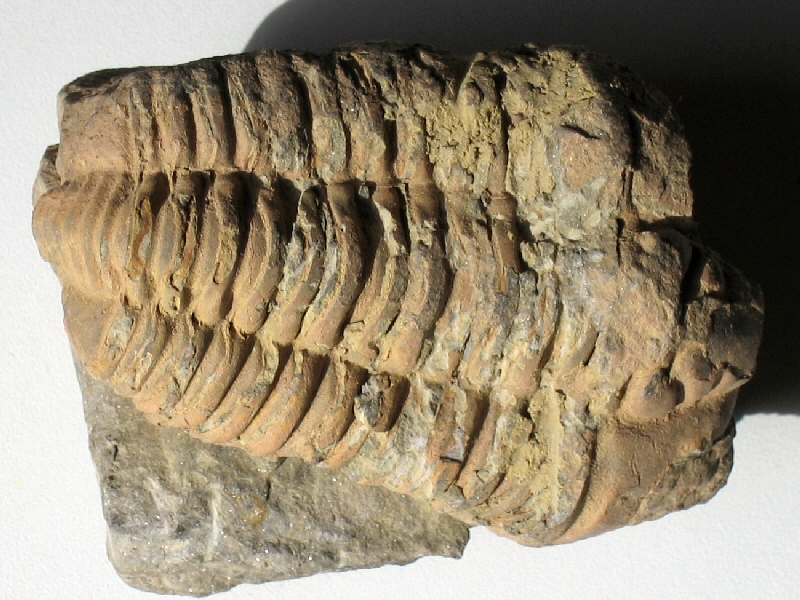
Body fossils of Triops are notoriously rare. Their thin exoskeletons dissolve quickly after death, especially in the acidic waters of temporary pools. The earliest confirmed body fossils attributed to Triops come from the Early Miocene of Japan, only about 20 million years ago. But trace fossils extend their story back to the Devonian, a gap of over 300 million years.
This is where ichnology shines. Trace fossils capture behaviors that body fossils cannot: fossilized coprolites (droppings) show what they ate, burrow structures reveal how deeply they dug, and egg chamber impressions in dried mud prove they buried their resting eggs before the pool vanished, exactly as modern Triops do today.
A Window Into Ancient Ecosystems
Every Triops trackway is also a snapshot of the pool it lived in. Sediment grain size reveals water depth and flow. Trail density shows population size. The direction of the tracks can even indicate which way the pool was shrinking as it dried. Paleontologists use these trace fossils to reconstruct ancient ephemeral pool ecosystems, environments that rarely preserve well because they exist only briefly.
Despite their importance, crustacean trace fossils remain understudied. They are tiny, often only millimeters wide, and easy to overlook in the field. But as researchers document modern Triops trails and compare them to ancient specimens, the fossil record of these crustaceans is slowly filling in. Every new trackway site adds another data point to the story of how Triops have quietly persisted through ice ages, asteroid impacts, and continental collisions, leaving their mark, quite literally, on the rocks beneath our feet.