Published August 11, 2026, 07:00 by the Triops.me Editorial Team · Back to Articles
Triops and the Mystery of Evolutionary Stasis
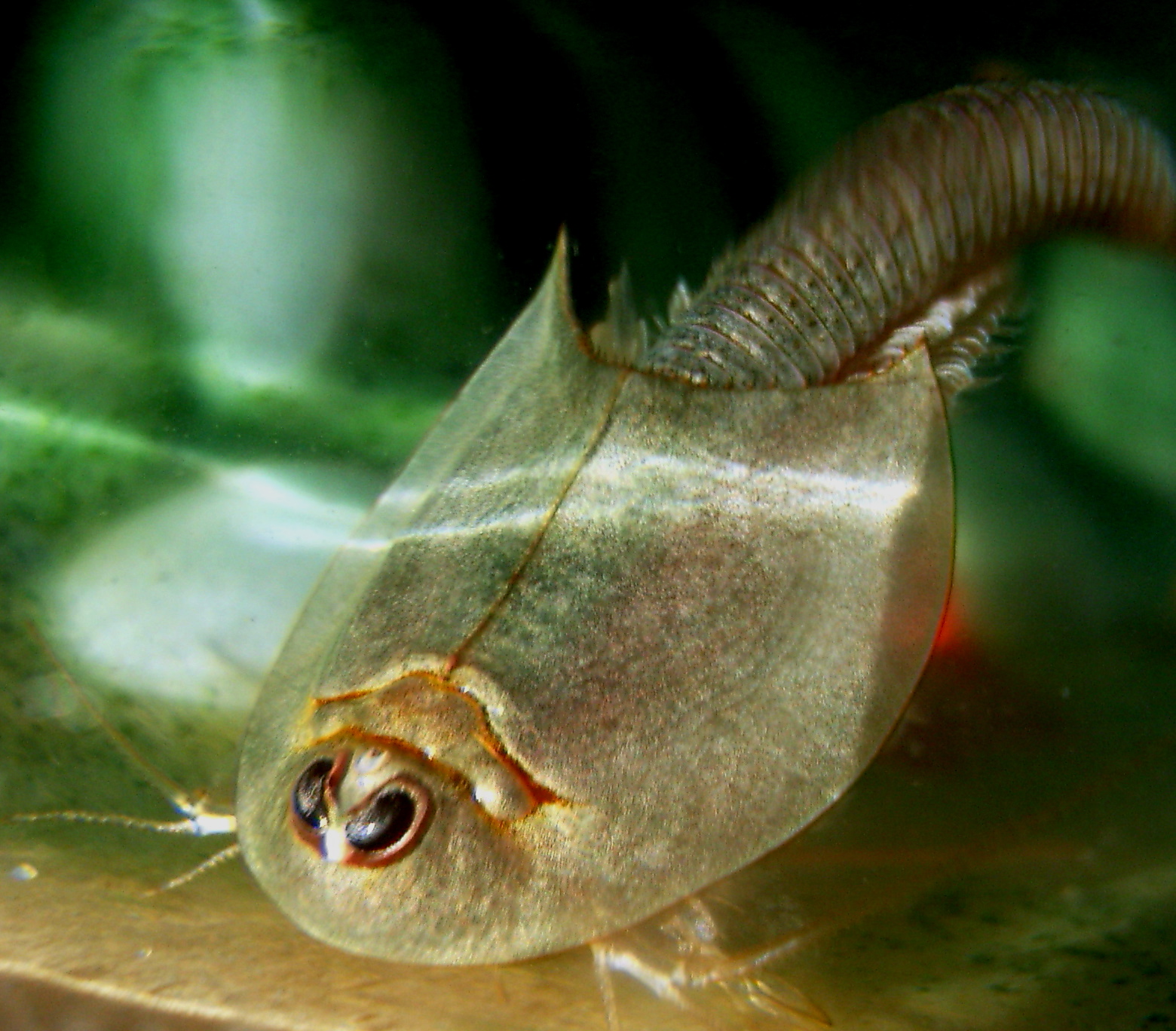
Most living things evolve. That is the fundamental rule of biology: populations change over time, species split, new forms emerge, old ones disappear. But a small handful of organisms seem to break that rule. They look today almost exactly as they looked millions, sometimes hundreds of millions, of years ago. Triops is one of these. And in March 2026, scientists finally got close enough to its DNA to ask a haunting question: why hasn't it changed?
A team led by Giobbe Forni and colleagues published a landmark study in Biology Letters, the journal of the Royal Society. They assembled high-quality genomes for two Triops species, Triops granarius and Triops simplex, and compared them against previously sequenced genomes of other Triops and their relatives. What they found was not what anyone expected. The genomic signature of evolutionary stasis, the molecular fingerprint that explains why these animals look the same across geological time, remained elusive. The genes are evolving. The proteins are changing. The genome is dynamic. But the body plan, the thing you can see with your eyes, has barely budged.
What Evolutionary Stasis Actually Means
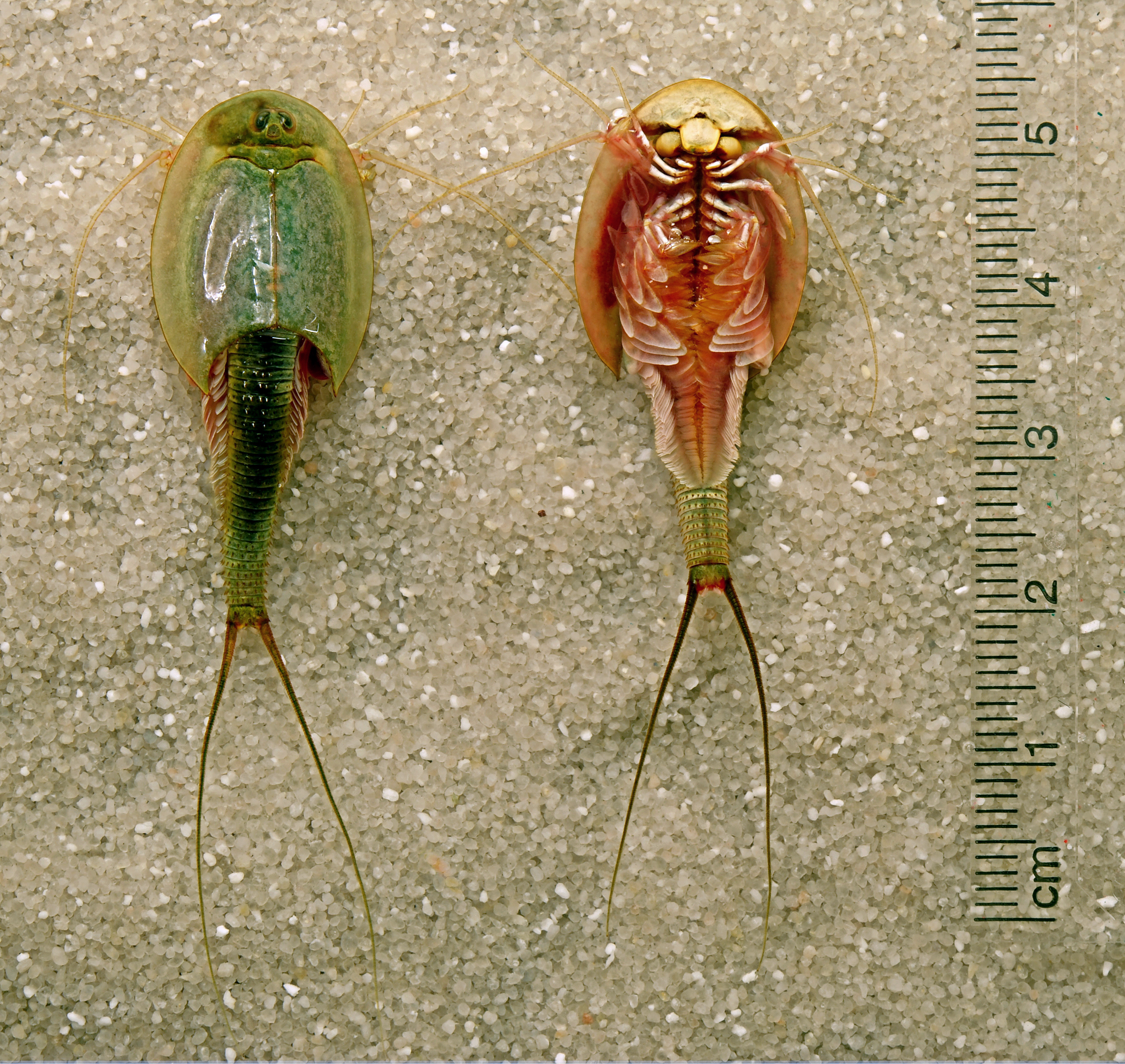
Evolutionary stasis is not the same as being "primitive." A Triops is not an unfinished animal, a halfway point on the road to something more advanced. It is a fully optimized organism that found a body plan that works and stuck with it. Fossil Triops from the Triassic period, roughly 220 million years ago, look strikingly similar to the Triops swimming in temporary ponds today. The shield-shaped carapace, the dozens of leaf-like swimming legs, the long tail filaments, the three eyes on top of the head, all of it has persisted through five mass extinctions, continental drift, ice ages, and the rise and fall of the dinosaurs.
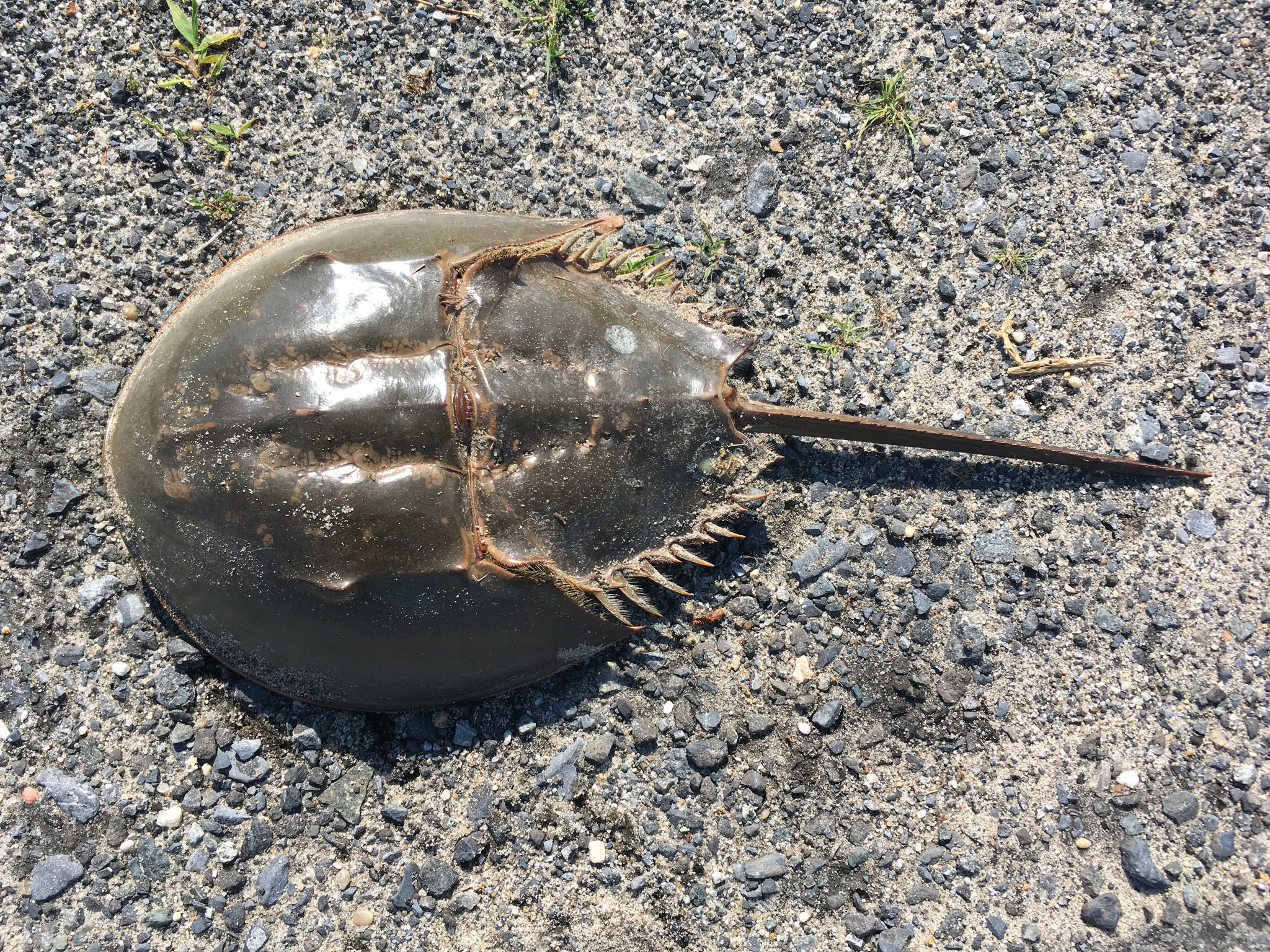
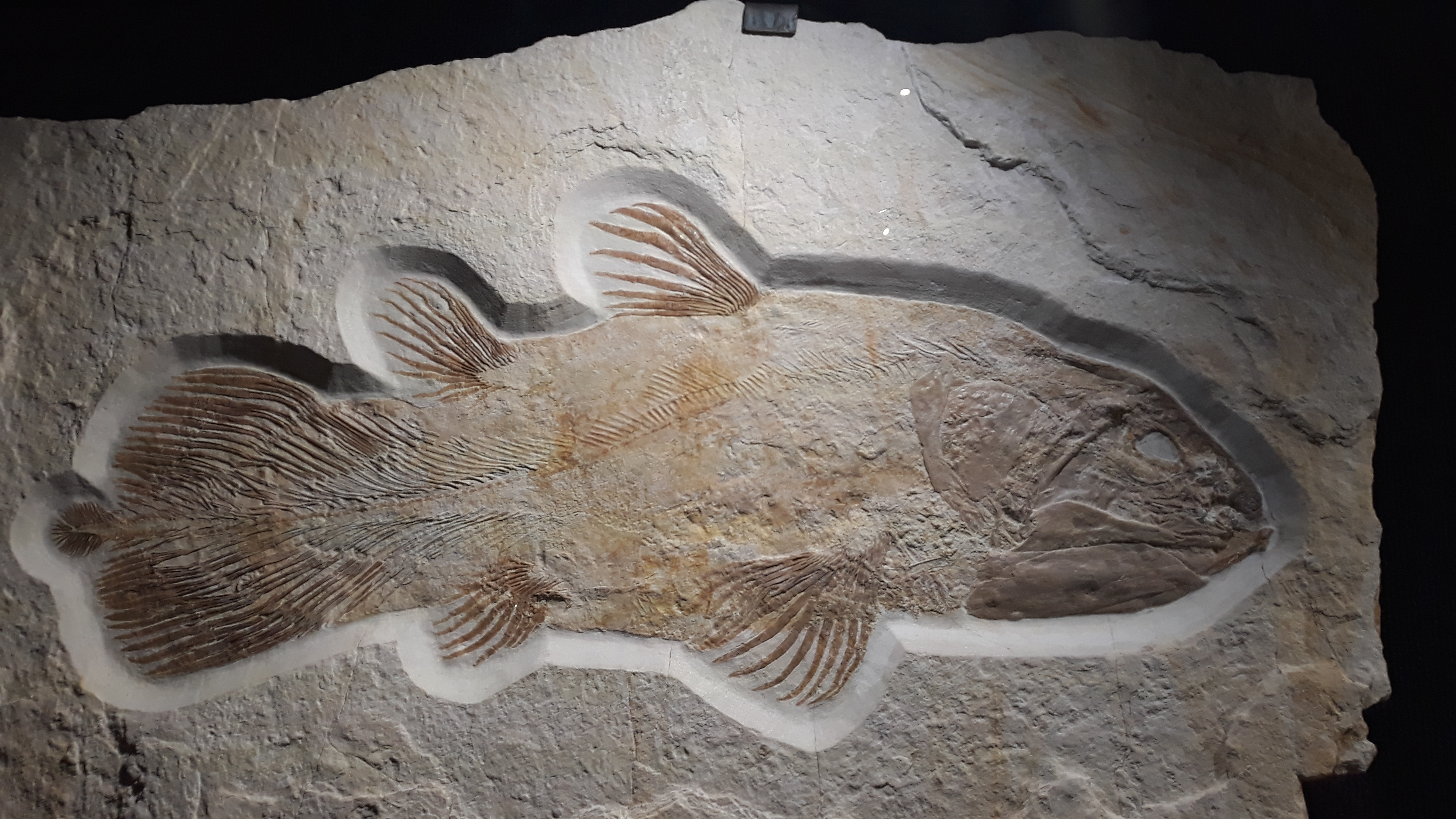
This kind of morphological conservatism is rare. Most animal lineages change dramatically over tens of millions of years. Insects diversify, mammals grow larger or smaller, fish develop new jaw structures. Triops, along with a few other organisms like horseshoe crabs, coelacanths, and the Ginkgo tree, seems to occupy a different evolutionary path entirely, one where the genome keeps ticking, keeps copying and mutating, but the visible animal stays essentially the same.
What the Genome Revealed
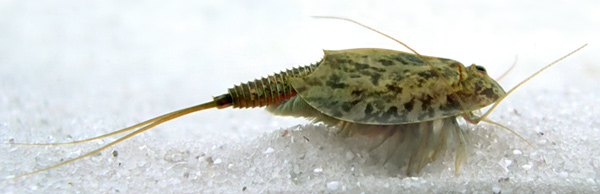
The Forni team's approach was elegant. They sequenced the genomes of T. granarius and T. simplex, two species found in Africa and Asia, and compared the rate of protein evolution across the Triops lineage. If stasis were caused by genes being frozen, by some kind of evolutionary lock that prevents change at the DNA level, they would have found very slow protein evolution. But that is not what they found. Protein coding genes in Triops evolve at normal rates. The genome rearranges, genes duplicate and are lost, transposable elements jump around. At the molecular level, Triops is not static at all.
What is conserved are the regulatory regions, the stretches of DNA that control when and where genes are turned on during development. The toolkit that builds a Triops body, the Hox genes and their regulators that lay out the basic body segments and appendage patterns, appears to be under intense stabilizing selection. Change the toolkit, and the animal does not survive. Change the protein sequences, and the animal adapts to its local environment without altering its fundamental architecture.
A Genome Under Different Pressures
This finding connects to a broader puzzle in evolutionary biology. Why do some lineages change constantly while others remain stable for geological ages? One hypothesis is that organisms living in unpredictable, temporary environments, like the vernal pools where Triops hatch, face a different set of selective pressures. Triops eggs can lie dormant in dry soil for decades. When rain finally fills a pool, the eggs hatch, the animals grow rapidly, reproduce, and produce new eggs before the pool dries again. The cycle is ancient and reliable. There is no evolutionary pressure to become something different, because the current strategy already works across a vast range of conditions.
Compare this to horseshoe crabs, another living fossil. Horseshoe crabs live in marine environments that have changed dramatically over hundreds of millions of years. Their body plan has been conserved, but their genomes show a different pattern of adaptation, one tuned to shifting ocean chemistry, changing predators, and fluctuating food sources. The coelacanth, another famous living fossil, took a different path entirely, retreating to deep ocean caves where conditions remained stable for millions of years. Each living fossil tells a different story about what it means to persist.
Why This Matters Beyond Triops
The practical implications are significant. If we can understand how Triops maintains morphological stability while allowing molecular flexibility, we gain insights into developmental biology, conservation genetics, and even the origins of body plan diversity in the animal kingdom. The genes that keep a Triops looking like a Triops are, in a sense, the genes that prevent new species from emerging from an ancient lineage. Understanding those constraints could illuminate why some animal groups diversify explosively while others stagnate.
There is also a conservation angle. Triops populations worldwide are declining as temporary pools are drained, paved, or polluted. These pools, called vernal pools or ephemeral wetlands, are among the most threatened habitats on Earth. A species that survived the Permian extinction and the asteroid that killed the dinosaurs could still be undone by suburban development. Studying the genome of Triops helps us understand what we would lose, not just as a curiosity, but as a living record of how evolution works when it chooses stillness over change.
The mystery of Triops is not that it is frozen in time. It is that the genome keeps evolving while the animal does not. That paradox, the gap between molecular change and morphological persistence, is one of the deepest questions in evolutionary biology. And thanks to the work of Forni and colleagues, we are finally beginning to see the answer.