Published 2026-08-27 by the Triops.me Editorial Team · Back to Articles
Triops and Australia's Great Artesian Basin: Where Underground Eggs Wait for Centuries
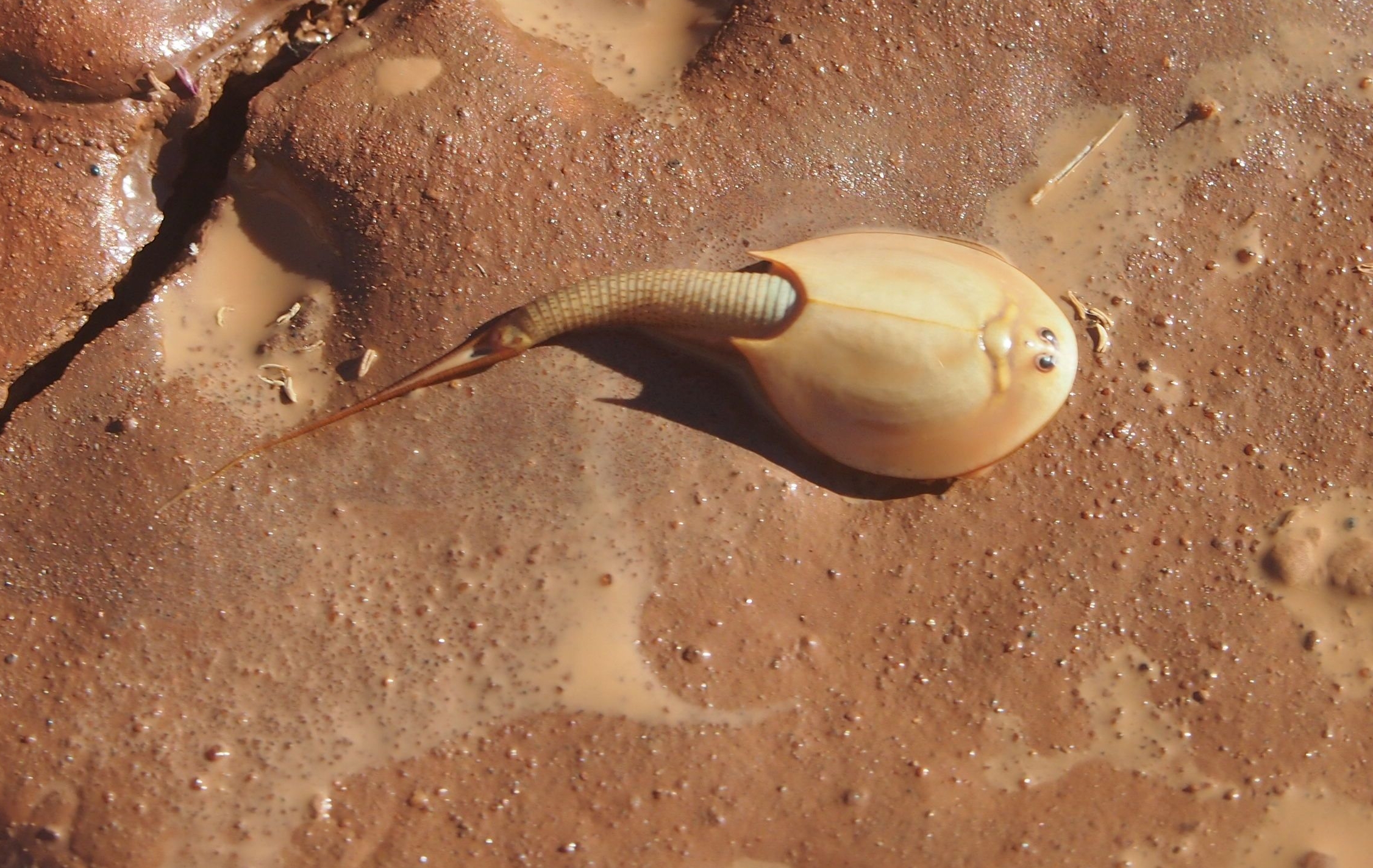
Across the sun-baked plains of inland Australia, where temperatures regularly exceed 40 degrees Celsius and rain may not fall for a decade, life seems impossible. Yet beneath this harsh landscape lies a secret: millions of tiny, dormant eggs, embedded in cracked mud and dried clay, waiting patiently for something extraordinary. These are the eggs of Triops australiensis, the Australian tadpole shrimp, and they are among the most resilient biological structures on Earth.
The story of how these prehistoric crustaceans survive in one of the planet's most unforgiving environments is intimately connected to a geological wonder beneath the surface: the Great Artesian Basin, one of the largest underground water reserves in the world.
The Great Artesian Basin: An Underground Ocean
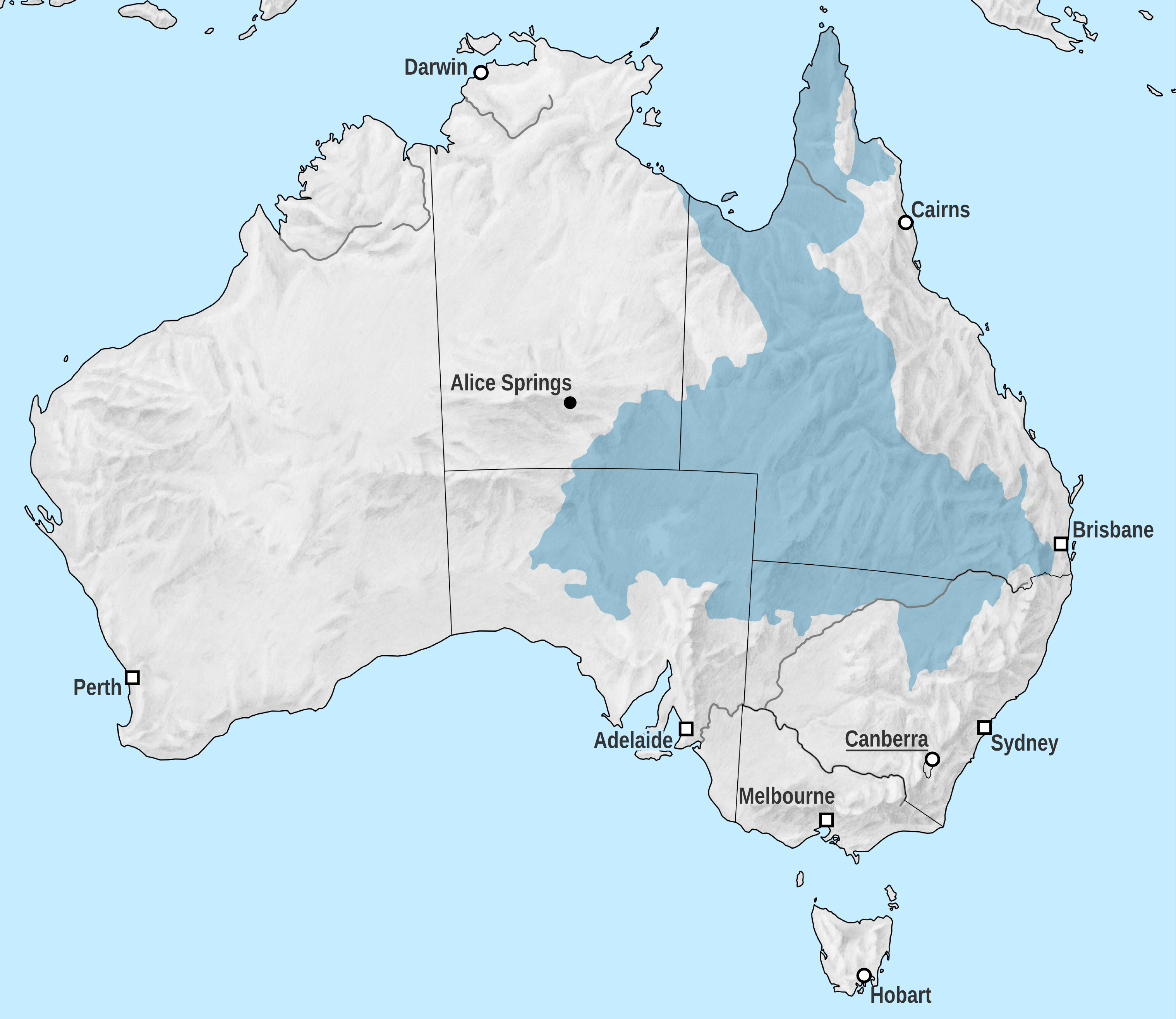
The Great Artesian Basin stretches across roughly 1.7 million square kilometers of eastern and central Australia, underlying parts of Queensland, New South Wales, South Australia, and the Northern Territory. It is one of the largest artesian basins on the planet, containing an estimated 65,000 cubic kilometers of water trapped in porous rock formations called aquifers.
This water entered the basin tens of millions of years ago, when Australia was still part of the ancient supercontinent Gondwana and the climate was far wetter than it is today. Rain fell on mountain ranges that no longer exist, seeped into underground sandstone layers, and was gradually pushed deeper by the weight of sediment above. Some of this water has been underground for over two million years, sealed by impermeable rock layers that prevent it from escaping to the surface.
Where pressure builds sufficiently, the water finds natural pathways upward. Artesian springs burst from the earth in places where no surface water should exist, creating oases in the desert. These springs are not just geological curiosities, they are the lifeblood of an entire ecosystem that includes Triops.
Eggs That Wait for Rain
Triops australiensis inhabits temporary freshwater pools that form after rare, intense rainfall events. These pools may hold water for just a few weeks before evaporating back into the red dust. But during that brief window, Triops must complete their entire life cycle: hatch from eggs, grow to adulthood, mate, and lay a new generation of eggs before the water disappears.
The eggs themselves are marvels of biological engineering. Encased in a tough, multi-layered shell, they enter a state called cryptobiosis, a form of suspended animation in which metabolic activity drops to nearly zero. Inside each egg, the embryo simply waits. It can survive desiccation, extreme heat, freezing temperatures, and even the vacuum of space, as experiments have demonstrated.
In the Great Artesian Basin region, these eggs have been documented surviving in dried mud for periods exceeding 70 years. The longest confirmed dormancy for Triops eggs is around 90 years, though anecdotal reports from Australian station owners suggest even longer periods. The eggs do not age in any meaningful sense while dormant, they simply pause.
The Role of Artesian Springs
The Great Artesian Basin's natural springs have created a unique paradox in Australian ecology. These springs provide permanent or semi-permanent water in landscapes where surface water is otherwise nonexistent. Over thousands of years, the water from these springs has carved out small pools and wetlands, known locally as mound springs, each of which develops its own distinct ecosystem.
Triops eggs are washed into these spring-fed pools during rare flood events, where they hatch and multiply rapidly. When the floodwaters recede and the pools dry, the eggs are left behind in the mud, dormant once again. Some eggs may be carried by wind or water flow to new locations, slowly expanding the species' range across the basin over geological timescales.
Why This Matters
The connection between Triops and the Great Artesian Basin is more than a curiosity. It illustrates a profound principle of evolutionary biology: the most successful survival strategies are not always about being the fastest or the strongest. Sometimes, the winning strategy is simply waiting.
Triops have survived five mass extinctions, outlived the dinosaurs, and persisted through ice ages and desertification, all by mastering the art of patience. Their eggs are biological time capsules, carrying ancient genetic information across centuries and millennia, emerging only when conditions are right.
In a world facing accelerating climate change, the Triops strategy is a powerful reminder that life's solutions to environmental extremes are often far more elegant and durable than anything human engineers have devised. The Great Artesian Basin may be slowly depleting as water is pumped for agriculture, but the Triops eggs buried in its dried margins will continue to wait, unhurried, for the next rain.