Published August 08, 2026, 03:52 by the Triops.me Editorial Team · Back to Articles
Triops in the Outback: How Prehistoric Shrimp Conquered Australia's Desert Pools
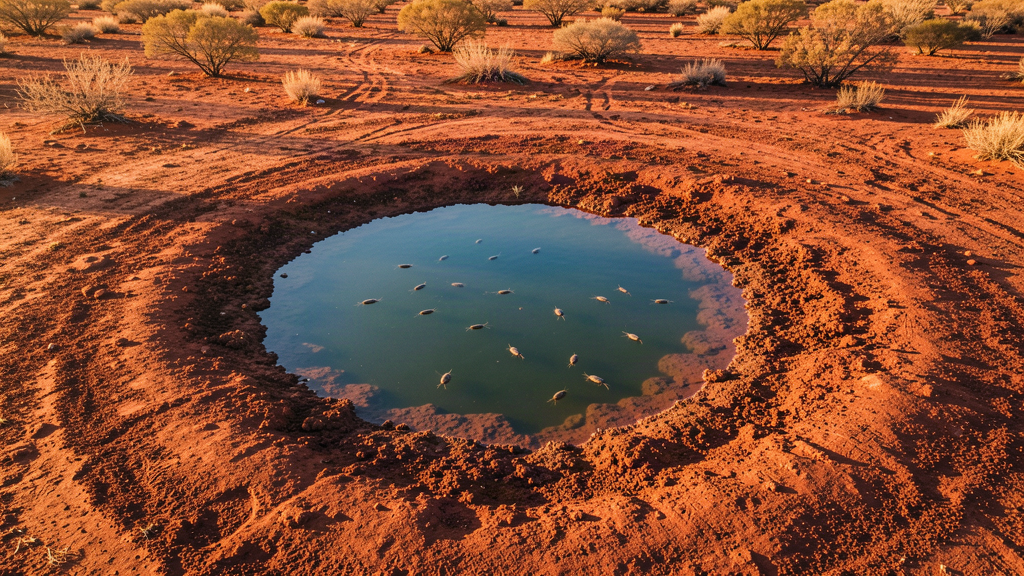
Imagine standing in the middle of the Australian outback. The ground is cracked red earth stretching to the horizon, baked by months of relentless sun. There is no water in sight. Now imagine that same landscape after a single night of heavy rain: shallow pools dot the desert floor, and within 48 hours, thousands of prehistoric shrimp are swimming through them.
This is not fiction. This is the life cycle of Triops australiensis, one of Australia's most remarkable and least understood animals. First described by naturalists Walter Baldwin Spencer and Thomas Sergeant Hall in 1895, this species of tadpole shrimp has quietly mastered one of the harshest environments on Earth.
An Ancient Survivor in a Modern Desert
Triops australiensis belongs to the order Notostraca, a group of crustaceans whose body plan has remained essentially unchanged for over 200 million years. While many Triops species live in temporary ponds across Europe, Africa, and the Americas, the Australian species occupies a uniquely extreme niche: the ephemeral waterholes of the arid interior.
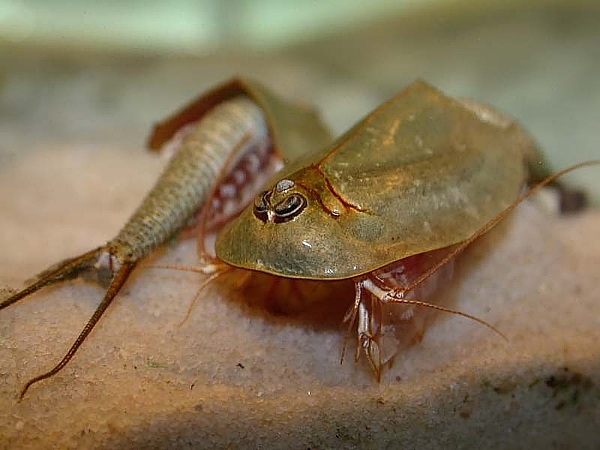
The species has a wide distribution across the continent, found in most states except the tropical north of Western Australia and Queensland. In Tasmania, it is replaced by a close relative, Lepidurus apus, which can be distinguished by a small plate between its tail filaments that T. australiensis lacks. The two species occupy similar ecological roles on either side of the Bass Strait.
The Waiting Game
The secret to Triops success in the outback lies in their eggs. These tiny capsules, called cysts, are engineered for one purpose: to wait. When a pool dries up and the adult Triops die, thousands of cysts settle into the mud. They can survive desiccation, extreme heat, UV radiation, and even freezing temperatures. Scientists have documented viable Triops cysts remaining dormant for decades.
When rain finally arrives, the cysts absorb water and hatch into microscopic nauplii (larvae) within 24 to 48 hours. The timing is critical. Triops have evolved to develop at an astonishing rate, reaching reproductive maturity in as little as two to three weeks. They do not have the luxury of waiting for ideal conditions. The pool could evaporate at any moment, so every day counts.
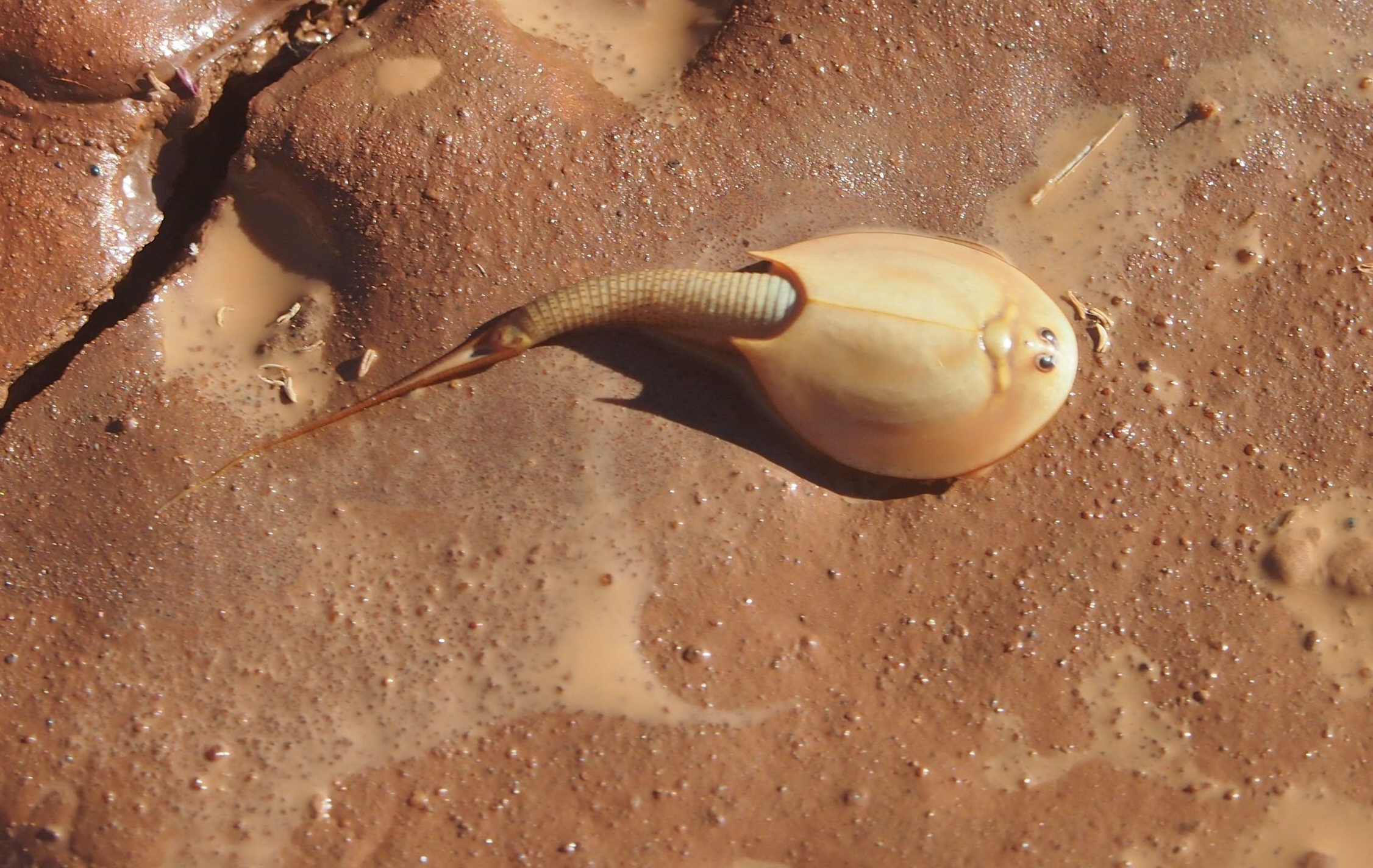
Adult T. australiensis can reach about 7.6 centimeters (3 inches) in length, making them among the larger tadpole shrimp in the world. Their broad, flat carapace gives them the local name "shield shrimp," a term used by the Queensland Museum. They tolerate a pH range of 7 to 9 and can survive in both hard and soft water, though their eggs hatch more reliably in water with low mineral content.
Why the Desert Works
It seems counterintuitive that a shrimp would thrive in a place defined by the absence of water. But the desert offers Triops something that permanent lakes cannot: freedom from predators. Fish, amphibians, and aquatic insects that would normally devour Triops simply cannot survive in pools that appear and vanish within weeks.
Researchers have observed an interesting pattern in the American Southwest with related species. Triops tend to colonize the most ephemeral pools, the ones that dry up fastest, precisely because those pools are too short-lived for predators like tiger salamander larvae to develop. The same logic applies in the Australian outback. The harsher the environment, the safer the Triops.
Life in the Fast Lane
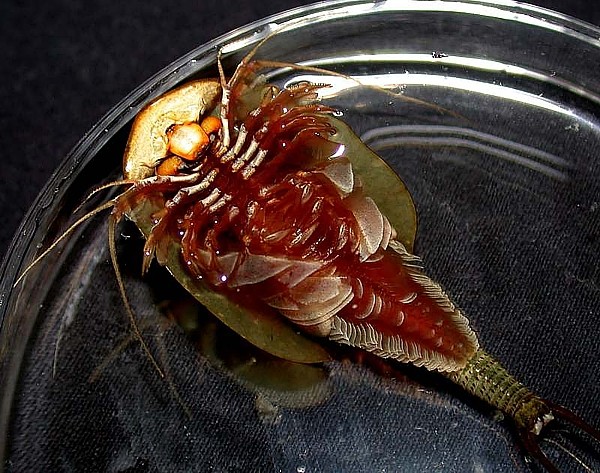
When Triops emerge in a freshly filled pool, the scene is one of frantic activity. They dig through the mud with dozens of tiny legs, stirring up clouds of sediment as they filter-feed on algae, bacteria, and organic detritus. They swim upside down along the water surface, their bright red hemoglobin visible through their translucent shells. Some even push into water so shallow that only their eyes poke above the mud, resembling crocodile snouts.
This rapid life cycle is not just about individual survival. It is a population strategy. A single pool may produce thousands of adults, each laying hundreds of eggs before the water disappears. Those eggs then seed the soil for the next rain event, which might be months or years away. The outback is not a single habitat for Triops. It is a network of potential pools scattered across thousands of square kilometers, connected not by water but by wind, flooding rivers, and the occasional bird carrying sticky cysts on its feathers.
What the Outback Tells Us
Triops australiensis is more than a curiosity. It is a living model of how life persists under extreme uncertainty. In an era of climate change and increasing drought frequency across Australia, understanding how Triops manage their boom-and-bust cycles could offer insights into ecosystem resilience. These shrimp have been doing it for millions of years. The outback is not their obstacle. It is their strategy.
Next time you see footage of rain falling on the Australian desert, remember: beneath that red soil, a 220-million-year-old army is waking up.