Published August 21, 2026, 09:29 by the Triops.me Editorial Team · Back to Articles
Triops and the Triassic: Surviving While Dinosaurs Rise
Two hundred fifty-two million years ago, something catastrophic happened to life on Earth. The Permian-Triassic extinction event, often called "The Great Dying," wiped out roughly 90% of all marine species and 70% of terrestrial vertebrates. It was the most severe mass extinction in the planet's history, leaving behind a world that looked almost unrecognizable. Yet from this devastation, a familiar creature emerged not only alive but largely unchanged: the Triops.
While scientists debate exactly how Triops survived the Great Dying and the Triassic world that followed, the fossil record tells a remarkable story of persistence. Triops did not merely endure the Triassic period, 252 to 201 million years ago. They thrived in it, and they did so while some of the most famous creatures in Earth's history were just getting started.
The World Before the Triassic
Before the extinction, the late Permian world was dominated by synapsids, the mammal-like reptiles that ruled both land and freshwater. In the water, giant amphibians and armored fish patrolled lakes and rivers. On land, creatures like Dimasaurus and various dicynodonts filled ecological niches that would later belong to dinosaurs. Triops were present throughout this world, living in the same temporary pools and floodplains they inhabit today.
The fossil record of Triops extends well back into the Permian, and possibly earlier. Triops cancriformis, the species alive today, has a fossil lineage stretching back over 220 million years. Some specimens have been found in Permian deposits dating to before the Great Dying, meaning that the ancestors of modern Triops were already established when the extinction struck.
What Killed Everything Else
The cause of the Permian-Triassic extinction is still debated, but most evidence points to the Siberian Traps, a series of massive volcanic eruptions that lasted roughly two million years. These eruptions released staggering amounts of carbon dioxide and methane into the atmosphere, driving global temperatures up by as much as 10 degrees Celsius. Ocean acidification followed, and oxygen levels in both air and water dropped sharply.
For large, oxygen-dependent animals like synapsids and amphibians, the combination was lethal. The fossil record shows a dramatic die-off across nearly every ecosystem. Freshwater environments, which might have offered some buffer against ocean acidification, were not spared. Large amphibians vanished. Many fish lineages collapsed. But the small, detritus-feeding branchiopods in ephemeral pools persisted.
Why Triops Survived
Several features of Triops biology likely helped them survive the Great Dying where other creatures failed. The most important is their egg stage. Triops produce desiccation-resistant eggs, called cysts, that can remain dormant in dry sediment for years or even decades. When conditions turn hostile, whether from drought, extreme heat, or chemical contamination, the eggs simply wait. When rains return and pools refill, they hatch.
This cryptobiotic strategy meant that Triops populations could essentially disappear from a landscape without going extinct. Their eggs buried in mud became biological time capsules, surviving conditions that killed active organisms outright. During the worst of the volcanic winter and subsequent warming, Triops eggs simply sat in the sediment, unharmed.
Triops also had another advantage: they are generalists. They feed on detritus, algae, small invertebrates, and even their own kind. This dietary flexibility meant they could exploit whatever food sources remained after the extinction. Specialized feeders with narrow dietary requirements died out, but Triops adapted to whatever their temporary pools offered.
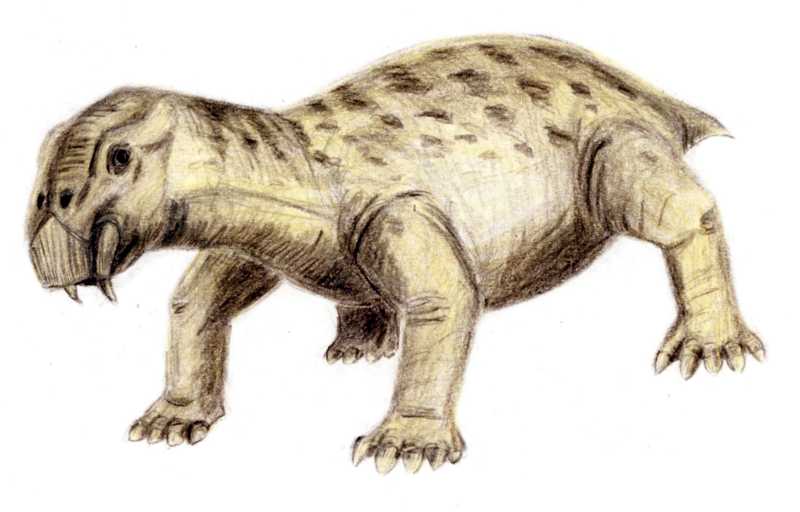
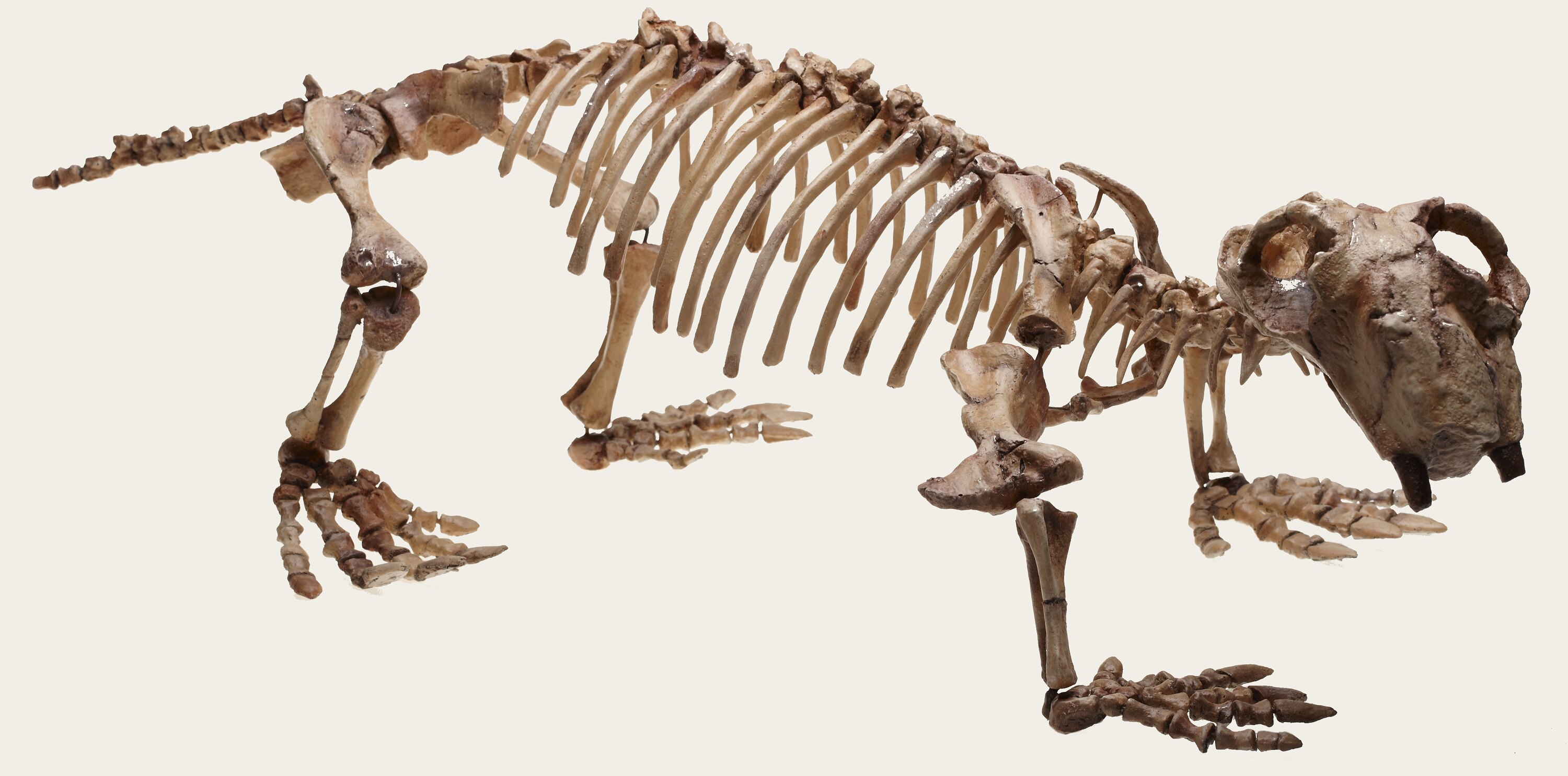
The famous survivor Lystrosaurus, a pig-sized dicynodont that dominated Early Triassic land ecosystems, used a different strategy. It reproduced quickly and could burrow underground to escape harsh surface conditions. Triops achieved something similar through their egg cysts, but without needing to burrow at all. The eggs simply sat on or just below the surface of dried pool beds, protected by their incredibly tough shells.
The Triassic World Triops Inhabited
The Triassic world that Triops emerged into was a recovering landscape. In the immediate aftermath of the extinction, Earth was warmer, drier, and less biologically diverse than the Permian. The lush coal forests of the Carboniferous and Permian were largely gone, replaced by sparser, more open vegetation. Monsoon-like seasonal patterns dominated many regions, creating cycles of flooding and drought that perfectly matched the Triops life cycle.
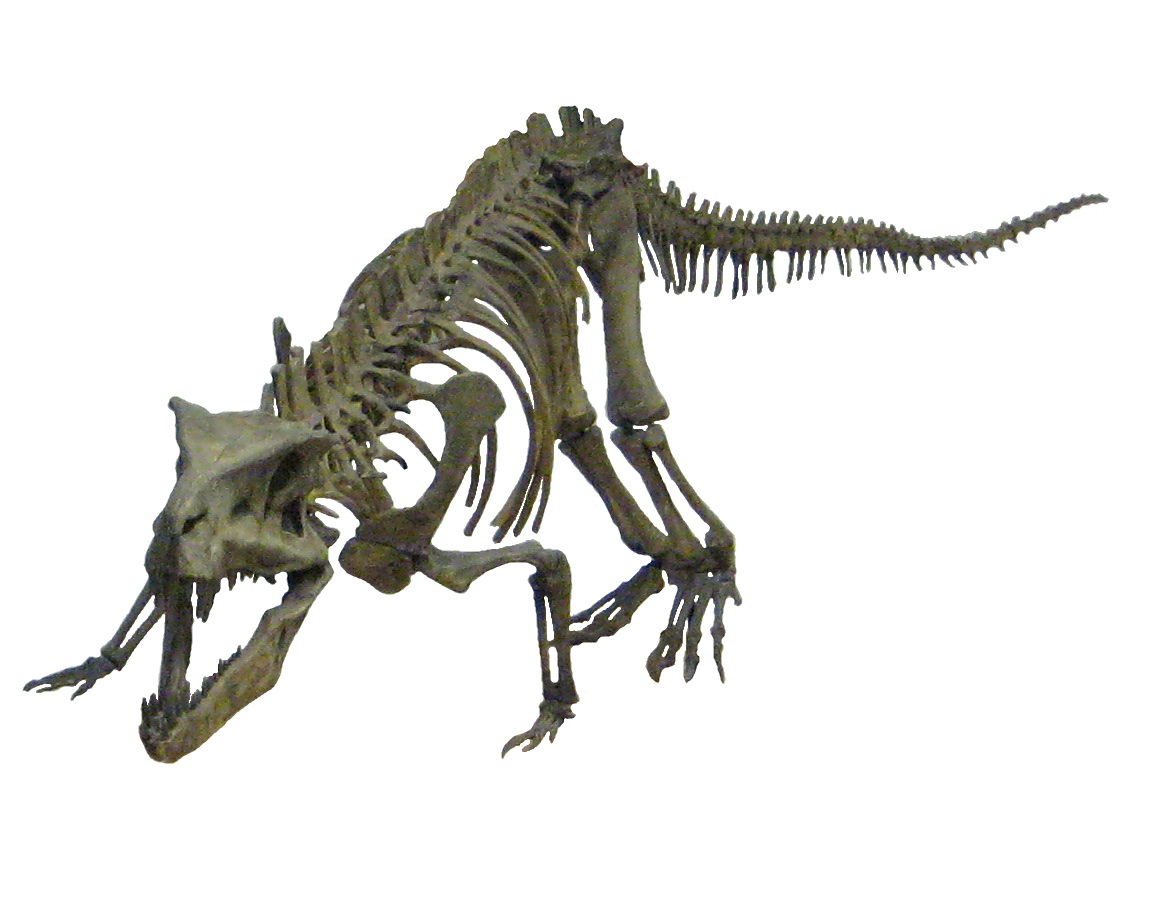
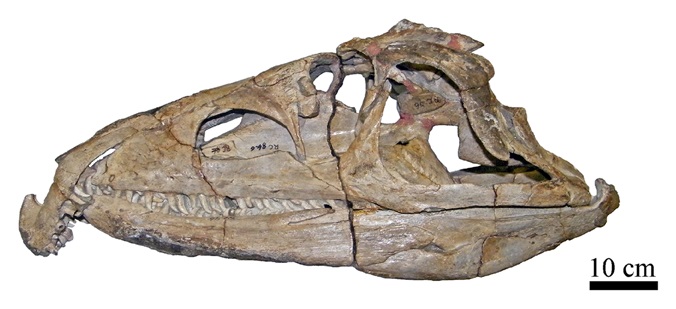
On land, the Triassic saw the rise of the archosaurs, the group that would eventually produce dinosaurs, pterosaurs, and crocodilians. Early Triassic predators like Proterosuchus, a crocodile-like reptile with a distinctive downturned snout, hunted along waterways where Triops likely lived. By the middle and late Triassic, larger predators like Postosuchus dominated the landscape, reaching lengths of over four meters. None of these formidable creatures posed much of a threat to Triops, which were small enough and fast enough to evade detection.
In the water, Triassic freshwater ecosystems were recovering but still relatively simple. Lungfish, which can breathe air and survive in low-oxygen conditions, were among the few large aquatic vertebrates that persisted through the extinction. Small amphibians gradually returned, and the first true freshwater reptiles appeared. But the temporary pools and vernal ponds where Triops lived remained largely free of vertebrate predators, just as they had been in the Permian.
The Fossil Evidence
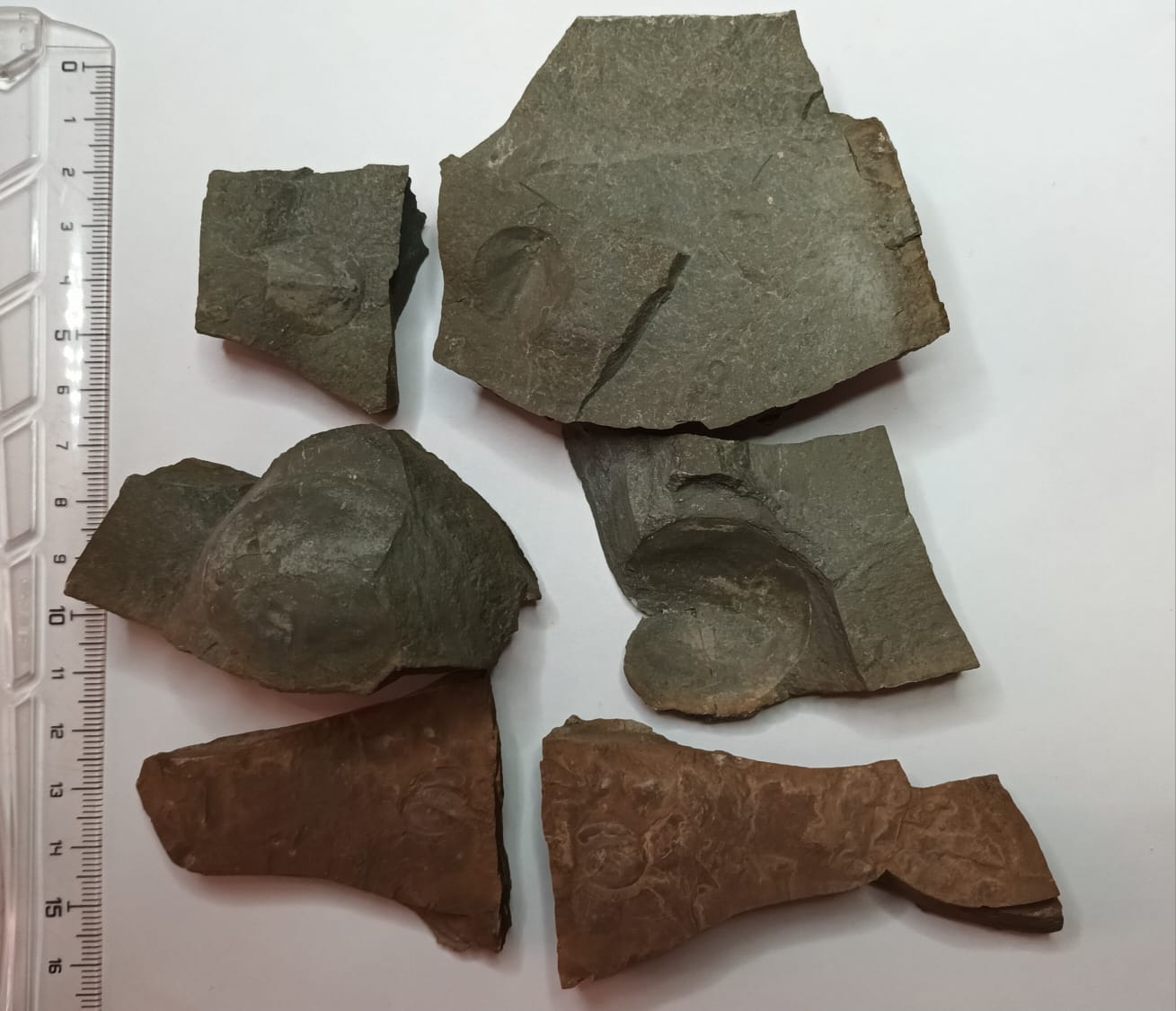
The fossil record of Triops during the Triassic is fragmentary but telling. Triops fossils from this period are found in lacustrine and fluvial sediments across what is now Europe and North America. The carapace shape, the arrangement of the telson, and the overall body plan are strikingly similar to modern species, suggesting that Triops had already achieved the basic form they maintain today by the Triassic.
Some of the best Triassic Triops fossils come from the↤Keuper deposits of central Europe, particularly from Germany and Austria. These sediments, laid down in seasonal lakes and floodplains during the Late Triassic, preserve delicate carapaces and even trackways that show how Triops moved across muddy substrates. The trackways reveal behavior patterns remarkably similar to those observed in modern Triops: shallow furrows in sediment with periodic branching, suggesting foraging paths.
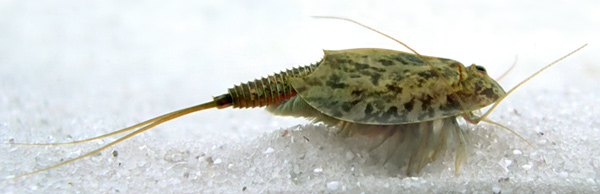
The genus Triops itself is sometimes classified alongside other Mesozoic and Cenozoic branchiopods, and the precise taxonomic history of Triassic specimens is complicated. Some researchers have placed certain Triassic fossils in the genus Apus or Lepidurus, while others argue they belong within Triops sensu stricto. What is not debated is that the basic body plan, the three-eyed head, the flattened carapace, and the long forked tail, was already established by the Triassic and has remained essentially unchanged for over 200 million years.
Living Through Five Extinctions
The Triassic extinction at the end of the period, approximately 201 million years ago, was itself a significant die-off, eliminating many large amphibians and marine reptiles. Triops survived this event too, as they would survive the Cretaceous-Paleogene extinction that killed the dinosaurs 145 million years later.
The key to understanding Triops survival across these catastrophes lies in their habitat. Temporary pools and vernal ponds are among the most unstable environments on Earth. They form, dry up, and reform on timescales of months to years. Organisms that live in these habitats must already be adapted to extreme conditions: desiccation, temperature swings, UV exposure, low oxygen, and unpredictable food supply. When mass extinctions hit, the permanent lakes and oceans suffered dramatically. But the ephemeral pools that Triops call home were already extreme environments, and the Triops were already adapted to them.
In a sense, mass extinctions did not create new challenges for Triops. They simply amplified the challenges that Triops had already mastered. While dinosaurs needed stable ecosystems with reliable food chains and moderate climates, Triops needed only a puddle that would eventually refill.
The Triassic Legacy
The Triassic period established the template for the next 200 million years of Earth's history. Dinosaurs rose to dominance, pterosaurs took to the skies, and the first mammals appeared. Through all of this, Triops continued to do what they had always done: hatch in temporary pools, feed on detritus, reproduce prolifically, and produce eggs that could wait out the next catastrophe.
When you raise Triops at home today and watch them dart through a small tank of water, you are observing a creature that shared its world with the first dinosaurs. The same three eyes that scan your tank scanned Triassic floodplains. The same forked tail that propels them through water propelled their ancestors through pools that existed before any dinosaur walked the Earth.
The Triassic did not change Triops. Triops survived the Triassic. And in doing so, they became one of the most successful animal lineages in the history of life on Earth.
Want to raise your own living fossil? Triops eggs are available from specialty retailers and can be hatched at home with just water, light, and a little patience. See our Triops Deep Dive for a complete guide to getting started.