Published August 09, 2026, 12:57 by the Triops.me Editorial Team · Back to Articles
Triops vs Sea Monkeys: What's the Real Difference?
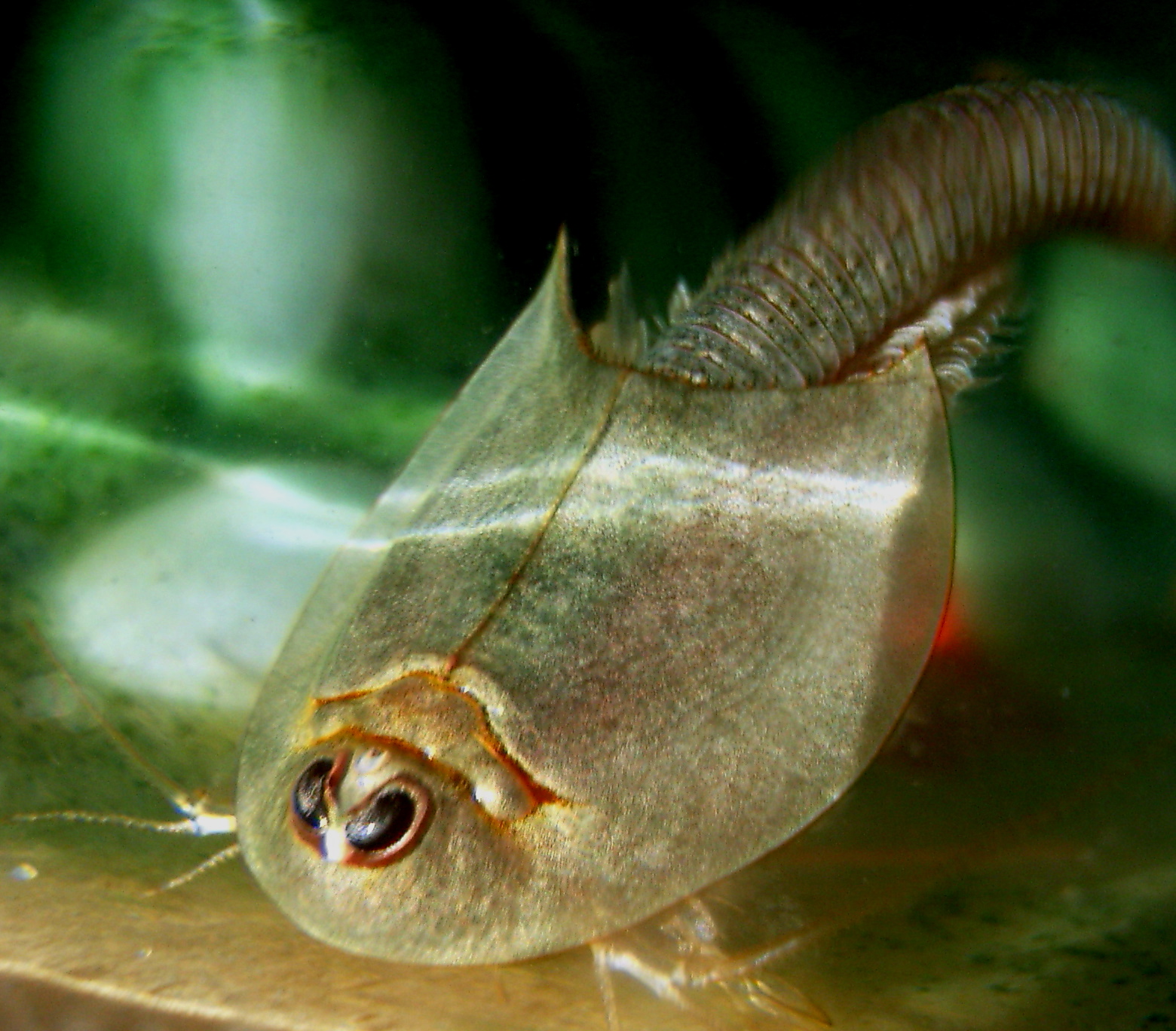
If you grew up in the last 50 years, someone probably handed you a tiny packet labeled "Sea Monkeys" and promised magical underwater creatures. What hatched was usually a handful of translucent shrimp drifting on their backs. If someone now hands you a packet labeled "Triops," you might think it's the same thing with a different brand name. It isn't.
Both Triops and Sea Monkeys (brine shrimp) share one remarkable trick: their eggs survive completely dried out for years, then spring back to life when you add water. This is called cryptobiosis. But from that shared survival strategy, the two animals diverge in nearly every other way.
What Are Sea Monkeys?
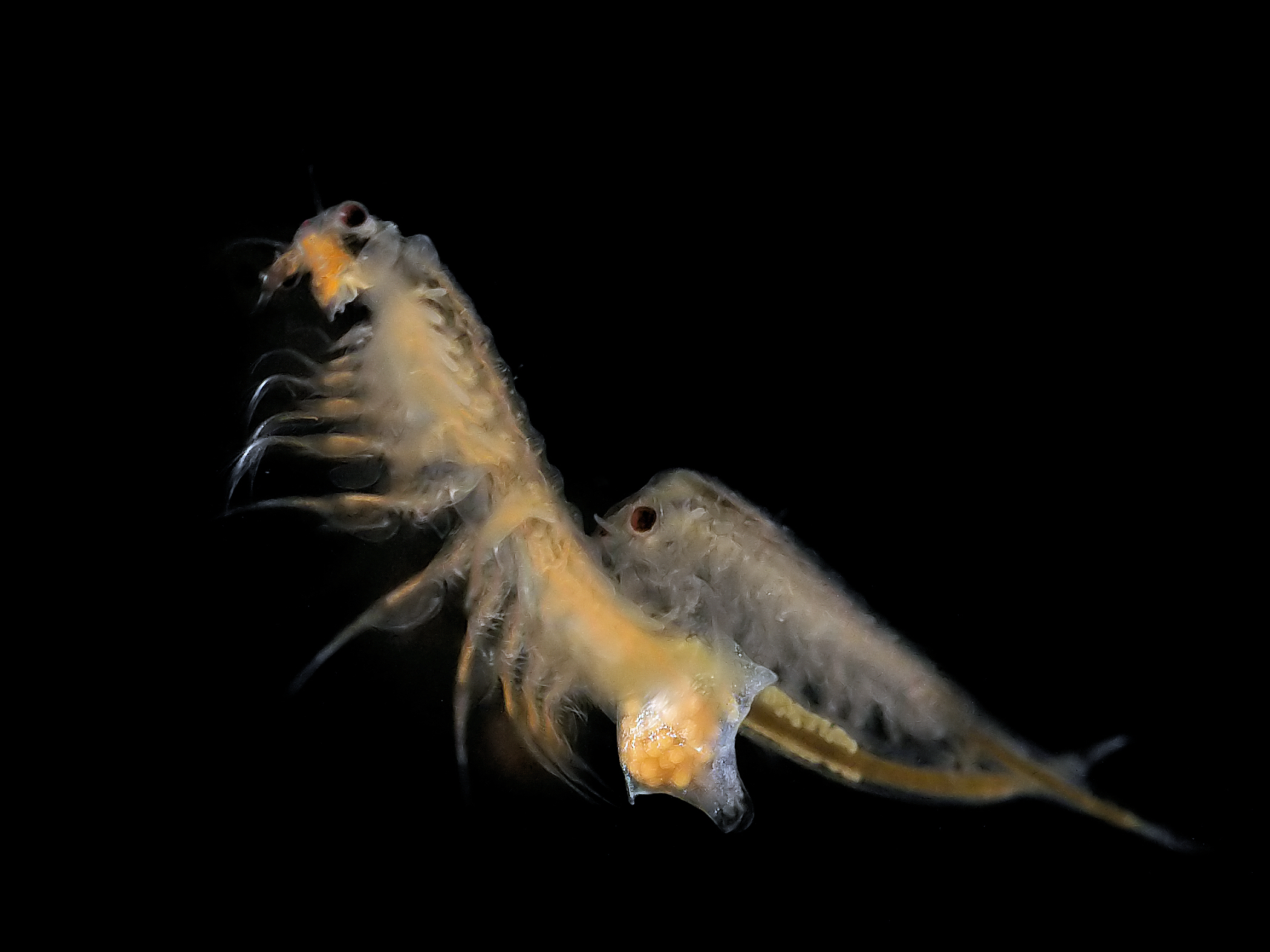
Sea Monkeys are brine shrimp of the genus Artemia, most commonly Artemia salina. In 1957, Harold von Braunhut marketed them in comic book ads with illustrations of grinning humanoid sea creatures. The reality: small, pale crustaceans barely 10 to 15 millimeters long that float upside down and filter-feed on microscopic particles.
Brine shrimp are saltwater animals. They thrive in hypersaline lakes like the Great Salt Lake in Utah, where over 2,000 metric tons of their dormant cysts are harvested annually. As pets, they are a simple novelty that requires almost no care. For many children, they are the first pet that needs no walking, no cleaning, and no daily feeding beyond a pinch of powder.
What Are Triops?
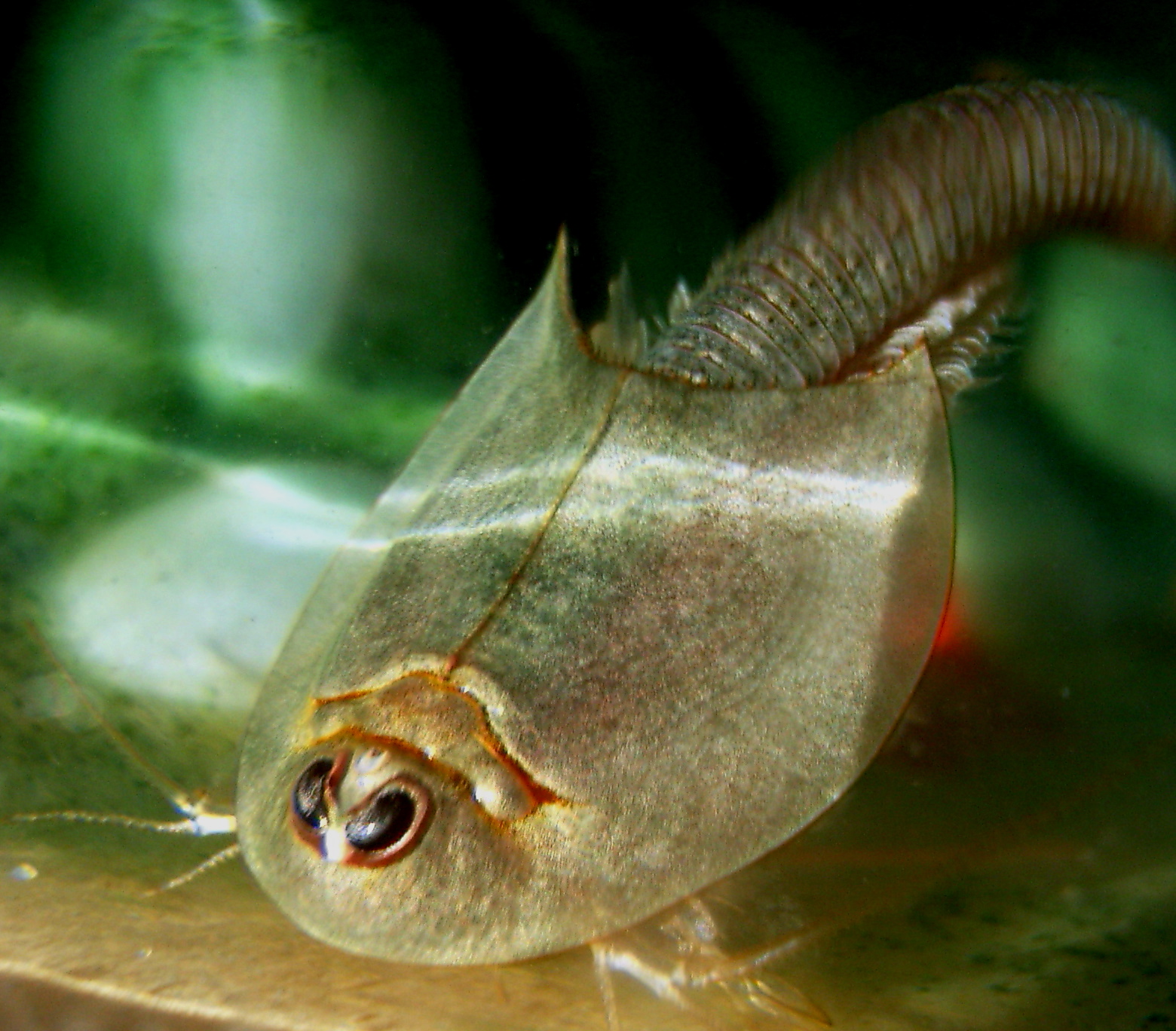
Triops are freshwater crustaceans in the class Branchiopoda, the same class as brine shrimp, but in a completely different order. Think of it like the difference between a cat and a dog. Both are mammals, but they behave and look nothing alike.
The size difference is immediately obvious. Brine shrimp barely reach 15 millimeters. Triops grow to 50 to 90 millimeters, and Triops cancriformis can exceed 100 millimeters, roughly four inches. Then there are the eyes. Triops have two compound eyes plus a third simple eye on top of their head called an ocellus. This third eye detects overhead light and helps them orient in murky water. Brine shrimp have no third eye, no carapace, and no tail shield. They are soft-bodied and see-through, while Triops carry a hard shell called a carapace that covers their head and thorax.
Behavior Sets Them Apart
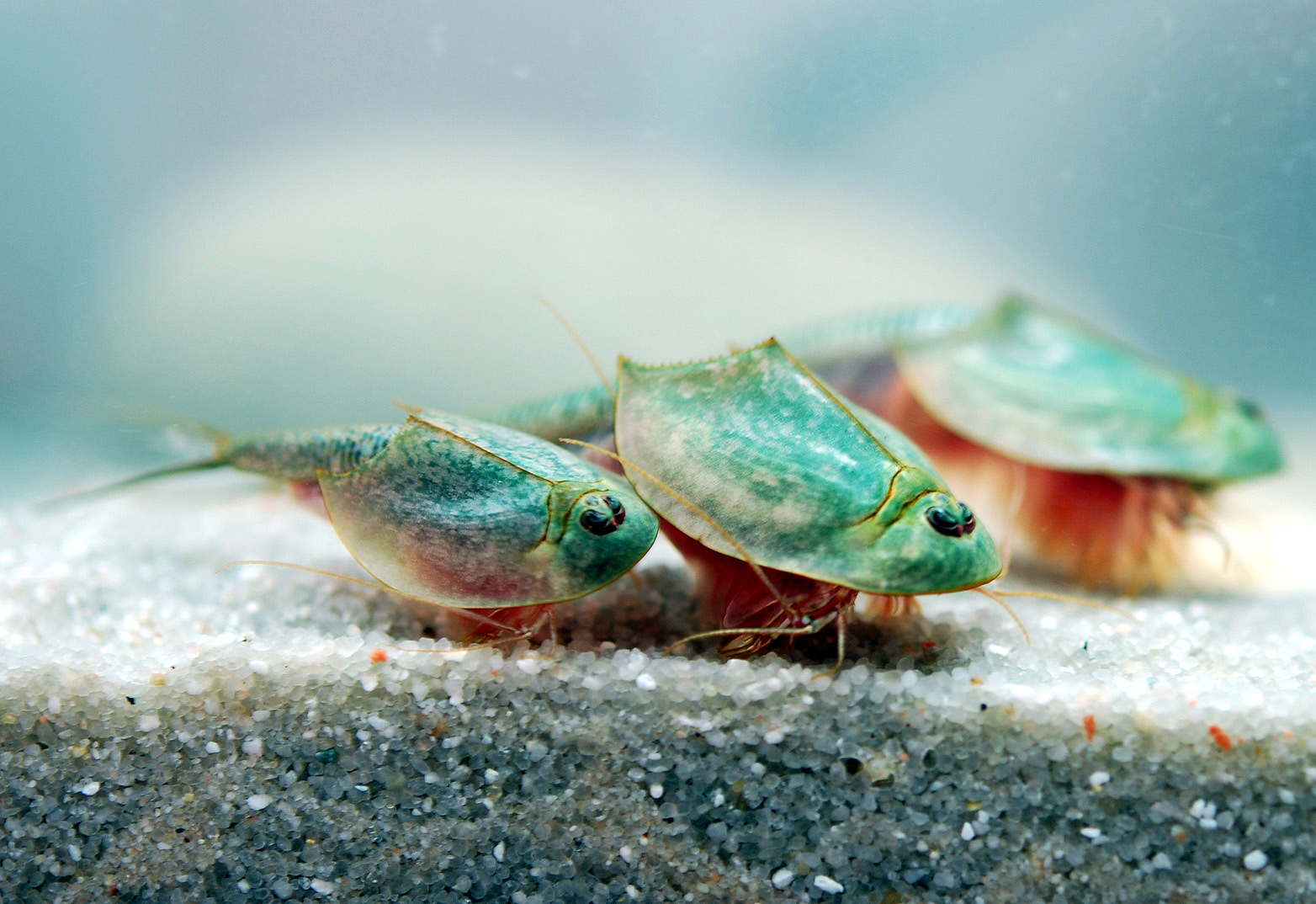
This is where the difference becomes impossible to miss. Brine shrimp float. They drift gently upside down, filter-feeding on whatever particles are in the water. They are not aggressive, not interactive, and not particularly dynamic to watch.
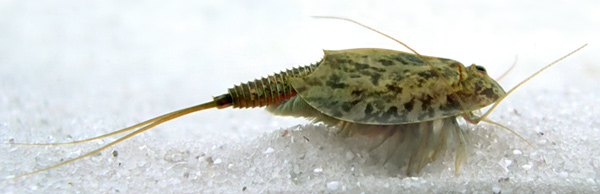
Triops are the opposite. They dig vigorously in substrate, creating furrows and mounds as they search for food. They swim in rapid bursts, chase each other, and pick up sand or food and carry it around. They are predatory enough to eat brine shrimp, mosquito larvae, and small worms. Put a Triops in a tank with Sea Monkeys and the Triops will treat them as a snack. Triops also respond to light. Shining a flashlight on a tank can cause them to swim upside down or on their sides, a trick impossible with brine shrimp.
Ancient Lineages
Sea Monkeys have a fossil record stretching back roughly 100 million years. Triops have been virtually unchanged for over 250 million years, since the Triassic Period. Their body plan appeared before the first dinosaurs and has persisted through five mass extinctions, including the Permian-Triassic event that wiped out 90% of marine species. Both groups use cryptobiosis to survive drought, but Triops eggs can remain viable for over 25 years in dry sediment, waiting for rain to fill an ephemeral pool.
Which Should You Choose?
If you want something simple, cheap, and low-maintenance, Sea Monkeys deliver that. But if you want something that actually lives up to the promise of raising a prehistoric creature at home, Triops are the real deal. They dig, they hunt, they grow large enough to appreciate, and they carry three eyes and a body older than any dinosaur. In the battle of ancient crustaceans, Triops win on almost every front that matters.