Published August 13, 2026 by the Triops.me Editorial Team · Back to Articles
The Tully Monster: A 300-Million-Year-Old Puzzle That Still Baffles Science
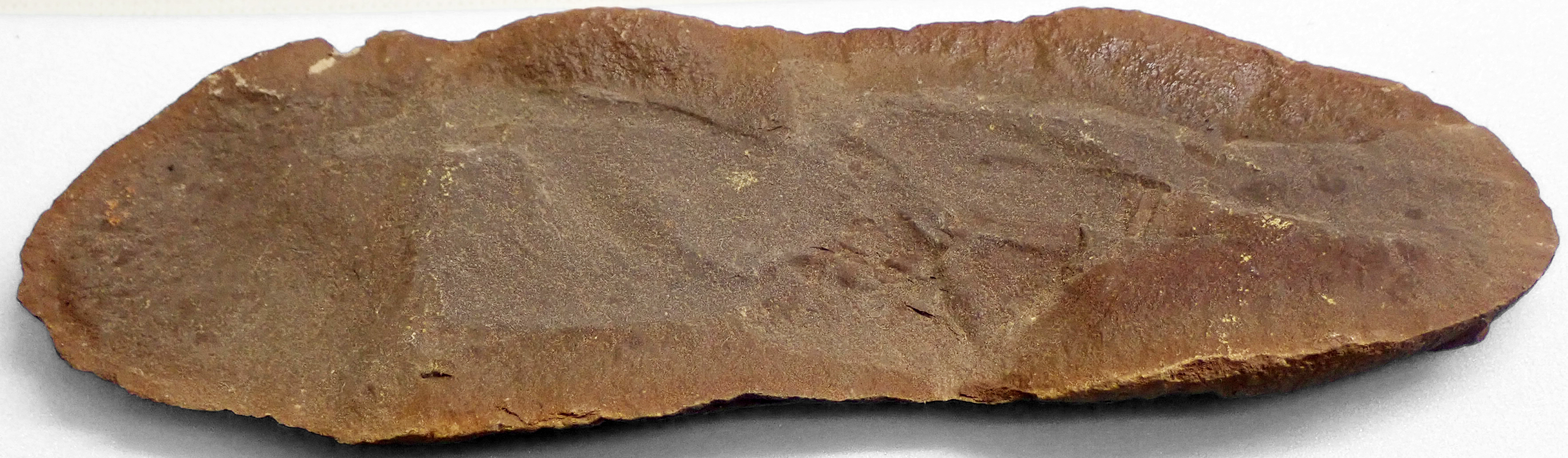
In 1955, a hobbyist fossil collector named Francis Tully was sifting through the ironstone concretions of Illinois's Mazon Creek beds when he found something that made no sense. It was a soft-bodied creature, roughly 300 million years old, with a long tapering body, a pair of stalked eyes, a strange proboscis, and what looked suspiciously like a tail fin. He brought it to the Field Museum in Chicago, where paleontologists looked at it and scratched their heads.
They had never seen anything like it. And they still haven't.
Officially named Tullimonstrum gregarium, the common Tully monster, the creature earned Illinois's state fossil designation in 1989. But its real claim to fame is that after more than 60 years of study, scientists still cannot agree on what kind of animal it actually was.
A Body Without a Blueprint
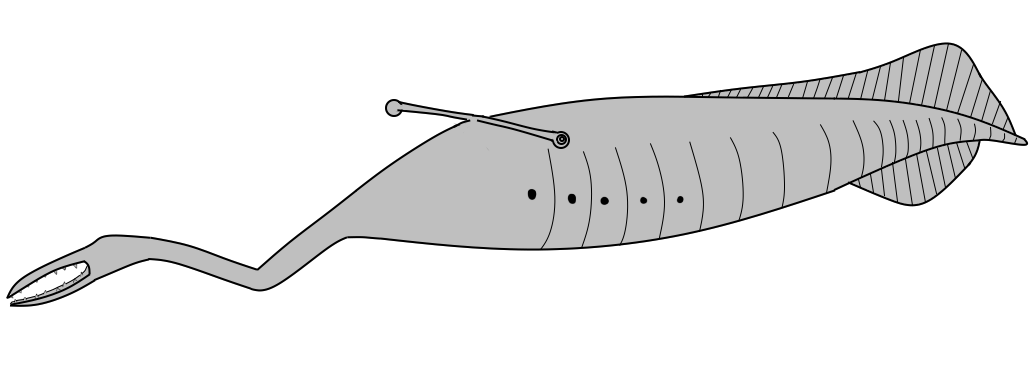
The standard Tully monster is about 15 centimetres long. It has no shell, no bones, no carapace, just soft tissue preserved in remarkable detail inside ironstone nodules. The body is elongated and segmented, with a distinctive proboscis extending from the front end. At the tip of that proboscis is a claw-like structure that some researchers interpret as a feeding apparatus. Two large, dark, stalked eyes sit on either side of the head region. A flattened tail fin completes the picture.
The problem is that every major animal group it could belong to has been proposed and then contested. In 2016, a team led by Victoria McCoy argued that the Tully monster was a vertebrate, specifically a lamprey-like jawless fish, pointing to what they interpreted as a notochord, camera-style eyes, and gill pouches. That would have placed it inside the chordate family tree, a stunning claim for a soft-bodied Carboniferous oddity.
But just as the vertebrate interpretation was gaining traction, other researchers pushed back. A 2020 study argued that the 'eyes' were not camera eyes at all but dark pigment patches, and that the internal structures misread as a notochord could just as easily belong to an invertebrate body plan. The debate intensified.
The Problem of the Mazon Creek
Part of the difficulty is the very feature that makes the Tully monster so famous: the Mazon Creek Lagerstätten. These Upper Carboniferous deposits, dating to around 300 million years ago, are renowned for exceptional soft-tissue preservation. Plants, jellyfish, worms, molluscs, shrimp-like arthropods, and the Tully monster all lived and died in a deltaic estuary system, then were rapidly buried and preserved in concretions that formed around organic matter.
This exceptional preservation is both a gift and a trap. It captures details rarely seen in the fossil record, but it also distorts and compresses soft bodies in ways that make anatomical interpretation fiercely contested. The same features that McCoy's team read as vertebrate hallmarks could, with an alternative interpretive lens, be dismissed as artifacts of mineral replacement and taphonomic distortion.
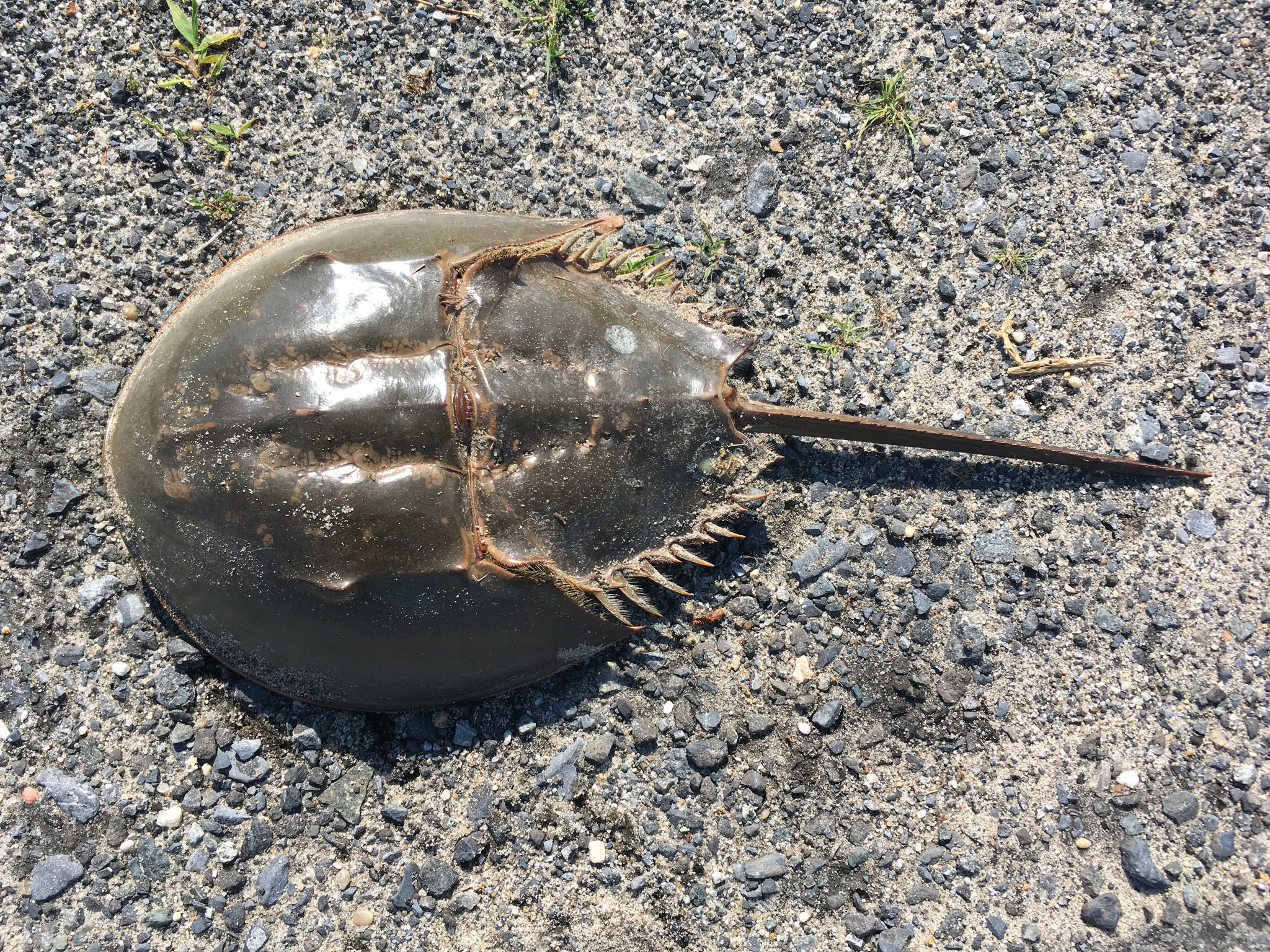
The Mazon Creek itself is a time capsule from a world that existed roughly 300 million years ago, when Illinois was covered by a warm, shallow sea at the edge of a vast delta. The Tully monster swam in those brackish estuaries alongside jellyfish, sea cucumbers, brachiopods, and early relatives of horseshoe crabs. It was not living in the age of dinosaurs, it predates them by roughly 50 million years.
A Creature Without Relatives
Perhaps the most frustrating aspect of the Tully monster is that no close relatives are known from anywhere else in the fossil record. Unlike Triops, which has a clear and traceable lineage stretching back to the Triassic, the Tully monster appears to be a one-off, a product of an evolutionary experiment that left no modern descendants and no obvious ancestors.
This isolation makes classification nearly impossible. Without comparative material, without a family tree to slot it into, paleontologists are reduced to arguing over single anatomical features: the nature of the eyes, the presence or absence of a notochord, the function of the proboscis. Each feature can support multiple interpretations. A dark spot on a fossil could be an eye, a pigment patch, a decay artifact, or a mineral stain. A translucent rod-like structure could be a notochord, a gut, or a taphonomic wrinkle.
What We Still Do Not Know
The fundamental questions remain open. Was Tullimonstrum a vertebrate or an invertebrate? Was it a predator, a scavenger, or a filter feeder? The proboscis suggests some kind of protrusible feeding mechanism, but whether it probed into worm burrows, scraped algae, or snatched small prey remains speculative. Did it live on the sea floor, in the water column, or buried in sediment? The tail fin suggests some swimming ability, yet the body shape is consistent with a slow-moving benthic animal.
Even its taxonomic identity within the broader tree of life is unresolved. If it was a vertebrate, it represents an unusual branch of early jawless fish that left no modern descendants. If it was an invertebrate, it might belong to a group of soft-bodied worms, molluscs, or something entirely extinct, a stem lineage that diverged before any living phylum acquired its modern diagnostic features.
The mystery is not merely academic. The Tully monster forces us to confront a sobering reality about the fossil record: most of the animals that lived on Earth never left a clear trace, and of the ones that did, many are so unusual that our existing categories cannot meaningfully contain them. The tree of life has branches we cannot see, and the Tully monster may be one of the few glimpses we have of one of those lost twigs.
Why the Tully Monster Still Matters
Six decades after its discovery, Tullimonstrum gregarium remains one of paleontology's most compelling unsolved mysteries. Every few years, a new paper emerges with a fresh interpretation, and the debate flares up again. The creature has become a poster child for the limits of paleontological inference: with only a flattened, mineralized body and no living relatives to compare it to, certainty may be permanently out of reach.
For a site dedicated to Earth's most remarkable life forms, creatures like Triops that survived mass extinctions and outlasted entire clades, the Tully monster is a humbling contrast. It is a reminder that not every evolutionary story ends in survival. Some stories are brief, strange, and ultimately unreadable, preserved in ironstone for 300 million years simply to remind us that nature has always been stranger than our categories allow.