Published August 24, 2026, 03:03 by the Triops.me Editorial Team · Back to Articles
Velvet Worms: Triops' Cambrian Cousins in the Modern World
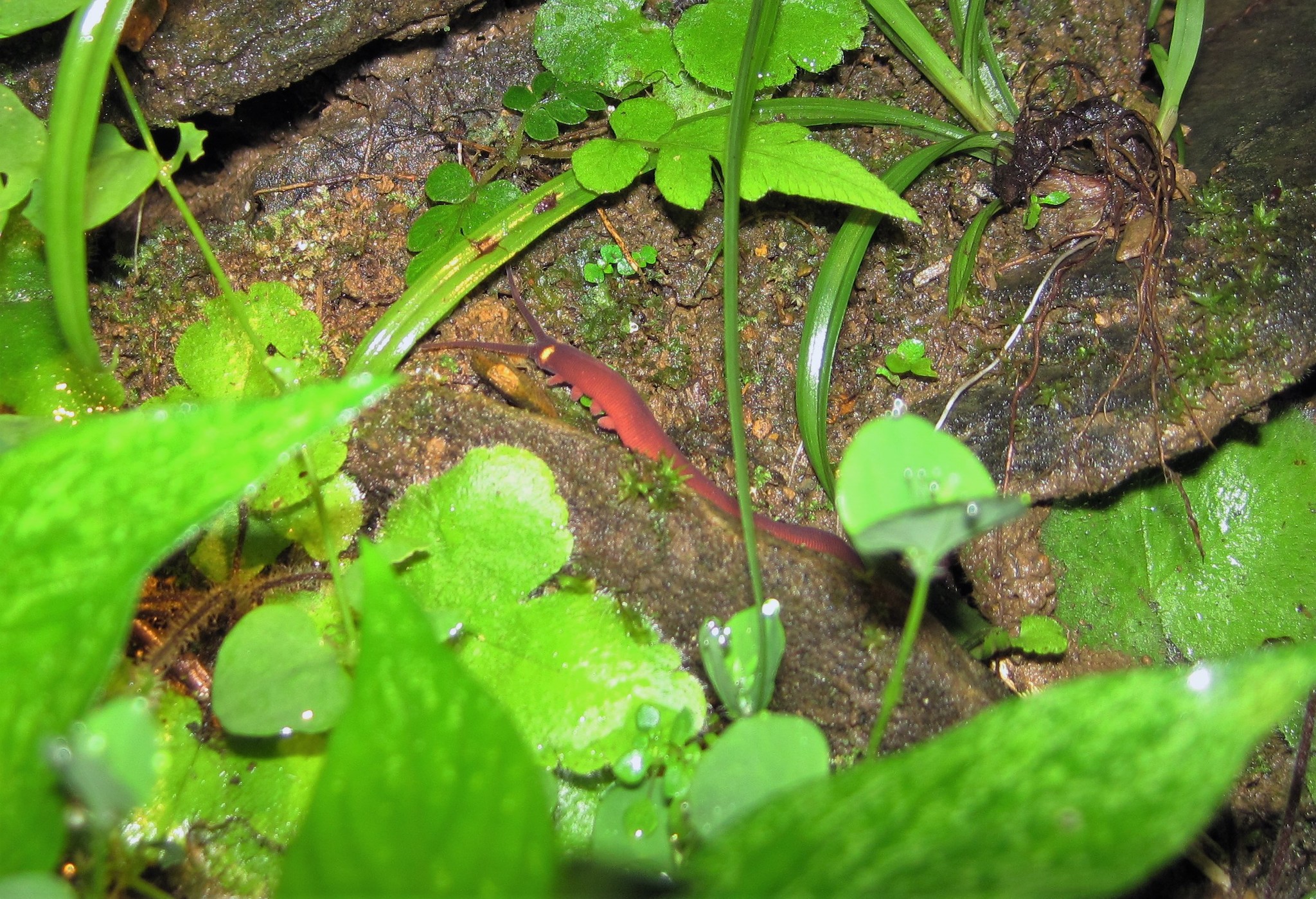
When we think of living fossils, Triops usually takes the spotlight. But tucked away in tropical forests on every continent except Antarctica lives another group of animals that has barely changed since the Cambrian period, roughly 500 million years ago. Meet the velvet worms, or Onychophora, creatures so ancient that Charles Darwin himself called them "wonderful animals" and struggled to place them on the tree of life.
What makes velvet worms especially interesting to Triops enthusiasts is their shared ancestry. Both belong to the superphylum Panarthropoda, which groups together arthropods and their closest relatives. Their last common ancestor lived deep in the Cambrian, and both lineages survived every mass extinction since. While Triops conquered temporary pools and desert mud, velvet worms conquered the forest floor, carving out a completely different survival strategy using an ancient body plan that still works.
A Body Plan from the Cambrian
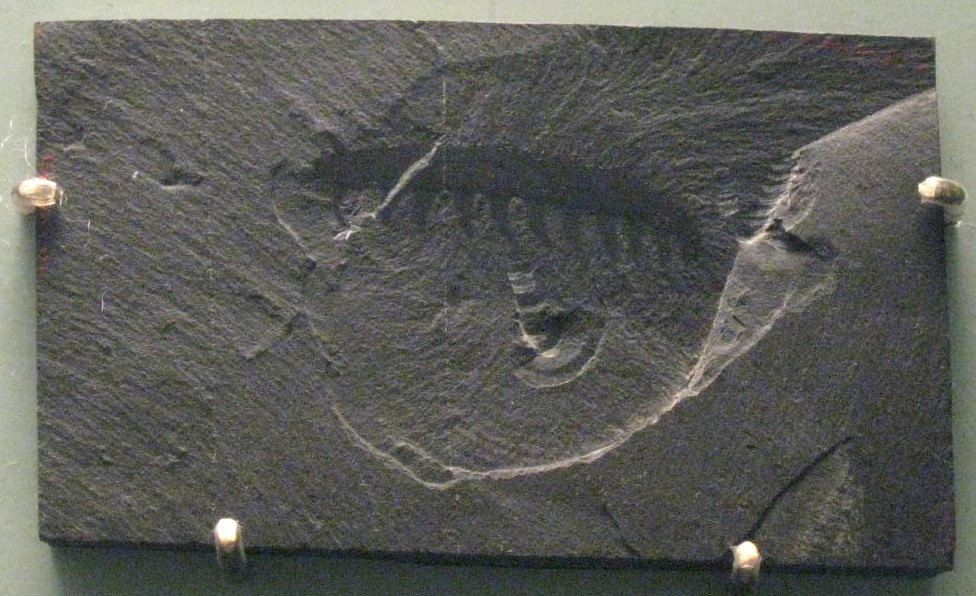
The fossil record of Onychophora stretches back to the Cambrian explosion, when complex animal life first appeared in the oceans. Aysheaia pedunculata, discovered in the famous Burgess Shale in Canada, is one of the earliest known velvet worms. This tiny creature, just a few centimeters long, lived among sponges on the ancient seabed. Its soft, unsegmented body and stubby lobopodous legs look remarkably similar to modern velvet worms, a testament to evolutionary conservatism at its finest.
Modern velvet worms have kept that basic blueprint intact. They have a soft, cylindrical body covered in microscopic scales that give them a velvety texture, hence the name. Their legs are fleshy lobopods, stubby projections tipped with claws, completely different from the jointed legs of insects or spiders. They breathe through tracheal tubes like insects, but their reproductive biology is closer to that of worms. Taxonomists spent decades arguing about where to place them, oscillating between the arthropods and the annelids before molecular evidence confirmed their position as a sister group to the arthropods.
The Slime Hunters
What sets velvet worms apart from their Triops cousins is their predatory lifestyle. While Triops are omnivorous filter feeders and detritivores of ephemeral pools, velvet worms are active hunters of the forest floor. They stalk small invertebrates like termites, crickets, and spiders, usually at night when humidity is high.
Their hunting weapon is extraordinary. When a velvet worm closes in on prey, it fires two streams of sticky slime from specialized oral glands called slime papillae. This adhesive hardens on contact, entangling the prey in a web of goo. The worm then injects digestive enzymes through its jaws, liquefying the prey's insides before sucking out the nutrients. The slime is a complex biological material, a mix of proteins and glycoproteins that remains liquid inside the gland but rapidly cross-links when exposed to air. Engineers are actively studying its properties for potential biomedical adhesives.
Why Velvet Worms Matter to Triops Fans
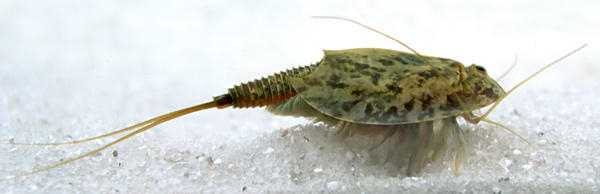
Velvet worms and Triops represent two radically different answers to the same evolutionary question: how do you survive for half a billion years? Triops endure by being fast reproducers that lay drought-resistant eggs, riding out catastrophes by waiting. Velvet worms endure by being specialists that avoid catastrophe altogether, hiding in stable microclimates that buffer them from the outside world.
About 200 species of velvet worms are known today, distributed across tropical and subtropical forests in Central and South America, Africa, Southeast Asia, Australia, and New Zealand. They need constant high humidity and cannot tolerate desiccation, which limits them to moist environments. Their distribution is a living map of ancient supercontinents, with closely related species found on landmasses that were once joined, like South America and Africa.
Unlike Triops, which are commercially bred and sold worldwide, velvet worms remain elusive. They are extremely sensitive to habitat disturbance, and many species are threatened by deforestation. Some are known only from single locations and have never been seen alive by scientists. Their inability to disperse across unsuitable habitat makes them particularly vulnerable, a sharp contrast to Triops eggs, which can hitchhike on migrating birds to colonize new pools.
500 Million Years and Still Going
The survival strategies of Triops and velvet worms could not be more different, yet both work. One hides in the mud; the other hides in the forest. One bets everything on eggs; the other bets everything on a stable home. Both have outlasted dinosaurs, ice ages, and mass extinctions by doing what they do best. Velvet worms remind us that there is no single formula for longevity in nature, only a diversity of approaches refined by hundreds of millions of years of trial and error.