Published September 02, 2026, 16:22 · by the Triops.me Editorial Team · Back to Articles
When Earth Froze Solid: Life During Snowball Earth
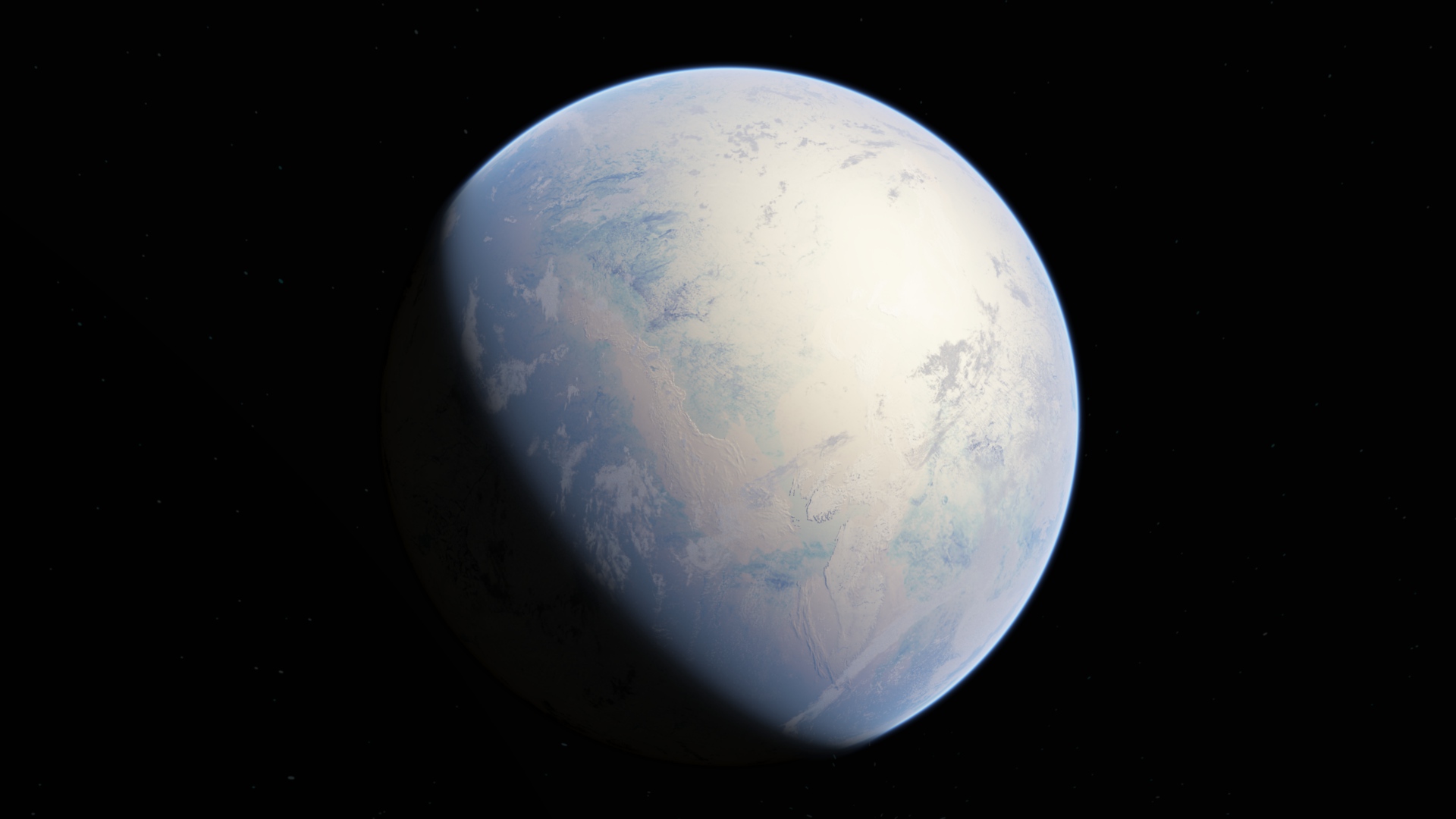
Extinction gets all the headlines. The Permian die-off, the asteroid that ended the dinosaurs, the megafauna extinctions: these are the stories we tell about life nearly ending. But the closest our planet ever came to a total biological wipeout was not an impact or a volcano. It was climate. Between roughly 720 and 635 million years ago, Earth froze. Not partially, not just the poles, but potentially from pole to pole, with ice sheets possibly a kilometer thick grinding across the equator and average surface temperatures plunging far below zero. Geologists call it Snowball Earth, and any creature that can trace its survival strategy back through deep time, Triops included, owes its existence to whatever lived through it.
This was no ordinary ice age. Our recent glacial periods pushed ice sheets to latitude 45 degrees and dropped global temperatures by about 5 degrees Celsius. The Sturtian and Marinoan glaciations of the Cryogenian Period went much further. Ice has a vicious feedback loop built into it: freeze a little, the white surface reflects more sunlight, temperatures drop, and more water turns to ice. Once ice crept below about 30 degrees latitude, models suggest the process ran away with itself. Within a few thousand years, a geological blink, the planet could have been encased. Average temperatures may have fallen to minus 50 degrees Celsius. The oceans, sealed under ice, slowly lost their oxygen as marine life used it up faster than the frozen surface could replenish it.
The Evidence Written in Rock
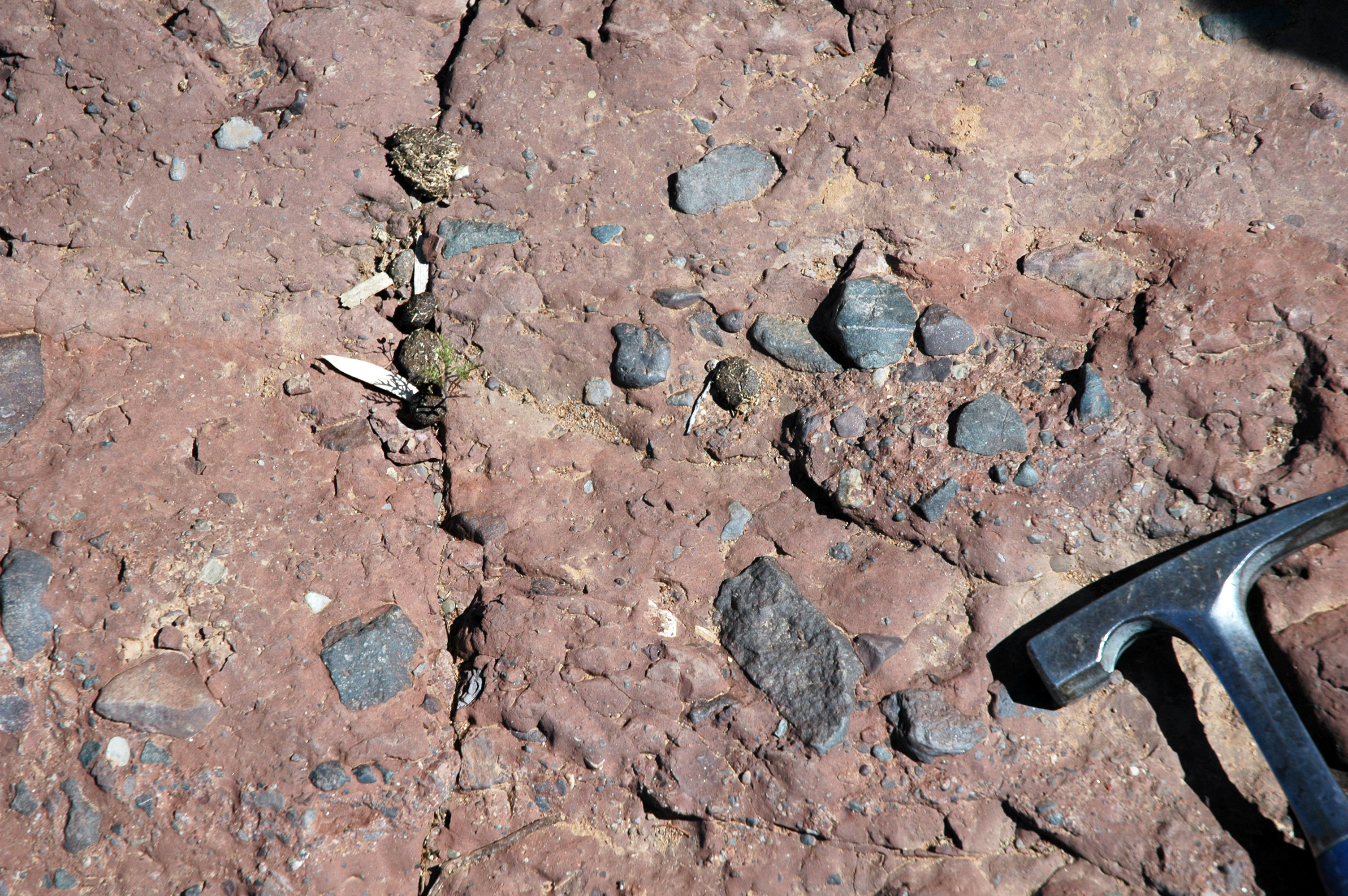
How do we know a frozen world is not just a wild theory? The proof lies in rocks you can visit today, and few places tell the story better than the Flinders Ranges of South Australia. There, a rock called the Elatina Formation preserves ancient glacial tillite, a jumbled mix of boulders, pebbles, and fine mud dumped directly by melting ice. Its layers record dozens of glacial cycles, and its magnetic minerals record where on the globe it sat when it formed. The answer stunned researchers: these ice deposits formed at low latitudes, close to the equator, where today only tropical heat exists.
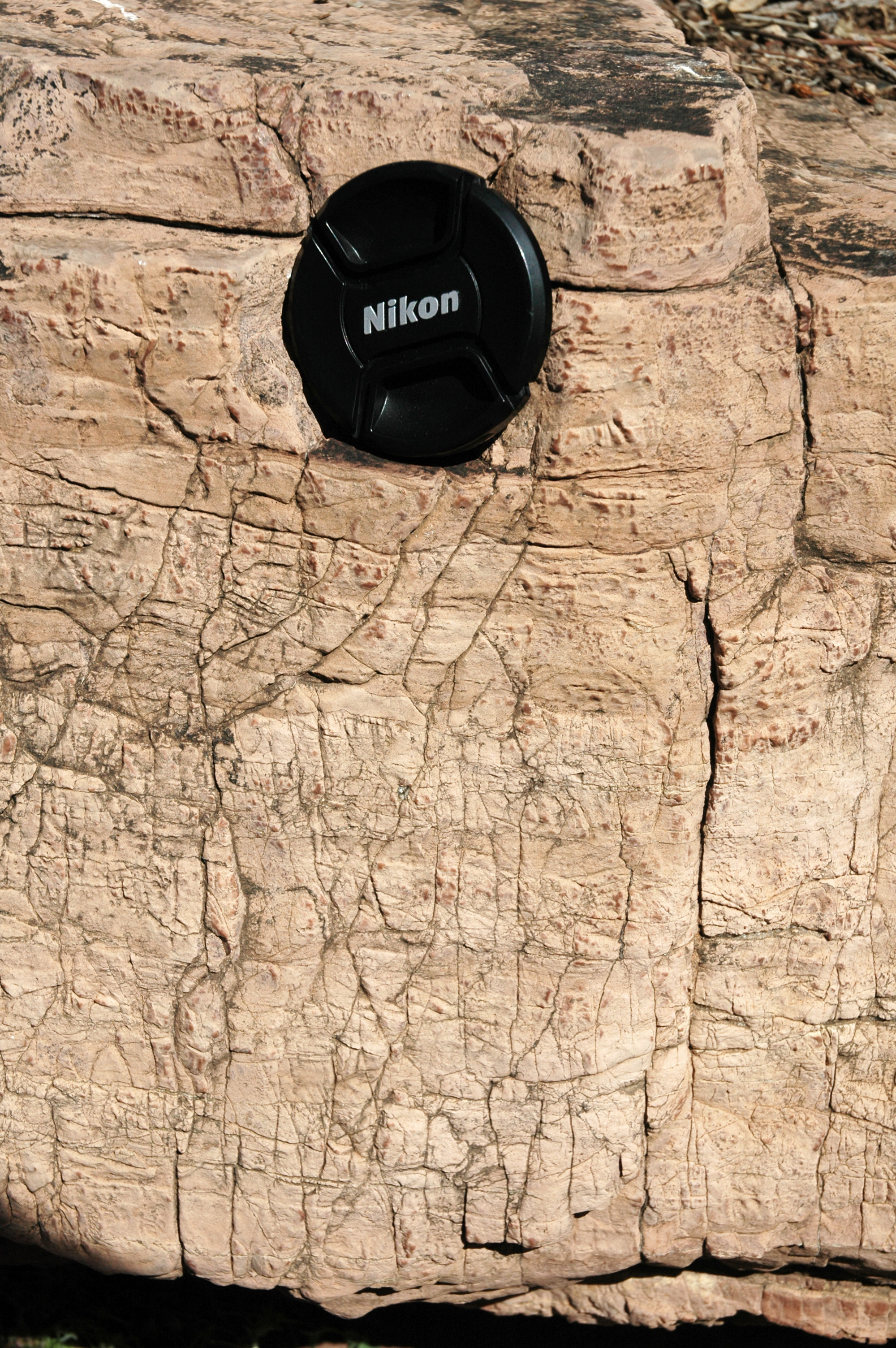
Other clues sharpen the picture. Dropstones, isolated rocks stranded in fine layered sediments, mark the paths of icebergs that rafted debris across open water and let it fall as the ice melted. Glacial striations, long parallel scratches carved into bedrock, show glaciers flowing over what are now sun-baked lands. And sandwiched directly on top of the glacial debris everywhere scientists look sits something strange: a thick layer of pale carbonate rock called a cap carbonate, deposited suddenly the moment the ice age ended. It is as if the planet hit a switch. Frozen wasteland, then immediately warm carbonate seas, with nothing in between.
The Great Thaw
The escape from the deep freeze is one of the most dramatic events in Earth's history. While the surface froze, the planet's volcanoes kept erupting, quietly pumping carbon dioxide into the atmosphere. Normally rain washes this carbon back down as it weathers rocks, but on a Snowball Earth there was no rain and almost no exposed, weathering land. The carbon dioxide had nowhere to go. Over millions of years it accumulated to levels perhaps 350 times higher than today, until even a brilliantly reflective ice world could no longer stay frozen.
When the thaw came, it came violently. With such an extreme greenhouse atmosphere, temperatures may have soared to 50 degrees Celsius, and acidified oceans laced with dissolved carbon dioxide rained out minerals to form those curious cap carbonates. Ice hundreds of meters thick melted in a few thousand years, a pace that is astonishing in geological terms. Sea levels rose dramatically as all that frozen water returned to the basins. The planet that emerged was hot, stormy, and chemically transformed, but it was alive.
Who Survived the Deep Freeze?
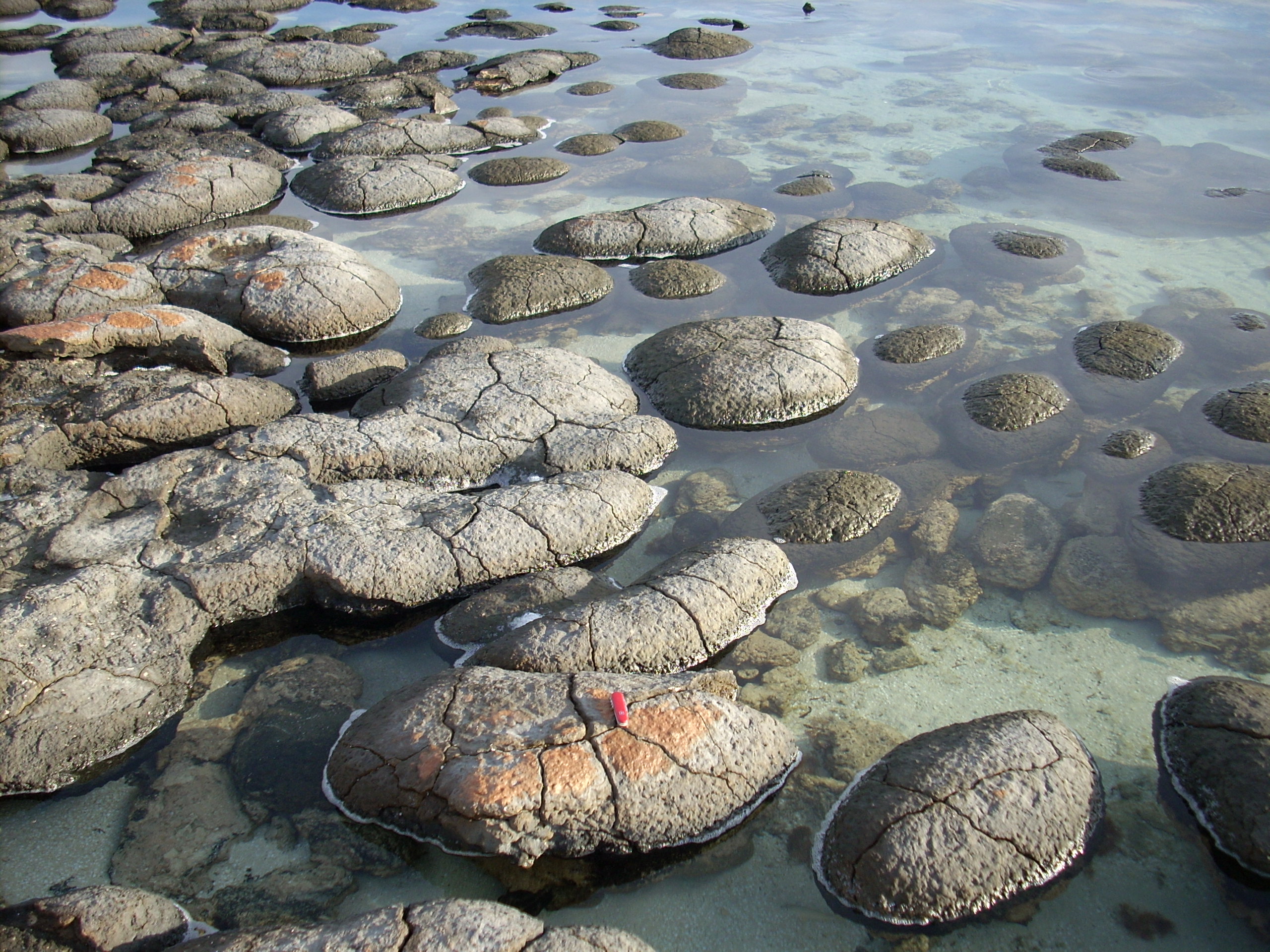
The obvious question is what could possibly live through this. The answer is revealing, because the survivors were not giants or specialists. They were tough, small, patient generalists. Microbial mats and stromatolites, layered structures built by cyanobacteria that had already thrived for over two billion years, weathered the crisis in refuges: around volcanic hot springs, in thin meltwater ponds on top of the ice, and in rare patches of tropical open water. Photosynthesis nearly stopped on a planetary scale, yet it never quite reached zero.
The survival strategies should sound familiar to anyone who knows Triops. Dormancy. Resting stages. Waiting out catastrophe sealed away from the world. Some researchers believe algae and protists survived the glacial maxima as cysts, hardened dormant cells that shut down metabolism and endured, much like the cryptobiotic eggs that Triops still use today to outlast drought, heat, and years of emptiness. In the meltwater ponds that dotted the ice surface, simple communities of microbes and tiny grazers could persist for the millions of years the deep freeze lasted, echoing the ephemeral pool ecosystems that branchiopods like Triops have mastered.
And here is the twist that makes Snowball Earth more than a horror story. Many scientists think the crisis was the making of complex life. The genetic evidence suggests the lineages that would become animals may have first split and diversified while huddled in these icy refuges. When the world finally warmed, vast fresh meltwater flooded the oceans, carried nutrients, and rewired marine chemistry. Not long after, in geological time, the Ediacaran faunas appear, and then the Cambrian explosion fills the seas with animals. The bottleneck may have forced life through a filter that favored resilience, and what crawled out the other side inherited an empty, nutrient-rich world. That great unleashing of animal forms, from Anomalocaris to the first chordates, traces back to survivors patient enough to sit out the freeze.
Why a Tadpole Shrimp Cares
Triops did not exist yet when the last Marinoan glaciation ended. The genus as we know it appears much later in the fossil record. But the strategy Triops embodies, surviving catastrophe through eggs that wait, is exactly the kind of toolkit that gets lineages through planetary emergencies. Ephemeral waters, brutal chemistry, long dormancy, explosive rebound when conditions turn: these are the moves. The animals that endured Snowball Earth were, in a sense, the first practitioners of what Triops would perfect.
There is a humbling perspective here too. For all our focus on dinosaurs and sabre-toothed cats, the hardiest life on this planet has always been the kind that stays small, slows down, and waits. Life on Snowball Earth was probably reduced to microbes huddling around volcanic warmth and sealed cysts in the dark. From that handful of holdouts came every animal that ever lived, including the ones this site celebrates. The next time a hailstone wipes out a Triops pond and the tank seems empty, remember that the eggs are doing what life has always done at its lowest ebb: keeping the future on file until the water returns.