Published 2026-09-16 · by the Triops.me Editorial Team · Back to Articles
Wiwaxia: The Armored Slug That Started a 100-Year Argument
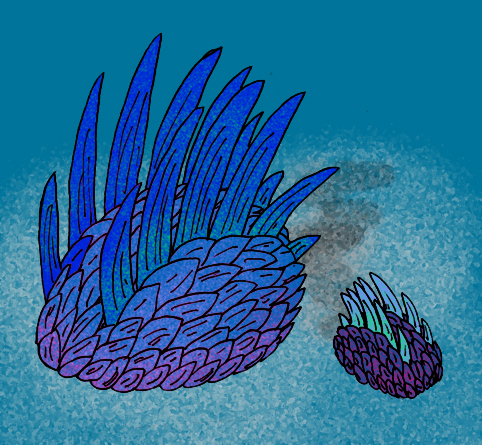
Half a billion years ago, creeping across the muddy floor of a shallow sea, there lived an animal that looks like nothing swimming today. It was small, rarely longer than a thumb. It had no eyes that we can find, no shell, and no limbs. But it wore a suit of armor made of thousands of tiny overlapping scales, topped with two rows of saber-like spines running down its back like a living medieval glove.
Its name is Wiwaxia, and despite being one of the best-known animals of the Cambrian explosion, scientists spent the better part of a century arguing about what it actually was. A worm? A mollusk? A missing link between the two? The answer matters, because Wiwaxia sits right at the fork in the road where two of the biggest animal groups on Earth split apart.
A fossil with a mountain's name
The first Wiwaxia fossils were collected in the Burgess Shale of British Columbia by Charles Walcott, who formally described the genus in 1911. He named it after the Wiwaxy Peaks that rise above Lake O'Hara in Yoho National Park. Walcott was convinced he was looking at an annelid worm, a relative of modern bristle worms, and he filed it away accordingly.
That classification stuck for decades, mostly because hardly anyone reexamined the specimens. Then the Burgess Shale was rediscovered by science in the 1970s, and Wiwaxia's problems began in earnest. When paleontologists finally sat down with the fossils under modern microscopes, the worm story started to fall apart.
The armor tells the story
Wiwaxia's body was covered in small, leaf-shaped plates called sclerites, arranged in neat diagonal rows like roof shingles. Along the top ran two rows of much longer spines. In juveniles the spines are absent entirely, which tells us the armor grew and reorganized as the animal matured. The scales and spines were made of chitin, the same tough material as insect shells, not mineral like a clam's armor.
Underneath all that hardware was a soft, slug-like body with a single muscular foot, exactly the kind of underside a snail uses to glide along a surface. There were no bristles in bundles like a worm would have, no segmentation, and no sign of legs. A worm in a suit of scale mail is not really a worm at all.
A radula changes everything
The decisive clue arrived in 2006, when researchers described a remarkable specimen from the Burgess Shale that preserved the animal's feeding apparatus. It consisted of rows of backward-curving teeth, strikingly similar to the radula, the toothed tongue-strap that mollusks like snails use to scrape food. Modern worms have nothing like it.
That find pushed most experts toward a mollusk affiliation, or at least toward Wiwaxia's lineage being a close relative of the mollusk stem. Others proposed that Wiwaxia belonged to a broader cluster of armored Cambrian animals, including the slug-like halkieriids with their shell-front-and-back design, that branched off near the common ancestor of mollusks and annelid worms. The debate has cooled but never fully ended. Wiwaxia remains one of paleontology's favorite arguments.
Life in the Cambrian neighborhood
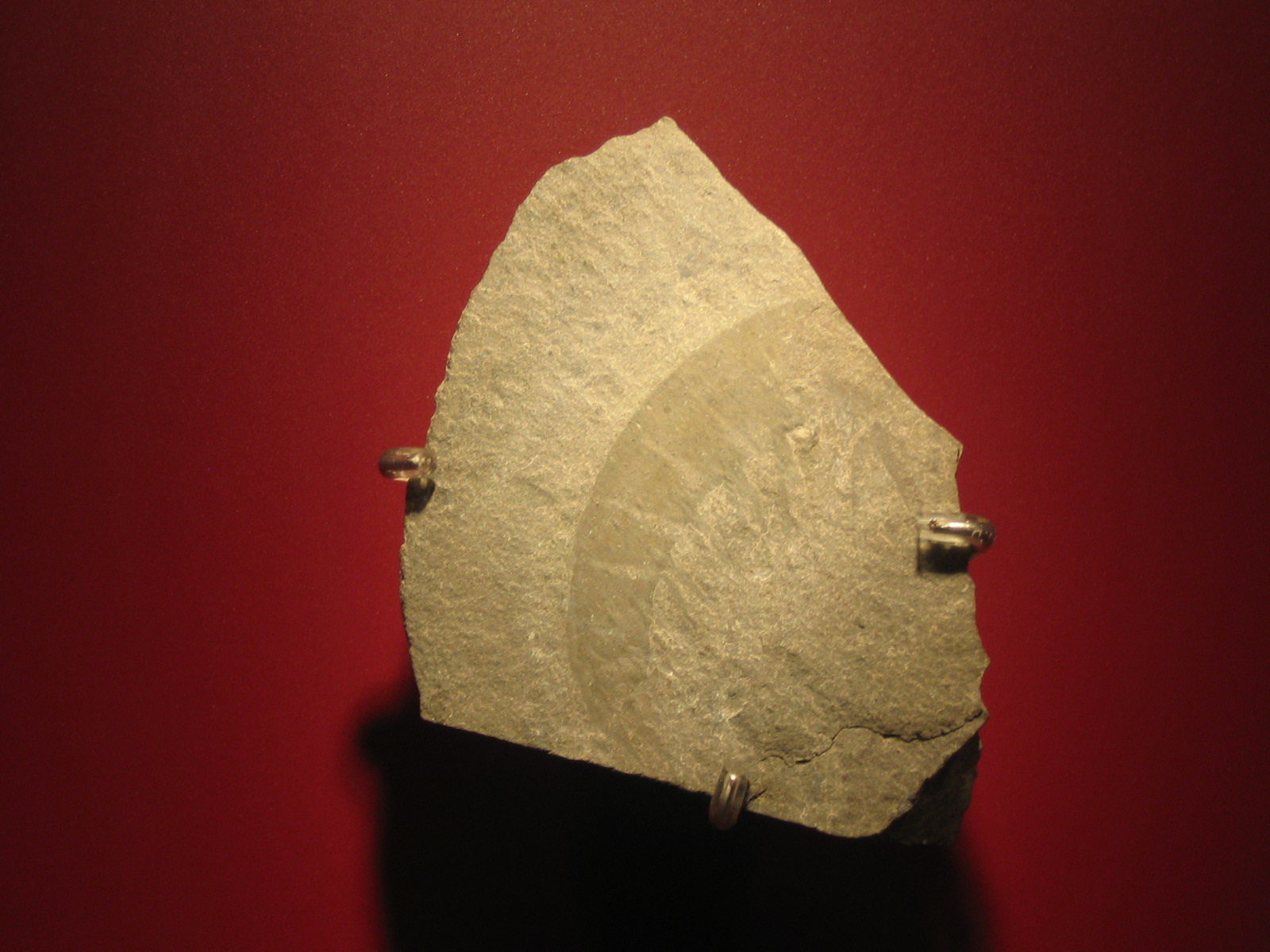
Wiwaxia lived about 505 million years ago, grazing microbial mats and detritus on the seafloor. It was a slow, bottom-dwelling vegetarian or scavenger in a sea full of predators, and the armor was almost certainly its answer to that danger. Some Burgess Shale specimens show damaged and repaired scales and spines, which looks very much like the record of attacks the animal survived, its armor doing exactly the job it evolved for.
The genus was no one-off curiosity. Fossils of wiwaxiid-type animals have since turned up in rocks of similar age in China's Chengjiang beds and elsewhere, showing that this armored grazing lifestyle was a widespread success across the early Cambrian world, not a local Burgess Shale quirk. Then it disappeared. Wiwaxia has no obvious descendants, and its lineage seems to have faded away before the Ordovician, a short but successful experiment in slug-shaped tank design.
Why a five-centimeter oddity matters
It is easy to dismiss Wiwaxia as a footnote, a weird little fossil from a weird little time. But it represents something bigger. The Cambrian explosion was the moment when nearly every major animal body plan appeared, and creatures like Wiwaxia are the transitional evidence of how those plans emerged. Its mix of features, worm-like body, mollusk-like foot and feeding gear, armor unlike either, is precisely what you expect from animals caught in the act of becoming distinct groups.
Triops readers will recognize the theme: survival often favors the armored and the adaptable. Wiwaxia armored itself against a dangerous new world and thrived for millions of years. Triops took a different route, outlasting the predators with drought-proof eggs and five mass extinctions. Different strategies, same deep story. Earth's early seas were a laboratory of bold designs, and Wiwaxia, the scale-mailed slug that refuses to be classified, is one of the most fascinating experiments it ever ran.