Published August 24, 2026, 21:06 by the Triops.me Editorial Team · Back to Articles
Woolly Mammoths: Giants of the Ice Age
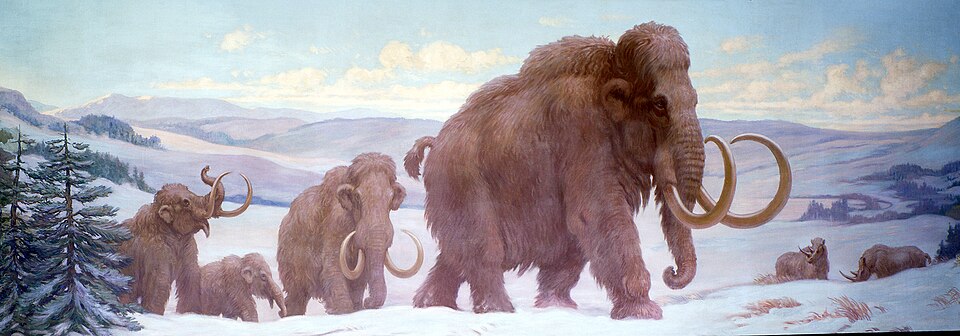
For over 300,000 years, woolly mammoths (Mammuthus primigenius) were among the most successful large mammals on Earth. They roamed the vast, frozen grasslands stretching from Spain to Siberia and across the Bering land bridge into North America. These iconic Ice Age giants were keystones of an entire ecosystem, shaping the landscape and surviving alongside early humans for tens of thousands of years before their final disappearance around 4,000 years ago.
A Giant Built for the Cold
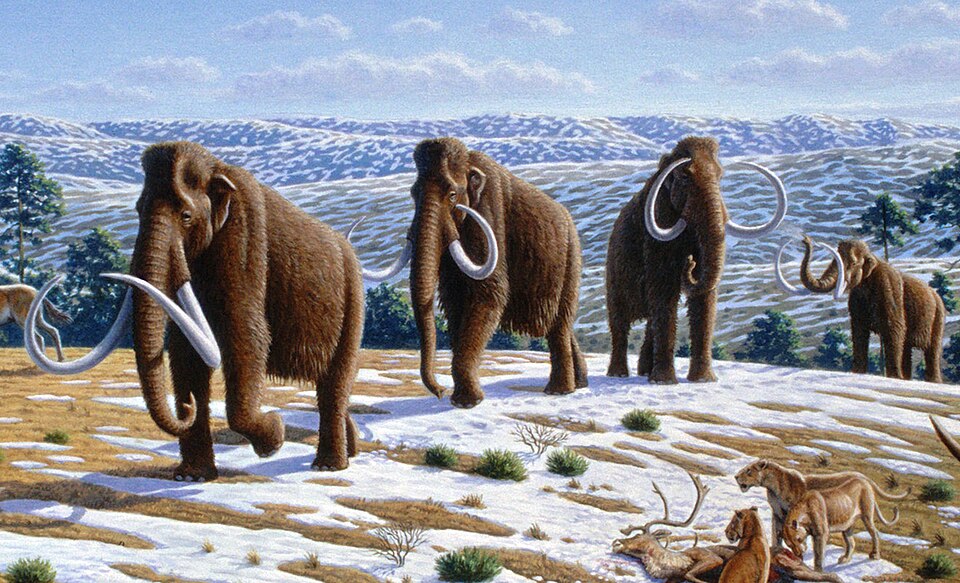
An adult woolly mammoth stood roughly 2.7 to 3.4 meters (9 to 11 feet) at the shoulder and weighed between 4,000 and 6,000 kilograms (8,800 to 13,200 pounds). Males were noticeably larger than females. Their most distinctive feature was their thick, shaggy coat of fur, which consisted of two layers: a dense, woolly undercoat for insulation and longer, coarser guard hairs that could reach up to 90 centimeters (3 feet) in length. Beneath the skin, a layer of fat up to 8 centimeters thick provided additional warmth and energy storage during harsh winters.
Their ears were strikingly small, rarely exceeding 13 centimeters across, a dramatic contrast to their modern African elephant relatives whose ears can span over a meter. This reduced ear size minimized heat loss in freezing conditions. Their tails were similarly shortened, another cold-weather adaptation. The trunk, longer and more muscular than that of any living elephant, served as a versatile tool for gathering food, social interaction, and even clearing snow from grazing areas.
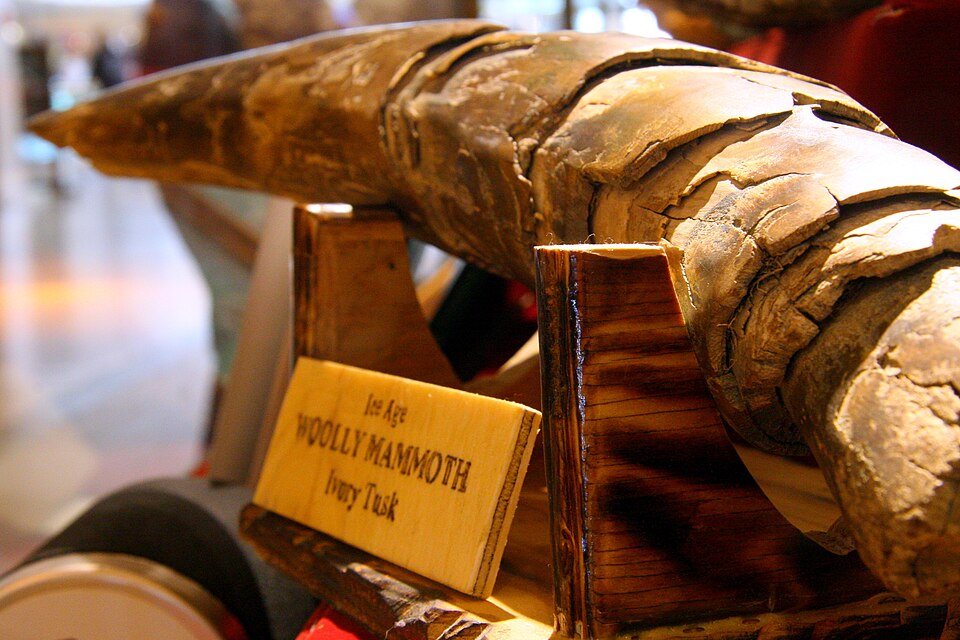
Their tusks were extraordinary. Curving upward and outward in a graceful spiral, tusks could reach 4.2 meters (14 feet) in length and weigh over 100 kilograms. Both males and females grew tusks, unlike many modern elephant species. Analysis of tusk growth rings reveals annual and even seasonal patterns, giving scientists a detailed record of each animal's life, diet, and the climate conditions it experienced.
The Mammoth Steppe
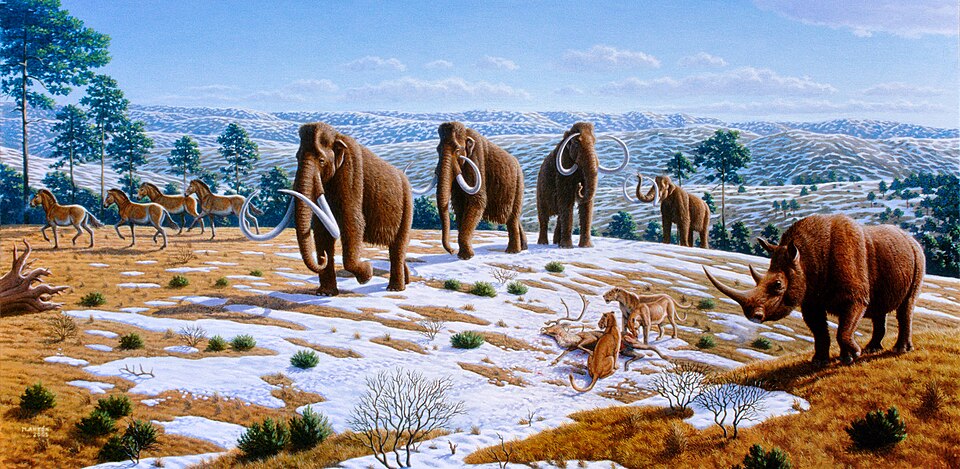
Woolly mammoths inhabited a biome known as the mammoth steppe, a cold, dry grassland that stretched across northern Eurasia and Beringia during the Pleistocene epoch. This was not a frozen wasteland of ice and snow, as many imagine. It was a vast, productive grassland ecosystem, more similar to the modern African savanna in its ecological richness than to the Arctic tundra that replaced it.
Mammoths were grazers, feeding primarily on grasses, sedges, and other low-growing vegetation. Isotope analysis of their bones and teeth shows that they consumed a diet dominated by grass, supplemented by herbs and shrubs in summer. Their molars were remarkably adapted for this lifestyle. Unlike the relatively simple teeth of many mammals, mammoth molars had up to 26 enamel ridges packed tightly together, creating a grinding surface ideal for processing tough, silica-rich grasses. They cycled through six sets of molars in their lifetime, with new teeth replacing worn ones from the back of the jaw, a trait shared with modern elephants.
The mammoth steppe supported a rich community of large herbivores. Woolly mammoths shared their world with woolly rhinoceroses, bison, wild horses, muskoxen, reindeer, and giant deer. This diversity of grazers maintained the grassland through their feeding and trampling, preventing shrubs and trees from encroaching. When the megafauna disappeared, the steppe itself contracted, replaced by mossy tundra and boreal forest. Some researchers argue that mammoths were not merely inhabitants of the steppe but active architects of it.
Social Lives and Extinction
Fossil evidence and rare preserved remains paint a picture of complex social behavior. Mammoths likely lived in matriarchal herds, similar to modern elephants, with older females leading groups of related females and their young. Males probably lived alone or in bachelor groups after reaching maturity. Cave paintings in France and Spain, created by humans who hunted mammoths, depict groups of animals moving together, supporting this interpretation.
Their extinction remains one of paleontology's most debated questions. Woolly mammoths vanished from mainland Eurasia and North America roughly 10,000 years ago, coinciding with the end of the last Ice Age and the expansion of human populations. On isolated Arctic islands, small populations persisted much longer. The last known woolly mammoths lived on Wrangel Island in the Arctic Ocean, dying out around 4,000 years ago, long after the pyramids of Egypt were built.
Two factors likely drove their extinction: climate change and human hunting. As temperatures rose at the end of the Pleistocene, the productive mammoth steppe gave way to less nutritious tundra and forest. Simultaneously, expanding human populations placed increasing pressure on mammoth herds through direct hunting. Neither factor alone may have been sufficient, but together they proved lethal to a species whose reproductive rate was too slow to absorb sustained losses.
De-Extinction: Bringing Mammoths Back?
In 2015, scientists sequenced the complete genome of the woolly mammoth from well-preserved Siberian remains. This breakthrough opened the door to one of science's most ambitious proposals: de-extinction. The plan, led by Harvard researchers and the startup Colossal Biosciences, is to edit the Asian elephant genome to reintroduce cold-adaptive traits such as small ears, thick fur, and cold-tolerant hemoglobin. The result would not be a true mammoth but a cold-adapted elephant, sometimes called a "mammophant."
Proponents argue such creatures could help restore the mammoth steppe ecosystem and potentially slow Arctic permafrost thaw by maintaining grassland cover. Critics raise ethical concerns about creating an animal with no natural habitat or social group to join. The debate continues, but the project has already advanced our understanding of mammoth genetics far beyond what traditional fossil analysis could achieve.
Lessons Across Time
The woolly mammoth's story carries a message that resonates across geological time. A species that thrived for hundreds of thousands of years could not survive the combined forces of rapid environmental change and human pressure. It is a pattern that echoes from the trilobites of the Cambrian to the dinosaurs of the Cretaceous, and one that modern conservation biology ignores at its peril.