Published 2026-09-21 · by the Triops.me Editorial Team · Back to Articles
The Devonian: Earth's Age of Fishes
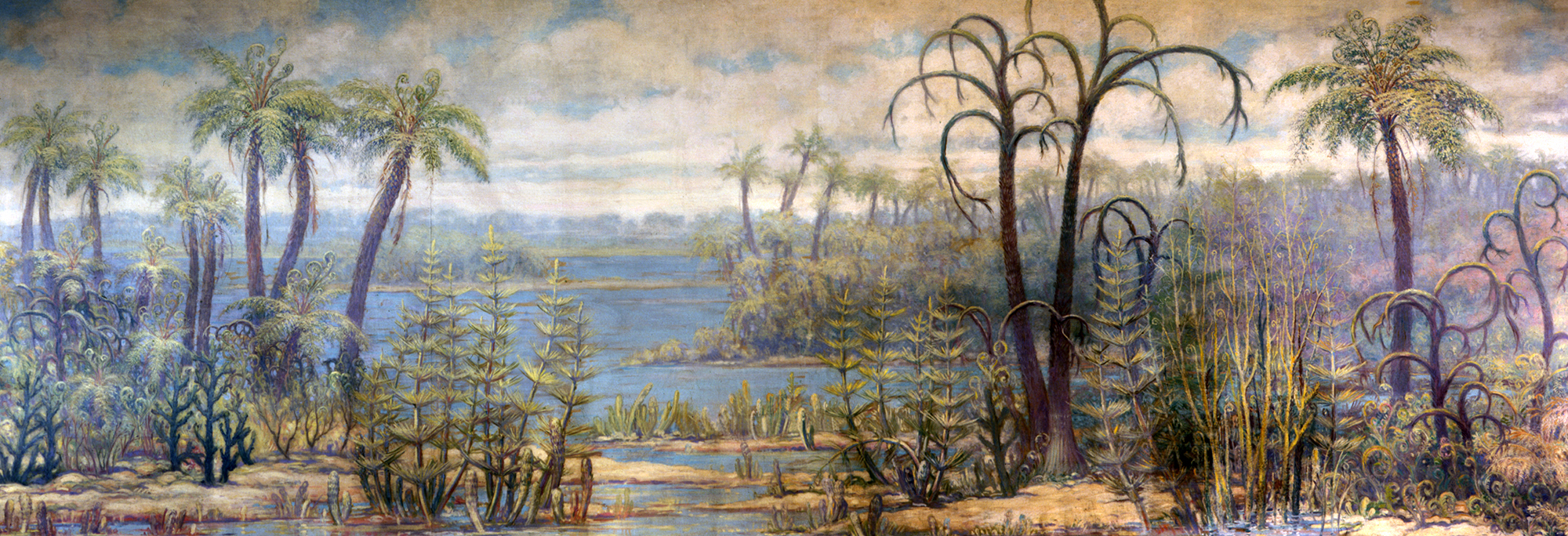
Ask most people to picture prehistoric Earth and they will imagine dinosaurs thundering through fern forests. Go back another 300 million years, though, and you find a world with a very different ruler. From roughly 419 to 359 million years ago, the Devonian period belonged to the fish. Paleontologists call it the Age of Fishes, and for good reason: nearly every major group of fish we know today either got its start or hit its stride in these warm, shallow seas.
The Devonian was a planet in transition. The supercontinents Gondwana and Laurussia were drifting toward each other, closing an ocean and crumpling up mountain ranges. Sea levels ran high, flooding continental shelves with sunlit, shallow water. Life on land was still embryonic: mosses, low-lying creepers, and by the middle of the period the very first true forests. The action, though, was in the water.
Arms of Bone: The Placoderm Takeover
The undisputed heavyweights of the Devonian seas were the placoderms, fish armored in bony plates from head to trunk. Earlier fish had been small, toothless, and timid. The placoderms changed the rules in two ways at once. First, they carried armor like living fortifications. Second, and more importantly, they were among the earliest fish with true jaws.
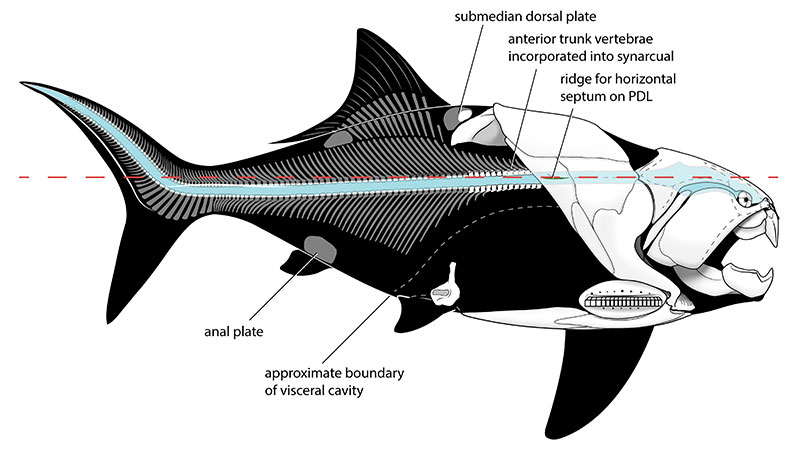
Jaws sound like a small upgrade, but they rewrote the food web. Before jaws, predation was mostly a matter of sucking in small prey or scraping. After jaws, fish could bite, crush, and tear. Within a few million years, the seas had their first superpredators. The most famous is Dunkleosteus, a placoderm that reached the size of a pickup truck and sliced prey with self-sharpening bony blade plates instead of teeth. Its bite force ranks among the most powerful ever estimated for any fish. As we covered in our profile of this armored giant, a single Dunkleosteus head shield can be half a meter across, and fossils even preserve its half digested meals.
Placoderms were not a single species but an entire class of fish, with hundreds of forms. Some hovered over reefs like armored boxfish. Others, like Bothriolepis, scooted along riverbeds on pectoral fins that worked almost like crutches. For tens of millions of years they were the dominant vertebrates on Earth. Then, at the very end of the period, the entire class vanished, leaving the waters to other lineages. Few dynasties in Earth history have risen so spectacularly and disappeared so completely.
Sharks, Rays, and the Cartilage Dynasty
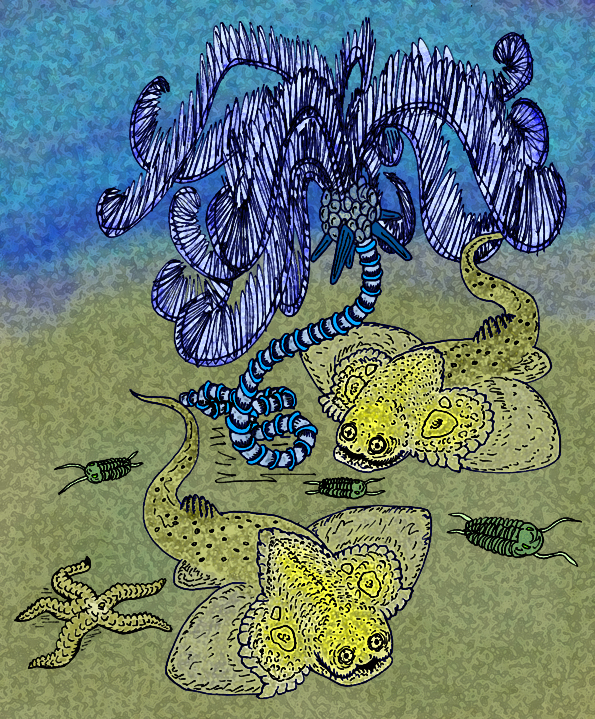
Not every Devonian success story wore armor. The first sharks appeared in these same seas, slender and small compared to their placoderm neighbors. Their advantage was not armor but architecture: skeletons of lightweight cartilage, a body plan tuned for cruising and speed. Sharks, rays, and their relatives would eventually outlast the placoderms and rule the oceans for the next 360 million years, a run that continues today.
Lobe Fins and the Road to Land
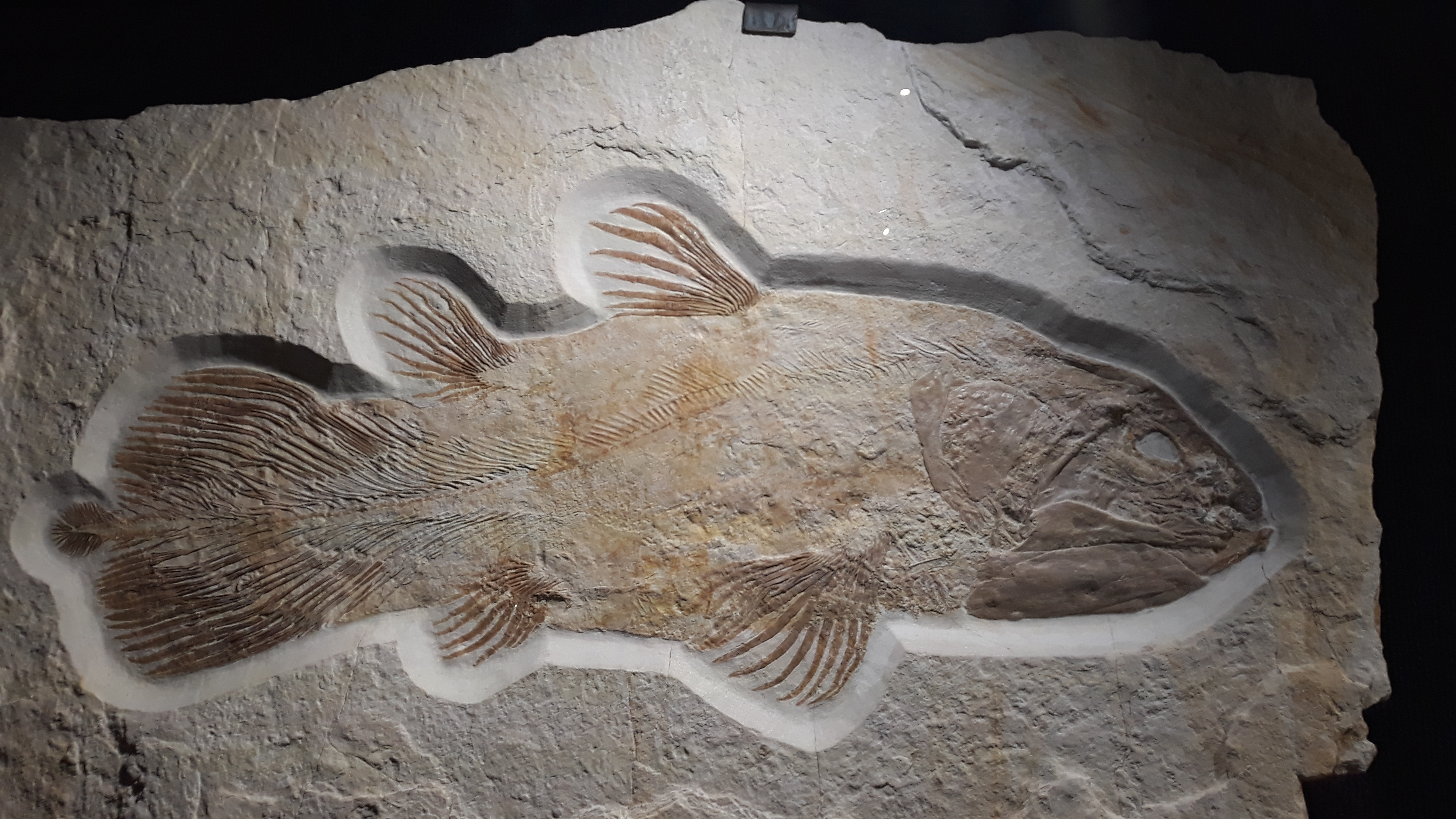
The most consequential fish of the Devonian, though, were neither armored nor aggressive. They were the lobe-finned fish, whose fins were supported by sturdy bones arranged like limbs. In Devonian rivers and swamps, these fish evolved lungs alongside their gills, letting them gulp air in oxygen-poor, stagnant water. Their living descendants include the lungfish and the coelacanth, a lineage so ancient it was long thought to have gone extinct with the dinosaurs.
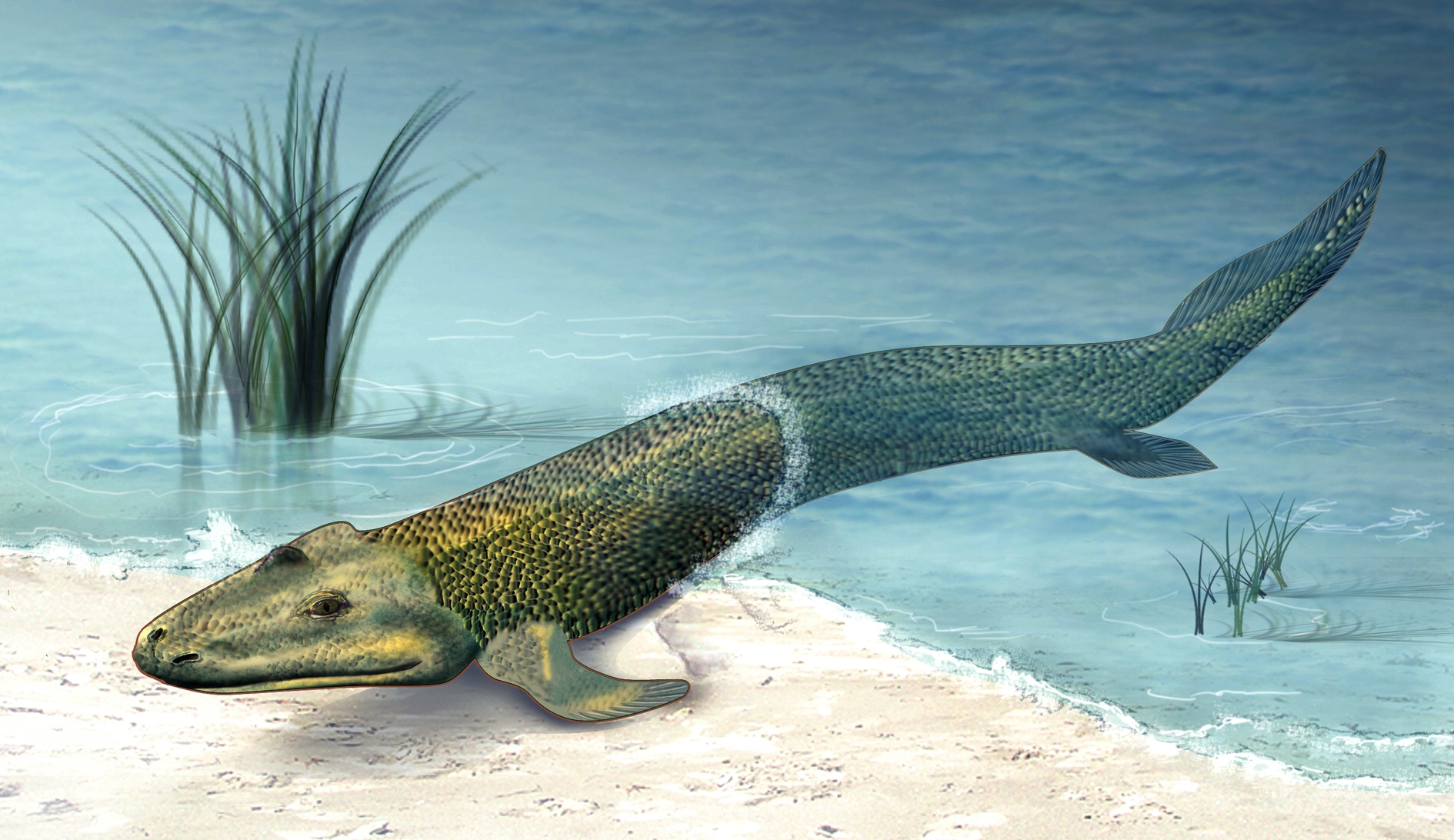
One branch of these fish did something no animal had done before: it climbed out of the water. Fossils like Tiktaalik show the transition in exquisite detail, a flat-headed fish with a neck, wrists, and fins strong enough to prop its body up. By the Late Devonian, true four-legged land animals, the tetrapods, were leaving footprints on Devonian mud. Every bird, every whale, every human carries the legacy of those fish. Without the Devonian experiment in walking, the Age of Dinosaurs and the Age of Mammals never happen.
The First Forests
While fish reigned in the water, land was undergoing its own revolution. In the Early Devonian, the tallest plants were ankle-high. By the end of the period, forests of Archaeopteris, an early tree with true wood, shaded the first soils. Roots broke up bare rock into Earth's first deep soils, and that chemical weathering drew carbon dioxide out of the atmosphere. Some scientists link this drawdown to global cooling near the end of the period. Land was no longer a barren crust; it had become a habitat, ready and waiting for the fish to climb onto it.
A Close Call at the End
The Age of Fishes ended in crisis. Around 359 million years ago, the Hangenberg event, the last of a series of Late Devonian extinctions, devastated marine life. The giant placoderms disappeared completely, and reef ecosystems collapsed. The extinction cleared the stage for the sharks, the bony fish, and the surviving tetrapods to diversify into the gaps. It was the fifth of the so-called Big Five extinctions, and you can read how it compares to the others in our overview of Earth's mass extinctions.
The Devonian teaches a lesson that keeps repeating through Earth history. Dynasties that look untouchable, like the armored placoderms, can vanish in a geological instant, while modest lineages like the lobe-finned fish can leave descendants walking on every continent. Survival often favors the adaptable over the armored. It is a lesson Triops, the little crustacean that has watched empires come and go for 220 million years, would surely recognize.