Published August 22, 2026, 11:57 by the Triops.me Editorial Team · Back to Articles
Horseshoe Crabs: Blue Blood and Ancient Armor
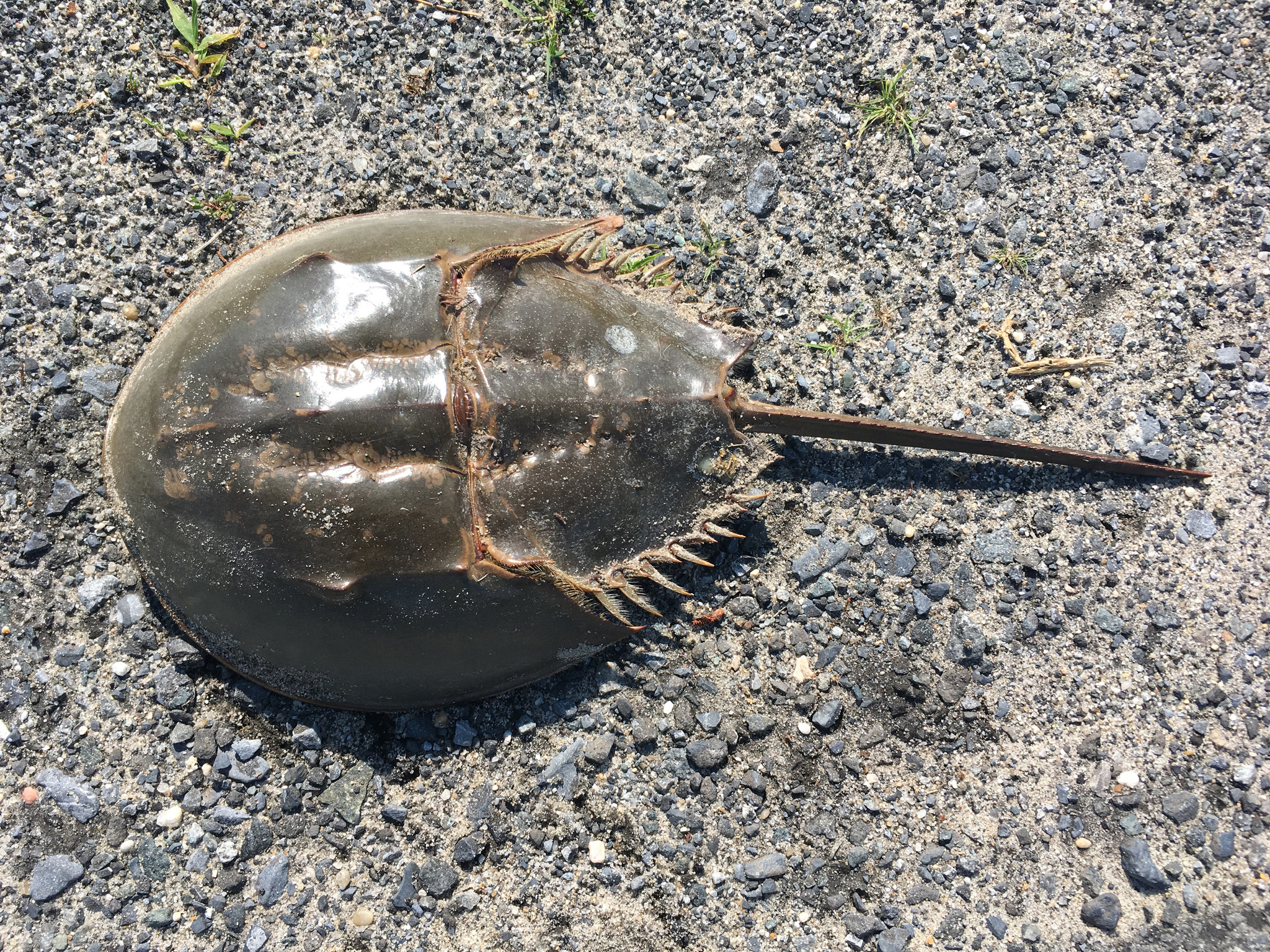
Long before dinosaurs walked the Earth, a peculiar armored creature was already patrolling the ocean floor. The horseshoe crab has been around for roughly 450 million years, making it older than most dinosaur-era reptiles and nearly as ancient as the first land plants. Despite its name, it is not a crab at all. It belongs to the order Xiphosura, a group more closely related to spiders and scorpions than to any crustacean.
Only four living species remain. The Atlantic horseshoe crab, Limulus polyphemus, lives along eastern North America. The other three are Asian: the Japanese horseshoe crab (Tachypleus tridentatus), the coastal horseshoe crab (Tachypleus gigas), and the mangrove horseshoe crab (Carcinoscorpius rotundicauda). Their range has shrunk dramatically, but the basic body plan has barely changed since the Ordovician period.
Anatomy: Built to Last
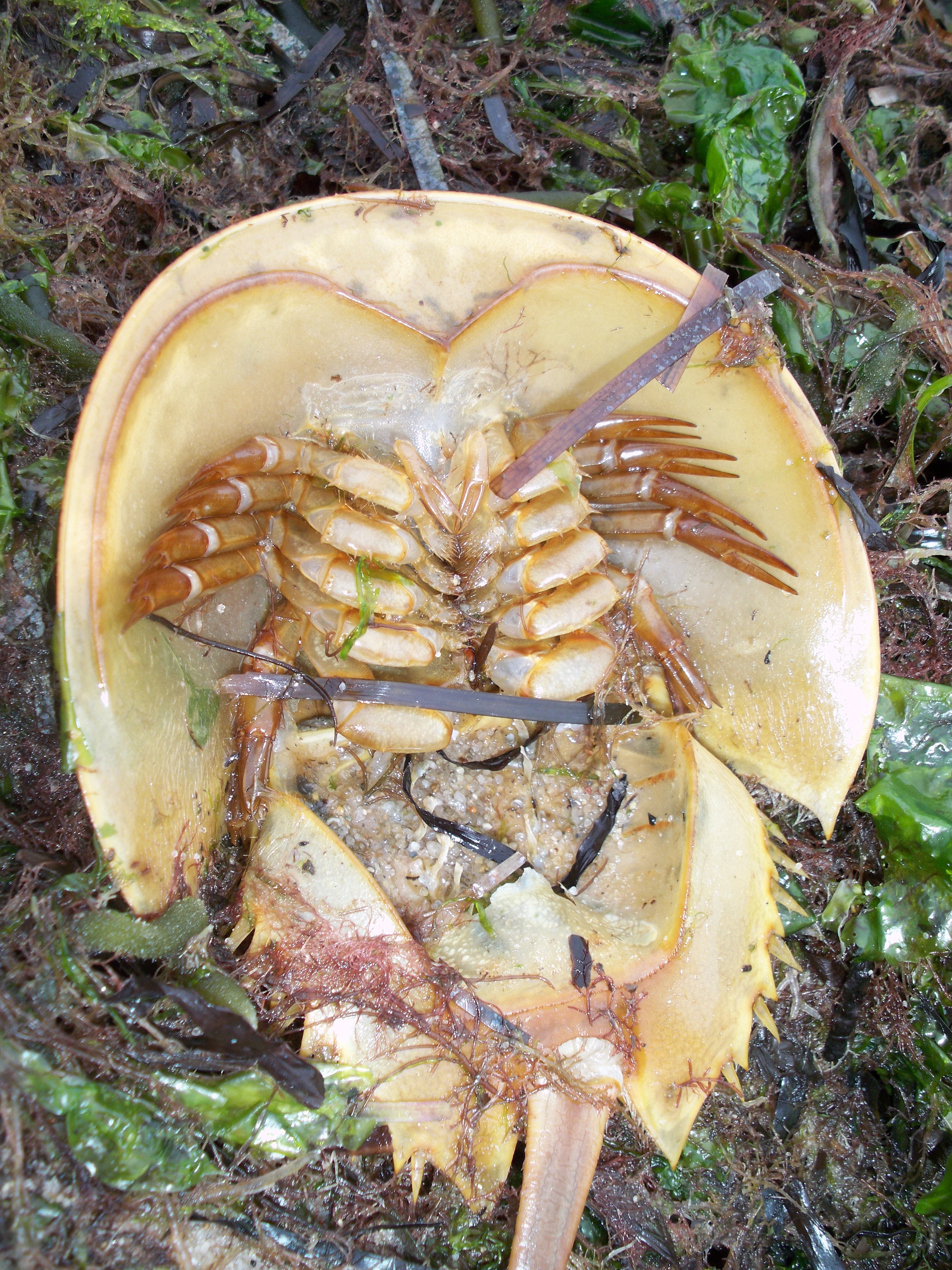
The horseshoe crab's body has three sections. The large, helmet-shaped front section, called the prosoma, houses the brain, mouth, and five pairs of walking legs. Behind that sits the opisthosoma, bearing book gills used for breathing and, in males, claspers for gripping females during mating. The long, spike-like tail, or telson, is not a stinger. It flips the animal right-side up if it gets overturned on the beach.
Their compound eyes contain roughly 1,000 ommatidia, fewer than many insects, yet researchers discovered in the 1960s that these eyes are extraordinarily sensitive to contrast, detecting light changes even in near-total darkness. This made horseshoe crabs a key model organism in vision neuroscience.
Blue Blood: A Medical Miracle
The most extraordinary thing about horseshoe crabs is their blood. Where human blood uses iron-based hemoglobin to carry oxygen, horseshoe crab blood uses copper-based hemocyanin, giving it a striking blue color. But the real marvel is a substance dissolved in that blood called Limulus Amebocyte Lysate, or LAL.
LAL reacts instantly to bacterial endotoxins, substances released by gram-negative bacteria that can cause deadly fever and shock. When LAL encounters even trace amounts of these toxins, it clots immediately, forming a gel that traps the contaminants. This reaction is so reliable that since the 1970s, the United States FDA has required LAL testing for every injectable drug, vaccine, and medical device produced in the country. Billions of dollars of medical products are tested with LAL each year.
The demand is enormous. Each year, roughly 500,000 Atlantic horseshoe crabs are harvested from the wild, bled of about one-third their blood volume, and returned to the ocean. Studies suggest 10 to 15 percent die from the process, though recent refinements have improved survival rates. Scientists are developing synthetic alternatives, but so far no substitute has matched LAL's sensitivity.
Spawning: An Ancient Ritual
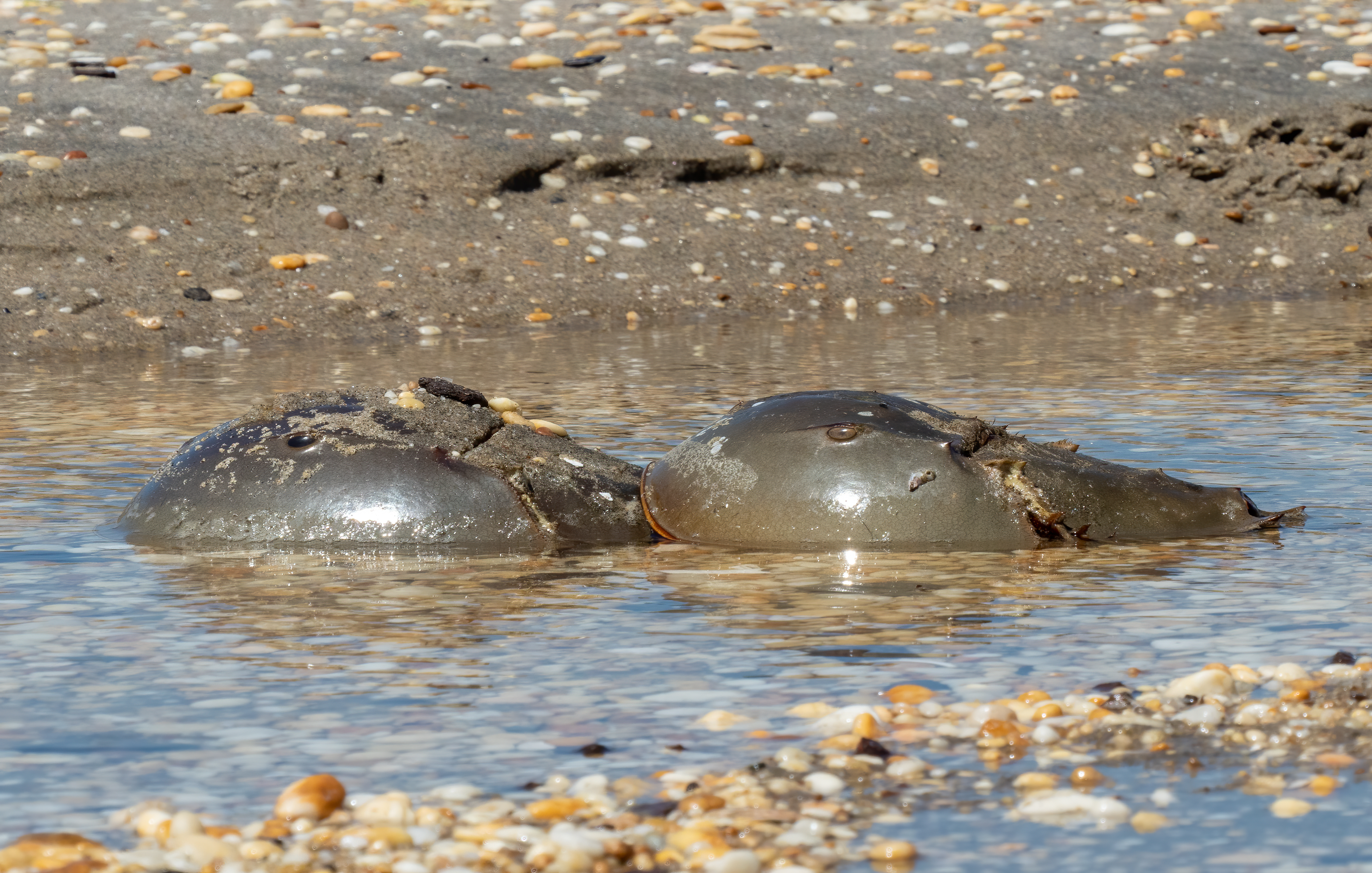
Every spring, thousands of horseshoe crabs crawl onto beaches to spawn. Females dig shallow nests and lay clusters of tiny green eggs, sometimes 80,000 to 100,000 per female. This spawning spectacle matters far beyond the crabs themselves.
The eggs are critical food for migrating shorebirds, especially the red knot (Calidris canutus rufa). These sandpipers fly nonstop from Tierra del Fuego to the Arctic, roughly 15,000 kilometers, and depend on horseshoe crab eggs to refuel at Delaware Bay.
Asian Species Under Pressure
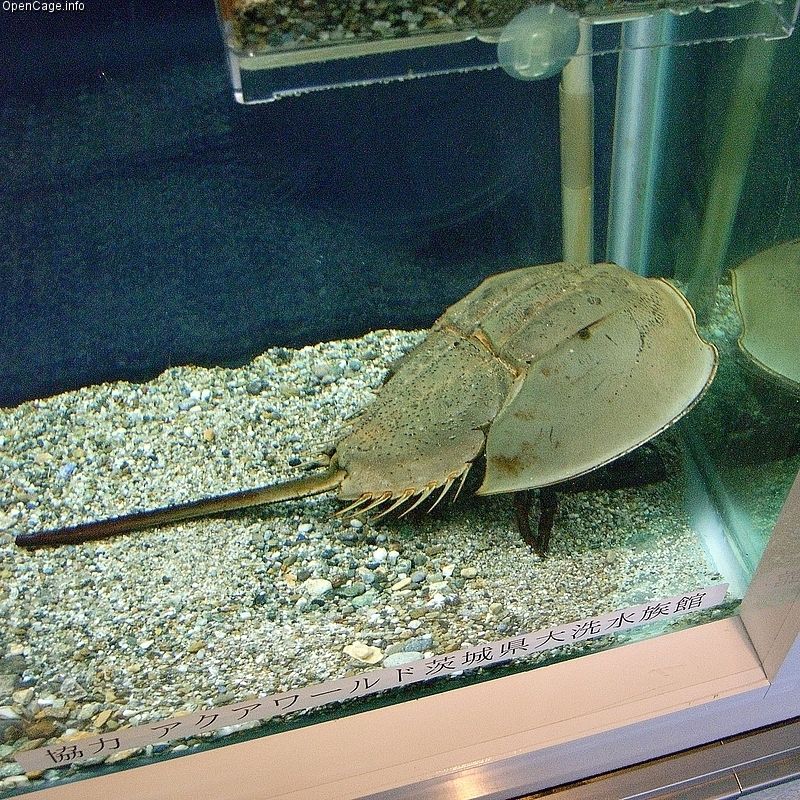
The Asian species face even greater threats. Tachypleus tridentatus was once common along coasts of China, Japan, Korea, and Vietnam, but populations have declined by over 90 percent in many regions. Coastal development, pollution, and direct consumption have taken a severe toll. Japan has established protected breeding areas, but recovery remains slow.
The mangrove horseshoe crab, Carcinoscorpius rotundicauda, carries an additional danger: its eggs contain tetrodotoxin, the same potent neurotoxin found in pufferfish. Accidental poisonings from consuming these crabs occur periodically in Southeast Asia.
Why Horseshoe Crabs Matter
Horseshoe crabs sit at the intersection of deep evolutionary time and urgent modern need. They are living links to a world before fish dominated the seas, and their blood quietly protects every vaccine and IV bag used in modern medicine. They anchor coastal food webs during spawning season and remind us that evolutionary success does not always mean becoming faster or bigger. Sometimes it means staying exactly what you are, century after century.
Like Triops and other living fossils, horseshoe crabs prove that ancient body plans can be extraordinarily resilient. But resilience has its limits. With four surviving species out of a lineage that once numbered many more, the horseshoe crab's future depends on what we do in the next few decades.