Published August 29, 2026, 18:51 by the Triops.me Editorial Team · Back to Articles
Ichthyosaurs: The Dolphin-Shaped Reptiles of Triassic Seas
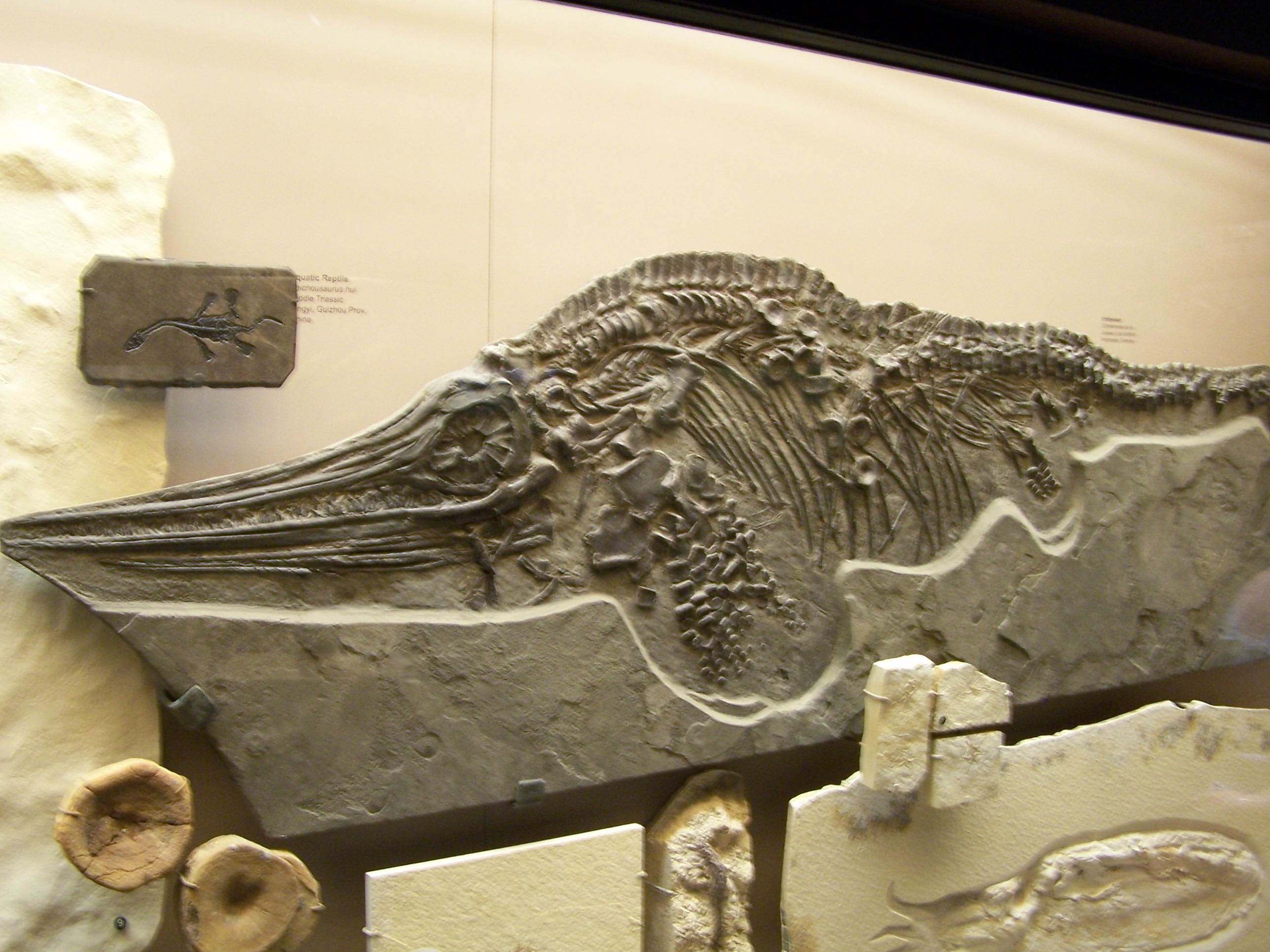
Imagine a creature that looks exactly like a dolphin but is actually a reptile, lived 250 million years before dolphins existed, and gave birth to live young in the open ocean. That is the ichthyosaur, one of evolution's most striking examples of convergent design. These marine reptiles dominated Earth's oceans for over 150 million years, sharing the Triassic seas with the very same ancient lineage that gave us modern triops.
The story of ichthyosaurs begins on land. During the early Triassic period, roughly 250 million years ago, small reptilian ancestors began venturing into shallow coastal waters. Within a few million years, natural selection sculpted their bodies into something unmistakably aquatic: streamlined fusiform shapes, paddle-like limbs, and crescent-shaped tail fins. The transformation was so complete that early paleontologists, when first encountering ichthyosaur fossils in the 1800s, initially mistook them for fish bones.
A Body Built for Speed
Ichthyosaurs were remarkably well-adapted to marine life. Their bodies were torpedo-shaped, reducing drag as they pursued prey through Triassic and Jurassic waters. Unlike most reptiles, ichthyosaurs were warm-blooded, or at least possessed a metabolic rate high enough to maintain elevated body temperatures in cold deep water. Their eyes were enormous, among the largest relative to body size of any vertebrate ever, suggesting they hunted in low-light conditions at depth.
Their limbs had transformed into rigid, wing-like flippers used for steering rather than propulsion. Speed came from a powerful vertical tail fin, similar to that of modern tuna or lamniform sharks. Some species, like Stenopterygius, could reach cruising speeds comparable to today's fast-swimming fish, making them formidable open-ocean predators.
Perhaps most remarkably, ichthyosaurs gave birth to live young. Fossil evidence from Germany and China shows complete pregnant specimens with embryos still inside, some positioned tail-first as in modern sea snakes. This was a critical adaptation, as it freed ichthyosaurs entirely from the need to return to land to lay eggs, unlike sea turtles. Once they committed to the ocean, they never looked back.
Giants and Predators
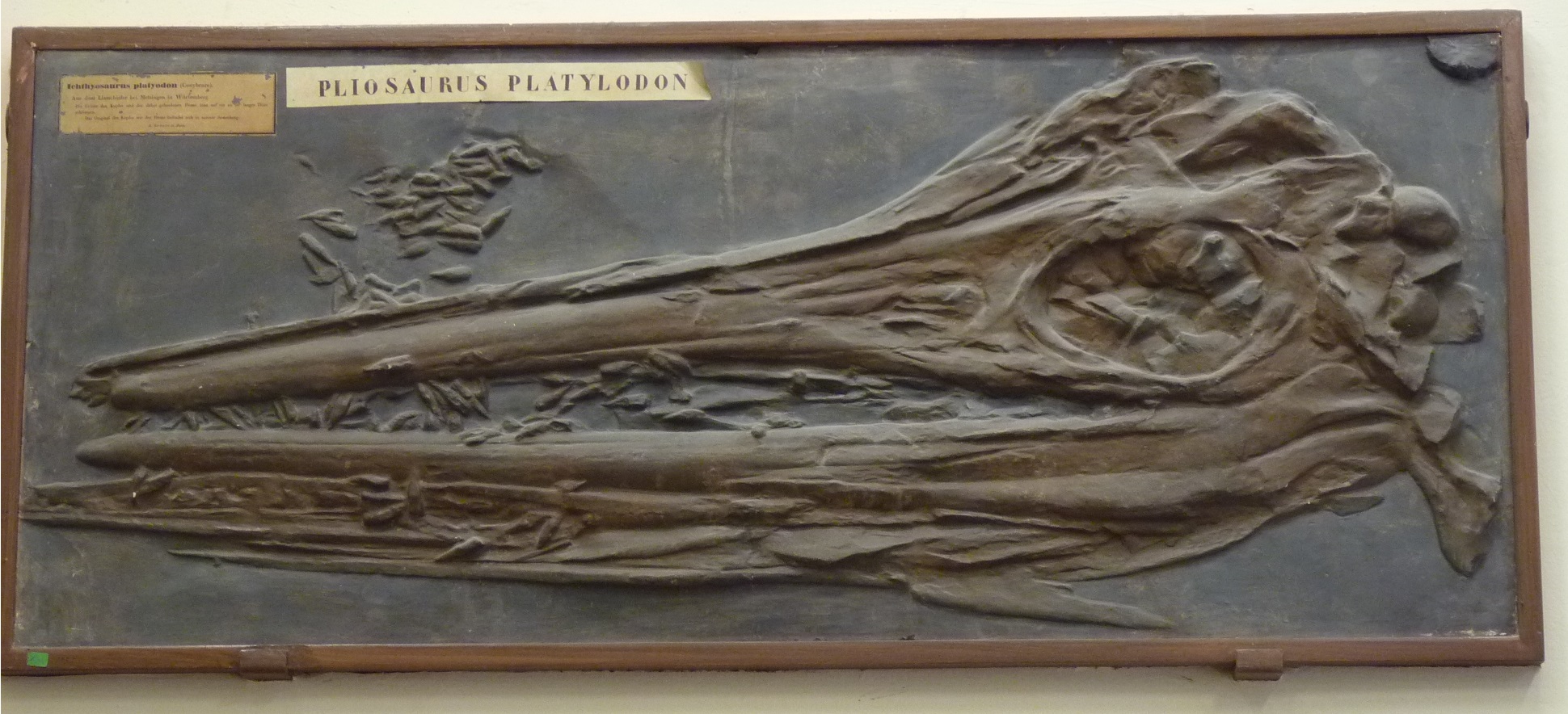
Not all ichthyosaurs were created equal. The group produced some of the largest marine reptiles ever to swim Earth's oceans. Shonisaurus popularis, which lived during the Late Triassic in what is now Nevada, measured up to 21 meters, roughly the length of a blue whale's heart alone. It was the largest animal on Earth during its time, dwarfing most of its contemporaries.
Smaller species filled different ecological niches. Temnodontosaurus, an early Jurassic predator, reached about 9 meters and had a mouthful of conical teeth built for catching fish and squid. Its massive eyes, over 20 centimeters in diameter, gave it exceptional vision in dim water. Ophthalmosaurus, from the Late Jurassic, was a deep-diving specialist that likely hunted squid in the mesopelagic zone, much like modern sperm whales hunt in the twilight depths.
The smallest ichthyosaurs were still impressive predators. Eurhinosaurus had an elongated upper jaw, like a swordfish bill, suggesting it slashed through schools of fish with horizontal sweeps of its head. Each species had carved out its own slice of the marine food web, creating a diversity of forms that lasted for millions of years.
Convergent Evolution: Nature's Blueprint
What makes ichthyosaurs especially fascinating to evolutionary biologists is how closely they mirror modern dolphins, despite being separated by over 200 million years of evolution. Both groups independently developed the same body plan: a streamlined fusiform shape, a vertical tail fin, and warm-blooded physiology. This is convergent evolution at its most dramatic, the same engineering solution arrived at by two completely different lineages facing identical hydrodynamic problems.
The similarities go deeper than body shape. Like dolphins, ichthyosaurs likely lived in social groups, cared for their young, and navigated by a combination of vision and possibly echolocation. While we cannot prove echolocation in ichthyosaurs, their brain structures suggest complex social behaviors and sensory processing that parallel what we see in modern cetaceans.
The Triassic Connection
Ichthyosaurs shared the Triassic world with our favorite living fossil, the triops. While ichthyosaurs patrolled the open oceans, triops thrived in ephemeral freshwater pools on land, their eggs waiting patiently through droughts that could last years. Both lineages survived the Permian-Triassic extinction, the most devastating mass extinction event in Earth's history, which wiped out roughly 90% of all species.
Their survival strategies could not have been more different. Triops endured through cryptobiosis, their eggs entering a state of suspended animation that could last decades. Ichthyosaurs survived through mobility, their speed and agility allowing them to chase prey across vast ocean distances as conditions changed. Both approaches worked, and both lineages radiated into the Triassic world with remarkable success.
Discovery and Legacy
The first ichthyosaur fossils were discovered in the early 19th century in England's Lyme Regis, along the Jurassic Coast. Mary Anning, one of history's most important fossil hunters, found several complete specimens that helped scientists understand these creatures for the first time. Her discoveries, made when she was barely into her twenties, revolutionized paleontology and challenged prevailing ideas about extinction.
Ichthyosaurs eventually disappeared during the Late Cretaceous, around 90 million years ago. Their decline was gradual rather than sudden, likely caused by competition from newly evolving mosasaurs and a changing ocean ecosystem. Unlike triops, which persist to this day in nearly unchanged form, ichthyosaurs left no living descendants. Their story is told entirely through fossils, a 160-million-year record etched in stone.
Today, ichthyosaur fossils are found on every continent, including Antarctica. They remain one of the most popular exhibits in natural history museums worldwide, their elegant silhouettes instantly recognizable even to casual visitors. For anyone fascinated by the creatures that shared Earth's ancient seas with triops, the ichthyosaur stands as a powerful reminder that evolution repeatedly finds the same optimal solutions, given enough time and the right challenges.