Published August 21, 2026, 21:31 by the Triops.me Editorial Team · Back to Articles
Conodonts: Geology's Ancient Timekeepers
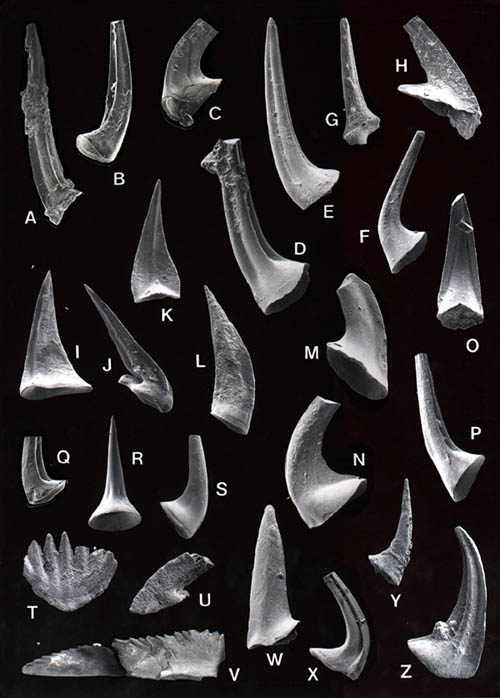
Most paleontologists cannot date a rock layer without consulting these tiny fossils. Conodonts, jawless marine creatures that swam Earth's oceans from roughly 520 to 200 million years ago, left behind microscopic phosphatic elements so distinctive and abundant that they have become the single most important tool in biostratigraphy. Their story stretches across the entire Paleozoic Era, beginning before the Cambrian Explosion and ending after the dinosaurs first appeared.
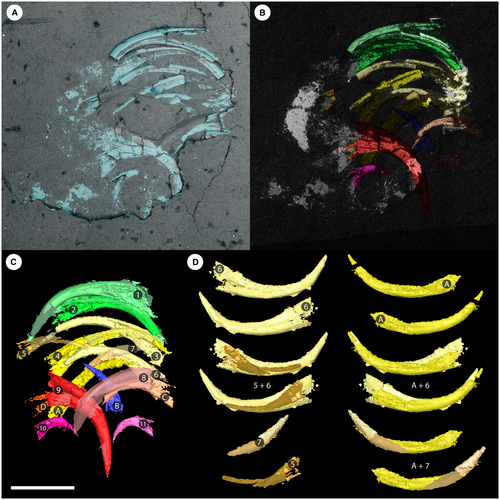
The name "conodont" comes from the Greek words for "cone" and "tooth," but these structures were not true teeth in the way we understand them. Conodont elements were composed of calcium phosphate, the same mineral in vertebrate bones and teeth, and they formed part of an elaborate grasping apparatus inside the animal's mouth. The soft-bodied creature itself was eel-like, measuring a few centimeters long, with a large head and a series of elements arranged in bilateral rows. Complete body fossils from the Waukesha Lagerstätte in Wisconsin have confirmed what paleontologists long suspected: conodonts were early vertebrates, more closely related to hagfish and lampreys than to any living invertebrate.
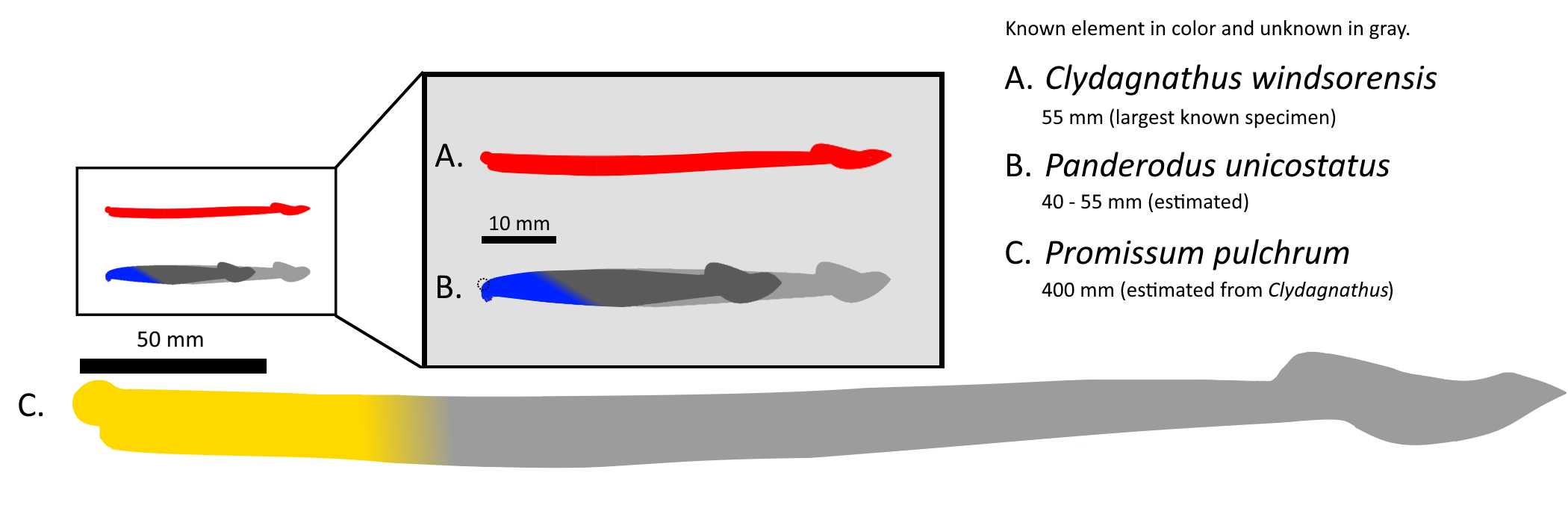
For nearly two centuries, conodont elements were a mystery. Scottish geologist William Nicol first described them in 1856, and for decades they were classified as everything from jaw fragments of primitive fish to the feeding structures of annelid worms. The lack of a complete body fossil made classification nearly impossible. It was not until the 1980s and 1990s, when exceptionally preserved specimens revealed soft tissue impressions around the elements, that conodonts were finally placed within the vertebrate family tree. The reconstruction of Panderodus, a common conodont genus, shows a slender, elongate animal with large eyes and a mouth packed with rows of these phosphatic blades, suited for grasping and slicing soft-bodied prey.
What makes conodonts invaluable to geologists is their combination of rapid evolution, wide geographic distribution, and resistance to weathering. Individual species appeared and disappeared within a few million years, a blink of an eye in geological time, yet their elements were dispersed across every ocean basin on Earth. When a geologist identifies a particular conodont species in a limestone sample from Morocco, they can confidently correlate that rock with the same time horizon in Nevada or China. No other fossil group offers the same temporal resolution. The standard geological timescale, the framework that divides Earth's 4.6 billion year history into named periods and stages, relies heavily on conodont zones.
Beyond dating rocks, conodont elements serve as miniature chemical archives. The ratio of trace elements locked within the calcium phosphate crystal lattice, particularly strontium and the rare earth elements, reflects the temperature and chemistry of the water in which the animal lived. This property, known as conodont thermometry, allows scientists to reconstruct ancient ocean temperatures with remarkable precision. Studies of conodont elements from the Permian-Triassic boundary, for instance, have documented ocean warming events that coincide with the largest mass extinction in Earth's history, providing chemical evidence for the thermal stress that devastated marine ecosystems 252 million years ago.
Their extinction at the end of the Triassic, around 200 million years ago, remains poorly understood. Conodonts had survived at least two prior mass extinctions, the Late Ordovician and the Late Devonian events, yet they could not weather the end-Triassic crisis that also eliminated many reef-building organisms and large predatory reptiles. Some researchers suggest that changing ocean chemistry and the rise of more efficient jawed fish competitors finally pushed them over the edge.
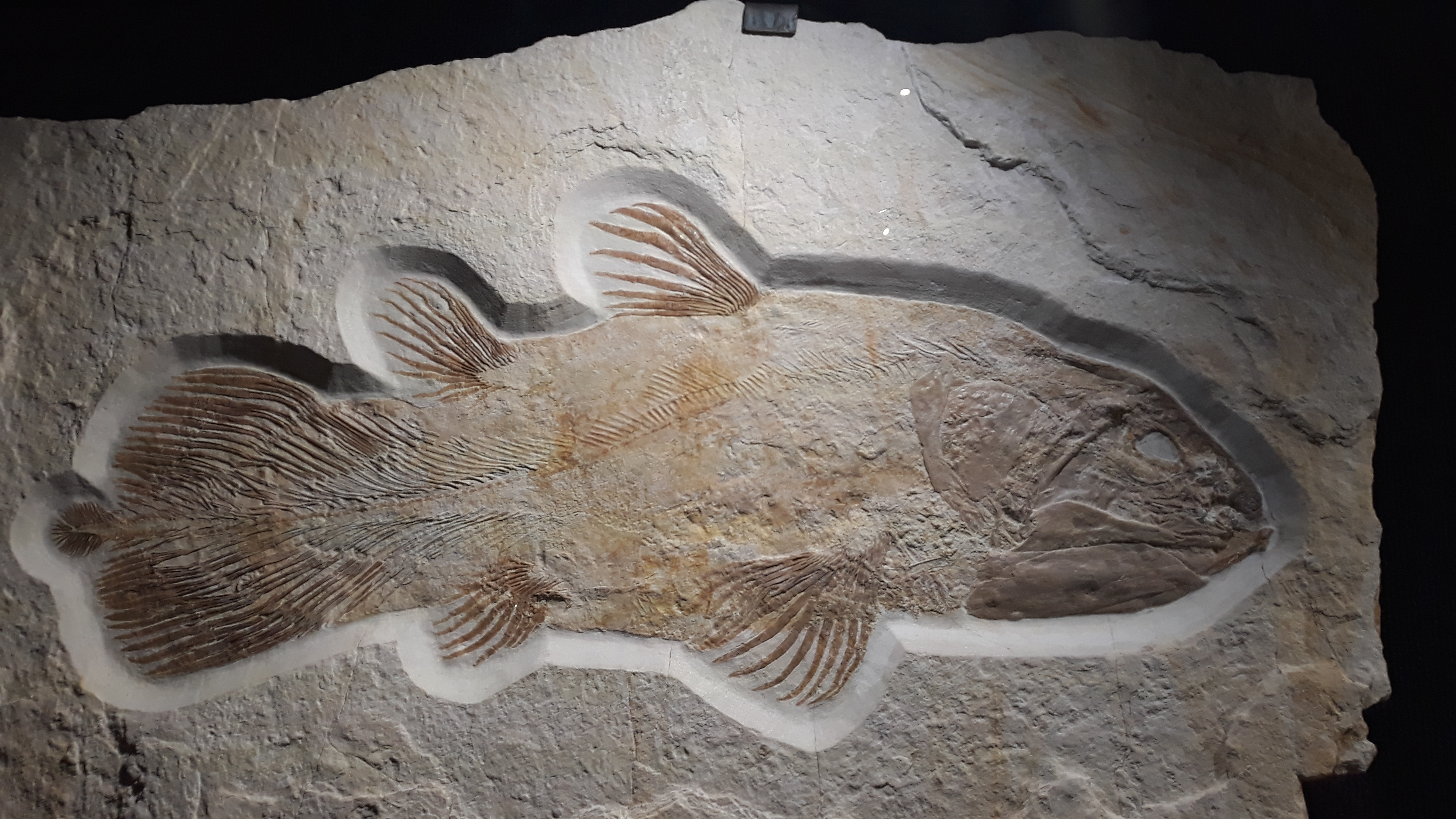
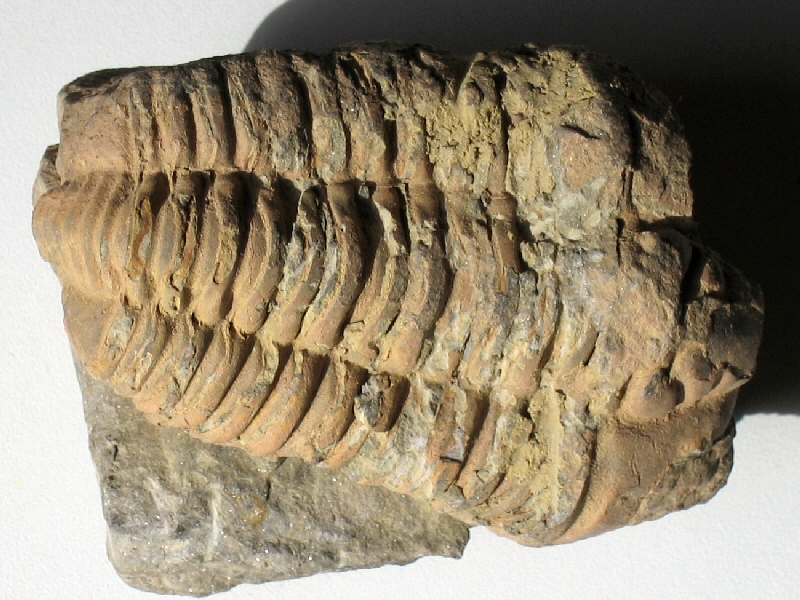
Conodonts remind us that the most important fossils are often the smallest. While trilobites get the fame and coelacanths get the romance, conodonts quietly underpin the entire chronological architecture of Earth science. Every rock layer dated, every extinction event timed, every ancient temperature reconstructed, rests in part on the work of these unassuming eel-like creatures and the microscopic elements they left behind.