Published September 20, 2026, 18:54 · by the Triops.me Editorial Team · Back to Articles
Stegosaurus: The Plated Puzzle of the Jurassic
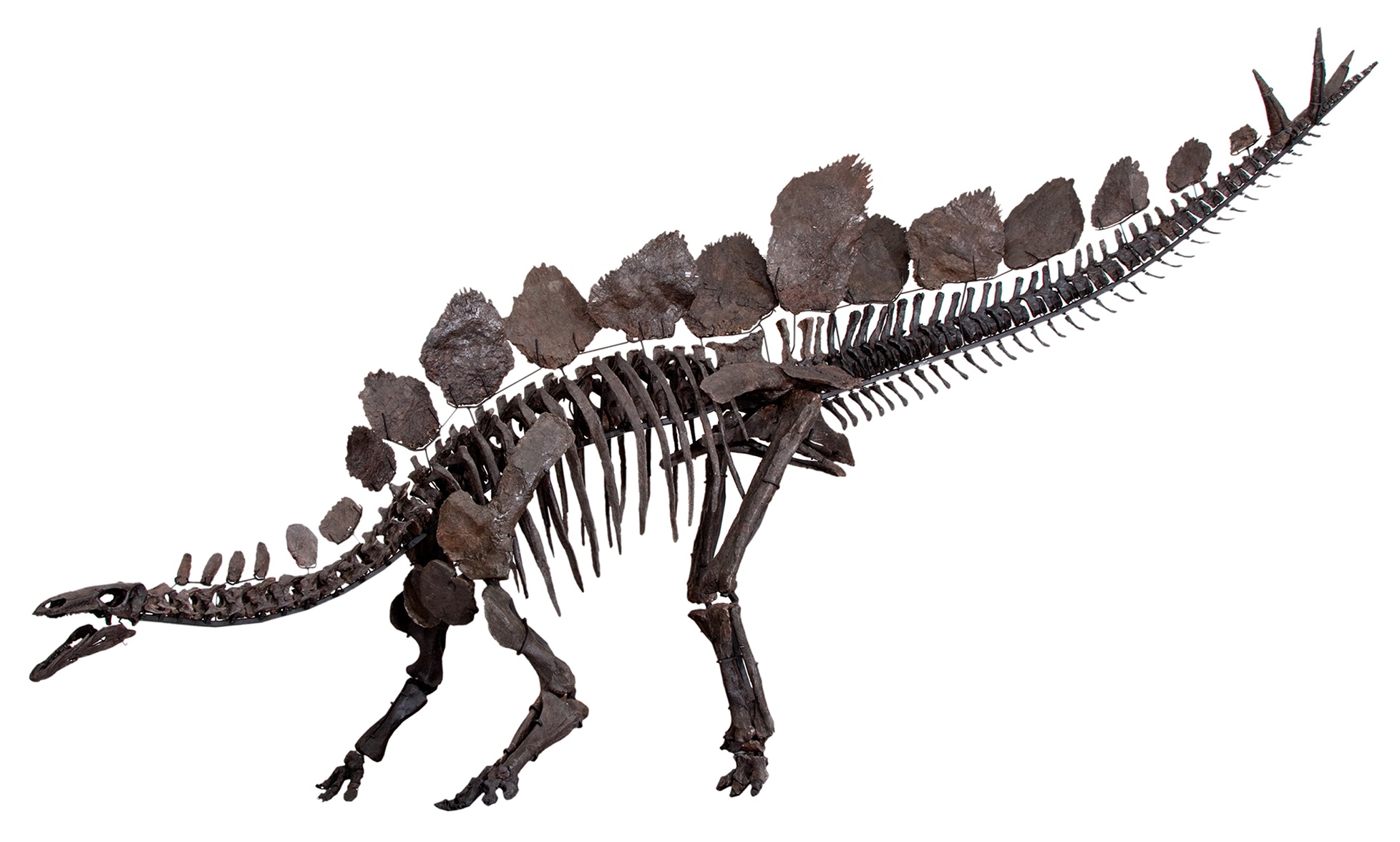
Few animals look as strange as Stegosaurus. A nine meter body shaped like an armored tank, a double row of giant bony plates rising along its back like a fence, and four spikes swinging from the tip of its tail. It is one of the most recognizable dinosaurs on Earth, and also one of the most confusing. For nearly 150 years, paleontologists have argued about what its plates were for, how it held them, and how an animal with such a tiny brain managed to survive for millions of years as one of the dominant plant eaters of the Late Jurassic.
Stegosaurus lived around 150 million years ago in what is now the western United States, roaming the floodplains of the Morrison Formation alongside giants like Allosaurus, Ceratosaurus, and Diplodocus. The Morrison was a warm, seasonal landscape of river valleys and open woodlands, and Stegosaurus browsed its way through ferns, cycads, and low growing shrubs. Its fossils have also turned up in Portugal, making it one of the few Jurassic dinosaurs known from both sides of the Atlantic.
The first Stegosaurus bones were dug up in Colorado in 1877 during the famous Bone Wars, a bitter fossil collecting race between paleontologists Othniel Charles Marsh and Edward Drinker Cope. Marsh named the animal in 1877, and over the following decades his teams uncovered dozens of individuals. The best known species, Stegosaurus stenops, is represented by a nearly complete skeleton found in 1886, still one of the most informative stegosaur fossils ever discovered.
The plates that stumped science
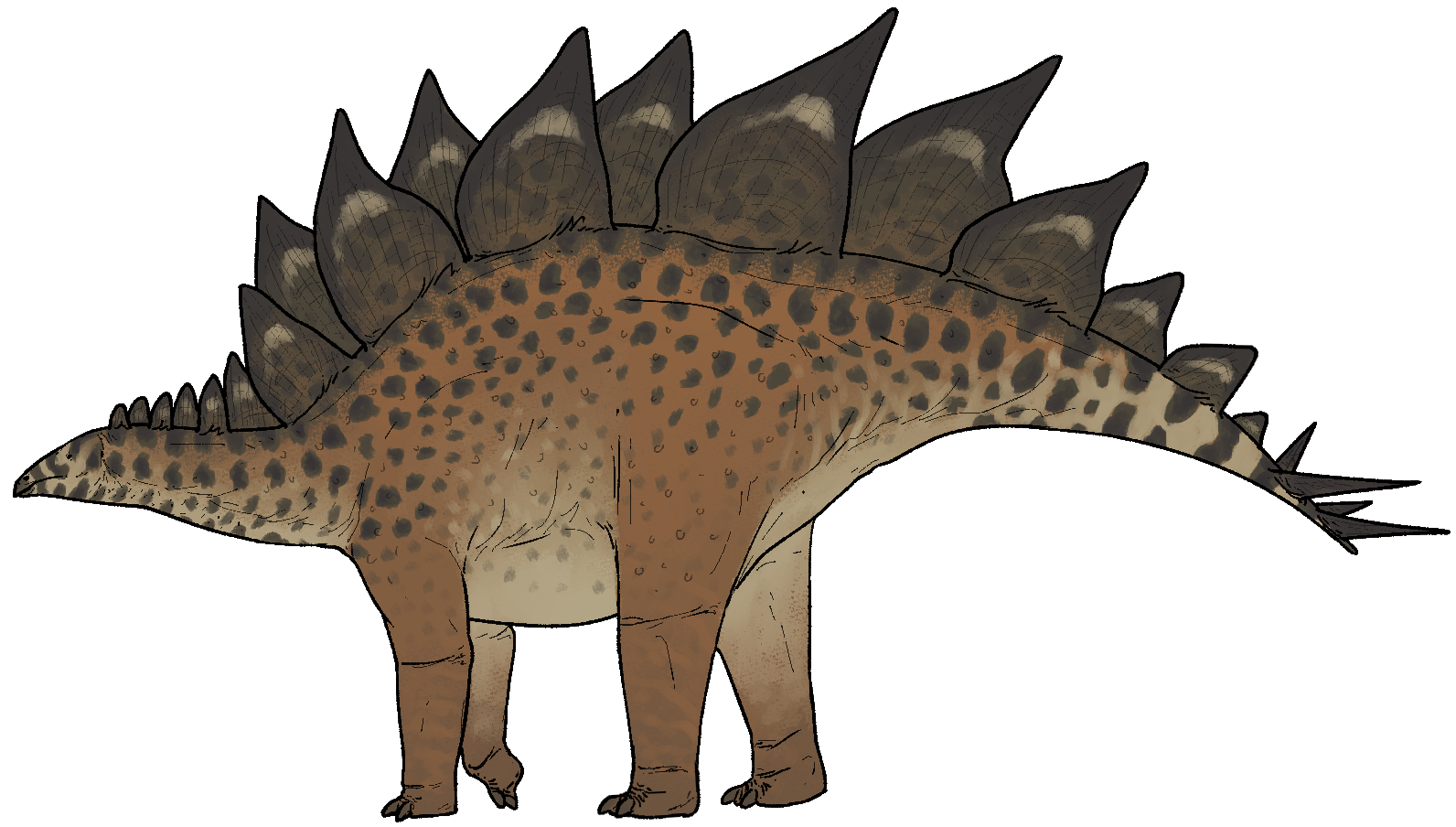
The back plates are Stegosaurus's signature feature, and early reconstructions got them badly wrong. Because the plates attach to the body through thin bony bases rather than solid joints, they scattered out of place as the animal decomposed. Marsh first thought they lay flat like roof tiles on the back. Later, museum mounts showed them standing upright in a single row. It was not until the 1970s that a well preserved Stegosaurus proved the truth: the plates stood in two staggered rows, with the plates on one side offset from the plates on the other.
Why grow such extravagant armor? The leading ideas are display and heat control. The plates are thin, flat, and riddled with blood vessels, which would make them excellent radiators, warming the animal in morning sun and dumping heat at midday. Their striking silhouette may have also helped Stegosaurus recognize members of its own species and look intimidating to predators. Studies of plate shapes in different stegosaurs suggest both functions likely played a role, with display probably the most important.
The thagomizer
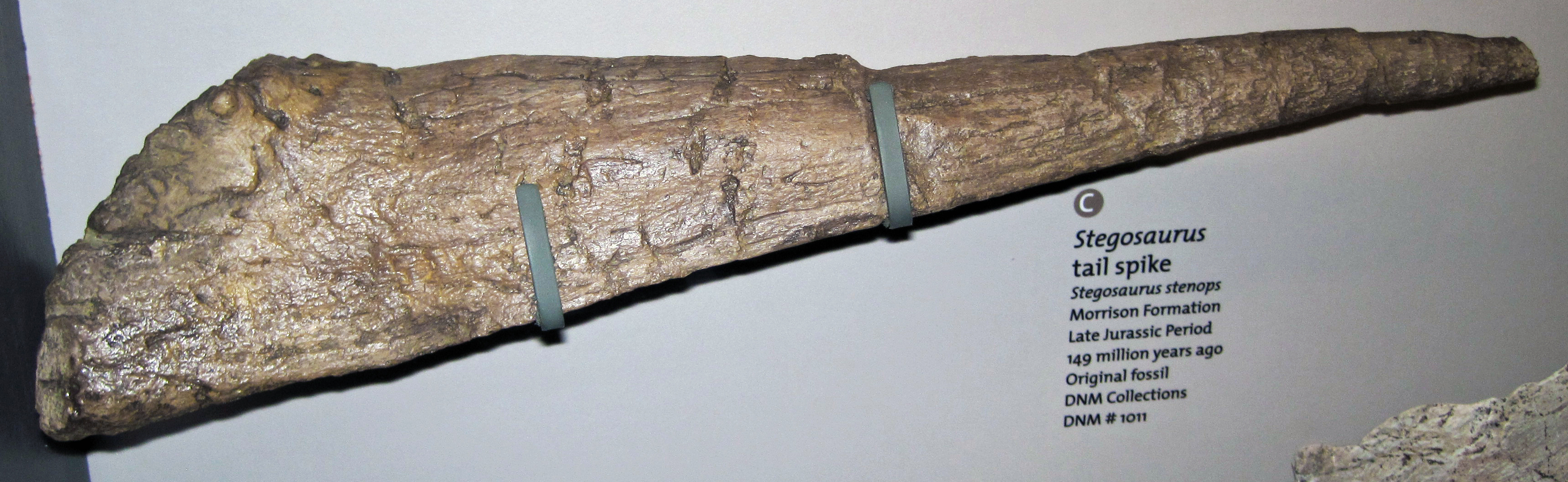
The tail carried its own surprise. Two pairs of long spikes, some over 90 centimeters, jutted from the last vertebrae. Paleontologists jokingly call this arrangement the thagomizer, a term invented in a 1982 Far Side cartoon by Gary Larson and later adopted, half seriously, into the scientific literature. The joke stuck because it fills a real gap: no other animal group evolved a weapon quite like it.
For decades scientists debated whether the spikes were defensive or merely ornamental. The question was largely settled by a fossil Allosaurus tail vertebra, punctured by a wound that matches a Stegosaurus spike almost perfectly. Muscle scars and joint structure show the tail was flexible and muscular at its base, able to swing in a wide, powerful arc. A charging Allosaurus that misjudged its approach could walk away with a serious hole punched in its body.
A walnut sized brain
Stegosaurus is famous for another oddity: a brain weighing roughly 80 grams, about the size of a walnut, in a body that could weigh five tonnes. Early scientists found this hard to believe and proposed a famous mistake, a "second brain" in the hip cavity to control the rear half of the body. We now know that cavity housed a glycogen body, a structure seen in modern birds that likely stored energy or supported the nervous system, not a brain.
In truth, Stegosaurus did not need much brainpower. Its lifestyle was slow and steady. Its head was held low to the ground, its narrow beak cropped soft, low calorie vegetation, and small cheek teeth ground it up without much chewing. Life as a low browsing grazer in a warm, predictable landscape rewarded patience over cleverness, and Stegosaurus played that strategy so well that stegosaurs as a group persisted for tens of millions of years across several continents.
A survivor in its own way
There is a common thread between Stegosaurus and the other survivors we cover on this site, from Triops in their temporary pools to Lingula in their burrows. Evolution does not always reward the biggest brain or the sharpest claws. Sometimes it rewards the body that can make a living where others cannot. Stegosaurus turned low quality food into tonnes of body, defended itself with a weapon no predator could ignore, and dominated its niche for millions of years before giving way to new plant eaters in the Early Cretaceous.
The next time you see a Stegosaurus toy, take a closer look at the plates. They are not decoration from a cartoonist's imagination but the subject of one of paleontology's longest running debates, and a reminder that even the most familiar prehistoric animals still keep a few secrets.
Curious about the Jurassic neighborhood Stegosaurus shared? Read about Dilophosaurus, the crested predator of the same era's dawn, or Diplodocus, its enormous long necked neighbor in the Morrison Formation.