Published August 09, 2026, 07:00 by the Triops.me Editorial Team · Back to Articles
The Weirdest Extinct Creature from Every Geological Period
Every geological period produced life forms that seem more fictional than real. Here is the weirdest extinct animal from each major chapter of Earth's history.
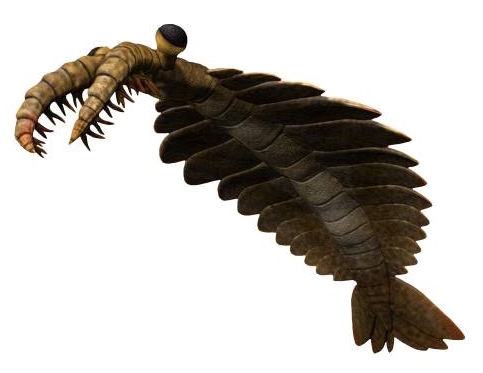
Cambrian (541-485 Ma): Anomalocaris
The Cambrian explosion was nature's first draft, and Anomalocaris was its boldest idea. About a meter long, this apex predator had compound eyes with over 16,000 lenses each, spiny grasping appendages, and a pineapple-ring-shaped jaw that crushed trilobite shells. Paleontologists initially thought its parts belonged to three separate animals before realizing it was one gloriously bizarre whole.
Ordovician (485-444 Ma): Cameroceras
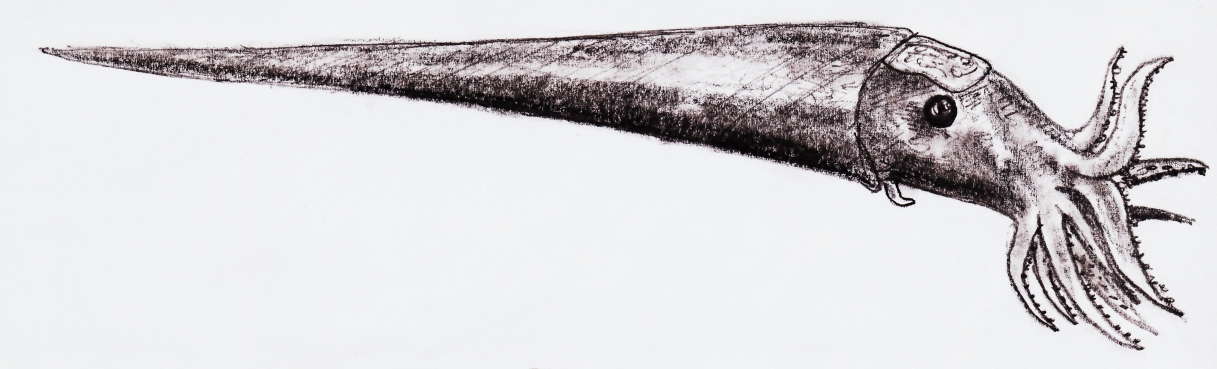
Imagine a squid wearing a six-meter-long straight cone. Cameroceras was the largest orthocone cephalopod, growing to over nine meters. It drifted through Ordovician seas with tentacles extending from its shell, ambushing fish and smaller cephalopods. Its shell controlled buoyancy, letting it hover at different depths.
Silurian (444-419 Ma): Pterygotus
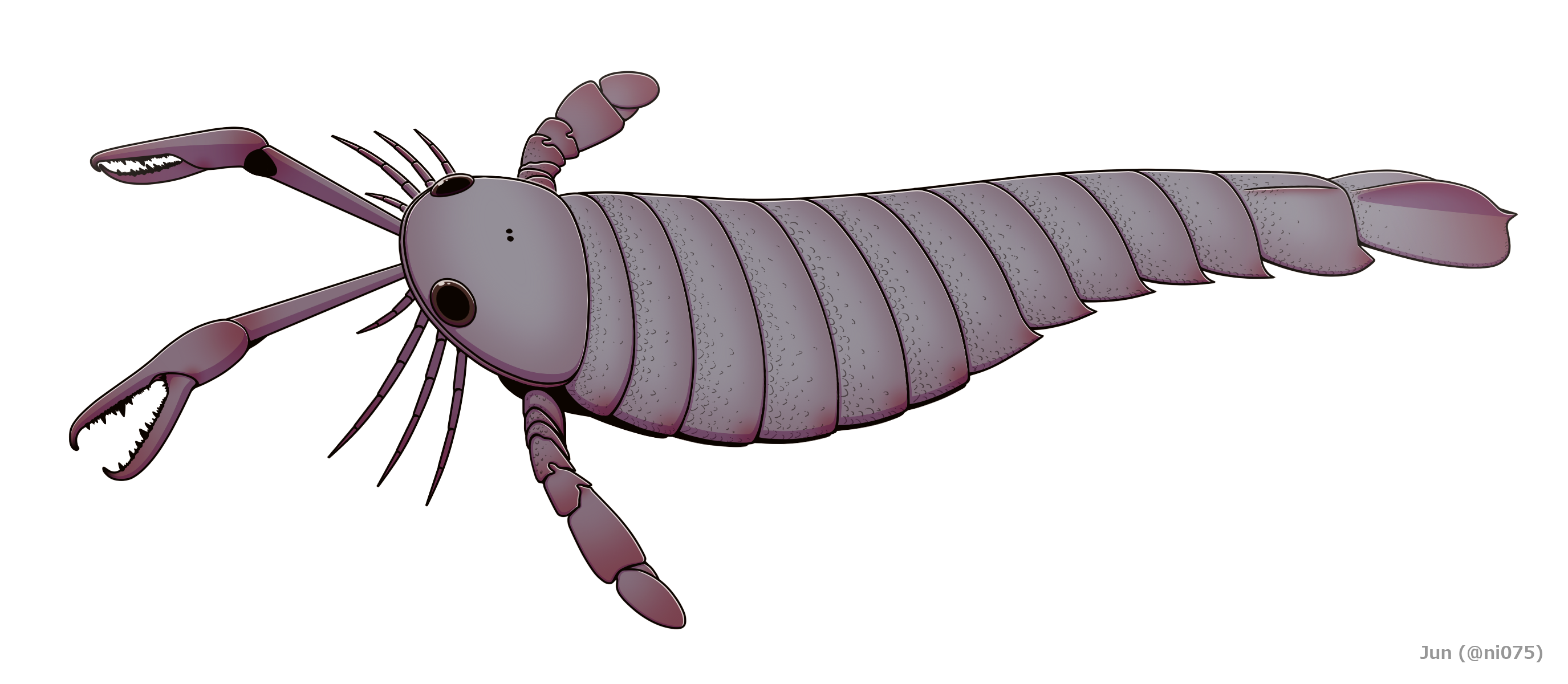
Sea scorpions, or eurypterids, were among the Silurian's top predators, and Pterygotus was the largest at 2.3 meters long. This arthropod had paddle-shaped swimming legs, compound eyes, and massive claw-like chelicerae that snatched fish from the water. Some species could also venture briefly onto land.
Devonian (419-359 Ma): Dunkleosteus
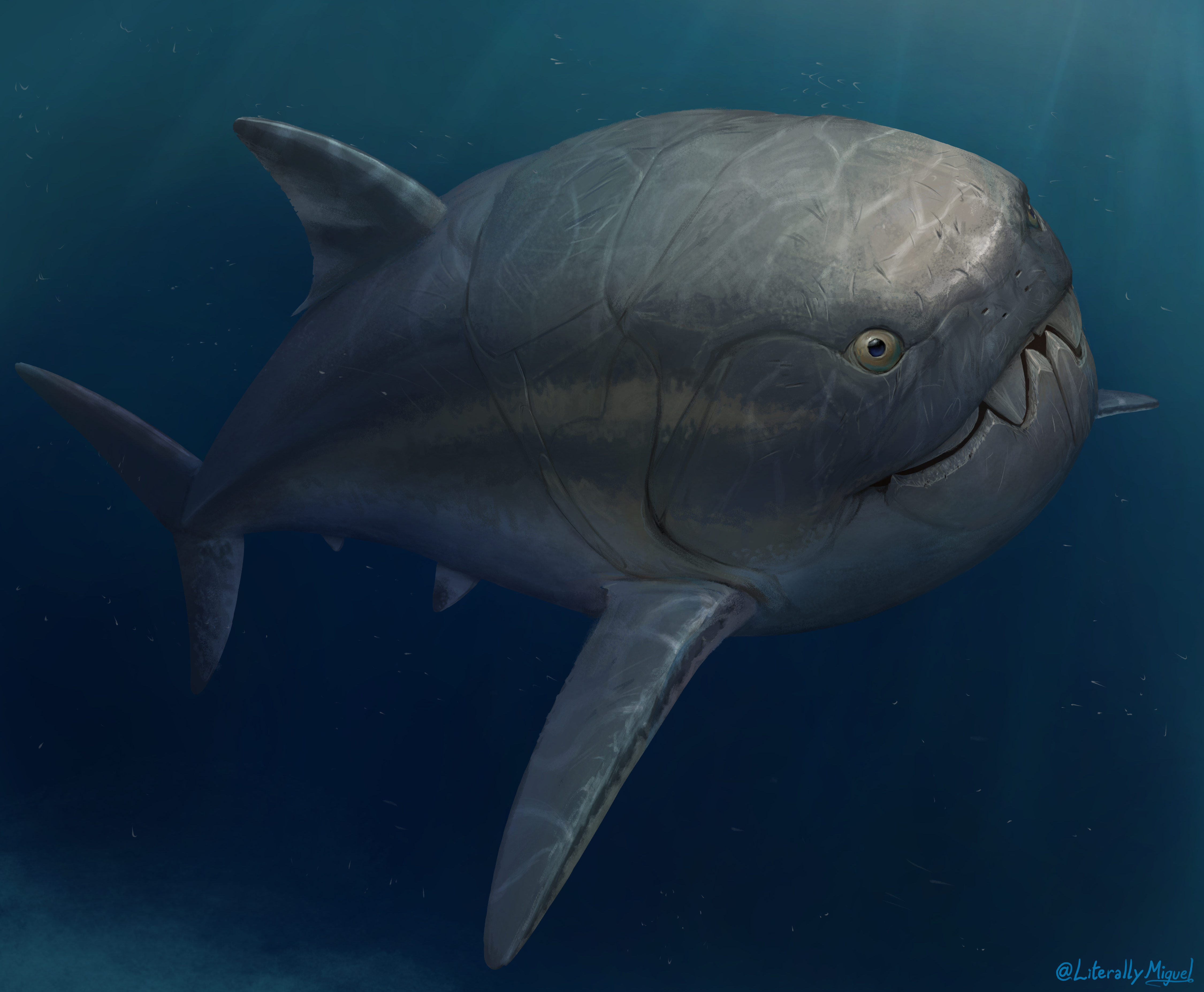
The Devonian, the Age of Fish, produced Dunkleosteus: a six-to-ten-meter armored predator with no teeth. Instead, it wielded self-sharpening bony plates like guillotine blades, generating bite forces over 6,000 newtons. It snapped its jaws shut in milliseconds, creating a suction vortex that pulled prey into its mouth.
Carboniferous (359-299 Ma): Arthropleura
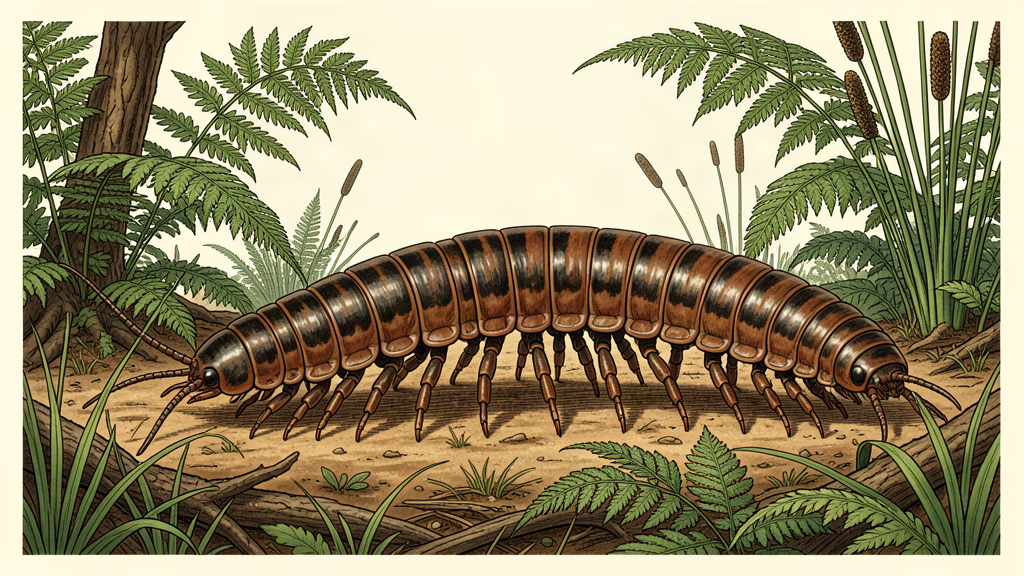
When oxygen peaked at 35 percent during the Carboniferous, insects grew to absurd sizes. Arthropleura was the champion: a millipede 2.5 meters long and weighing an estimated 50 kilograms. Fossil trackways suggest it could rear up on its hind segments. With no significant predators, this armored giant lumbered through coal forests, feeding on decaying plant matter.
Permian (299-252 Ma): Helicoprion
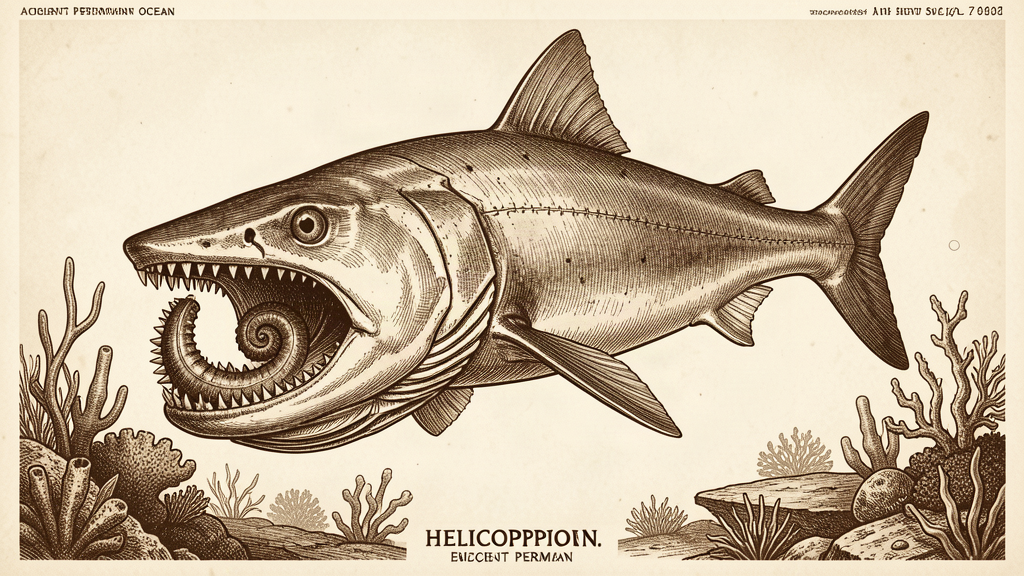
No one has found a complete Helicoprion skeleton, only its teeth, and those teeth are a puzzle wrapped in a spiral. This shark-like fish had a lower jaw that grew into a whorl of serrated teeth coiling inward like a buzzsaw. CT scans in 2013 finally confirmed the spiral sat in the lower jaw, sweeping food backward into the throat.
Triassic (252-201 Ma): Tanystropheus
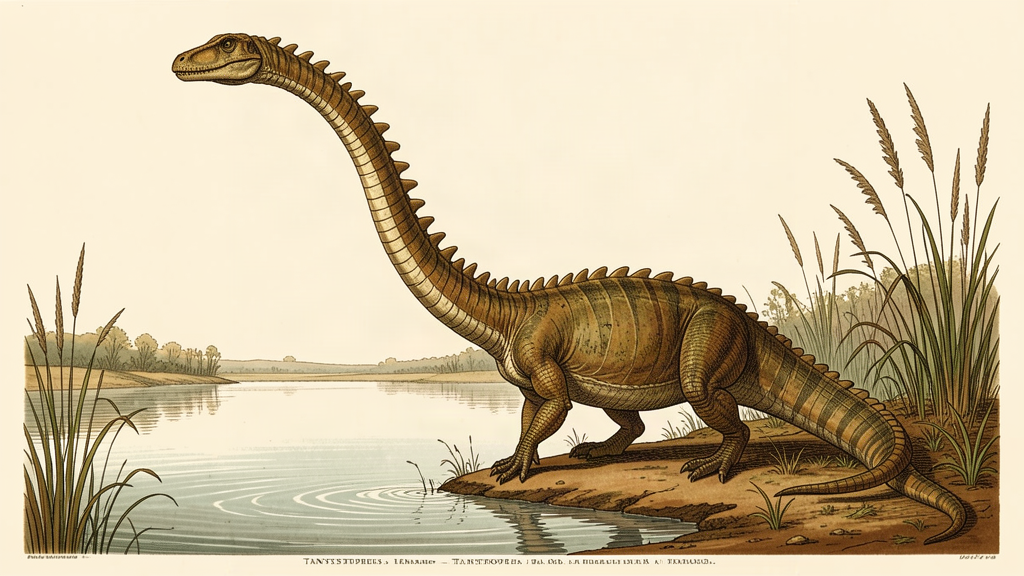
After the Permian extinction wiped out 90 percent of life, Tanystropheus evolved a neck longer than its body and tail combined. Reaching 2.5 meters total, with a neck stretching over a meter, this semi-aquatic reptile likely ambushed fish from a distance, striking like a biological fishing rod.
Jurassic (201-145 Ma): Liopleurodon
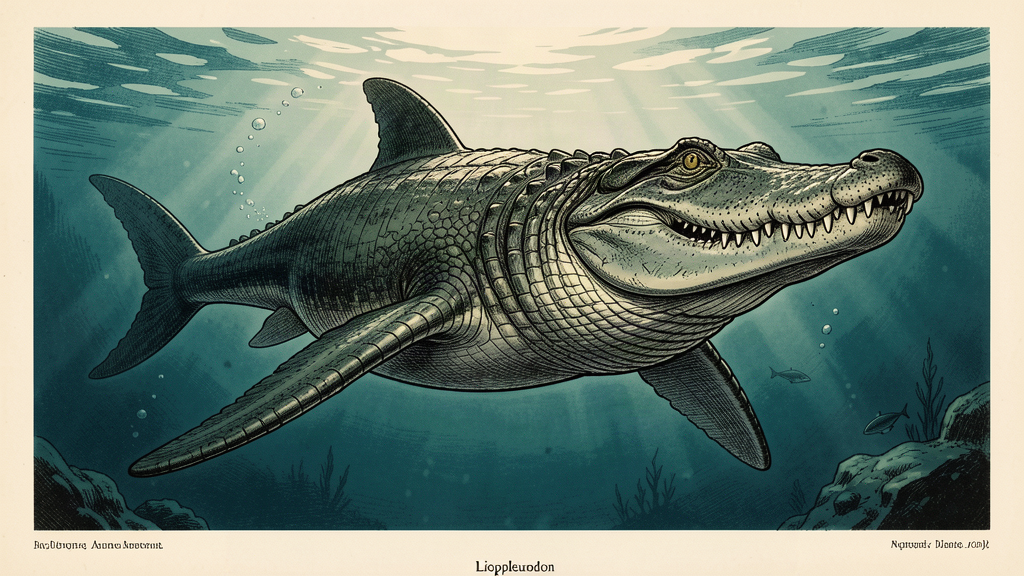
The Jurassic seas belonged to Liopleurodon, a pliosaur with a powerful neck and a crocodile-like skull packed with interlocking teeth. Growing up to seven meters, it used four massive flippers to move at surprising speeds. Studies suggest it tracked prey by detecting chemical trails in seawater.
Cretaceous (145-66 Ma): Deinocheirus
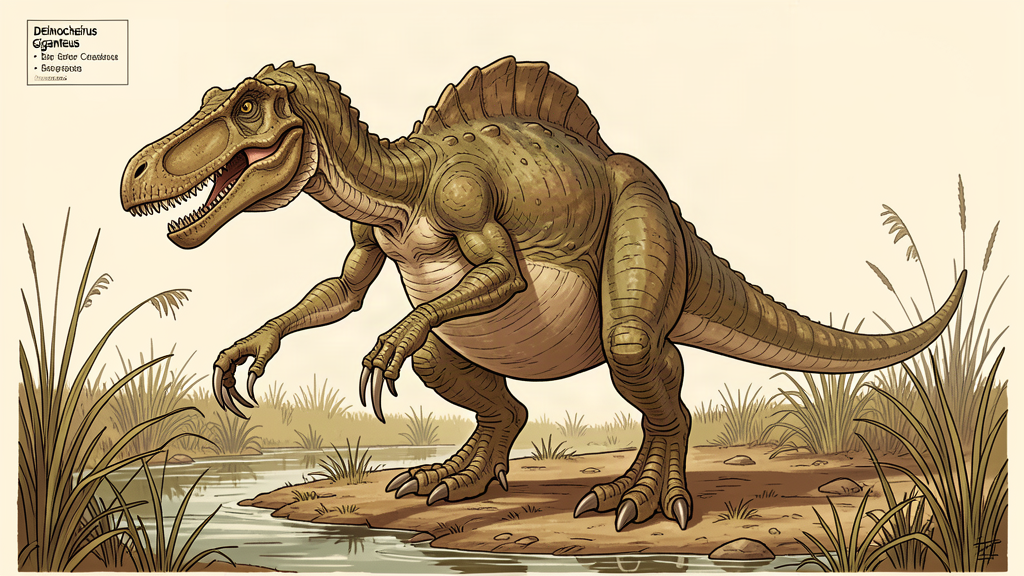
When paleontologists discovered massive, 2.4-meter-long arms with sickle claws in Mongolia in 1965, they named the animal Deinocheirus, meaning terrible hand. For 50 years no one knew what the rest looked like. When a complete specimen was found in 2009, it turned out to be a six-meter, hump-backed, duck-billed omnivore with a round belly and tiny head.
Cenozoic (66 Ma-present): Thylacoleo carnifex
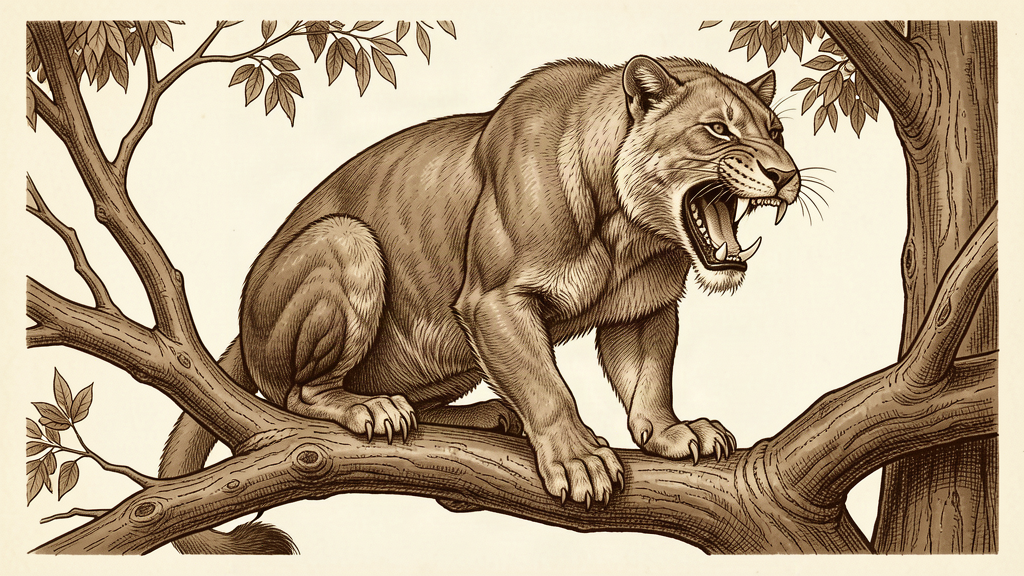
Often called the marsupial lion, Thylacoleo was not really a lion at all. This Australian predator had the strongest bite force relative to body size of any known mammal. Its carnassial teeth were modified premolars, evolved into blade-like shearing tools that crushed bone. It likely ambushed prey from trees, using retractable claws to haul itself up trunks.
The Living Fossil Among Us
Every creature on this list vanished, undone by mass extinctions or outcompeted. But Triops has survived since before all of them. The Triops body plan dates back roughly 220 million years, meaning it outlasted Tanystropheus, Liopleurodon, Deinocheirus, and every other animal here.
The secret is not size or strength. Triops survives through dormant eggs capable of enduring years of drought, and a simple body plan that just works. While the giants of each age burned bright and disappeared, Triops quietly persisted in temporary pools, waiting for rain.
Next time you marvel at a fossil, remember that the strangest survival story might be the tiny three-eyed crustacean still swimming in puddles today.
Want to learn more about the creatures that survived when others did not? Read our deep dive on how Triops eggs survive drought through cryptobiosis and how Triops compares to other living fossils.