Published 2026-10-18 · by the Triops.me Editorial Team · Back to Articles
Brontosaurus vs Apatosaurus: The Name That Refused to Die
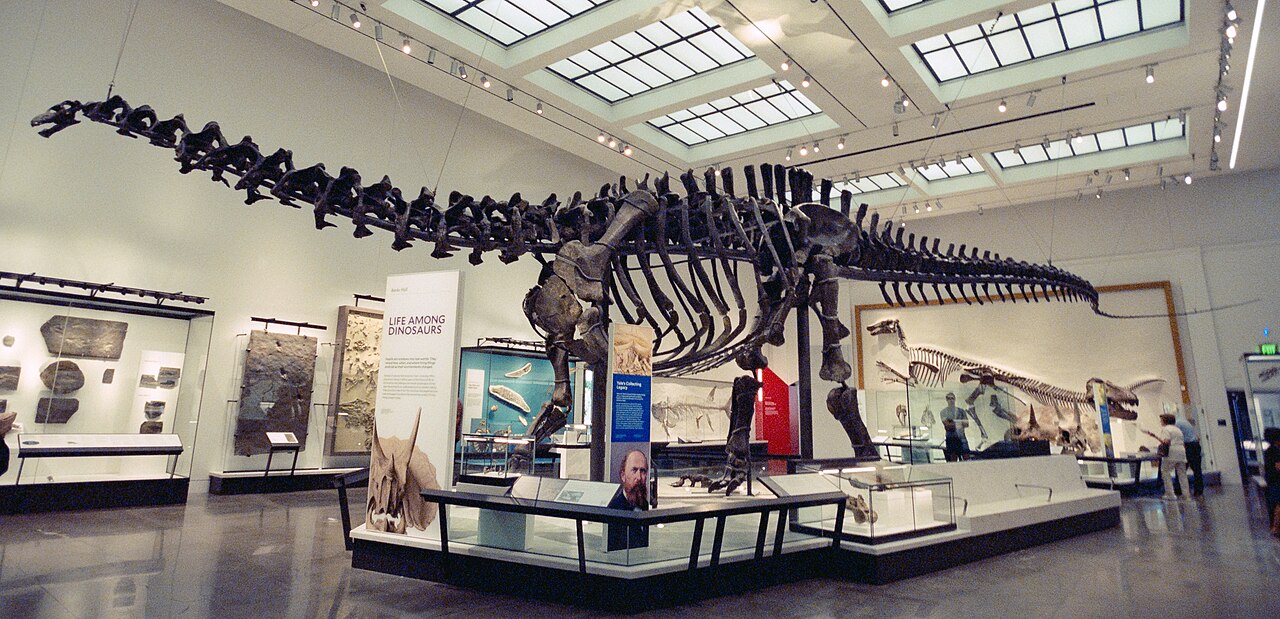
For 112 years the thunder lizard did not exist. Schoolchildren kept it in their bedrooms anyway, on lunch boxes and in picture books, while every textbook politely explained that Brontosaurus was a mistake, a second name for a dinosaur that already had one. Then in April 2015 a team of three paleontologists published a study so thorough that the name came back, and museums had to change their labels again. It is the closest thing paleontology has to a resurrection, and it began with two rival scientists digging up the same Wyoming valley in the 1870s.
Othniel Charles Marsh, a professor at Yale, named Apatosaurus ajax in 1877 from vertebrae and limb bones found in the Morrison Formation. The name means deceptive lizard, a jab at how the bones misled him, with ajax borrowed from the Greek hero. Two years later his field crew under William Harlow Reed pulled a larger, fairly complete skeleton out of the rock at Como Bluff in Wyoming, and Marsh published Brontosaurus excelsus, noble thunder lizard, in 1879. Neither skeleton arrived with a skull. Both descriptions were rushed, because by then the Morrison had become the front line of the Bone Wars, the bitter collecting feud between Marsh and Edward Drinker Cope that rewarded whoever claimed the most new species the fastest. The quarry around them was also busy with Allosaurus, Stegosaurus and Camarasaurus, which matters later, because it was Camarasaurus that got borrowed for the wrong head.
The first extinction of Brontosaurus was administrative. In 1903 Elmer Riggs of the Field Columbian Museum in Chicago compared fresh material with Marsh's types and concluded that the two animals were not different enough to stand as separate genera. He wrote it plainly: since Apatosaurus had been published first, it kept the name, and Brontosaurus would be treated as a synonym. Under the rules of the International Code of Zoological Nomenclature that decision was correct, and almost every twentieth century paleontologist agreed with it. The species name excelsus survived inside the other genus as Apatosaurus excelsus. Only the genus, the thunder lizard itself, was retired.
Museums were slower to follow. In 1905 the American Museum of Natural History in New York unveiled the first sauropod skeleton ever mounted, a composite built mainly from one specimen and labelled Brontosaurus excelsus, under the direction of Henry Fairfield Osborn, who had no love for Marsh's names and used that one anyway. Since no skull had ever been found, preparator Adam Hermann sculpted one by hand from the thickest sauropod jaw bones available, which belonged to Camarasaurus. Osborn admitted in print that the head was largely conjectural.
The head problem dragged on for decades. In 1909 Earl Douglass, digging for the Carnegie Museum what would become Dinosaur National Monument, found a small, delicate skull lying a few metres in front of a skeleton that became Apatosaurus louisae. Museum director William Jacob Holland accepted the pairing. Osborn rejected it. Holland defended his case in a 1914 address, then went home and left the Carnegie mount headless rather than fight; when he died in 1934, staff quietly glued a Camarasaurus cast onto it. The Yale Peabody Museum, mounting Brontosaurus in 1931, sculpted a stranger head based partly on Marsh's 1896 reconstruction, whose skull bones later turned out to belong to Brachiosaurus altogether.
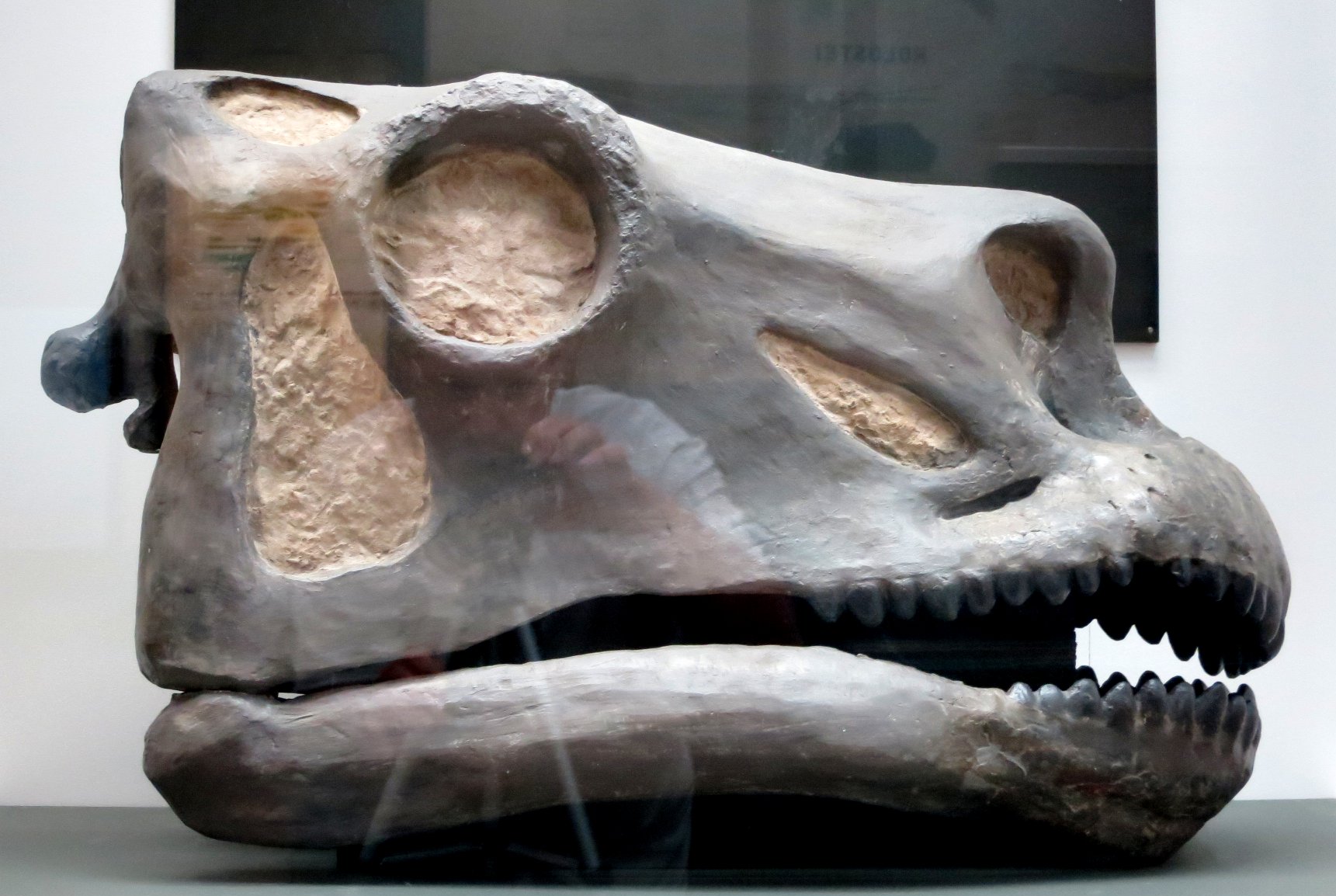
Resolution arrived from the comparative side. John Stanton McIntosh and David Berman redescribed the skulls in 1975 and argued that apatosaurines carried a narrow, horse like skull much closer to Diplodocus than to Camarasaurus, which is what Holland had suspected all along. The first correct skull went onto a museum skeleton in October 1979, the Carnegie followed with a new head in 1995, and New York relabelled its star attraction Apatosaurus excelsus. The wrong headed Brontosaurus had been fixed as an Apatosaurus, and the name stayed buried.
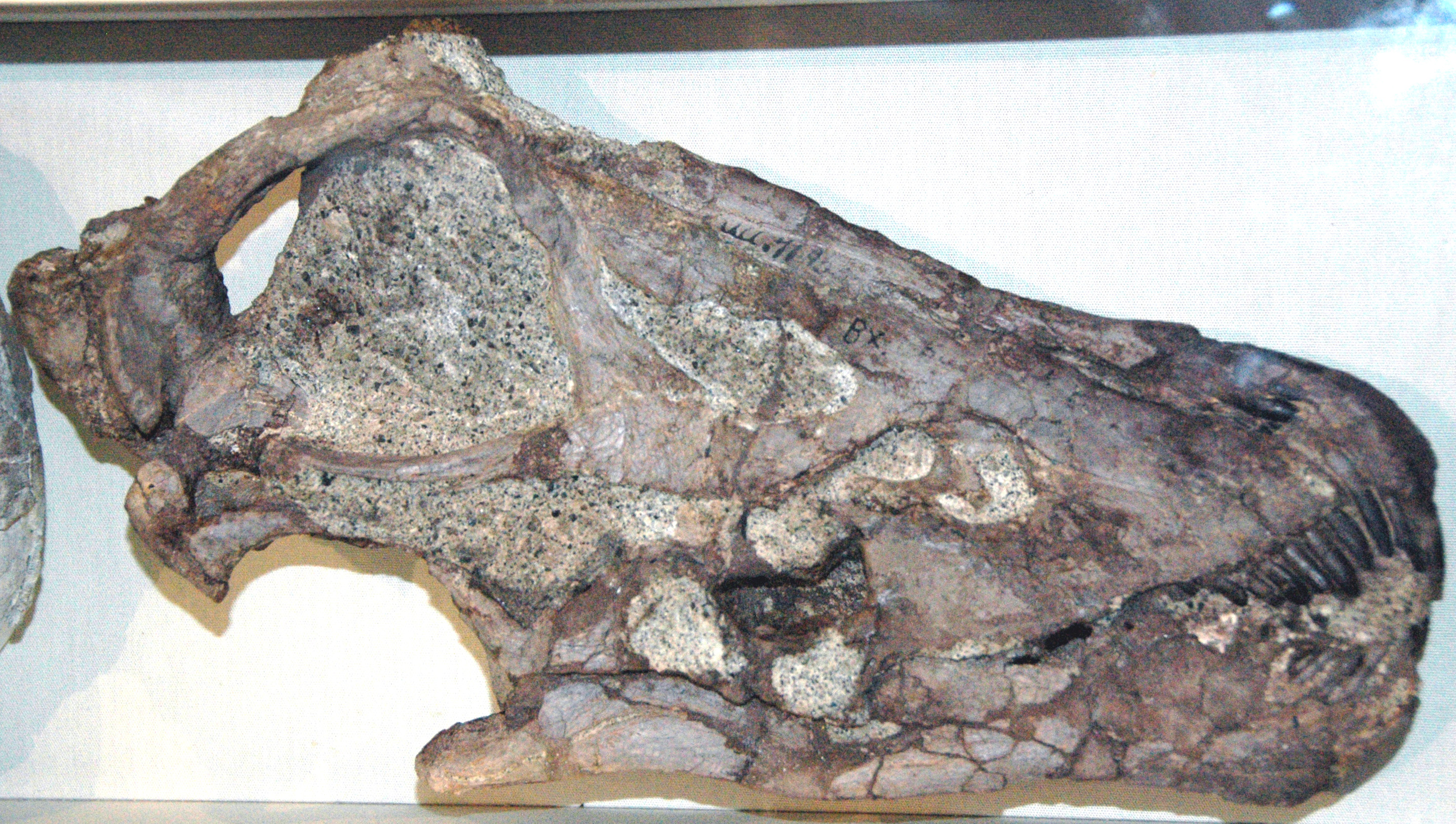
What reopened the case was new fossils. Emanuel Tschopp, Octavio Mateus and Roger Benson spent nearly 300 pages on the family Diplodocidae for the journal PeerJ, scoring dozens of specimens against hundreds of anatomical characters, then used statistics to ask how big the gap between two names normally is. Differences between Brontosaurus and Apatosaurus, they found, were at least as numerous as the differences between other established diplodocid genera and far beyond what usually separates species. Two former Apatosaurus species, parvus and yahnahpin, moved into the reinstated genus. Roger Benson put the result simply: the differences were as large as between closely related genera that nobody disputed.
Not everyone signed. Michael D'Emic and Donald Prothero pushed back in public, Prothero arguing that the press coverage outran the evidence, and John Foster and ReBecca Hunt-Foster still treat the two as one genus. That honest disagreement is the point. A name in paleontology is a hypothesis, and hypotheses survive until better material topples them. Riggs toppled Marsh in 1903 with one partial skeleton; Tschopp and colleagues brought the name back in 2015 with a much larger pile of them.
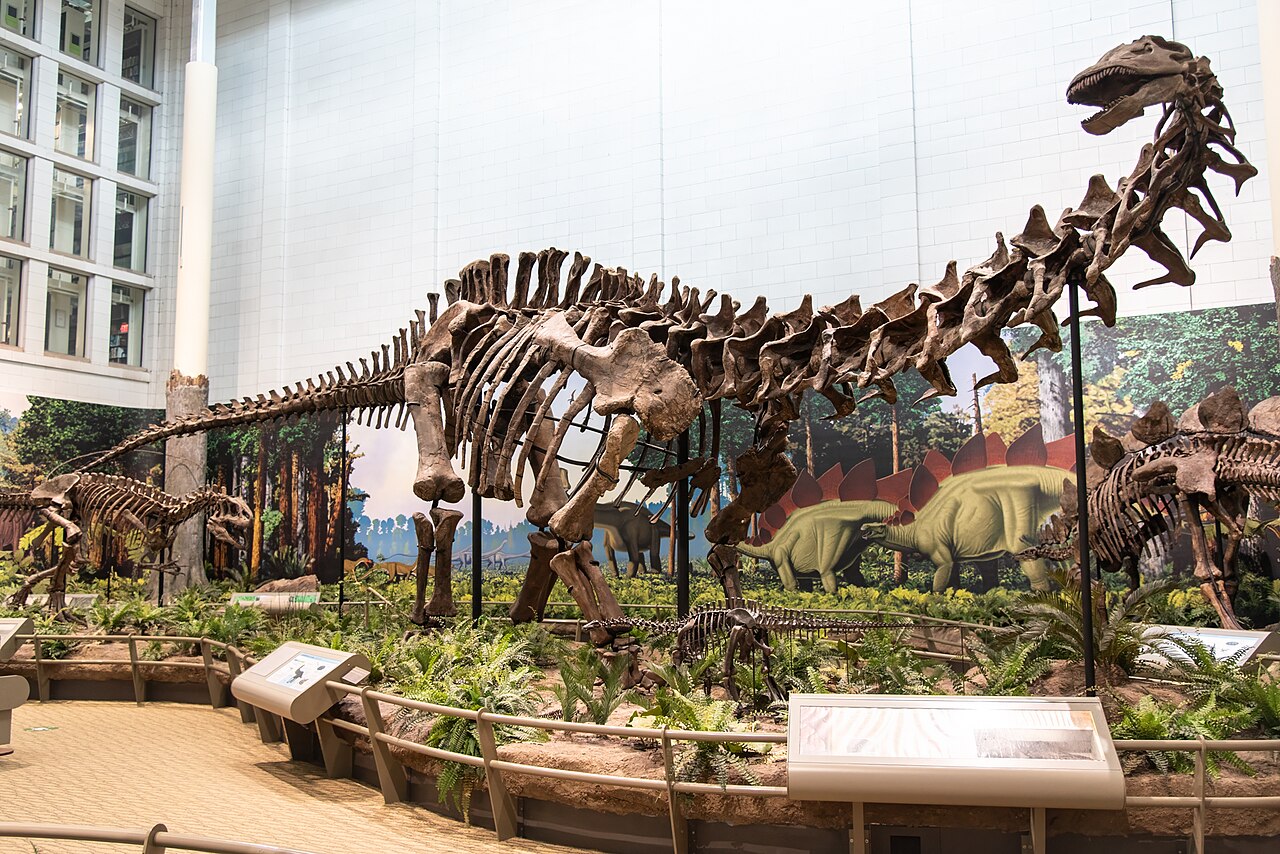
The animal underneath the argument did not change with either verdict. Brontosaurus excelsus ran 21 to 23 metres nose to tail and weighed somewhere between 15 and 20 tonnes, with a neck built roughly twice as heavy as a Diplodocus neck of the same length, a whip thin tail and air pockets hollowing out every big bone. Juveniles reached full size in around fifteen years. It shared the Late Jurassic floodplains of North America with Diplodocus, Barosaurus, Brachiosaurus, Stegosaurus and Allosaurus, a crowded neighbourhood that explains why so many similar sauropods keep turning up in the same quarries and keep confusing the people who name them. For more on how that body plan worked, see why prehistoric animals grew so big.
Meanwhile the public never stopped using the discarded name. The 1933 film King Kong chased sailors with one across Skull Island, and Sinclair Oil kept a green Brontosaurus as its logo for a century, choosing it over every other dinosaur purely because people liked it best. When the 2015 paper landed, the reaction felt less like a discovery and more like a reunion: the thunder lizard had been scientifically dead since 1903, and almost nobody had stopped saying its name.
That is what makes this pair worth knowing. Fossils are fragmentary, rivalries rush descriptions, and museum mounts get built from whatever bones are on hand, so the history of a dinosaur name is a record of people correcting each other in public. Apatosaurus and Brontosaurus are two labels for the same story of that correction, told twice, and at the moment both names are in use. Browse the rest of the article archive for more creatures whose names have had a rougher time than their fossils.