Published 2026-10-08 · by the Triops.me Editorial Team · Back to Articles
Allosaurus: Lion of the Jurassic
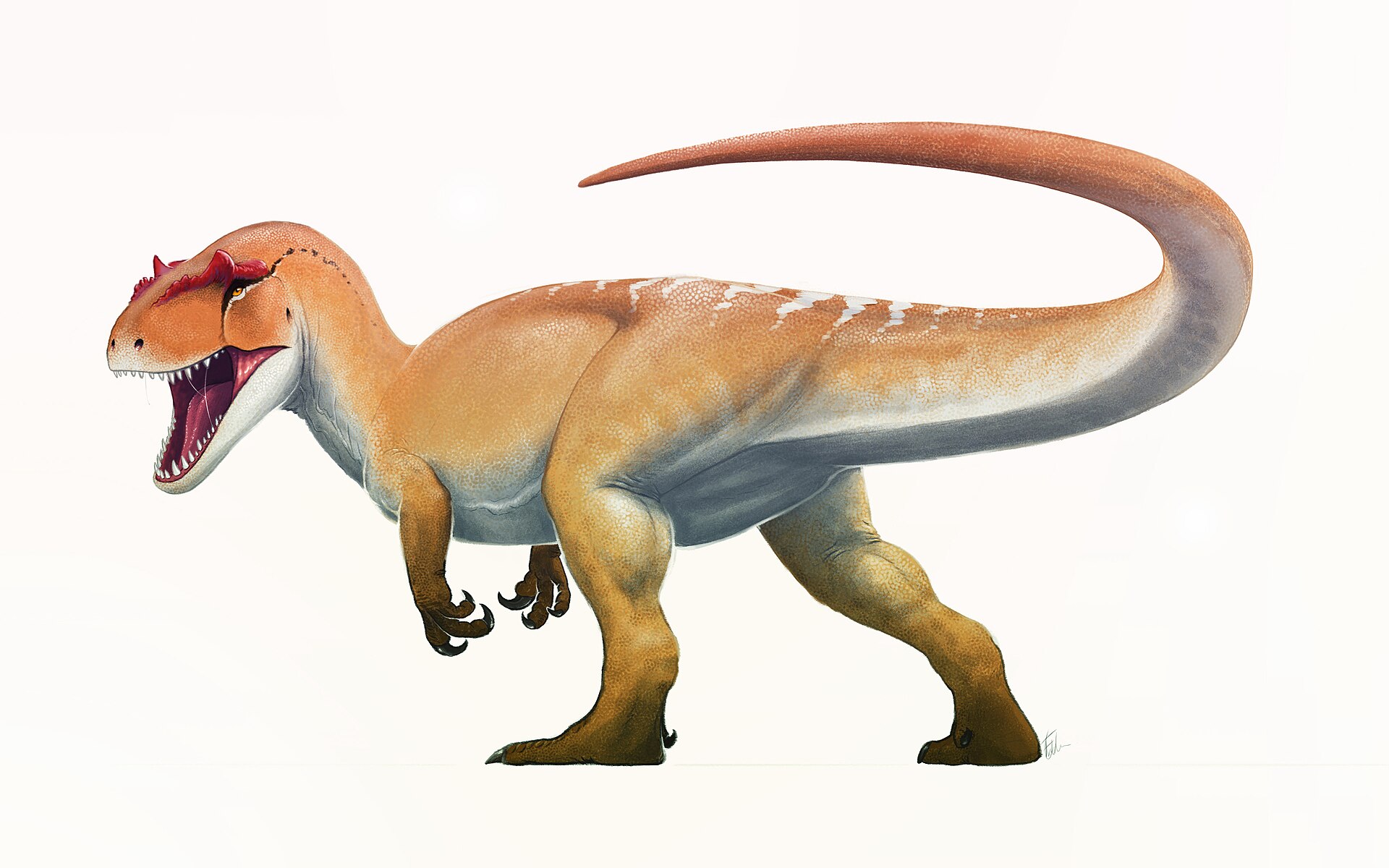
Roughly 150 million years ago, the western half of North America was a world of slow rivers, seasonal mudflats and fern prairies. Everything that lived there shared one problem: a predator about eight meters long, with forward-facing eyes and three clawed fingers on each hand. That animal was Allosaurus, the most common large meat eater of the Late Jurassic, and for several million years it sat at the top of the food chain.
Few dinosaurs are as well known, and fewer still have left such a detailed record of how they actually lived. Alongside the bones of Diplodocus, Stegosaurus and other long-necked giants, paleontologists have dug up dozens of Allosaurus individuals, feeding damage on prey bones, and one almost complete skeleton that still carries the scars of a violent life.
A Name Built From Scraps
Allosaurus was named in 1877 by Othniel Charles Marsh, one of the two rivals whose Bone Wars turned the fossil beds of the American West into a giant dig site. Marsh had little more than vertebrae and teeth to work with, which is exactly why he chose the name: from the Greek allos, meaning different or strange, and sauros, meaning lizard. The type species, Allosaurus fragilis, refers to the thin, lightweight construction of its vertebrae.
It was a modest beginning for the animal that would become the defining predator of its age. When the great museum expeditions cleared the Morrison Formation in the late nineteenth and early twentieth centuries, Allosaurus came out of the ground faster than any other carnivore, and it has been the yardstick for Jurassic predators ever since.
Built to Hunt Animals Bigger Than Itself
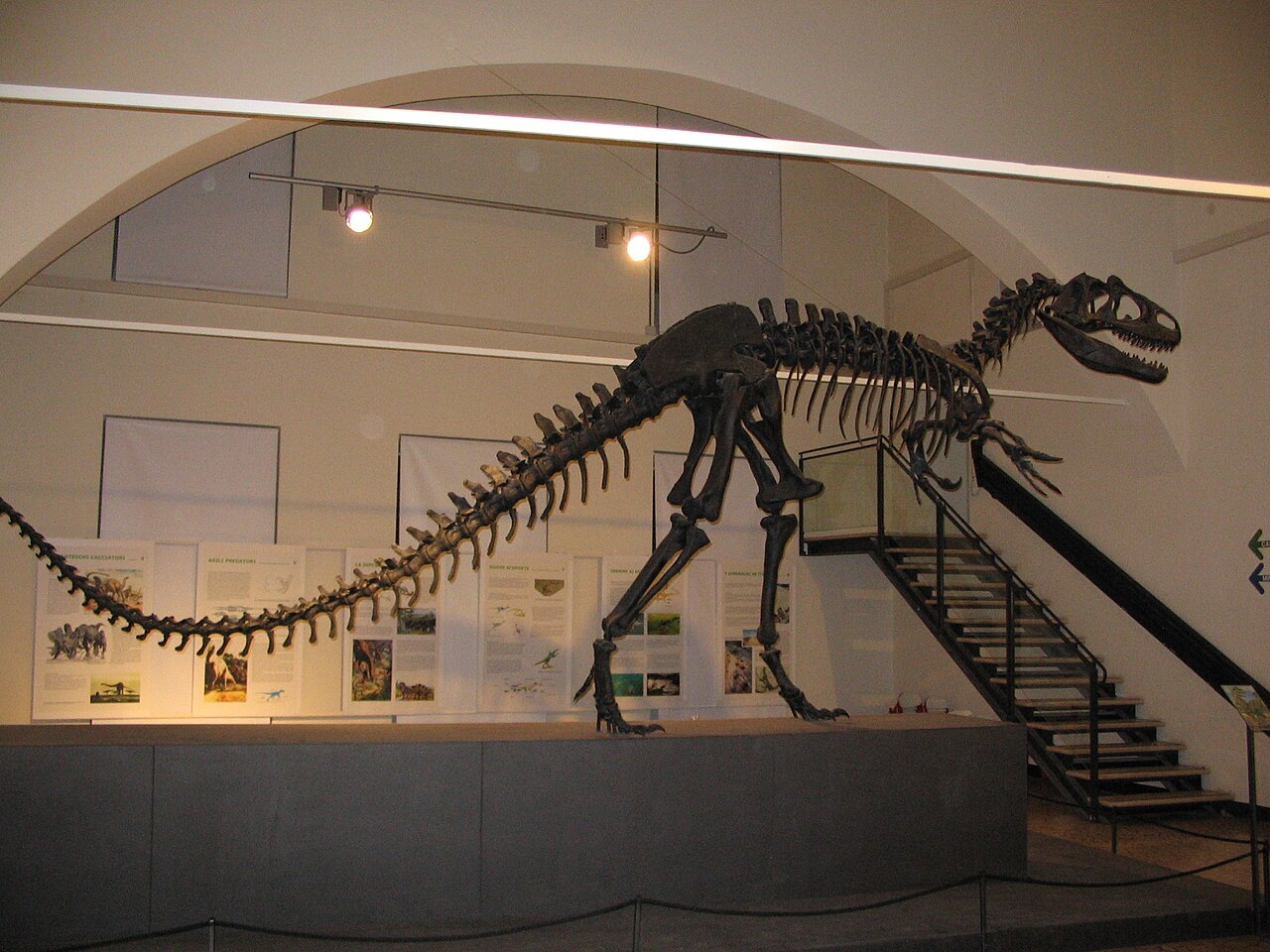
An average Allosaurus fragilis measured about 7.5 to 8 meters long and probably weighed somewhere between one and two tonnes, with the largest known specimens stretching to around 9 meters. It was a lightly built animal for its size. The skull alone could approach a meter in length, yet it stayed light because the bone is riddled with large openings, and a pair of horn-like crests sat over the eyes, almost certainly for show rather than for fighting.
The hands tell you what kind of hunter it was. Three fingers, each tipped with a huge recurved claw, and arms far more powerful than those of the giant carnivores that came millions of years later. The eyes faced mostly forward, giving the animal good depth perception for judging the distance to a moving target. Long legs and a heavy tail rounded out a body built for short, committed lunges rather than endless chases.
The Commonest Killer in the Morrison
The Morrison Formation, the rock unit that runs through Colorado, Wyoming, Utah, Montana and New Mexico, preserves one of the richest dinosaur faunas ever found. Diplodocus, Camarasaurus, Apatosaurus, Brachiosaurus and Stegosaurus all lived there, alongside smaller hunters like Ceratosaurus and Torvosaurus. Yet when you count large predator bones in the Morrison, more than half of them belong to Allosaurus. No other large carnivore came close.
The best single window into that abundance is the Cleveland-Lloyd Dinosaur Quarry in central Utah, where the remains of more than 40 Allosaurus individuals were found mixed with other dinosaurs, most of the Allosaurus being young or subadult animals. Why so many predators ended up in one place is still argued over. A natural trap in a drying waterhole, a drought concentration, or a predator trap where carcasses kept drawing in hunters: each idea has evidence, and none has won yet.
A Bite Like a Hatchet
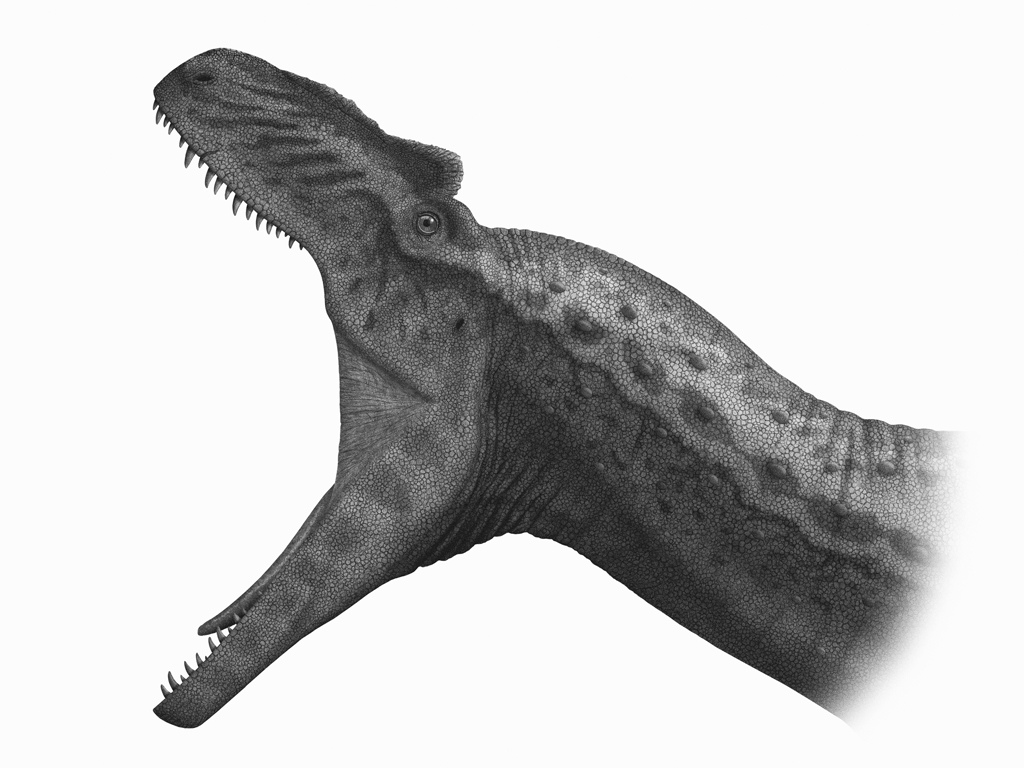
Older reconstructions gave Allosaurus a bone-crushing bite to match its reputation. Biomechanical studies of the skull put a stop to that idea. The bite was modest for an animal its size, well below what you would expect from a predator of that weight, and the jaw muscles were not built for clamping down hard.
Instead, researchers now think Allosaurus used its head almost like an axe. It would drive the upper jaws into prey using the powerful neck, then pull back, letting the blade-like serrated teeth shear out a mouthful of flesh. Damage marks on sauropod bones, including chewed ribs and tail bones from animals like Camarasaurus and Apatosaurus, fit that slicing and pulling pattern much better than a crush bite does. The weapon was the whole head, not just the jaw.
Big Al: Nineteen Injuries, One Life
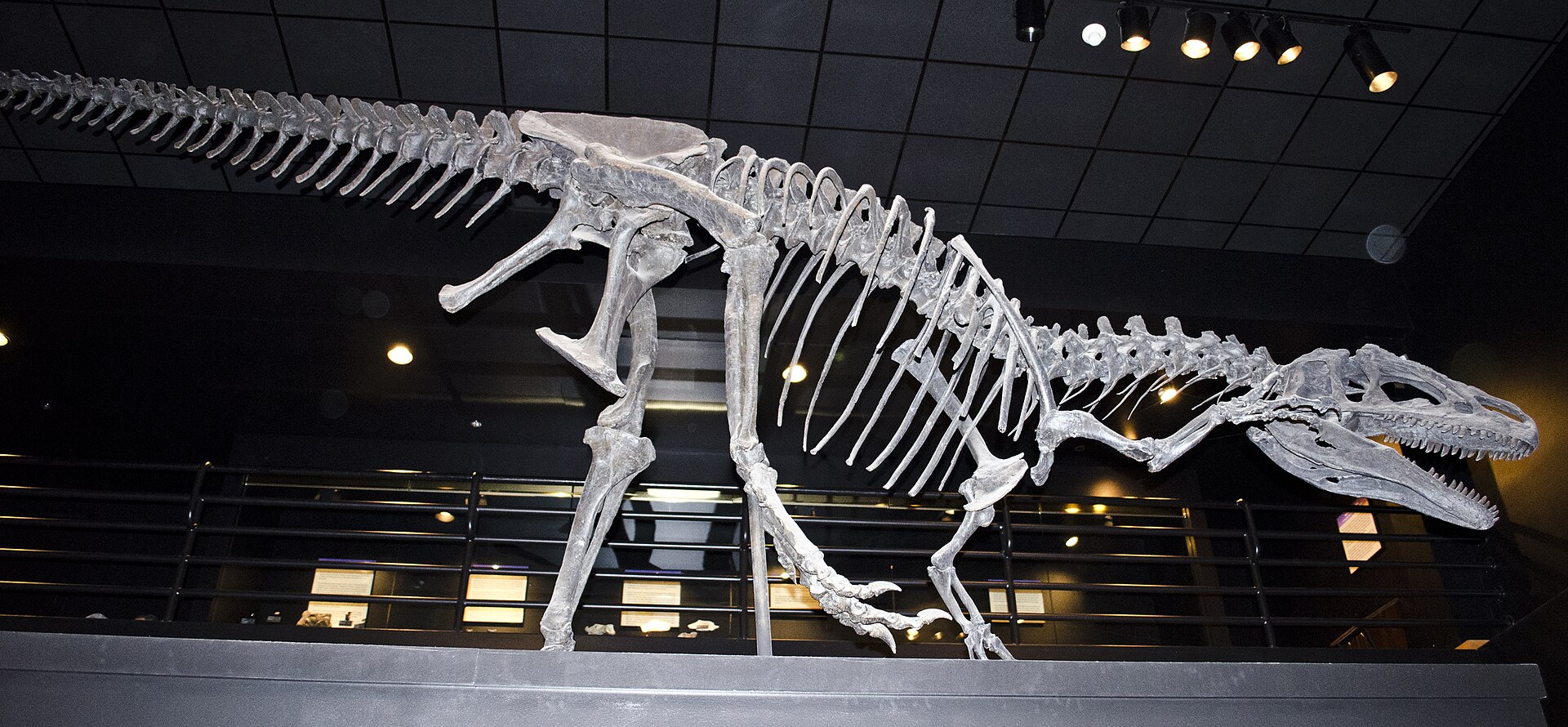
In 1991, near the town of Shell in Wyoming, a nearly complete Allosaurus turned up with about 8 meters of bone almost intact. Nicknamed Big Al (specimen MOR 693) and now studied at the Museum of the Rockies, it is one of the most complete Allosaurus skeletons ever found, and by far the most informative about how these animals actually spent their days.
A detailed review of the skeleton documented 19 separate injuries. Ribs that had broken and healed. Damaged tail vertebrae. A crushed vertebra in the back. A damaged hand bone. An infected right foot with badly damaged toes. Many of these had clearly healed before the animal died, which means it kept hunting while hurt. The foot infection was the serious one: it was severe enough to have limited how the animal moved, and it may be the reason Big Al died at all. For an apex predator, the message is blunt. Every hunt was a gamble, and the bill eventually came due.
Social Hunter or Lone Wolf?
Mass accumulations like Cleveland-Lloyd have long fueled the idea that Allosaurus hunted in coordinated packs. The counter-argument is that a single waterhole or trap can concentrate animals without any social behavior at all. The cautious reading of the evidence is that Allosaurus was mainly a solitary, opportunistic hunter, one that tolerated others around a large carcass rather than hunting as a coordinated team.
It also was not a sprinter in the modern sense. Computer studies of theropod running suggest the largest carnivores could not sustain high speeds for long, so ambush, patience and short explosive lunges did the work. Prey had answers of their own: the spiked tail of a Stegosaurus and the sweeping tail of a sauropod were dangerous things to run into, and Allosaurus bears the scars to prove it.
Cousins Across a Closing Ocean
Allosaurus gives its name to a whole branch of the family tree, the allosauroids, and some of its later relatives grew even bigger. Carcharodontosaurus of Africa and Giganotosaurus of South America are distant cousins in that group. Allosaurus fossils have also been found in Portugal, in rocks of the Lourinhã Formation, which makes sense: the Atlantic was still opening, and the dinosaur faunas of eastern North America and Europe had not yet been separated by an ocean.
The Lion That Did Not Make It
Allosaurus disappears from the fossil record by the end of the Jurassic. The reasons are not dramatic. Sea levels changed, climates shifted, and faunas turned over. In the Cretaceous that followed, tyrannosaurs rose to the top spot in the north, while carcharodontosaurids ruled the south. The lion of the Jurassic simply had no successors in its own backyard.
Its neighbors in the mudflats fared better. Triops and its branchiopod relatives were already ancient when Allosaurus was born, having survived the end-Permian catastrophe by doing something predators never could: sealing their eggs into drying pond beds and waiting out whatever the climate did for the next decade or more. The Late Jurassic floodplains held those same temporary pools. Read the full story in how Triops survived five mass extinctions.
Look at it that way, and the balance sheet of deep time is strange. The eight-meter hunter is a skeleton behind glass, and the centimeter-long crustacean still hatches from the mud of a puddle after a heavy rain.