Published 2026-10-03 · by the Triops.me Editorial Team · Back to Articles
Deinonychus: The Raptor That Started the Dinosaur Renaissance
In the summer of 1931, the veteran fossil hunter Barnum Brown was digging in the Cloverly Formation near Billings, Montana. He was there for the common herbivore Tenontosaurus, but his crew hit something else: a small carnivorous skeleton locked in hard lime, lying close to the tenontosaur. Brown noted the find in his field report to the American Museum of Natural History, gave the animal a private name he never formally published, and moved on. The bones sat largely unprepared for more than thirty years.
In August 1964, paleontologist John Ostrom led a Yale expedition back to the same beds and uncovered more of the same animal. Comparing his material with Brown's unused collection, he realized he had a predator nobody had described. He named it Deinonychus antirrhopus in February 1969 and followed it with a full monograph that July. The name means "counterbalancing claw". The animal reached about 3.4 meters long, weighed somewhere around 70 to 100 kilograms, and lived between roughly 115 and 98 million years ago, in deposits now found in Montana, Wyoming and Oklahoma.
The claw is the animal's signature. The second toe of each foot carried a huge sickle-shaped hook, held off the ground while the animal walked, and Ostrom estimated the sheathed claw of the holotype at over 120 millimeters long. Nothing else in the Early Cretaceous looked quite like it. That foot belongs to the dromaeosaurids, the family that includes Velociraptor and Microraptor, and it turned Deinonychus into the reference point for every "raptor" that followed.
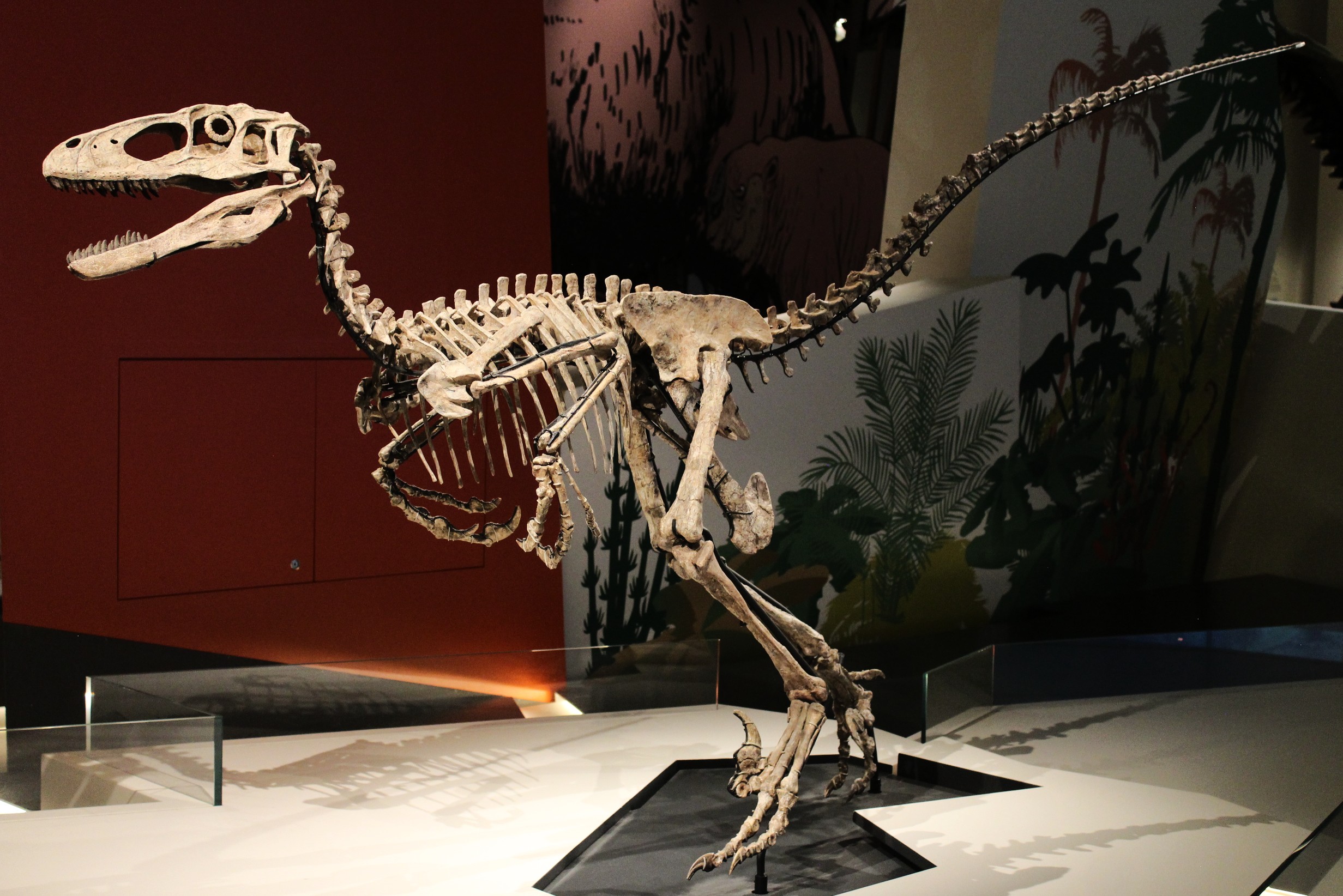
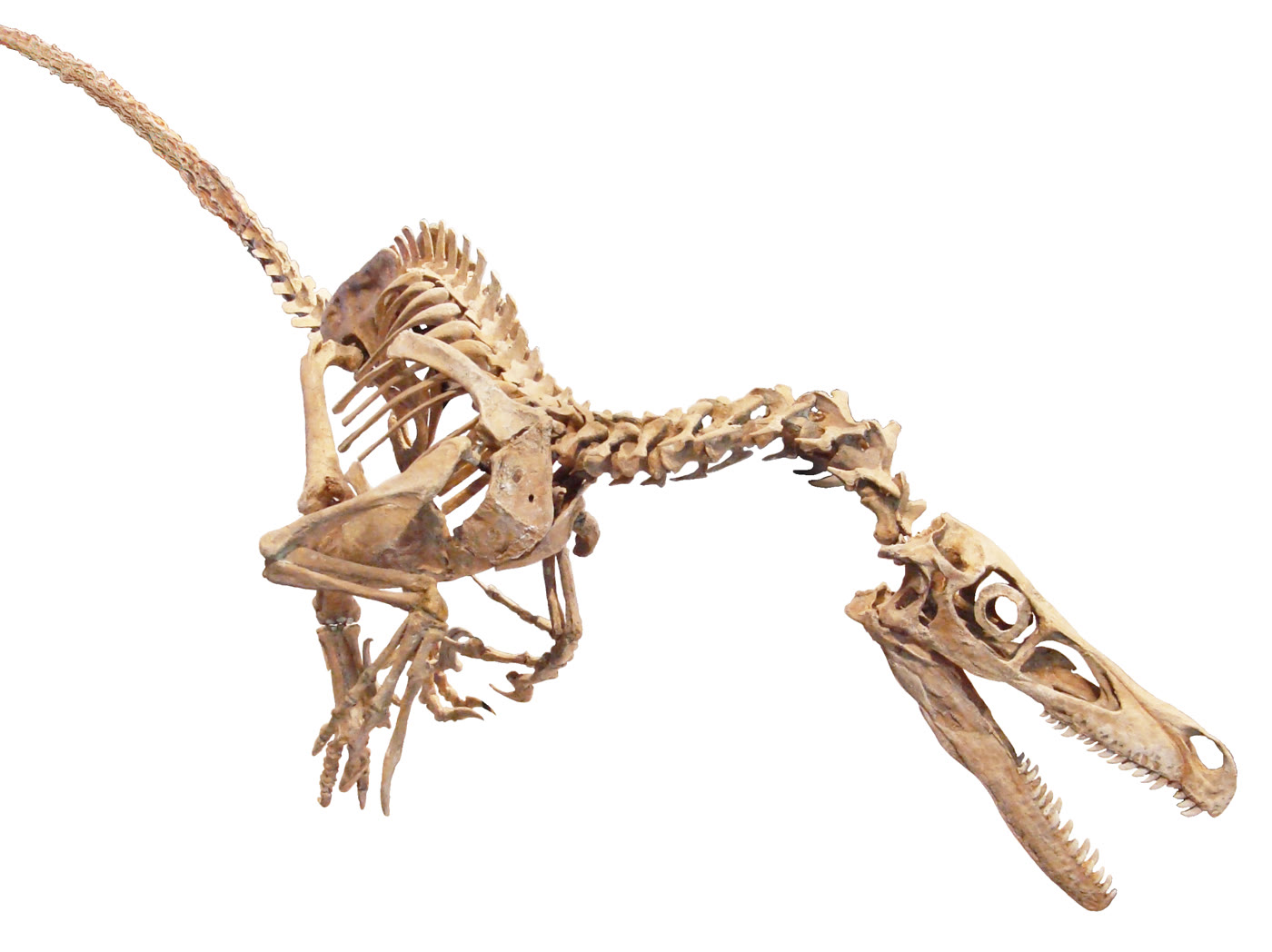
The species name refers to the tail. Ostrom saw ossified tendons and elongated bone processes locking the tail vertebrae into a rigid rod, which he read as a counterweight for a hunting animal that leapt and turned fast. Later discoveries complicated that picture. An articulated tail of Velociraptor preserved a long lateral S-curve, showing the tail could sweep side to side. The stiff tail was not a frozen pole after all. It was a steering boom, stiff enough to hold position and flexible enough to swing.
What those animals hunted is written in the rock. Deinonychus teeth turn up constantly alongside Tenontosaurus, and two quarries preserve the association in detail. One Yale site in Montana held the teeth plus four adult Deinonychus and one juvenile around a tenontosaur. A second quarry in the Antlers Formation of Oklahoma held six partial Tenontosaurus skeletons of mixed sizes with one partial Deinonychus and a scatter of its teeth, and one tenontosaur humerus carries what look like Deinonychus tooth marks. Work by Brinkman and colleagues in 1998 pointed out the arithmetic: a 70 to 100 kilogram predator against prey that reached one to four metric tons as an adult. One hunter could not take a grown tenontosaur down.
That is where the pack debate starts. Ostrom read the multiple kills as cooperative hunting, and the image of a raptor pack stuck to the public imagination for decades. Later workers countered that the bonebeds might record family groups or a feeding gathering on a carcass rather than a coordinated hunt. The current reading sits between the two: Deinonychus was probably social, but not a wolf-like pack with a hunting strategy. Whatever happened at those sites, several of them did show up together at the same dinner.
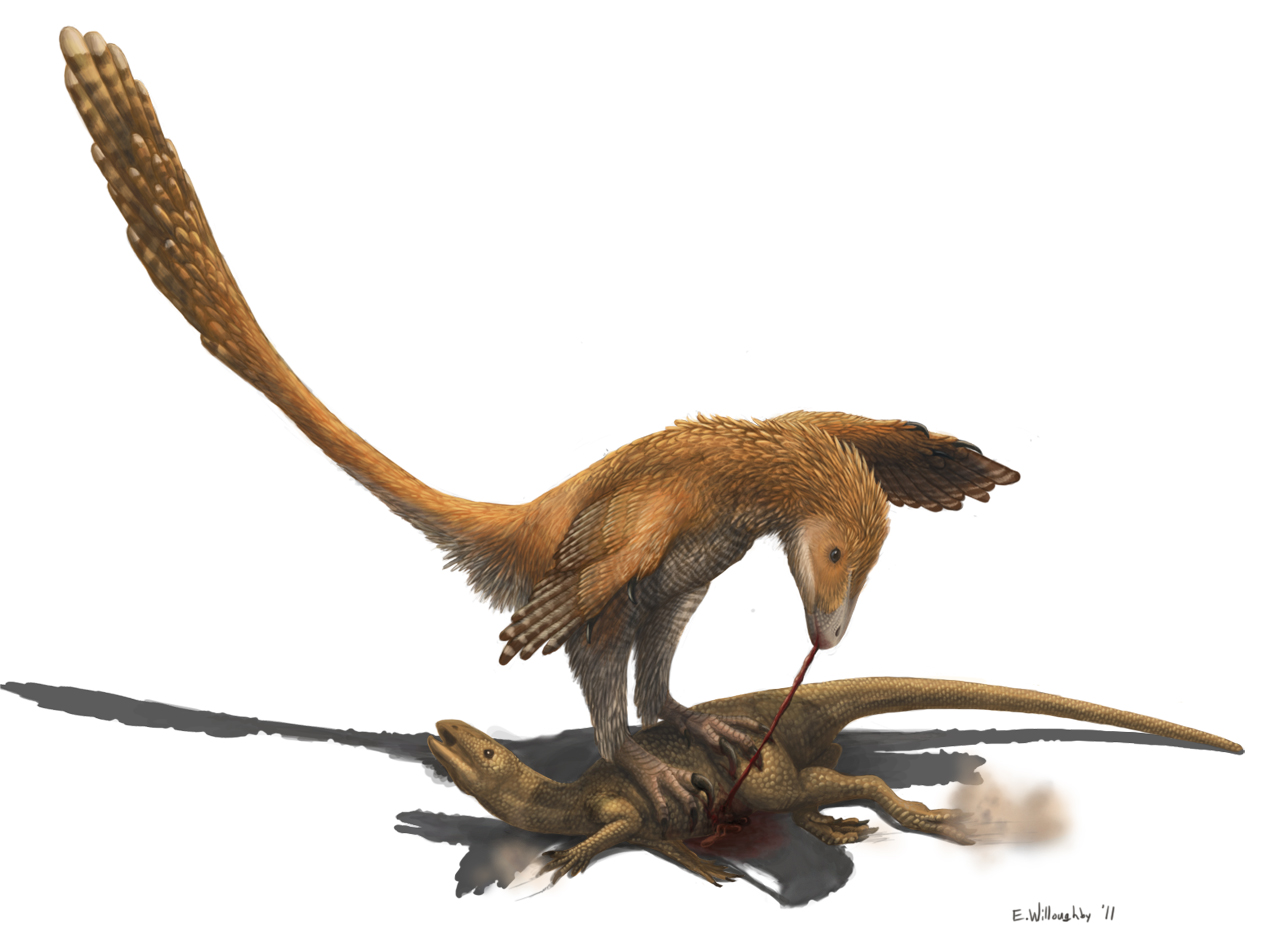
How did it actually kill? A study of the foot anatomy proposed a model called raptor prey restraint. Grip strength and toe mechanics resemble those of owls and hawks, not big cats. The animal would hop onto the back of prey, pin it with the sickle claws, and hold on while the jaws, which were weak-biters, worked at soft tissue. Feathered arms would act as stabilizers during the struggle, with the tail holding the whole body steady. It is a hunting style that looks exactly like a bird of prey, only on the ground.
Before 1969, the standard picture of a dinosaur was a slow, cold-blooded reptile dragging itself through a swamp. Ostrom's skeleton broke that image apart. He pointed to the small body, the horizontal posture, the ratite-like spine and above all the raptorial feet, and argued for an active, agile predator with a high metabolic rate. The description kicked off the argument over whether some dinosaurs were warm-blooded, an argument that reshaped the field for the next fifty years. One history of the discipline has called Ostrom's 1969 paper the most important single discovery of dinosaur paleontology in the mid-twentieth century.
Ostrom also got things wrong in public and fixed them in print. His first reconstruction described an odd trapezoidal hip bone that no other theropod had. Five years later, in a 1974 monograph on the shoulder, he showed the bone was actually a coracoid, part of the shoulder girdle, and redrew the animal. That is how the work moved forward, one correction at a time.
More evidence for a bird-like metabolism came from overlooked rock. In 2000, two researchers examining unprepared blocks from the original material found fossilized eggshell pressed against the belly ribs of a specimen. The contact suggested the animal sat on its eggs, transferring body heat the way brooding birds do. If the interpretation holds, Deinonychus incubated with body warmth rather than burying a clutch and walking away, which points toward endothermy. The famous "egg thief" of Mongolia was later found brooding in exactly the same posture, on the nest it had been accused of robbing.
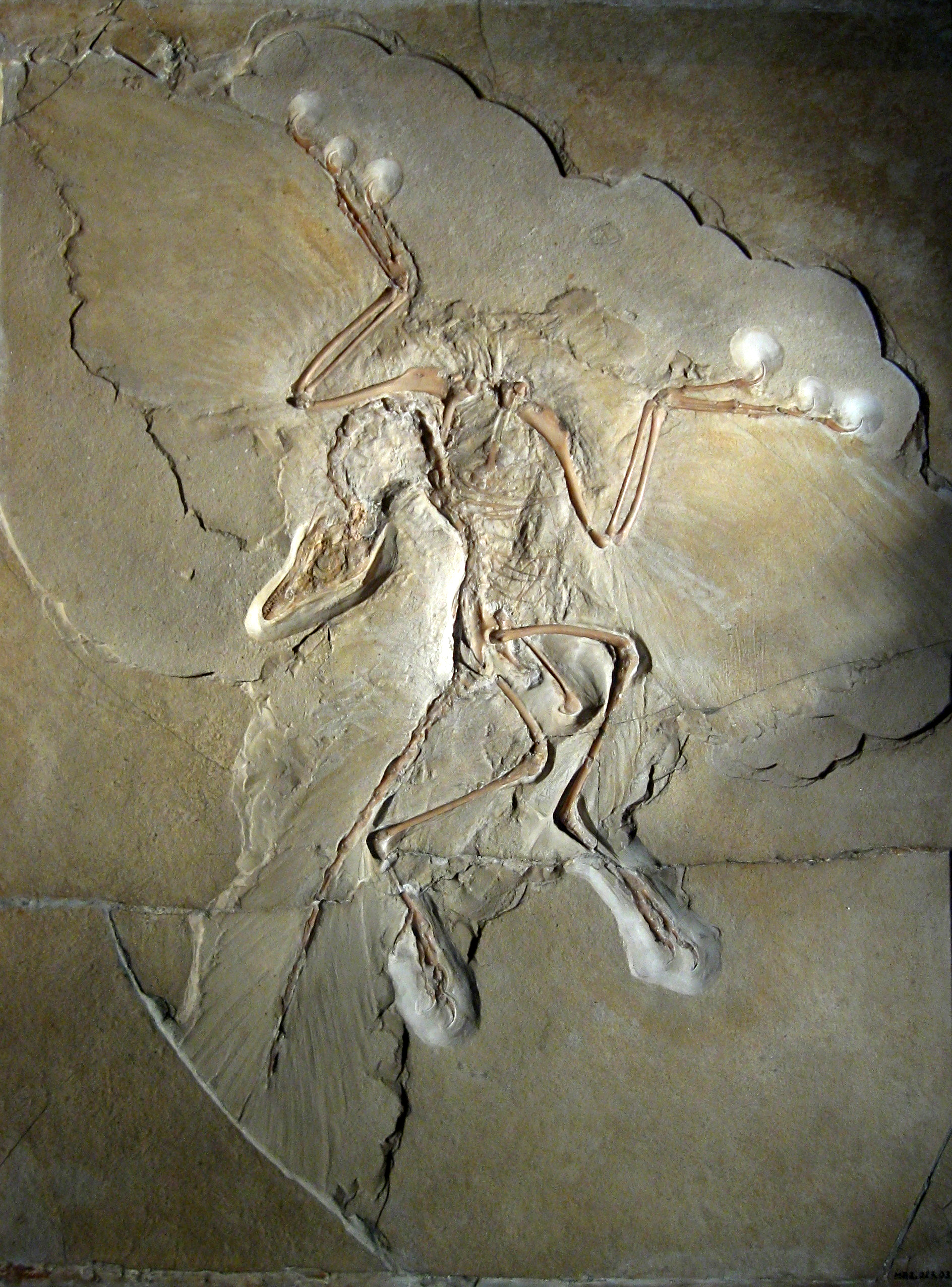
The bird connection was the part that stuck hardest. Ostrom laid the forelimb of Deinonychus next to Archaeopteryx and found the same wrist structure, the same long arms, the same arrangement that lets a bird fold its wing against the body and swing the hand forward in a flight stroke. He had revived an idea from the 1800s that most paleontologists had abandoned, that birds are living dinosaurs. No skin impressions of Deinonychus itself have ever been found, but the family around it kept turning up feathers. Velociraptor preserves quill knobs on the forearm, the attachment points for modern feathers, and Microraptor preserves vaned feathers on its arms, legs and tail. On present evidence the animal almost certainly wore feathers.
The public met Deinonychus under another name. Michael Crichton consulted John Ostrom several times while writing Jurassic Park about how the animal might have behaved and looked, then chose to call it Velociraptor in the novel because he thought the name sounded more dramatic. Ostrom later recalled that Crichton admitted the dinosaur in the book was based on Deinonychus in almost every detail except the name. The creatures on screen ended up sized like Deinonychus too, and bulkier relatives such as Utah's Utahraptor turned up soon after, a reminder that the raptor family always had bigger members waiting.
Deinonychus died out tens of millions of years before Tyrannosaurus appeared, and it never left a feathered skin in the record. What it left was an argument. One animal from a Montana lime quarry forced scientists to take dinosaurs seriously as active animals, opened the door to the warm-blooded debate, and put birds back in the dinosaur family tree. Few fossils have done more with less. Keep reading with the Velociraptor story, our look at the four-winged Microraptor, and the full creature gallery.