Published 2026-09-03 · by the Triops.me Editorial Team · Back to Articles
The Tuatara: New Zealand's 200-Million-Year Survivor
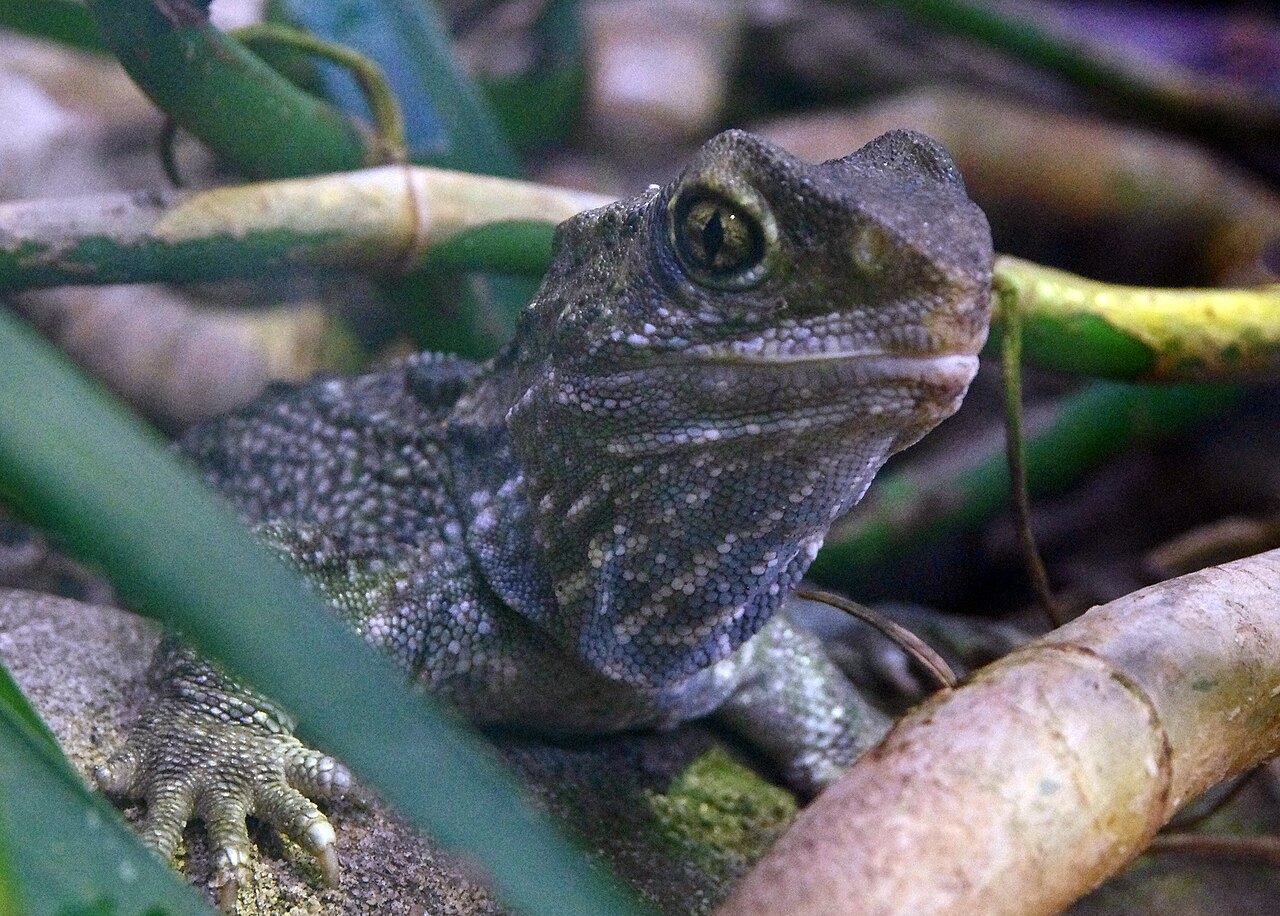
On a few rocky islands off New Zealand lives a reptile that most people would walk past without a second look. It is about the size of a large lizard, grey-green, slow moving, and fond of lying around in burrows. But the tuatara is not a lizard. It is the last living member of an entire order of reptiles, the Rhynchocephalia, and it has been quietly outlasting ice ages, mass extinctions and the rise of humans for more than 200 million years.
When the first true lizards appeared in the fossil record, the rhynchocephalians were already there. The two lineages split roughly 240 million years ago, in the Triassic, and for much of the Mesozoic the rhynchocephalians were the more successful of the two. Fossils of their relatives turn up in Europe, North America, Africa and Asia, often alongside early dinosaurs. Then, over millions of years, the lizards diversified and the rhynchocephalians faded, retreating until only a handful of forms remained. Today a single species, Sphenodon punctatus, survives in the wild, on roughly 32 islands scattered along New Zealand's coast.
The eye on top of its head
The tuatara's most famous feature is its third eye, and this is not folklore. On top of the skull sits a parietal eye, a small structure with its own lens, retina and nerve connection to the brain. In hatchlings it is clearly visible, a pale grey dot between the two ordinary eyes. As the animal grows, scales slowly cover it, but the organ keeps working for life.
What does a reptile do with an eye on its roof? It cannot form images. The best evidence suggests it works as a light meter, tracking day length and season through the pineal gland, and it may also detect ultraviolet light. That timing matters for a cold-blooded animal in a temperate climate, and hatchlings appear to use it to decide when it is safe to leave the nest. A reptile with a sensor on its skull might sound exotic, but the tuatara is not the only three-eyed survivor still with us. Triops carries a median eye of its own, along with a pair of compound eyes, as we explain in our deep dive on the three eyes of Triops.
Everything about it runs slow
Nearly every part of tuatara biology breaks the usual reptile rulebook. Lizards in most of the world bask hard to push their body temperature into the high twenties or thirties Celsius. The tuatara is active at temperatures as low as 5 degrees, does its best work around 12 to 16 degrees, and can die of heat stress above the high twenties. No other reptile is built for such a cool comfort zone. It is mostly nocturnal, and on warm nights it prefers to stay underground.
That slow engine produces one of the slowest life histories of any reptile. Tuatara commonly live past 60 years and probably past 100. A male named Henry at the Southland Museum in Invercargill fathered chicks in 2009 at the estimated age of 111. Females breed only every two to five years, the eggs develop inside the mother for years before they are even laid, and incubation in the nest takes 11 to 16 months, among the longest of any reptile. The sex of each hatchling depends on nest temperature, with warmer nests producing males, which is one reason a warming climate worries conservationists.
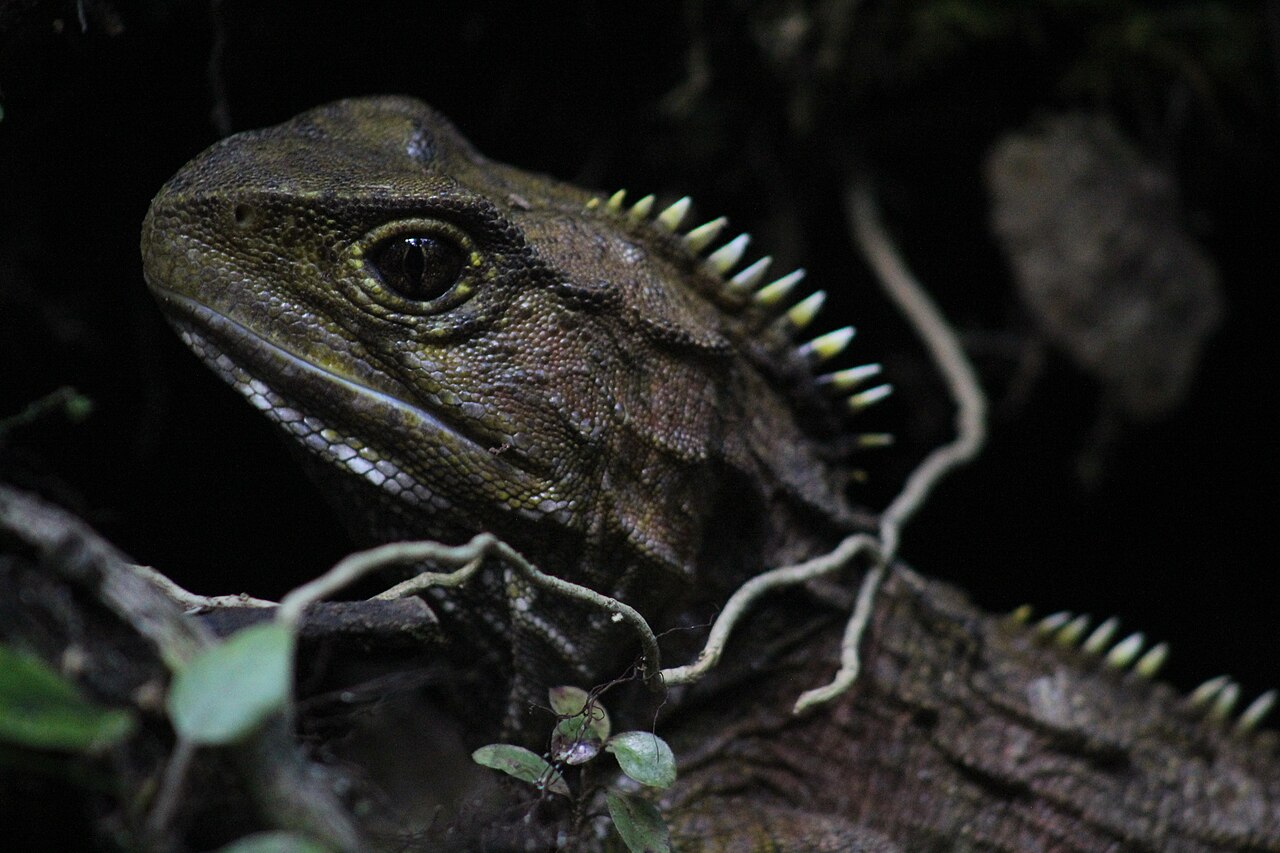
The teeth seal the case that this is no lizard. Tuatara have a single row of teeth fused to the edge of the jawbone, forming a beak-like shearing blade that is worn down with age and never replaced. The lower jaw closes so that its teeth slot neatly between the upper row, a slicing bite lizards cannot manage. Add a skull layout different from any lizard, and the complete absence of external ear openings, and you have an animal that merely impersonates a lizard at a distance.
A shared home with seabirds
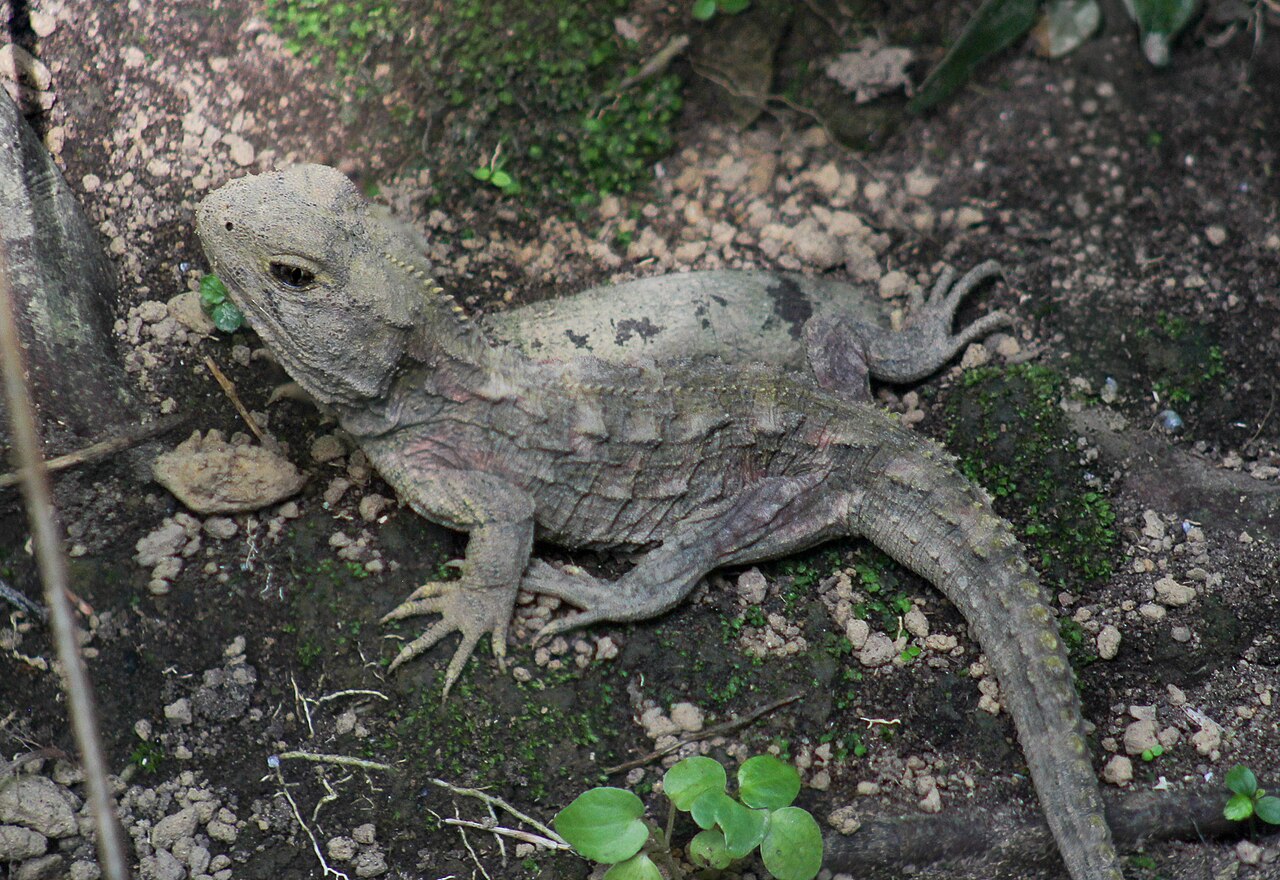
In diet and habits, the tuatara is an opportunist. Beetles, crickets, spiders and large weta make up most of the menu, with lizards, seabird eggs and even chicks taken when the chance appears. Many of the best burrows are dug by petrels and shearwaters, and tuatara move in alongside them, defending the good real estate with raised crests and open mouths. The birds fertilize the soil with their droppings, the soil feeds the insects, and the insects feed the tuatara. It is a small, circular economy that has run on these islands for thousands of years.
The squeeze that nearly ended it
Tuatara once lived across mainland New Zealand. Their bones turn up in former Maori settlement sites, where they were sometimes eaten and sometimes kept around as scavengers. That changed when the Polynesian rat, the kiore, arrived with Polynesian settlers around 750 years ago. Rats eat eggs and hatchlings, and a reptile that breeds only every few years cannot absorb that pressure. Mainland populations collapsed, and rats followed by cats and other introduced mammals finished the job. What saved the species was geography: islands lying far enough offshore for rats never to reach them.
Since the 1990s, conservationists have been pushing back. Tuatara have been translocated to rat-free islands, bred in captivity, and returned to fenced mainland sanctuaries such as Zealandia in Wellington, where the public can now see them in the wild for the first time in over a century. In 2020 researchers sequenced the tuatara genome and found it spans about five billion base pairs, one of the largest reptile genomes ever measured, full of repeated elements that confirm just how long this lineage has been on its own path.
Why it survived when its relatives did not
There is no single trick. The tuatara endured because it retreated into a niche nobody else wanted: cool, isolated islands with few competitors and few predators, where a slow, patient lifestyle costs nothing. Triops made the opposite bet with similar results. Instead of hiding in a quiet corner of the map, Triops lives in pools that dry up and vanish, and rides out each collapse inside eggs that can wait decades for rain, a strategy covered in our article on cryptobiosis and in how Triops survived five mass extinctions. One survivor went slow and low, the other went dormant. Both simply refused to compete on the terms of faster, flashier newcomers.
That is what makes the tuatara worth knowing. It is not a mascot or a relic, but a complete branch of reptile life reduced to a single species, still breeding, still hunting weta in the dark, still wearing an eye on top of its skull. When you look at a tuatara, you are reading the last page of a 240-million-year story that, with some help, is still being written.