Published 2026-10-18 · by the Triops.me Editorial Team · Back to Articles
Haast's Eagle: The Largest Eagle Ever
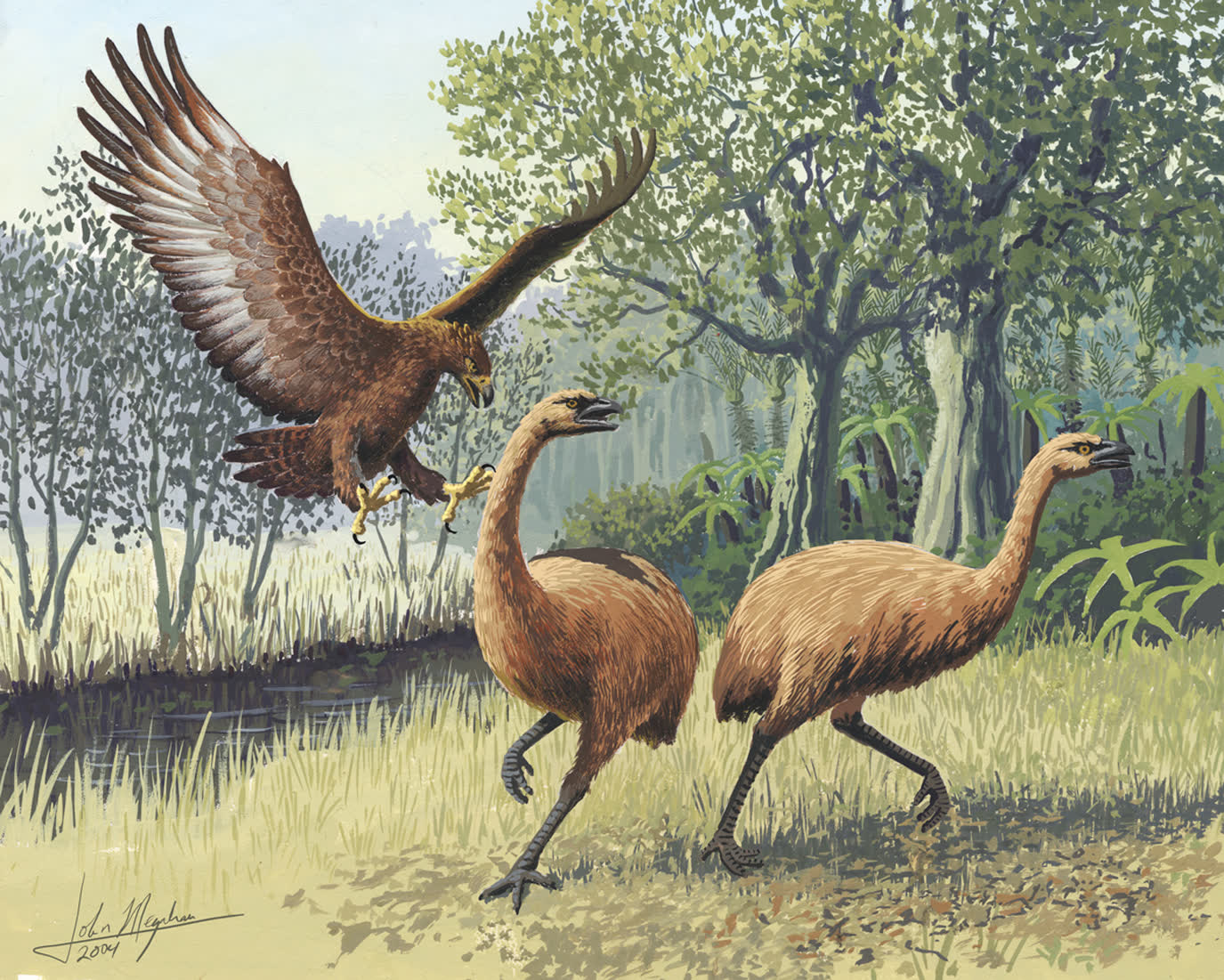
New Zealand never had wolves, big cats or bears. Until human ships arrived in the thirteenth century, the only land mammals on those islands were three species of bat, and birds took every job going. Moa grazed through forest and scrub where deer would elsewhere, flightless and unbothered. Above them sat two raptors: the Eyles' harrier and a giant called Haast's eagle, the largest eagle known to have existed.
Adult females ran between 10 and 18 kilograms, about forty percent heavier than the biggest eagles flying today, and they took prey many times their own weight. The strange part is where that size came from: the giant descended from a small Australian relative under a kilogram, and it got there in under two million years.
Bones from a Glenmark Swamp
The bird was first described in the early 1870s by Julius von Haast, a German-born geologist working in Canterbury, from remains dug up by Frederick Richardson Fuller, taxidermist at the Canterbury Museum, in a former marsh on the Glenmark Estate. Haast had one femur, two claw bones, a rib and a fragment of a humerus, and it was enough to name a new genus: Harpagornis moorei. The name pairs the Greek harpax, grappling hook, with ornis, bird, while the species honours George Henry Moore, who owned the estate.
He also named a smaller second species from the same swamp in 1874, then admitted what the difference probably was: birds of prey differ sharply between the sexes. In 1990 Richard Holdaway confirmed that both names were simply male and female of one animal. DNA later moved the giant into the living eagle genus Hieraaetus.
The Fastest Weight Gain on Record
In 2005 a DNA study led by Michael Bunce delivered the surprise. Despite its bulk, Haast's eagle was not close to Australia's wedge-tailed eagle, the match everyone had assumed. Its nearest living relatives are the little eagle and the booted eagle, small hunters that together weigh less than one big female of the extinct bird. The lineages split between about 1.8 million and 700,000 years ago, so the giant's ancestors multiplied their body weight ten to fifteen fold in a geological eyeblink. That is the fastest increase in average body weight known in any vertebrate.
Islands hand out that kind of opportunity. With no mammalian predators to compete against and a population of slow, flightless birds to eat, a hunter could keep growing as long as it stayed airborne. Habitat opened the door: when New Zealand's forests broke up in the late Pliocene and early Pleistocene, moa and eagles moved into the open country and ecological release did the rest. The moa answered the same island pressure in the opposite direction, by giving up flight.
Built for Forests, Not Open Sky
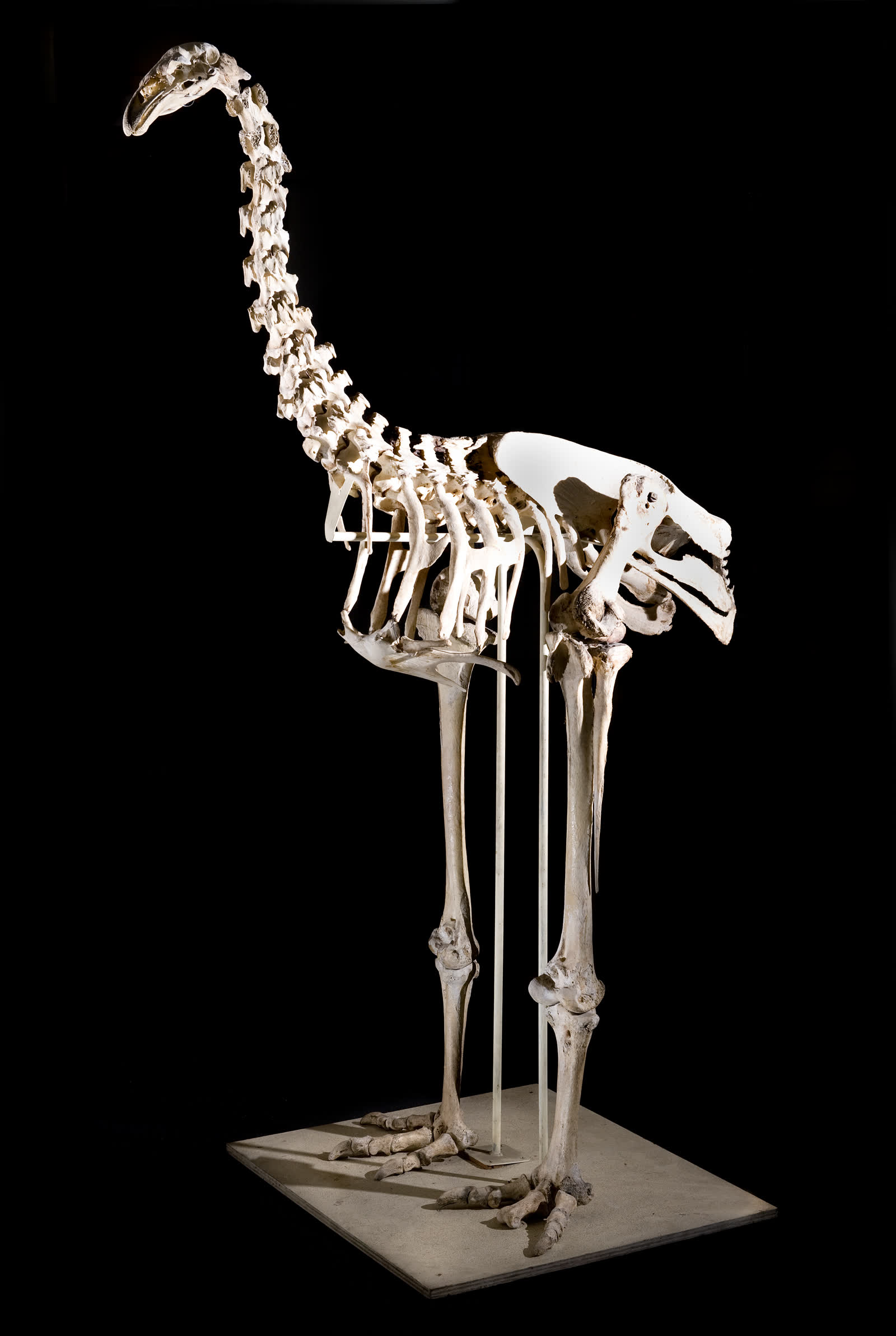
A female reached about 1.4 metres long, stood roughly 90 centimetres tall and spanned around 2.6 metres, occasionally 3. Males ran 9 to 12 kilograms against the female's 10 to 18. No living eagle verified in the wild exceeds 9 kilograms, so the biggest raptor on earth today is around forty percent lighter than this one was.
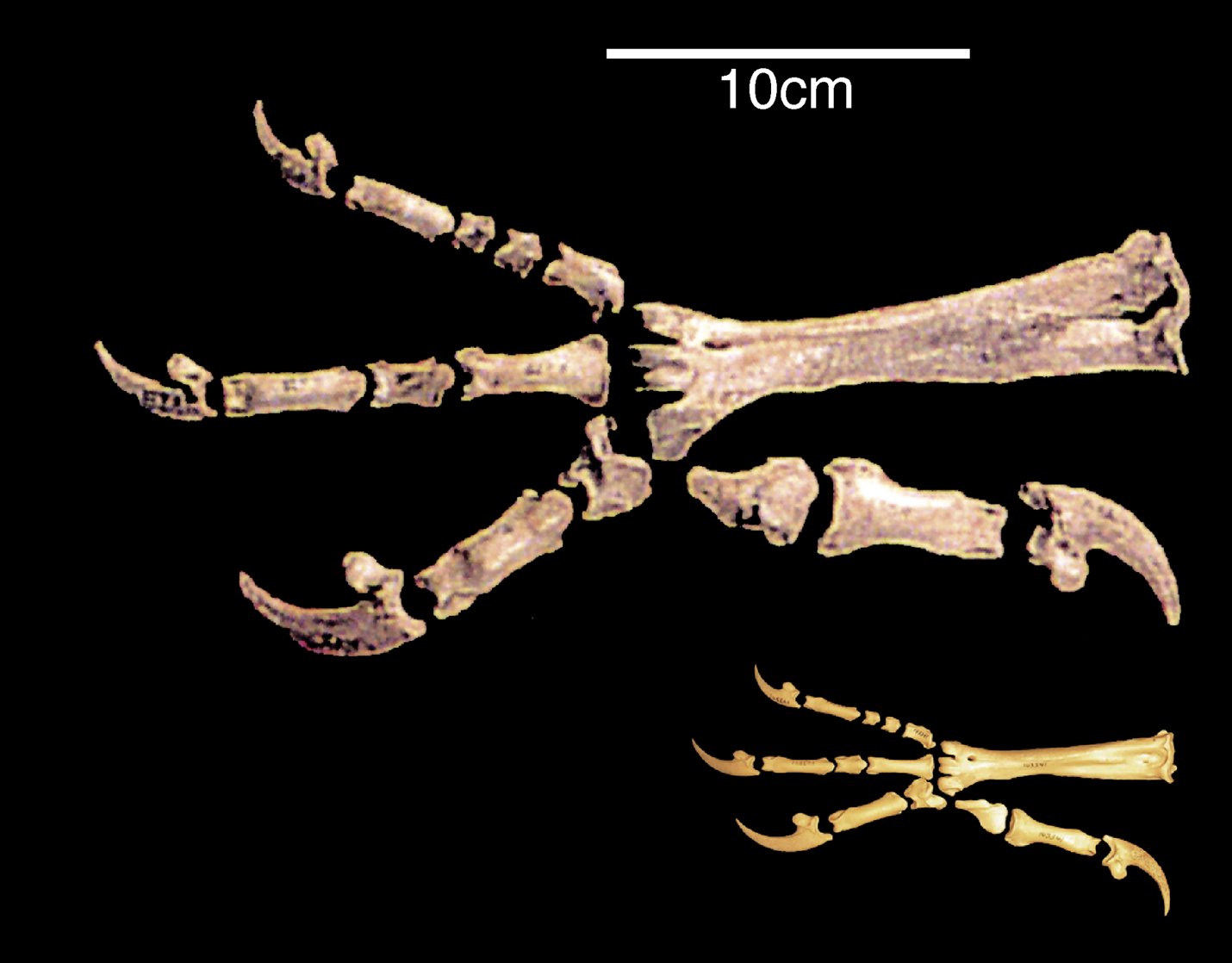
The wings were short and broad for a bird that heavy, which rules out lazy soaring but suits weaving between trunks, and they pair with a long, broad tail over 50 centimetres in females that repays the reduced wing area with lift. Powerful legs and heavy flight muscles let the bird launch from the ground with a jump. The real weapons were the feet: front talons 4.9 to 6.15 centimetres long, a rear claw possibly reaching 11 centimetres, and a grip that biomechanical tests show deformed far less under load than the talons of any living bird of prey.
How to Kill a Bird Many Times Your Size
The menu was flightless birds. Moa dominated it, with the largest females around 200 kilograms, some fifteen times the eagle's own mass, alongside the 18-kilogram South Island giant goose and the rare adzebill. Talons that size were built for heavy prey, so small animals were simply awkward to catch. Even the kākāpō seems to carry the mark of the hunt: a 2024 genetic study tied its rarer olive-green plumage, which raptors struggle to spot, to a variant that arose almost two million years ago.
The proof sits in the bones. During excavations at Pyramid Valley in 1991, Holdaway found moa pelvic bones with deep wounds only enormous talons could make. The claws punched five centimetres through skin and muscle before striking bone, and about ten percent of the moa bones at the site carry that signature. The scars cluster on the lower back, the kidney region and the area just below the skull, an attack aimed at the spine rather than a scramble for grip. A six-kilogram golden eagle can bring down an 80-kilogram deer; this was that plan scaled up by an order of magnitude.
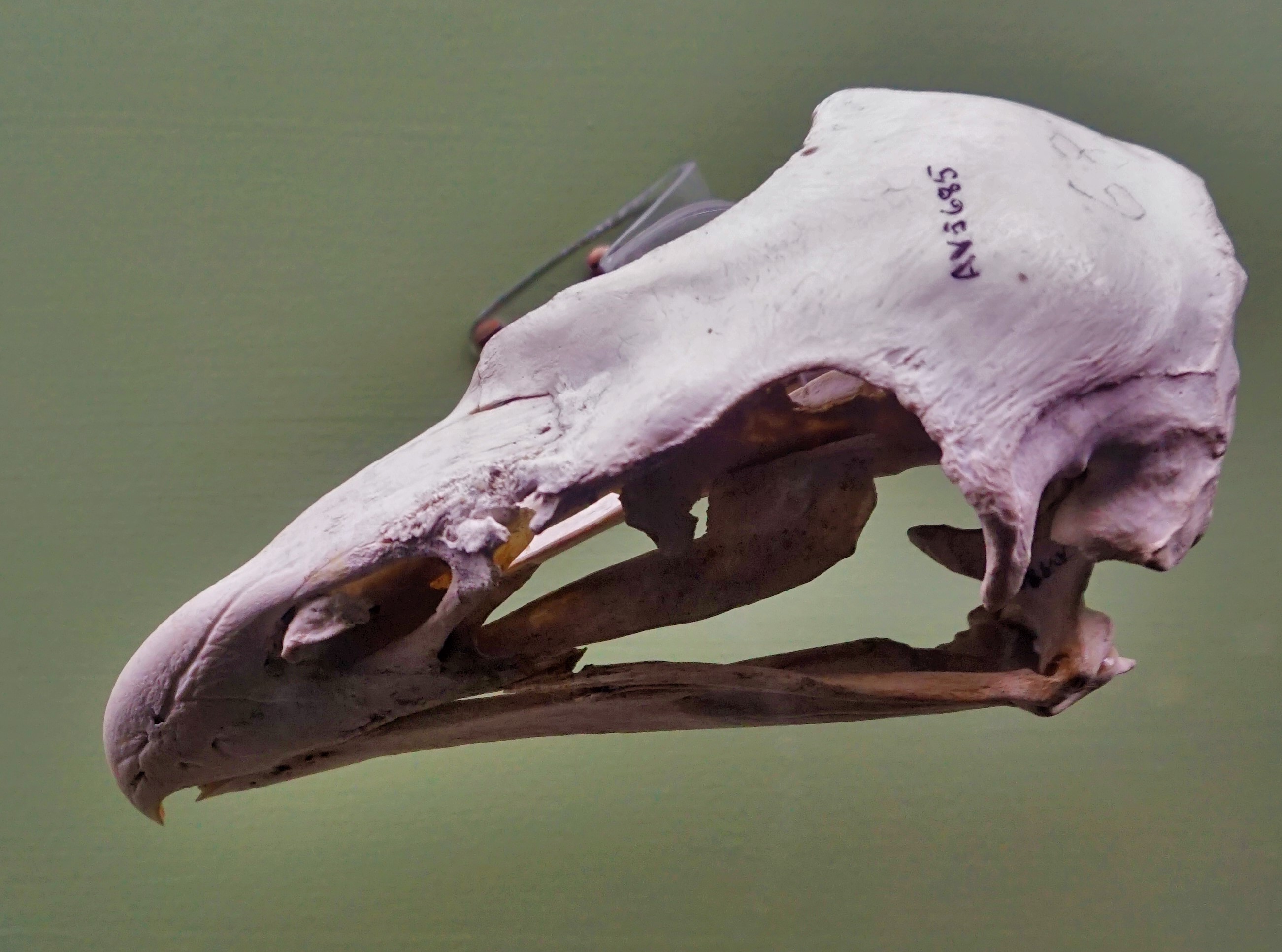
How did it get close? Scofield and Ashwell argued in 2009 that the eagle flew rarely but fast, waiting in tall trees or on mountain ledges and dropping at speed, which fits Māori accounts of a bird that descended too quickly to dodge. Others place it in dense forest, hunting like a modern forest raptor. Both readings agree on the essentials: an ambush predator with no need to chase, and a hunter rather than a scavenger. A 2021 biomechanical analysis by Anneke van Heteren and colleagues settled the argument from bone, finding an eagle's beak and talons, a bite stronger than a harpy eagle's, and a rear skull that converges on the Andean condor. It killed like an eagle, then fed like a condor, plunging its head into the carcass for the nutrient-rich organs.
The Pouākai in the Rock
The first Māori settlers lived alongside the eagle, and their traditions remember it. Under the names pouākai, hakawai and hōkioi it appears in tribal knowledge as a killer of moa and, in some tellings, of people. Governor George Grey recorded a description in 1873: a very large hawk in red, black and white, streaked with yellow and green, roosting on mountain tops rather than plains, as large as a moa. The Reverend James W. Stack wrote in 1878 of a pouākai that swooped with such speed that no one could escape its talons.
Nobody claims a confirmed attack on a human, but Holdaway and Worthy argued in The Lost World of the Moa that a bird this strong could have taken one. Settlers cut eagle bones into tools, so people handled the animal while it still flew. Cave drawings near Timaru show it with a pale, bare head, which matches the feeding evidence from a completely different direction: a head best left uncovered when you reach into a carcass.
The End Came with People
People arrived between roughly 1250 and 1280, hunted every moa species to extinction by about 1440 to 1445, burned forest for settlements and introduced the Polynesian rat. The eagle population, estimated at 3,000 to 4,500 breeding pairs across the South Island, was far too small to have driven the moa down itself. It was the passenger rather than the author of the collapse. With its specialised food gone and its woodland shrinking, the largest eagle that ever lived followed the moa off the stage within a century, part of a wave that erased around half of New Zealand's bird species.
Radiocarbon keeps a sliver of doubt alive. A near-complete female skeleton from a cave near the summit of Mount Owen dates to about two thousand years ago, evidence of isolated subalpine populations sealed off by spreading forest. And the surveyor C. E. Douglas reported shooting two "large falcons", twice the size of harriers, in the Landsborough Valley in the 1860s, before the eagle had even been described. Holdaway has not ruled out a relict population into the nineteenth century. Nothing is confirmed, but the last hōkioi may have slipped away later and more quietly than the record suggests.
The pattern is familiar from elsewhere on this site. South America's terror birds and Argentavis filled the same all-in slot wherever the top job was open, and every one of them ended when conditions changed. New Zealand kept one prehistoric holdout running: the tuatara, a survivor that endured by doing very little, very patiently. Haast's eagle never had that option, because specialisation at the top of a food chain lasts only as long as the prey beneath it. Triops made the opposite bet, investing nothing in size or speed and everything in eggs that sit in drying mud through droughts, fires and extinctions; the full story is in how Triops survived five mass extinctions. The heavyweight hunter is behind museum glass now, and the centimetre-long crustacean still hatches after rain.