Published August 17, 2026, 13:50 by the Triops.me Editorial Team · Back to Articles
Opabinia: The Five-Eyed Cambrian Oddity
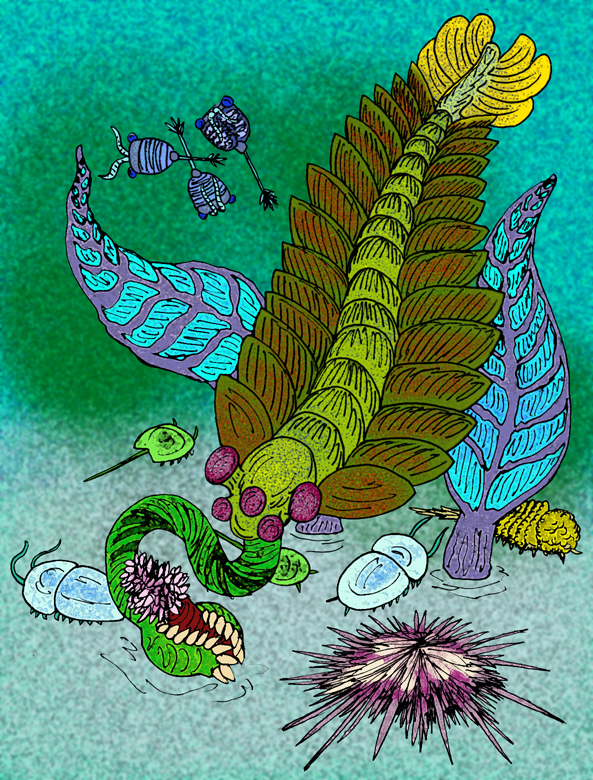
Imagine a creature with five eyes sitting on top of its head, a long flexible proboscis tipped with a grasping claw, and a mouth that opens backward under its body. When paleontologist Harry Whittington first presented his detailed 1975 reconstruction of Opabinia regalis to a room of colleagues at the Geological Society of London, the audience reportedly burst out laughing. No known animal matched what they were looking at. Opabinia was, and remains, one of the most bizarre animals ever discovered.
Discovered in the Rock, Reconstructed from Silence
Opabinia was first collected in 1911 by Charles Doolittle Walcott from the Burgess Shale of British Columbia, one of the most famous fossil deposits on Earth. Walcott placed it loosely with the annelid worms and moved on. For over sixty years, the handful of known specimens sat largely unstudied. It was not until Whittington undertook a painstaking re-examination in the mid-1970s that the creature's full strangeness became clear.
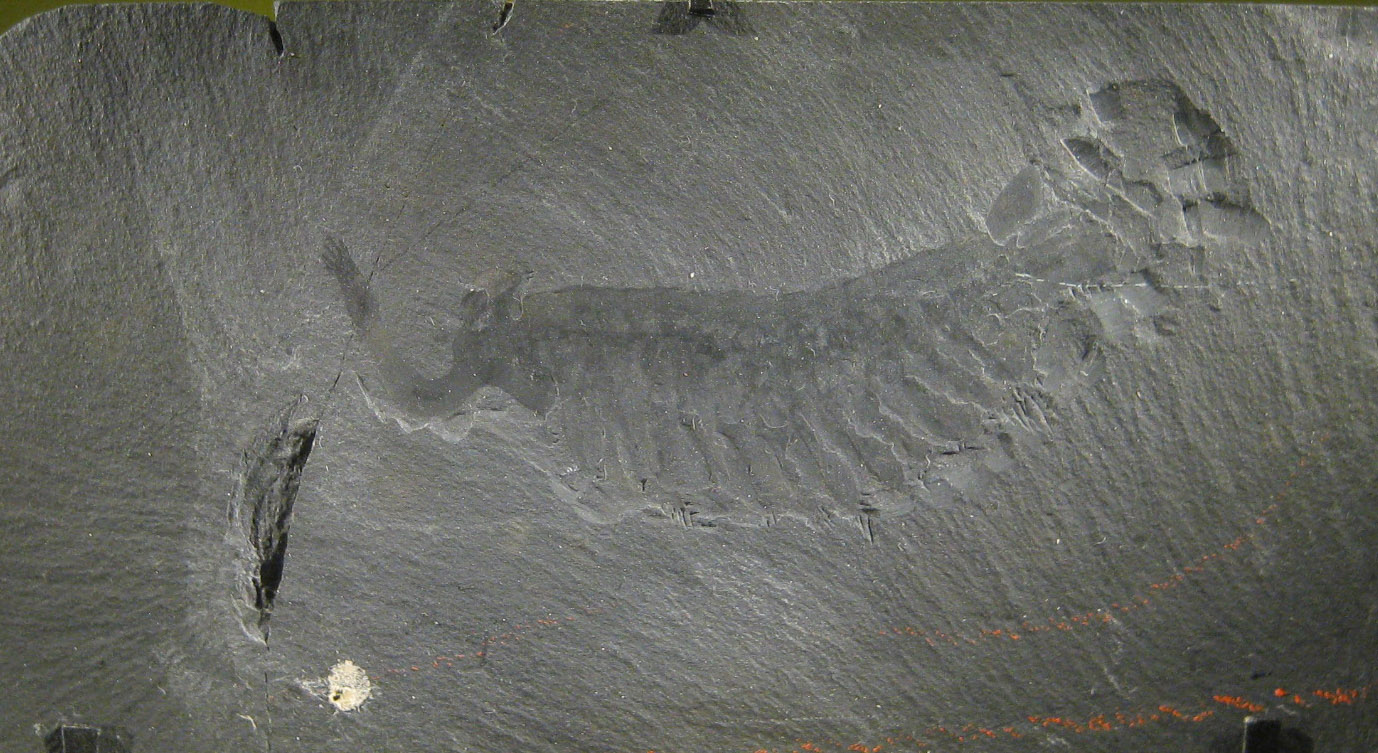
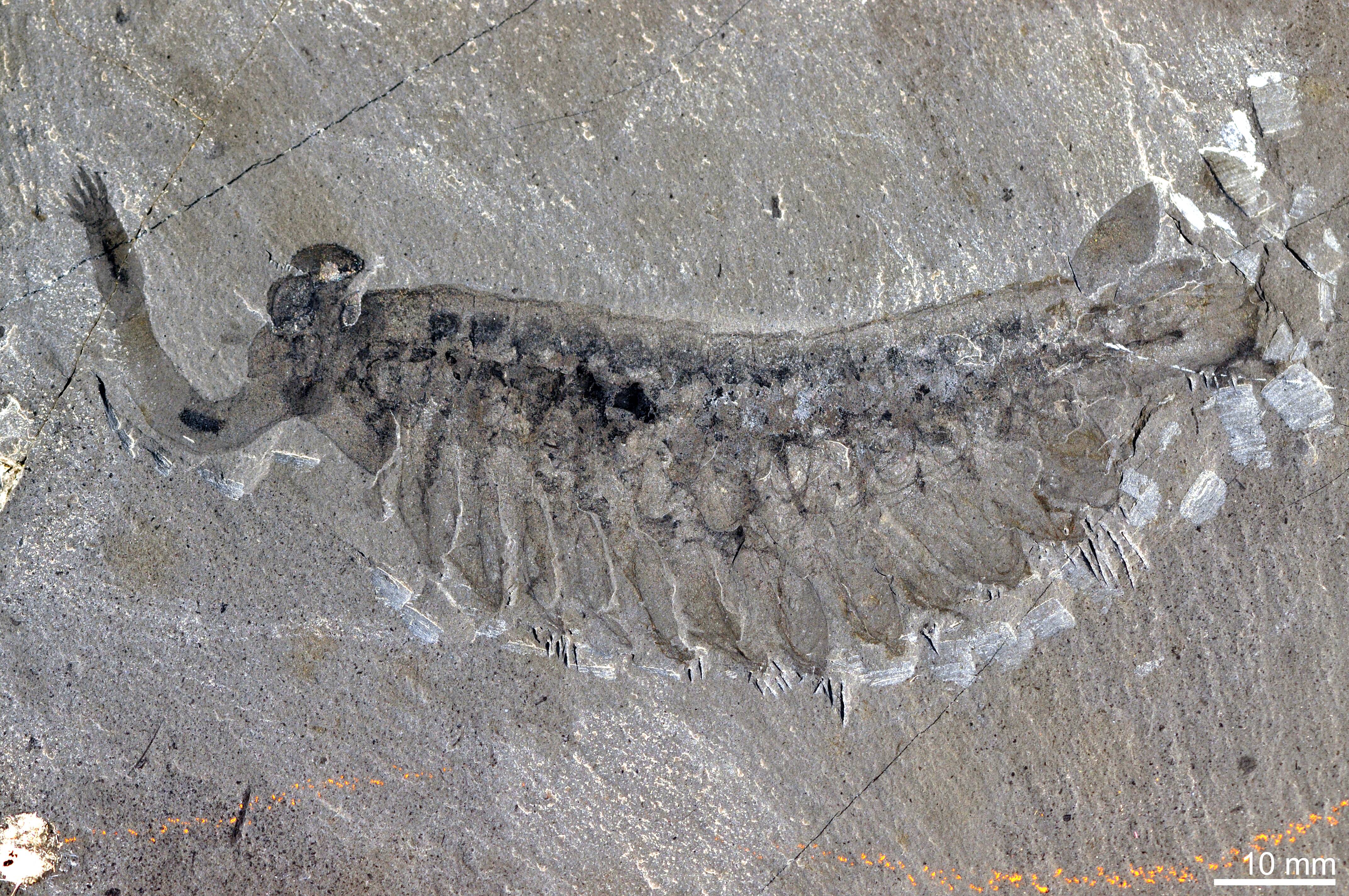
Whittington's reconstruction was meticulous. He mapped every segment, every flap, every appendage from the compressed shale impressions. What emerged was an animal unlike anything in the modern world or the fossil record as it was then understood. It had a segmented body roughly seven centimeters long, lined on each side with overlapping gill flaps used for swimming. At the rear, a fan-shaped tail spread outward like a hand. But it was the head that defied all expectation.
Five Eyes and a Proboscis
The most striking feature of Opabinia is its five eyes. Two pairs of smaller eyes sat on either side of the head, while a single larger eye occupied the central position. This arrangement is unique among known animals, living or extinct. The eyes were mounted on short stalks and would have provided a wide field of vision across the Cambrian seafloor. What evolutionary pressure produced five eyes rather than two or four remains a mystery, but in the chaotic arms race of the Cambrian explosion, where predator and prey were inventing new body plans at a dizzying pace, unusual solutions were the norm.
Extending forward from the head was a long, segmented proboscis, probably flexible and muscular, ending in a small spiny claw. This appendage was not a feeding tube in the modern sense. Instead, Opabinia appears to have used the proboscis to reach out and seize small, soft-bodied prey from the sediment, then curl it backward to deliver food to a mouth that opened on the underside of the head, facing rearward. The entire feeding apparatus was, in effect, backwards by modern standards.
A Seafloor Cruiser
Despite its alien appearance, Opabinia was a relatively simple animal. It lacked hard parts aside from the small claw on its proboscis, which is why its preservation required the exceptional conditions of the Burgess Shale, where fine-grained mud buried organisms rapidly and excluded oxygen. The overlapping flaps along its body suggest it swam close to the seafloor, undulating its lateral lobes in a coordinated ripple, much like modern sea spiders or the unrelated but superficially similar Canadaspis. The fan-shaped tail may have acted as a stabilizer or rudder.
The diet of Opabinia was almost certainly soft-bodied organisms living in or on the seafloor sediment. Small worms, brachiopod larvae, and other tiny invertebrates would have been within reach of its proboscis. There is no evidence that it was a large predator like its distant relative Anomalocaris, which grew to over a meter in length and had powerful grasping frontal appendages. Opabinia was a modest, bottom-dwelling forager in a world increasingly dominated by bigger and faster hunters.
Where Does It Fit?
When Whittington published his reconstruction, Opabinia was so unusual that he concluded it did not belong to any living phylum. It was not an arthropod, not an annelid, not a chordate. It stood alone. This conclusion held for nearly two decades.
Beginning in the late 1990s, new fossil discoveries, including the related animals Kerygmachela and Pambdelurion from Greenland, helped place Opabinia within a broader context. Today it is classified as a stem-group arthropod, part of the clade Dinocaridida, which also includes the radiodonts such as Anomalocaris. These are not true arthropods in the strict sense, but they share a common ancestor with the group and represent early branches on the arthropod family tree. The connection makes sense: like modern arthropods, Opabinia had a segmented body, lateral appendages, and compound eyes, even if the details were wildly different from anything alive today.
Why Opabinia Matters
Fewer than twenty well-preserved specimens of Opabinia have ever been described. From the Phyllopod bed in the Burgess Shale, where the community composition is known in detail, Opabinia constitutes less than 0.1% of the fauna. It was rare even in its own time. Yet its scientific importance is enormous.
Opabinia demonstrates that the Cambrian explosion was not a simple march toward modern body plans. It produced experiments, dead ends, and body architectures that have no parallel in the living world. Five eyes, a backward mouth, a clawed proboscis: these features were functional, successful enough to persist through at least part of the Middle Cambrian, roughly 505 million years ago, and then vanish without descendants. In the story of life on Earth, Opabinia is a reminder that evolution is not a straight line. It is a branching, messy, and often astonishing process that occasionally produces something so strange that even scientists cannot help but laugh.
And then, of course, they get back to work figuring out how it lived.
Related reading: The Cambrian Explosion · Anomalocaris, the Cambrian Apex Predator · The Burgess Shale · Hallucigenia