Published September 15, 2026, 11:54 · by the Triops.me Editorial Team · Back to Articles
Paraceratherium: The Largest Land Mammal That Ever Walked
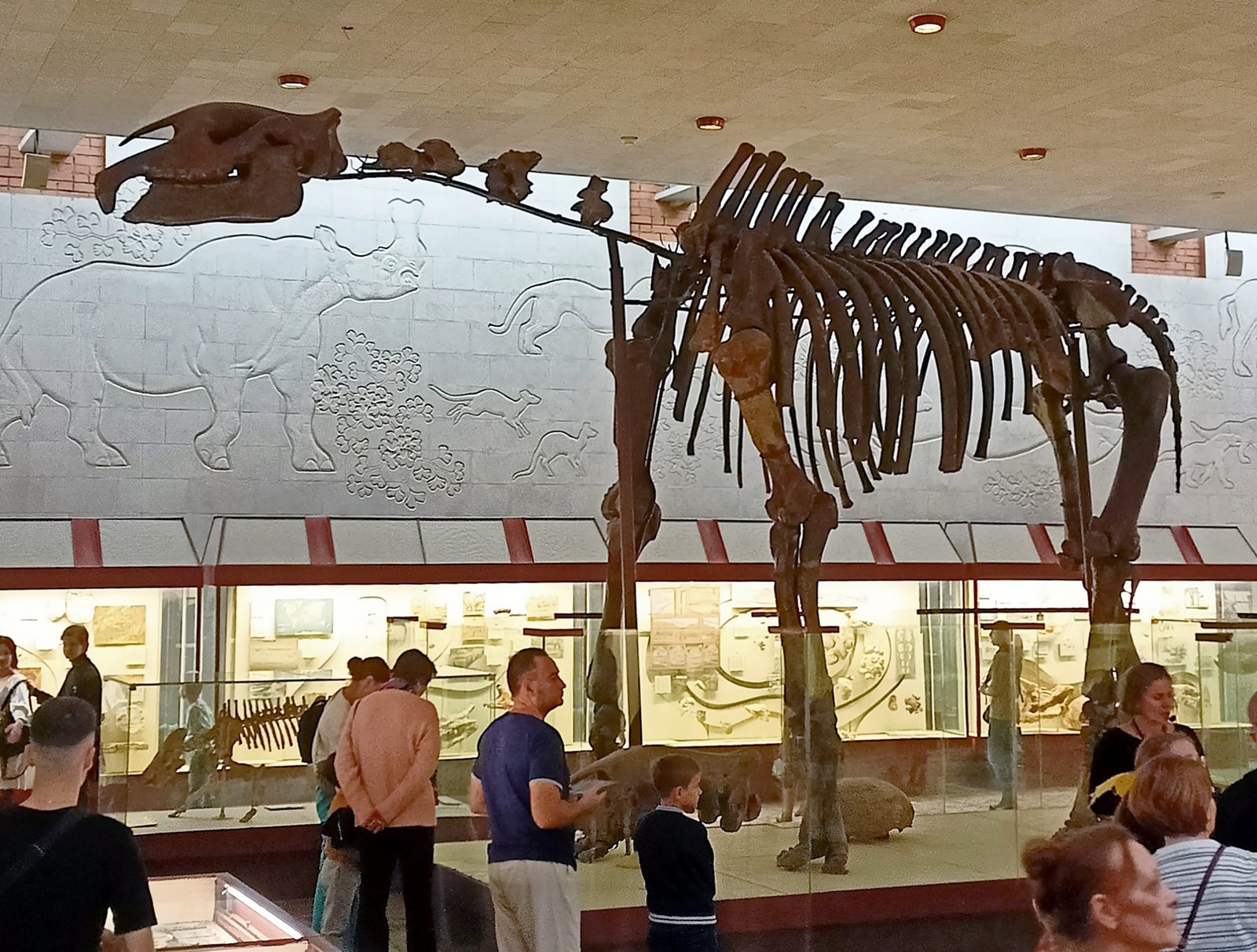
Deep in the Oligocene, about 30 million years ago, something enormous moved through the open woodlands of Central Asia. It was bigger than any elephant alive today, bigger than any mammoth or mastodon, and taller than a double-decker bus. It had no horns, no tusks worth the name, and no interest in anything but the treetops. Its name is Paraceratherium, and it is the largest land mammal that science has ever dug up.
A grown Paraceratherium stood roughly 4.8 meters at the shoulder, measured around 7.4 meters from nose to tail, and weighed somewhere in the region of 15 to 20 tonnes. To picture that, imagine a rhinoceros stretched upward until its shoulders brushed the third floor of a building, then inflated until it outweighed four large elephants. Museum mounts, like the famous skeleton in Moscow's Paleontological Museum, need entire halls to hold them.
A rhino that grew up instead of out
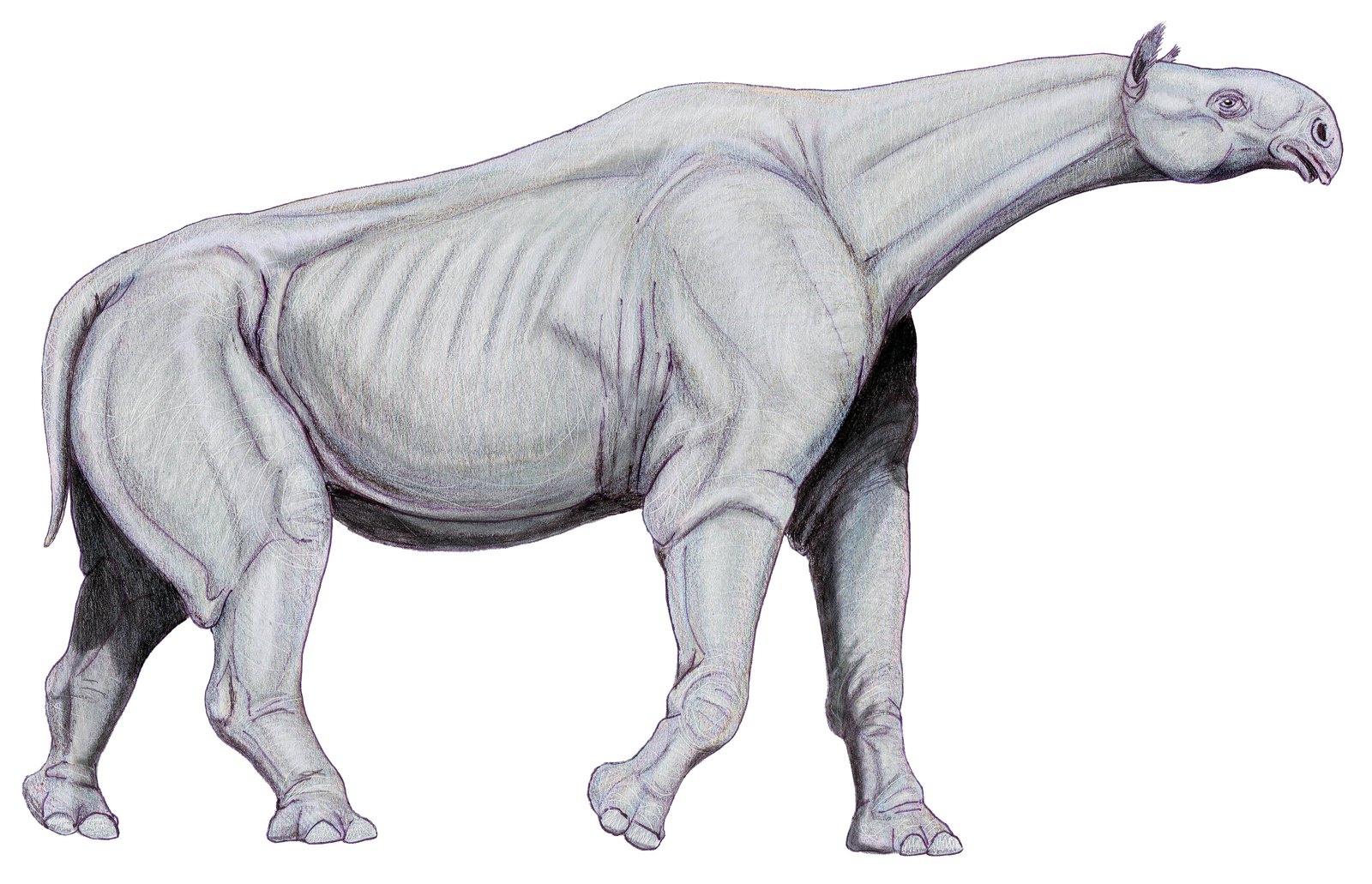
The strangest part of the story is what Paraceratherium actually was. Not an elephant, not a giraffe, but a rhino. Or more precisely, a distant cousin of rhinos, sitting on the odd-toed ungulate branch of the mammal family tree alongside horses and tapirs. While its modern relatives evolved armor and horns, this lineage took the opposite route: it lost the horns entirely and invested everything in sheer size and a neck long enough to reach the canopy.
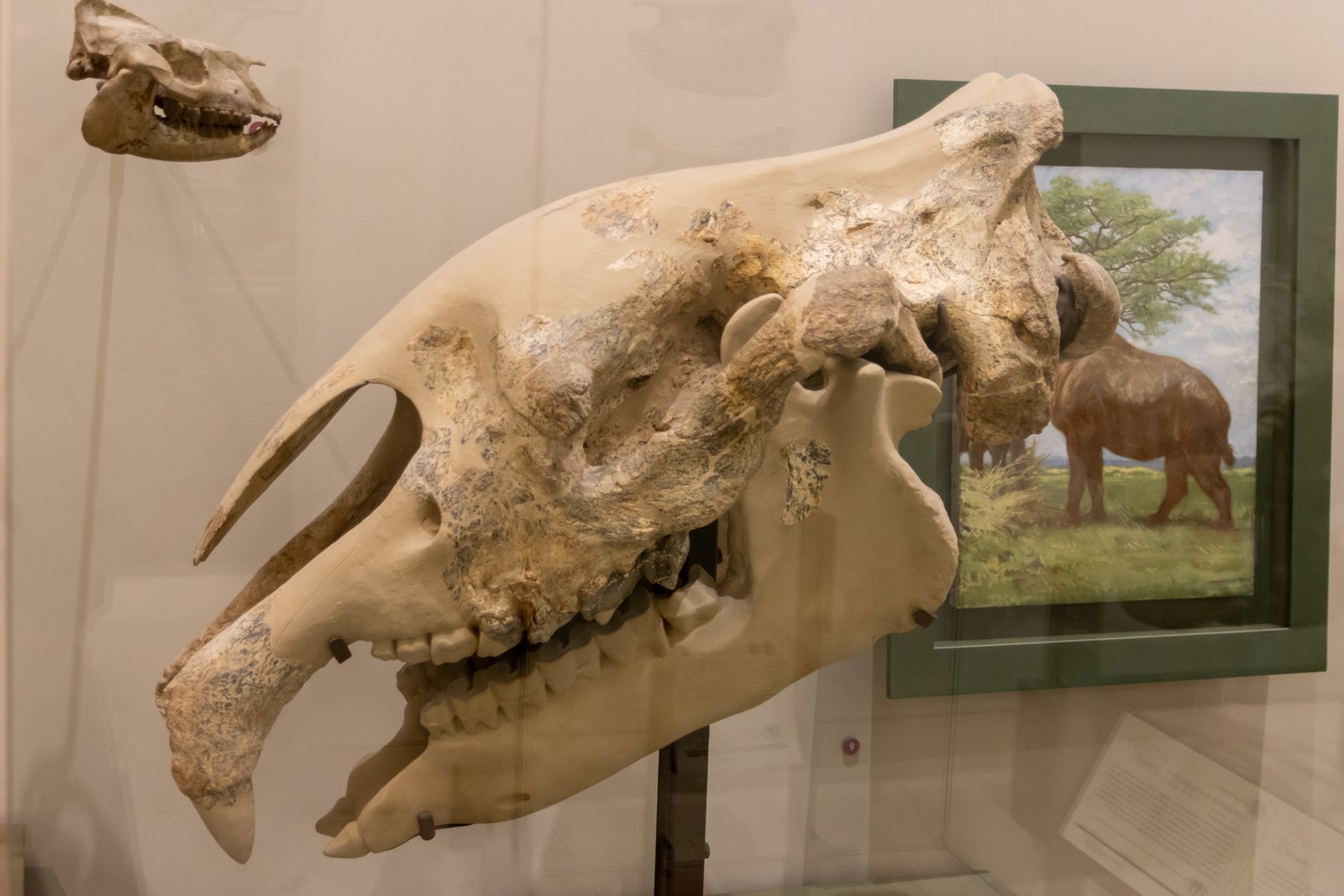
The head alone was about 1.3 meters long. Instead of horns it had a broad nasal boss, a bony bump where horns might otherwise have grown, which hints that the animal may have carried a muscular upper lip or a short trunk, something like a tapir crossed with an elephant seal. Its lower front teeth grew into a pair of downward-pointing tusks, probably used to strip branches and lever them into reach of its molars. Those molars were low-crowned and built for soft browse: leaves, twigs and fruit, not gritty grass.
Everything about the skeleton screams "carry a mountain". The limbs were columnar, like those of an elephant, with weight-bearing bones stacked vertically rather than angled. The feet had three broad toes each, splayed to spread the load. Even the vertebrae of the neck were massively built, because swinging a 1.3-meter skull and a browsing reach of over 7 meters is hard work for a spine.
How we met the biggest land mammal
For such a famous animal, Paraceratherium had a messy introduction to science. The first fossils surfaced in the Bugti Hills of Balochistan, in what is now Pakistan, and were described by the British paleontologist Clive Forster Cooper in 1911 under the name Paraceratherium. Over the following decades, bones found across Kazakhstan, Mongolia and China were given a parade of separate names, including Baluchitherium and Indricotherium, as researchers scattered across empires compared notes slowly and rarely.
It took most of a century, and a proper re-study of the fossils, to work out that most of those names described the same group of giant hornless rhinos, with Paraceratherium holding priority as the first name published. That is why the old books say Indricotherium while modern papers say Paraceratherium, and why museum plaques around the world have been quietly rewritten.
The best fossils came from Oligocene deposits between about 34 and 23 million years old, spread from Pakistan through Central Asia to Mongolia and northern China. This was a world of open woodland and scrub, seasonally dry, and full of strange company: hoofed creodont predators like Hyaenodon, the pig-like omnivores called entelodonts, and smaller rhinos and chalicotheres browsing below.
Life at the ceiling of the mammal world
An animal that size has almost no enemies once adult. No Oligocene predator in Central Asia could have done much to a 17-tonne Paraceratherium beyond irritating it. Calves were another story, and the presence of bone-crushing creodonts in the same deposits suggests that young giants lived dangerous lives until they outgrew the menu. That pattern is familiar from modern elephants, whose calves face lions and hyenas while adults answer to nobody.
Reaching that size was slow. Big mammals grow over many years and reproduce infrequently, carrying one calf at a time after long pregnancies. Every few years per female is the realistic rate for an animal like this. That made Paraceratherium's populations stable in a steady world but fragile in a changing one, because a species that cannot breed quickly cannot recover quickly either.
Was anything ever bigger?
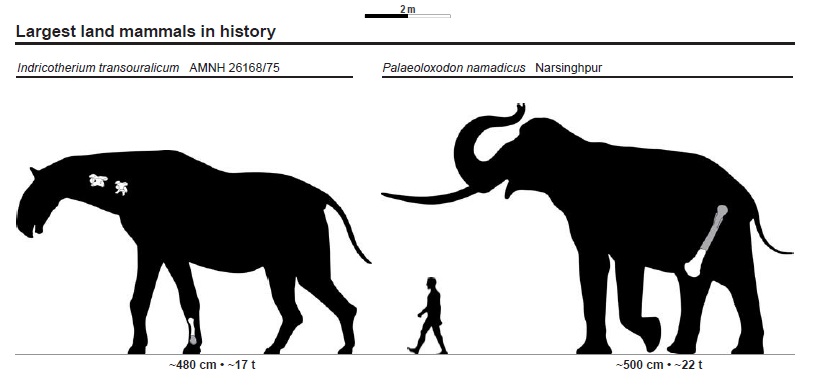
For decades Paraceratherium wore the crown unchallenged, but modern estimates have complicated the leaderboard. A gigantic extinct straight-tusked elephant, Palaeoloxodon namadicus, from Pleistocene India, has been reconstructed from a remarkable leg bone as potentially taller and heavier, perhaps around 22 tonnes. The honest summary is that Paraceratherium remains the largest land mammal known from well-preserved skeletons, while Palaeoloxodon may have matched or edged past it based on fragmentary evidence. Either way, the two were in a class nothing alive today comes close to.
Why giants disappear
Paraceratherium was gone by the end of the Oligocene, around 23 million years ago, long before any human existed to hunt it. Its decline lines up with a slow cooling and drying of Central Asia, which pushed open woodlands toward harsher, more open habitats. An animal that needed enormous amounts of high-quality browse, and reproduced only slowly, was exactly the wrong shape for that kind of change. Its closest relatives dwindled with it, and the giant branch of the rhino family tree simply ended.
There is a physical ceiling here too. On land, body size runs into hard limits: food quality, heat dissipation, the strength of bone and the sheer logistics of finding enough to eat every day. Whales escape those limits by floating in water, which is why the blue whale dwarfs anything that ever walked. On solid ground, Paraceratherium and Palaeoloxodon represent something close to the practical maximum, and both reached it by very different routes.
Other giants on this site walked similar tightropes. Megatherium in South America and the woolly mammoth of the Ice Age were specialists that thrived until their worlds shifted, whether by climate or by human hands. Even Argentavis, the heaviest flying bird, traded flexibility for extreme size and eventually lost the bet.
Two ways to survive deep time
Set Paraceratherium beside Triops and you get two opposite survival strategies. Paraceratherium bet everything on being too big to fail: enormous, long-lived, nearly invulnerable as an adult, but slow to reproduce and dependent on a habitat that had to stay generous. When the environment stopped cooperating, the strategy collapsed completely, and the lineage vanished without descendants.
Triops bet the other way. Tiny, short-lived, wildly fertile, and capable of sitting out bad decades as dried eggs, it has crossed more than 200 million years of extinctions essentially unchanged, as we have covered before. One strategy buys millions of years of dominance and a spectacular end; the other buys immortality through humility. Paraceratherium shows how far the giant bet could go, and, just as clearly, why nobody is betting that way anymore.