Published October 22, 2026, 15:30 · by the Triops.me Editorial Team · Back to Articles
Prototaxites: The Giant Fungus Before the Forests
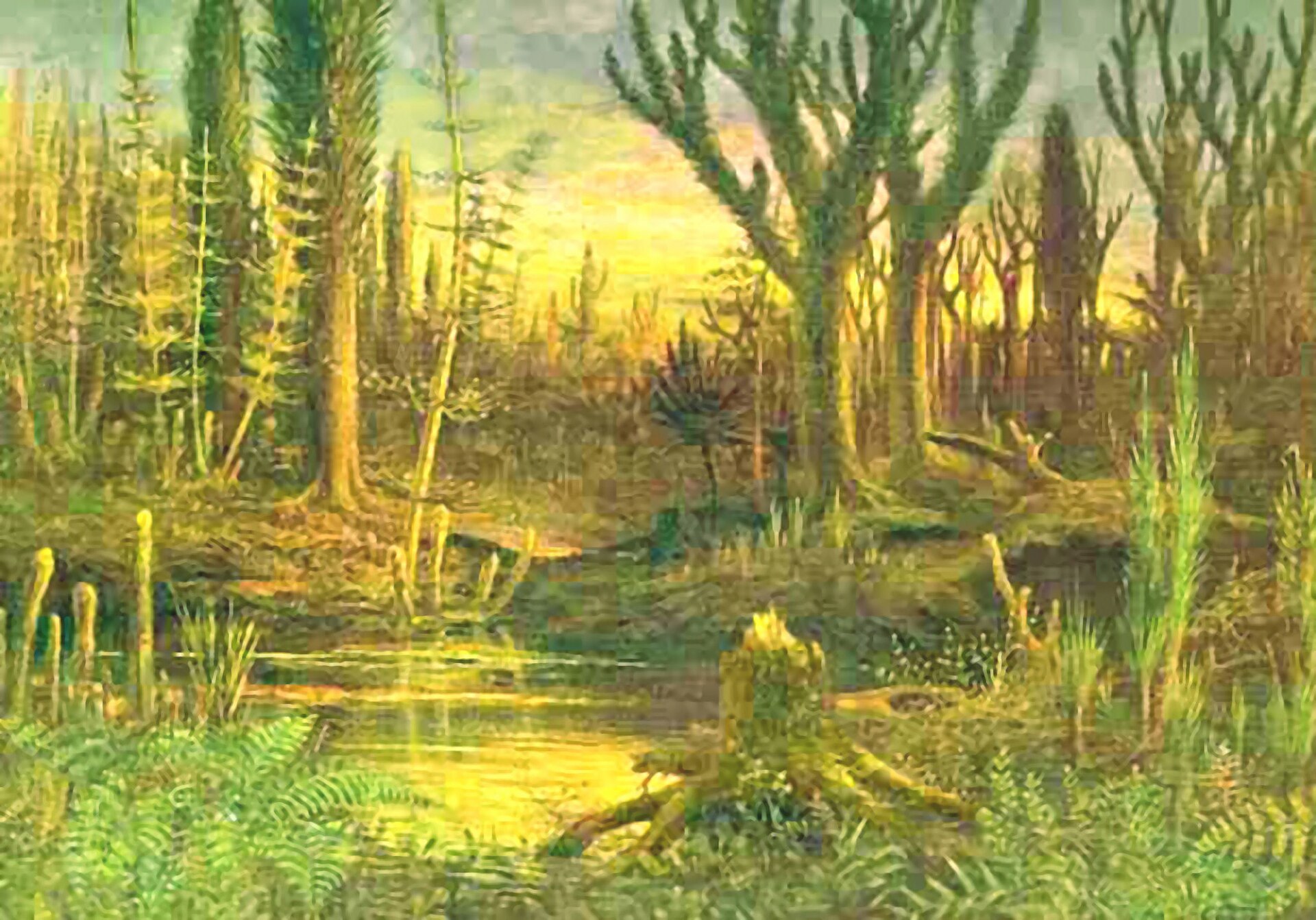
Every landscape has a tallest living thing. Today that title belongs to the coast redwoods of California. Roughly 400 million years ago, long before the first forest, the tallest thing on dry land was not a tree at all. It was a column of tangled threads up to 8 metres high and a metre wide, standing alone on a shore where the biggest green plants were the size of your hand.
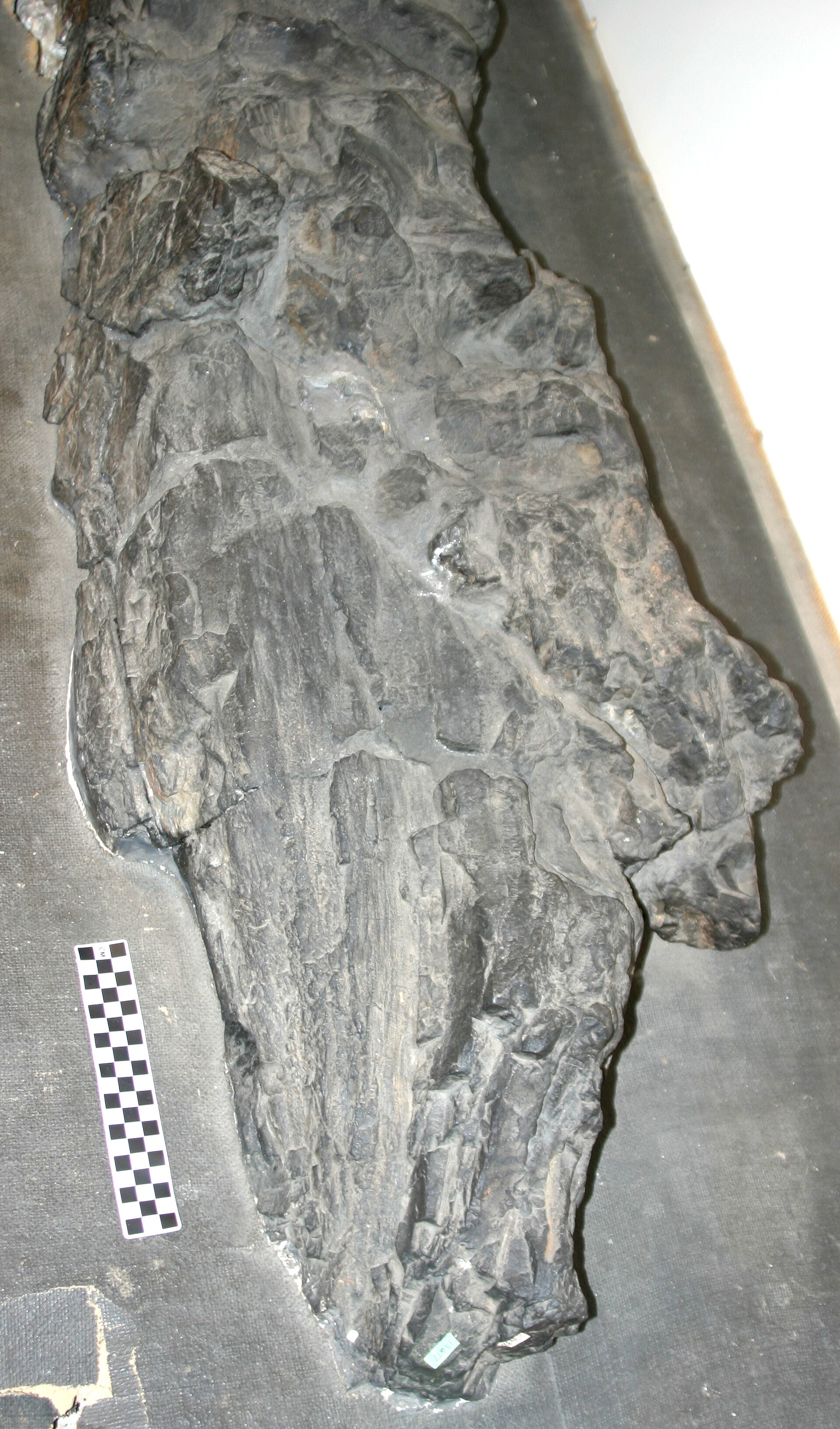
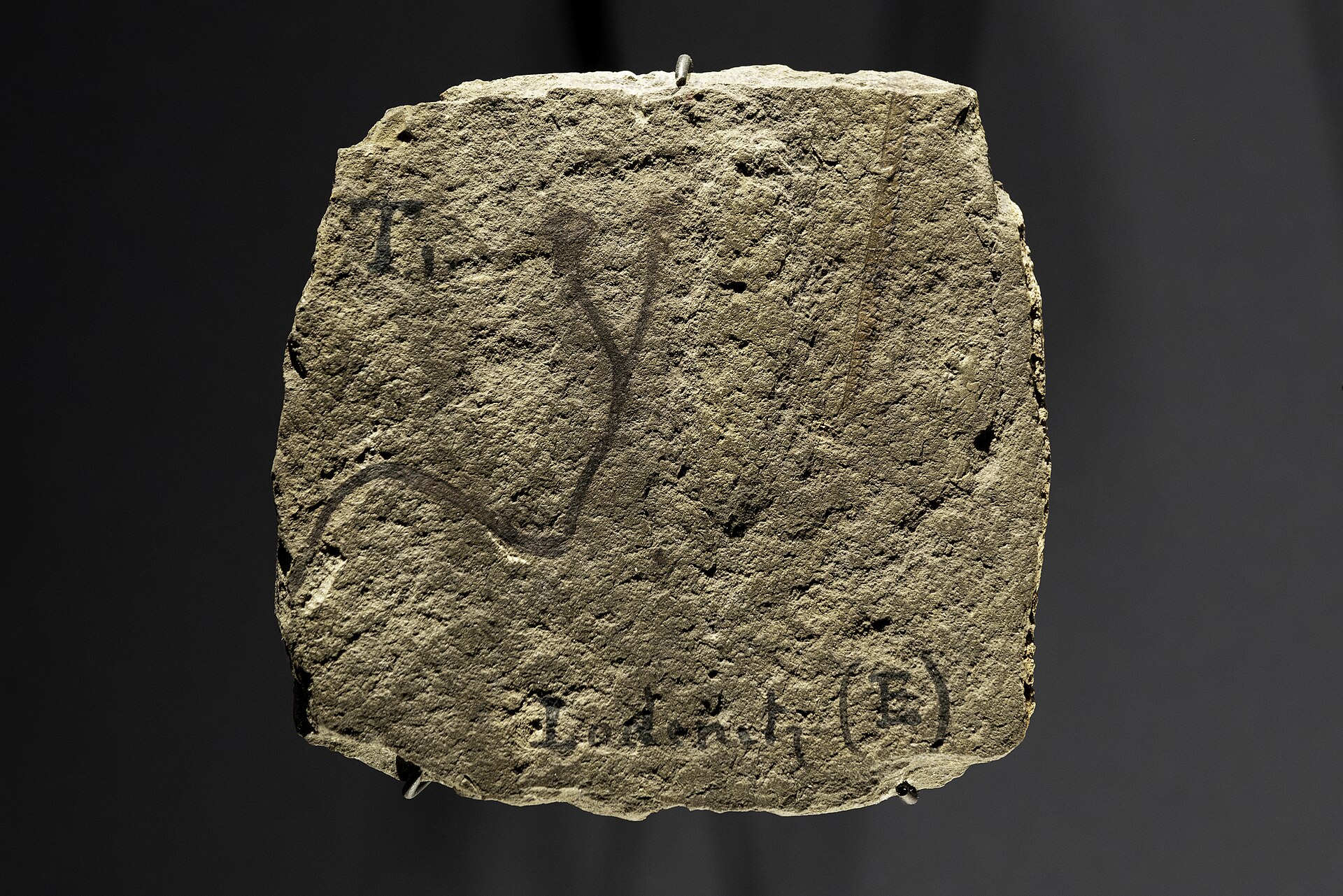
The organism is called Prototaxites, and for more than a century nobody could agree on what it was. Its fossils turn up in Silurian and Devonian rocks across several continents, from Scotland to Tennessee to the Sahara, and each one looks from a distance like a stripped tree trunk. Cut one open, though, and there is no wood, no bark, and no plant tissue of any kind. There are only tubes, woven together like rope.
A Trunk Without Wood
Under the microscope the trunk falls apart into two kinds of filaments. Thick walled skeletal tubes, 20 to 50 micrometres across, run the length of the fossil without branching. Thinner generative filaments, 5 to 10 micrometres wide, branch constantly and carry perforated internal walls. That last feature, a germ pore in each cross wall, is known in nature from only two groups: red algae and fungi. Concentric bands wrap around the trunk and show that the organism added outer layers over many years, the way a perennial grows.
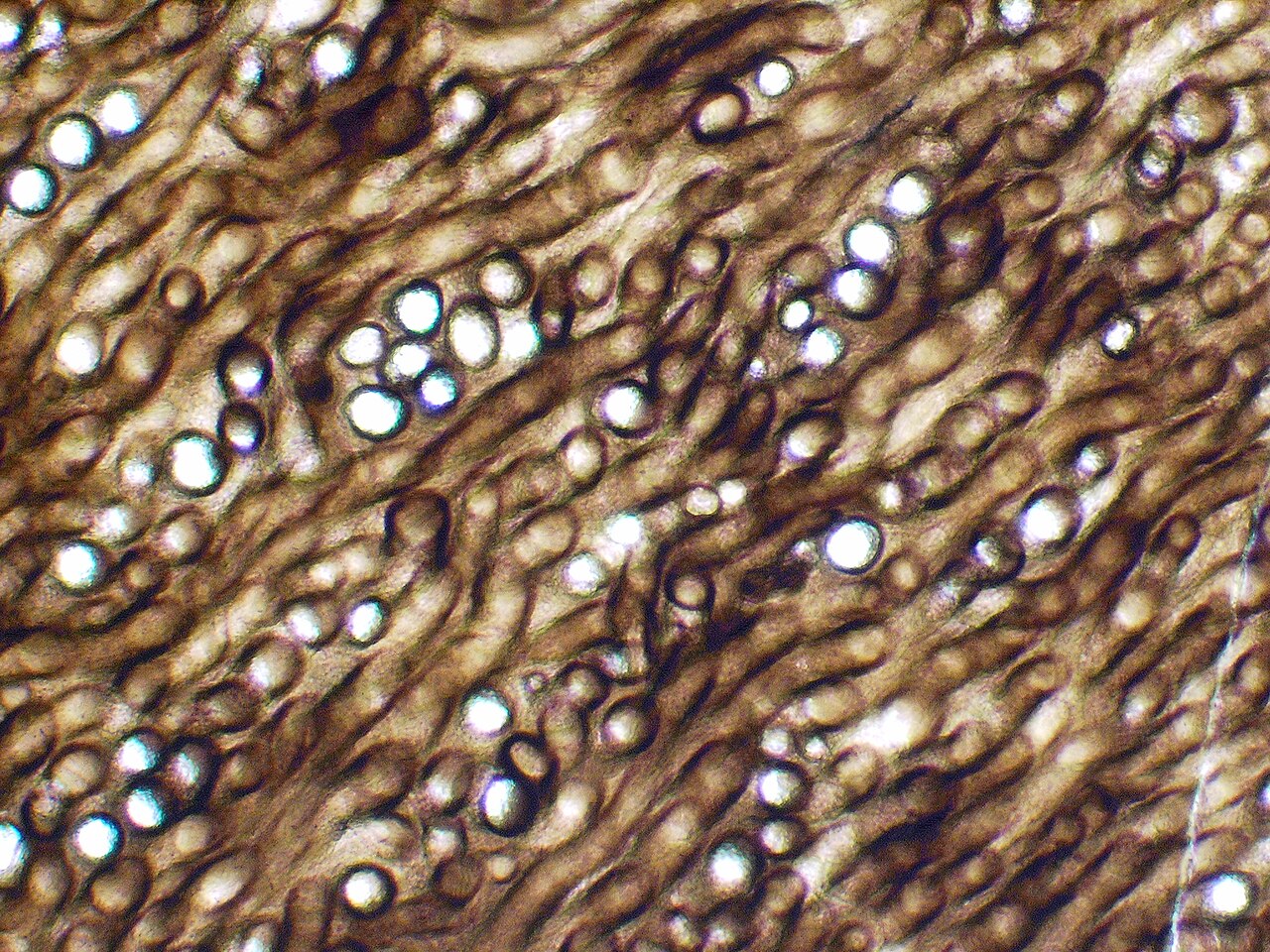
Nothing about it matches a plant. There are no vessels, no cellulose reinforced cells, no annual rings of the kind wood produces. The fossil is best read as a sporophore, the standing fruiting body of a much larger organism spread through the soil beneath it, a mat of mycelium that may have covered ground the way a fungal network does today.
First Fir, Then Alga, Now Fungus
The story starts in 1843, when Canadian geologist Sir William Logan hauled a fossil trunk more than two metres long out of Devonian rock on the Gaspé Peninsula in Quebec. Fourteen years later John William Dawson studied it, decided it was a rotting conifer, and named it Prototaxites loganii, loosely "first yew".
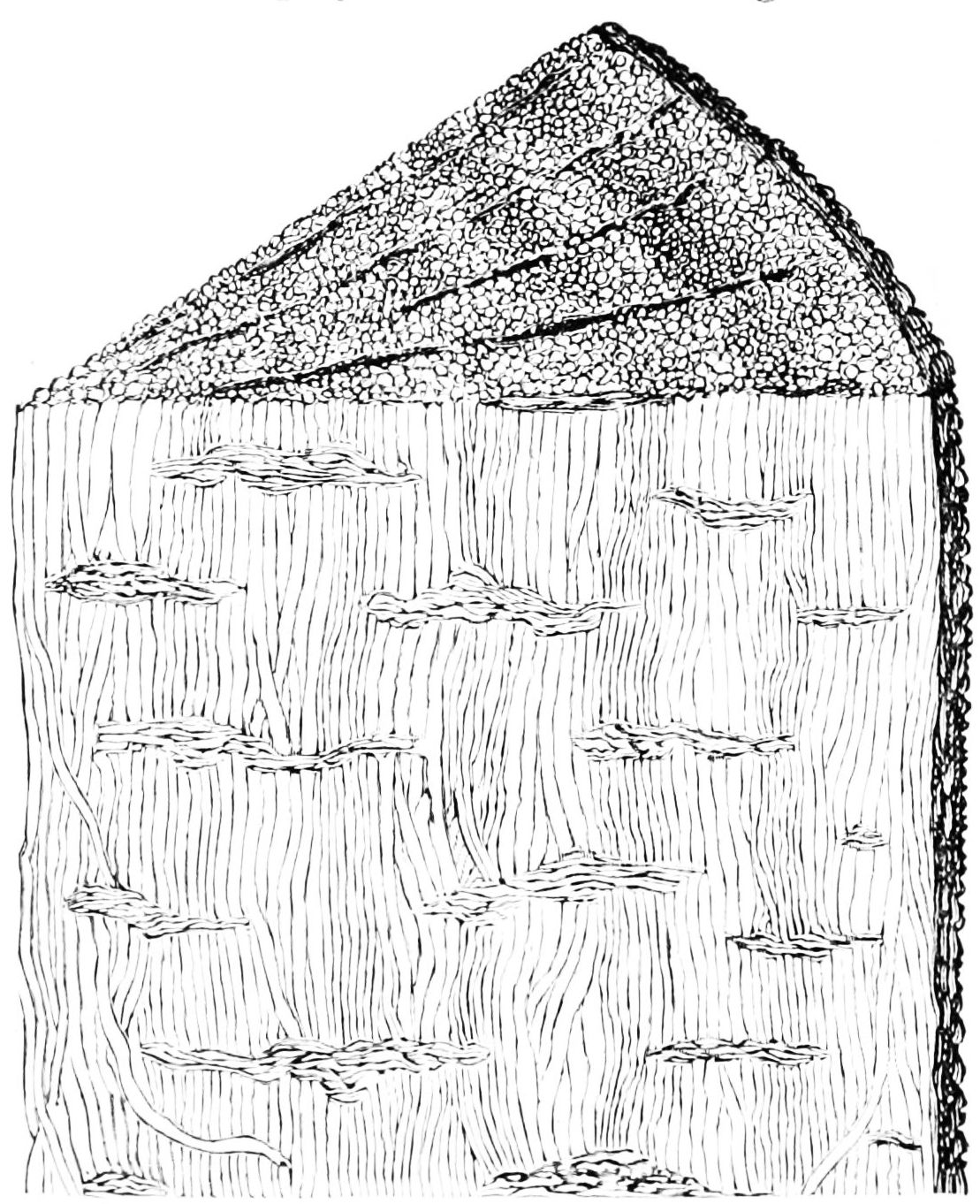
Dawson defended that reading for decades. In 1872 the British botanist William Carruthers mocked the whole idea, argued it was a giant marine alga, and proposed the name Nematophycus, "stringy alga". Botanical naming rules kept Dawson's unfortunate name anyway.
The argument dragged on because the fossil has no diagnostic features that match any modern group. Francis Hueber spent twenty years on it and published his verdict in 2001: it is a fungus. Most researchers were sceptical, until a 2007 isotope study by a team including Hueber and K.C. Boyce measured wildly variable carbon isotope ratios in different specimens. Photosynthetic organisms of one era draw carbon from the same atmospheric pool and cluster together; Prototaxites scattered all over the chart. That pattern points to a heterotroph, something that fed on other organic matter rather than sunlight.
The debate has not gone quiet. A 2022 paper suggested the trunk was really a fungal rhizomorph that grew on its side, perhaps partly underground, transporting water across the landscape. Then in 2026 a study of specimens from the Rhynie chert in Scotland reported that Prototaxites lacks chitin, the signature molecule of modern fungi, and proposed it belongs to an extinct lineage of its own, separate from plants and fungi alike. A published comment on that paper disputes the spectroscopic analysis, so the classification is wide open again.
The Scale Problem
Whatever it was, Prototaxites had a serious size advantage. The Silurian land plant Cooksonia, one of the pioneers of the first soils, reached about 6 centimetres. Invertebrates were the only other complex life on dry land. For tens of millions of years a standing Prototaxites column was a hundred times taller than anything else around it, which earns it the plain title of largest land organism of its time.
Height buys a spore bearer two things: wind. Spores released from 8 metres up travel further than spores released from 6 centimetres, and on a flat Silurian shore there was nothing else in the way. Alternatively, if the columns carried a skin of symbiotic algae or acted like a giant lichen, extra height meant extra light. The heterotroph reading pushes the other way: such a large body would have needed an extensive mycelial network below ground, and the root-like fills found in Early Devonian rocks have been read as the channels that moved nutrients up into the trunk.
Something Was Living Inside It
Arthropods found the columns long before they found wood. Boreholes drilled into Prototaxites are known from both the Early and the Late Devonian, and some specimens contain mazes of animal tubes with the organism growing back into the voids. Boring animals were at work hundreds of millions of years before woody stems evolved, which raises the possibility that when real trees finally appeared, those same borers simply moved across to the new food supply. One older hypothesis even blames the tunnels, in part, for the organism's disappearance.
The End of the Columns
Prototaxites disappears from the fossil record in the Late Devonian, around 370 million years ago, at exactly the moment vascular plants got serious. Root systems deepened, leaves spread, and the first genuine forests closed over the ground. Once trees could supply structure and height on their own, a giant thread organism had nothing left to offer. The Coal Age that followed belongs to scale trees and giant clubmosses, and you can read that takeover in the coal swamp forests that laid down Europe's and America's coal seams.
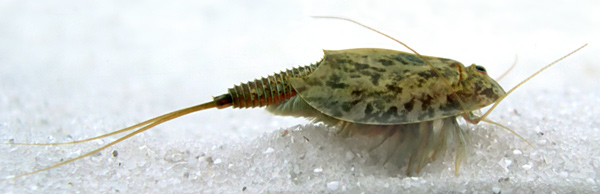
There are no descendants. Not a single living thing carries the Prototaxites body plan forward, which makes it the opposite of the survivors celebrated on this site. Stromatolite builders, the oldest living monuments, are still stacking mats in Shark Bay. Triops reached its modern shape in the Triassic and still hatches in the same rainwater puddles today, more than 200 million years later.
Most of Earth's history runs on designs that were tried once and then dropped. Prototaxites is the starkest example: a dominant, continent spanning organism that ruled dry land for roughly 50 million years and then left nothing behind but rock, a name that still means "first yew", and an argument about what kind of life it was. For the winners of that lottery, see the living fossils that time forgot.