Published 2026-09-14 · by the Triops.me Editorial Team · Back to Articles
Sarcosuchus: The SuperCroc That Hunted Dinosaurs
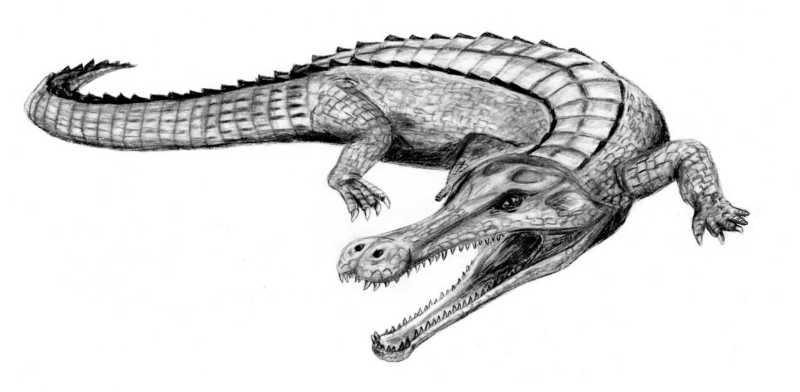
In 1964, geologists prospecting for dinosaur bones in the Ténéré Desert of Niger pulled a jaw fragment from 110-million-year-old rock. It was over a meter long and belonged to something no one had a name for. When more of the animal surfaced decades later, the numbers settled in: nearly 12 meters from snout to tail, a skull the size of a rowboat, and teeth the length of your hand. Scientists dubbed it Sarcosuchus, flesh crocodile. National Geographic would later brand it the SuperCroc, and the name stuck.
Crocodilians have a reputation for being unchanging survivors, and this site has covered that idea before. But Sarcosuchus was not a crocodilian at all. It belonged to an earlier dynasty of croc-line reptiles that experimented with shapes and lifestyles modern crocodiles never tried. Understanding what it was, and why it vanished, says as much about the limits of bigness as it does about the power of it.
A graveyard in the desert
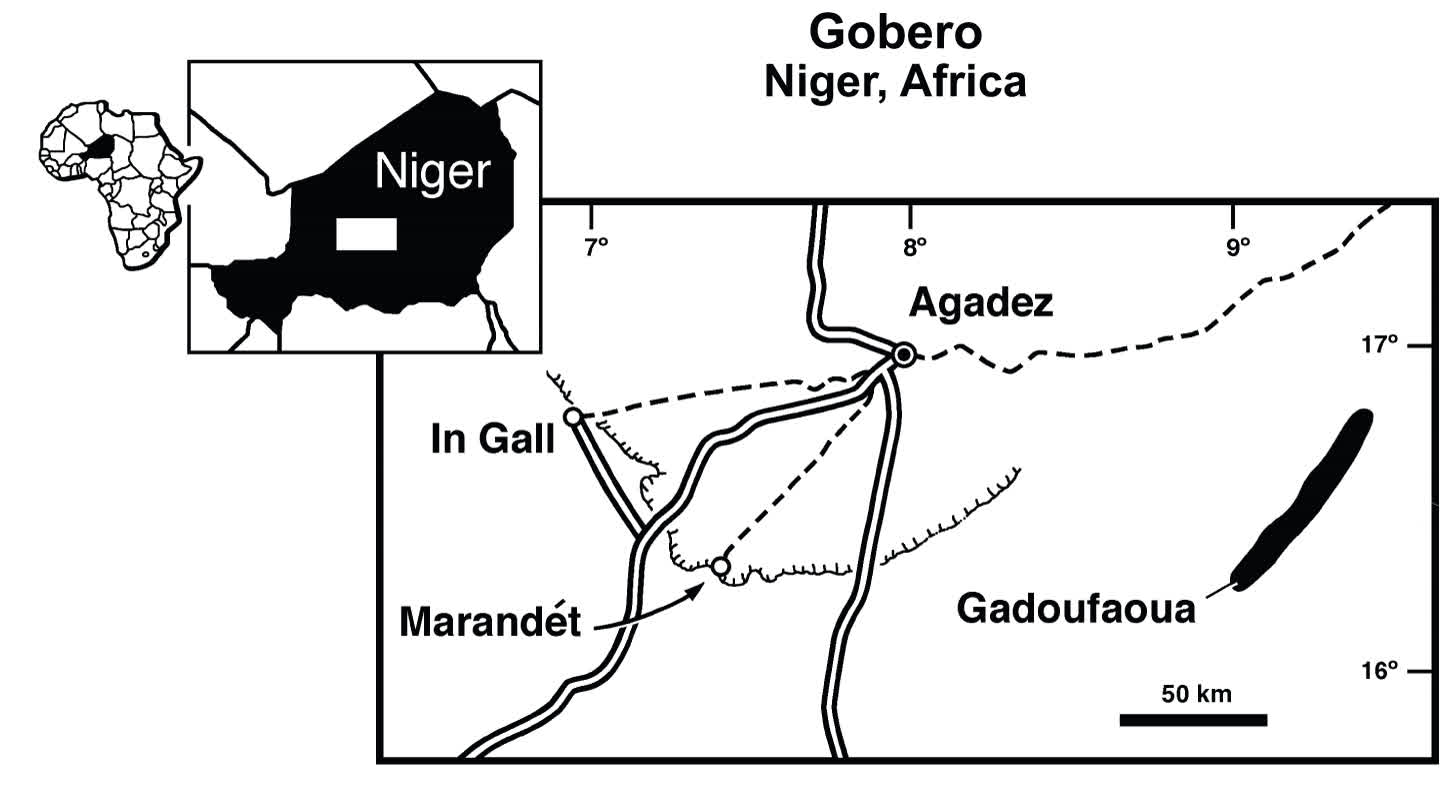
The rocks of Gadoufaoua, in what is now Niger, formed from the sediments of a vast river system that crossed green Cretaceous Africa. Today the area is one of the harshest deserts on Earth, and fossils literally weather out of the ground and lie on the surface. The site has yielded Sarcosuchus alongside the sail-backed fish-eater Suchomimus, the lawn-mowing sauropod Nigersaurus, and a small duck-billed relative called Ouranosaurus. In life, all of them shared a river where a twelve-meter predator patrolled the shallows.
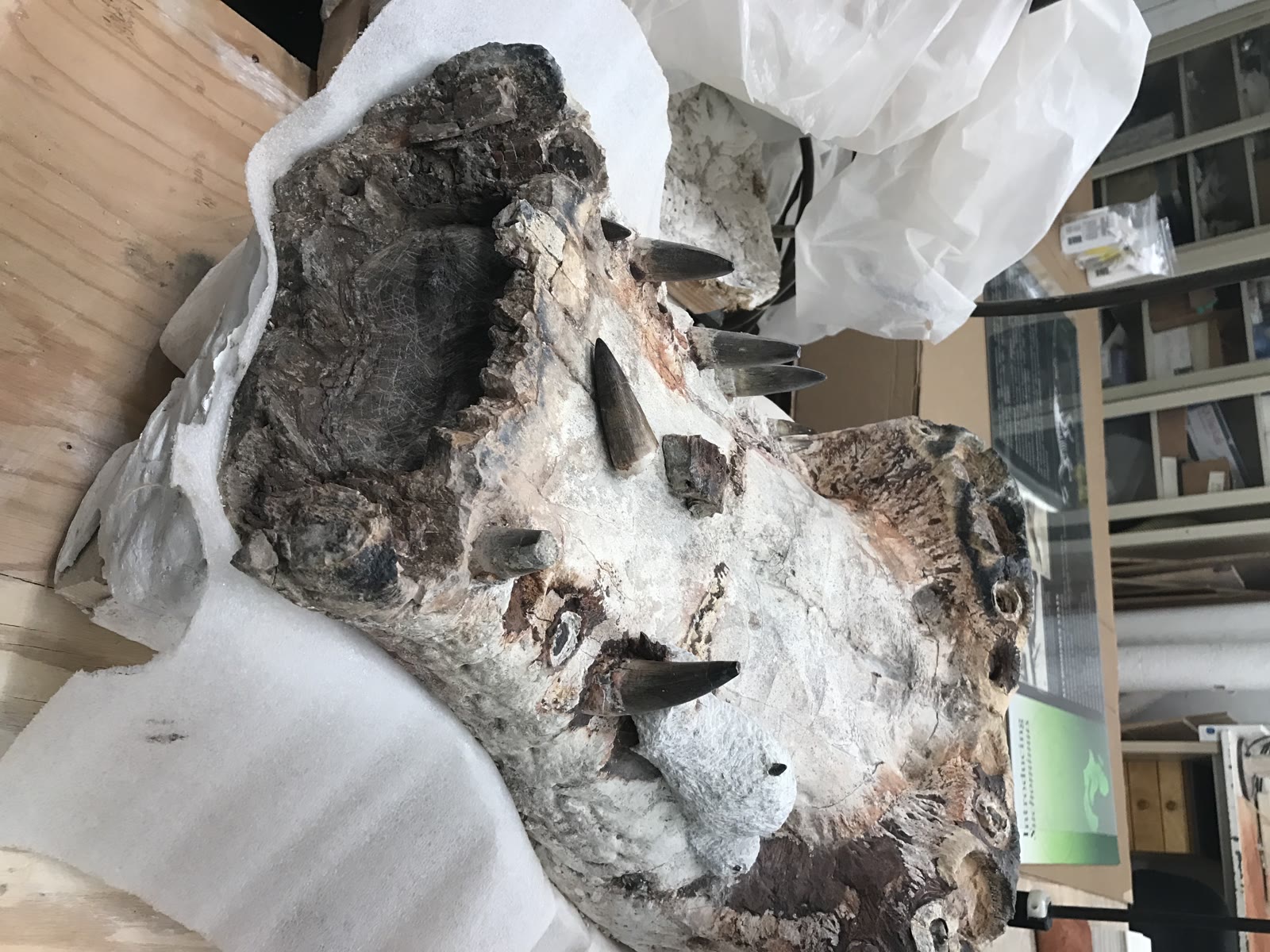
Paul Sereno's 2000 expedition recovered several individuals of different ages, which allowed the first serious study of how Sarcosuchus grew. The biggest skull, specimen MNN 604, measures 1.6 meters long. Scaling from growth rings in the bone (the same trick used with tree rings) suggests the largest animals reached 11 to 12 meters and may have weighed around 8 tonnes, roughly twice the mass of the largest saltwater crocodiles alive today.
A bulla, and a snout full of weapons
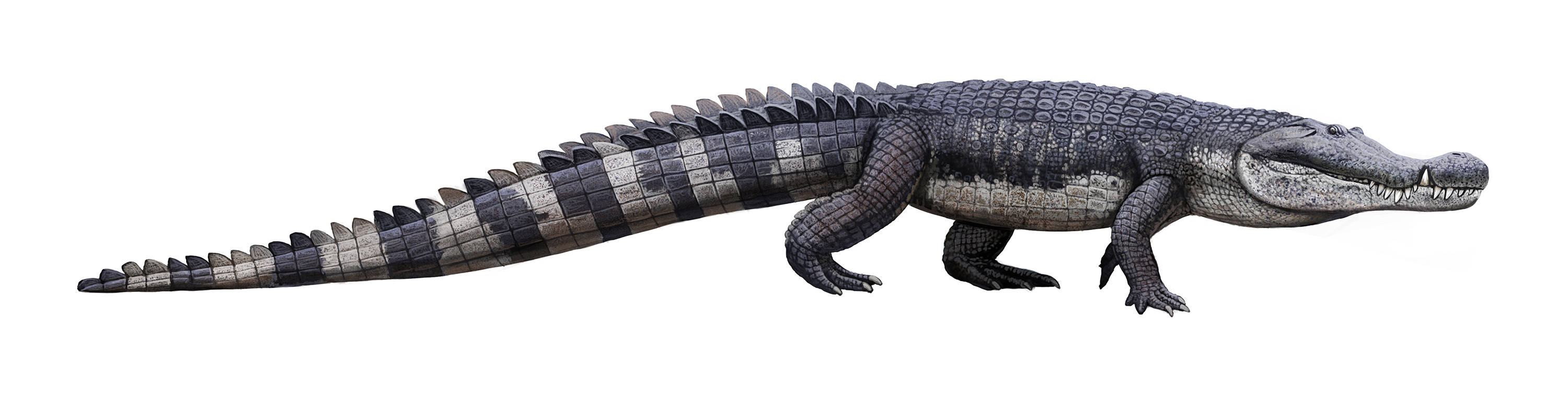
The strangest feature of Sarcosuchus is a hollow bulge at the tip of its snout, the bulla. Nothing like it exists in any living crocodile. It was built from thin, hollow bone and enlarged with age, so it may have worked like a resonating chamber, letting a four-tonne male produce a sound that carried across kilometers of floodplain. It is a reminder that fossil bones record behavior we can only guess at.
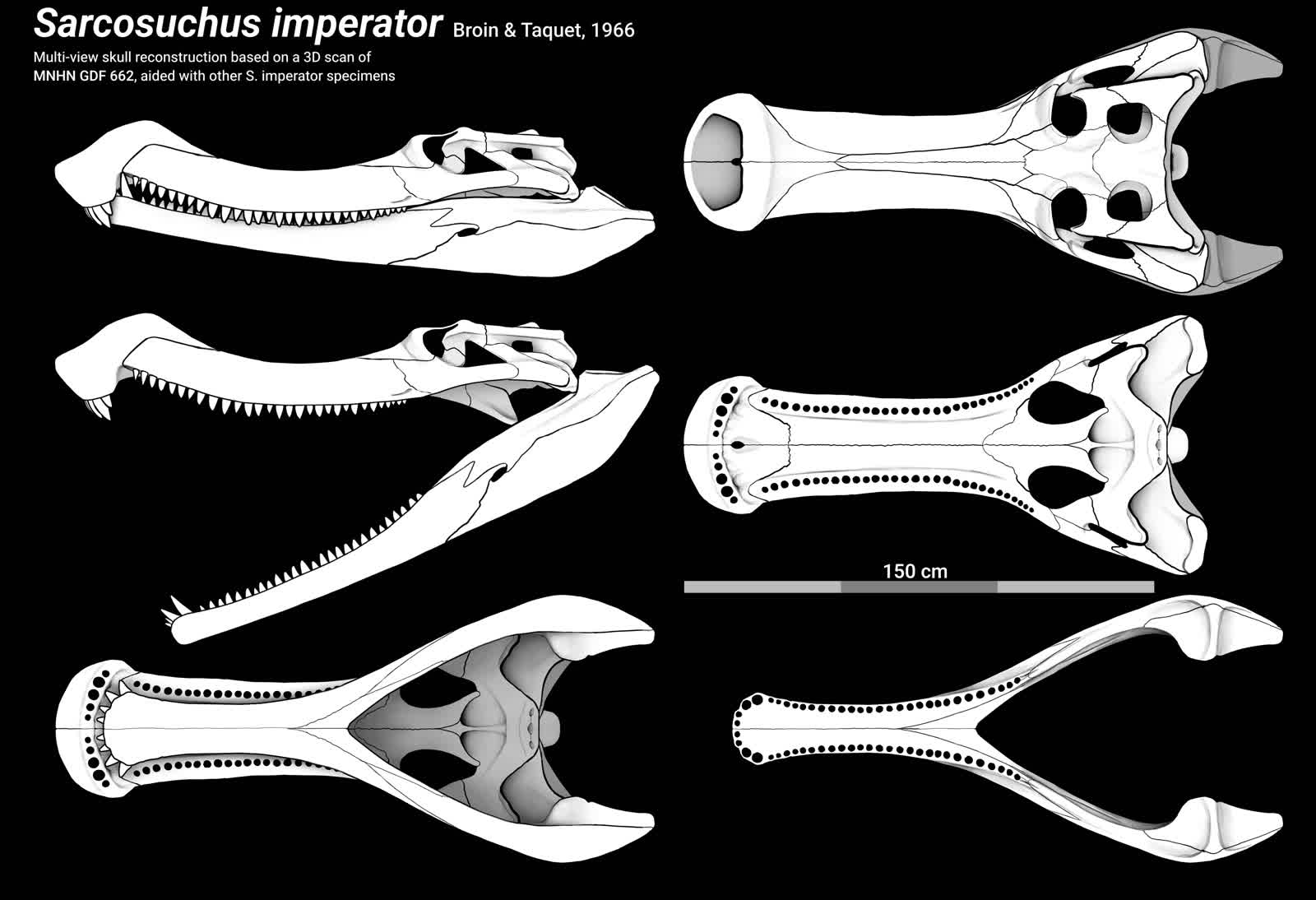
The skull itself is long, narrow, and stiff, with 30 to 36 teeth in the upper jaw and about 31 in the lower. Unlike modern crocodiles, whose jaws interlock, the Sarcosuchus upper and lower teeth meshed together at the jaw margin, like a pair of pincers. That grip was made for fish, and the river that preserved it teemed with giant lungfish, some as long as a person is tall. But bone beds hold harder evidence: coprolites and bite marks point to prey far beyond fish. Sarcosuchus shared its water with Ouranosaurus and Nigersaurus, and puncture wounds matching its tooth size have been found on dinosaur bones from other sites in the same region. The SuperCroc was not a picky eater.
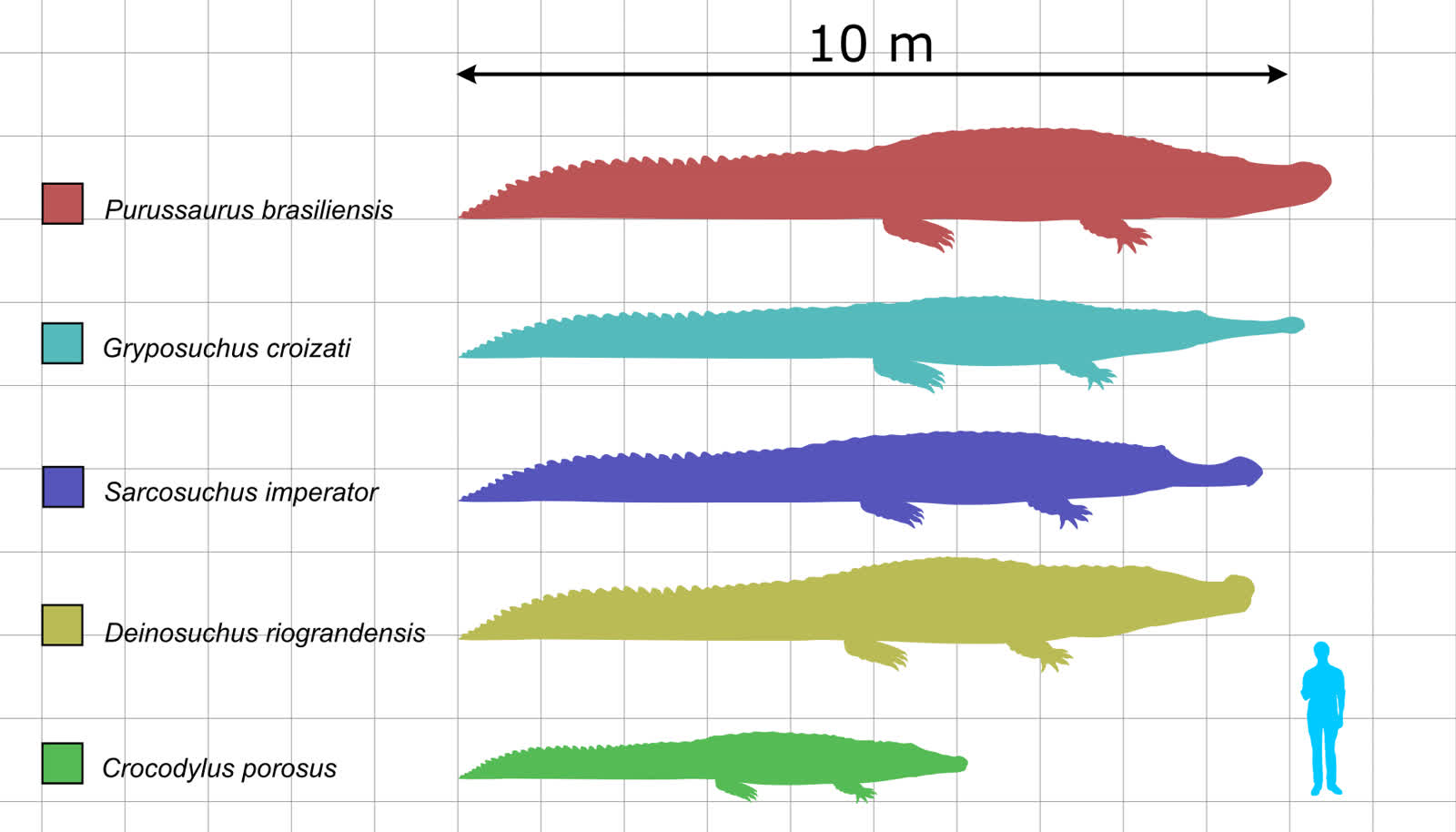
How does it stack up against other giant crocs? Deinosuchus, the alligator-relative of Late Cretaceous North America (covered in its own article here), likely reached about 10 meters. Purussaurus, a Miocene caiman, was in the same range. Sarcosuchus is generally considered the longest, but its build was more lightly armored, so estimates of its mass vary. What is certain is that a giant croc-line predator evolved at least three separate times, on three separate continents, in three separate eras. Evolution kept re-running the experiment, because a big ambush hunter in a river is simply a design that works.
Not a modern crocodile, and proud of it
Here is the twist. Sarcosuchus lived alongside crocodiles, but it was not one. It sat outside the crown group Crocodyliformes on the pholidosaurid branch, an early offshoot of the croc line. Modern crocodiles belong to a family that radiated later, and the two look alike for the same reason sharks and ichthyosaurs do: ambush predation in water rewards the same body plan again and again.
The eyes of Sarcosuchus opened partly sideways rather than nearly straight up like a modern crocodile's, a detail that has fed a long-running debate about how much time it spent at sea or in open water. Its back was armored with rows of bony scutes, and its growth rings suggest a slow, decades-long maturation. It was, in short, its own kind of animal, built by the same pressures that built today's crocodiles but never part of their club.
Why bigness was not enough
Sarcosuchus disappeared from the fossil record well before the end of the Cretaceous. The exact cause is unclear, but the pattern is familiar: the great river systems of Cretaceous Africa shifted, the ecosystems around them reorganized, and specialists with enormous caloric demands are always the first to feel a shrinking base. When the rivers changed, the giants changed with them.
Compare that with a creature this site celebrates daily. Triops never grows more than a few centimeters, lives a few months at most, and survives droughts by leaving eggs that wait in the dust for rain. Its strategy is the mirror image of the SuperCroc's. Sarcosuchus bet everything on size, on owning the top of its food web. Triops bets on smallness, speed, and eggs that outwait catastrophes. One strategy built an animal that ruled its river for millions of years and then vanished without descendants. The other produced a lineage that has been resetting the clock since the Triassic and shows no sign of stopping.
Bigness wins battles. Survivability is a different contest, and it is usually won by the small, the patient, and the adaptable. Sarcosuchus is the best argument for that idea that has ever been pulled out of a desert.