Published October 12, 2026, 14:48 · by the Triops.me Editorial Team · Back to Articles
Eusthenopteron: The Fish With Arms Before Arms Existed
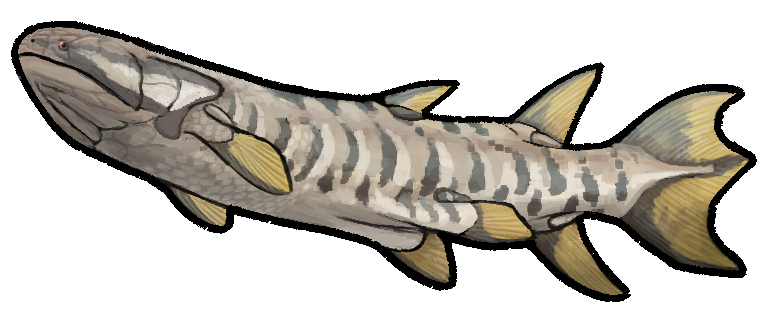
Something like 385 million years ago, in the shallow freshwater deltas of the Late Devonian, a fish called Eusthenopteron foordi cruised the bottom in search of prey. It never left the water. It had no fingers and no toes. It never took a single step on land. Yet inside those ordinary-looking side fins sat a humerus, a radius and an ulna, the same three bones that run from your shoulder to your wrist.
Eusthenopteron could not walk. It simply carried, quietly and completely, the plan that every land vertebrate would later build its limbs on. That is why this metre-long predator has spent a century and a half in textbooks, and why it still turns up in every argument about how vertebrates came ashore.
A Fish Named for Its Strong Fins
The first specimens came out of freshwater shale at Kiltorcan in County Kilkenny, Ireland, and were described in 1871 by the naturalist C. E. Leith Adams. The name he chose says it all: from the Greek for "strong fin". Similar fossils later turned up in the shale around Cathkin in Scotland and, most gloriously, in the Escuminac Formation at Miguasha in Quebec, today a UNESCO site famous for its Devonian fish fauna.
For most of the twentieth century Eusthenopteron was the animal every student met first when the subject turned to the origin of limbs. It was dissected, drawn, X-rayed and argued over by the great comparative anatomists, and it repaid them: few fossils of its age preserve the fin skeleton so completely.
What It Looked Like
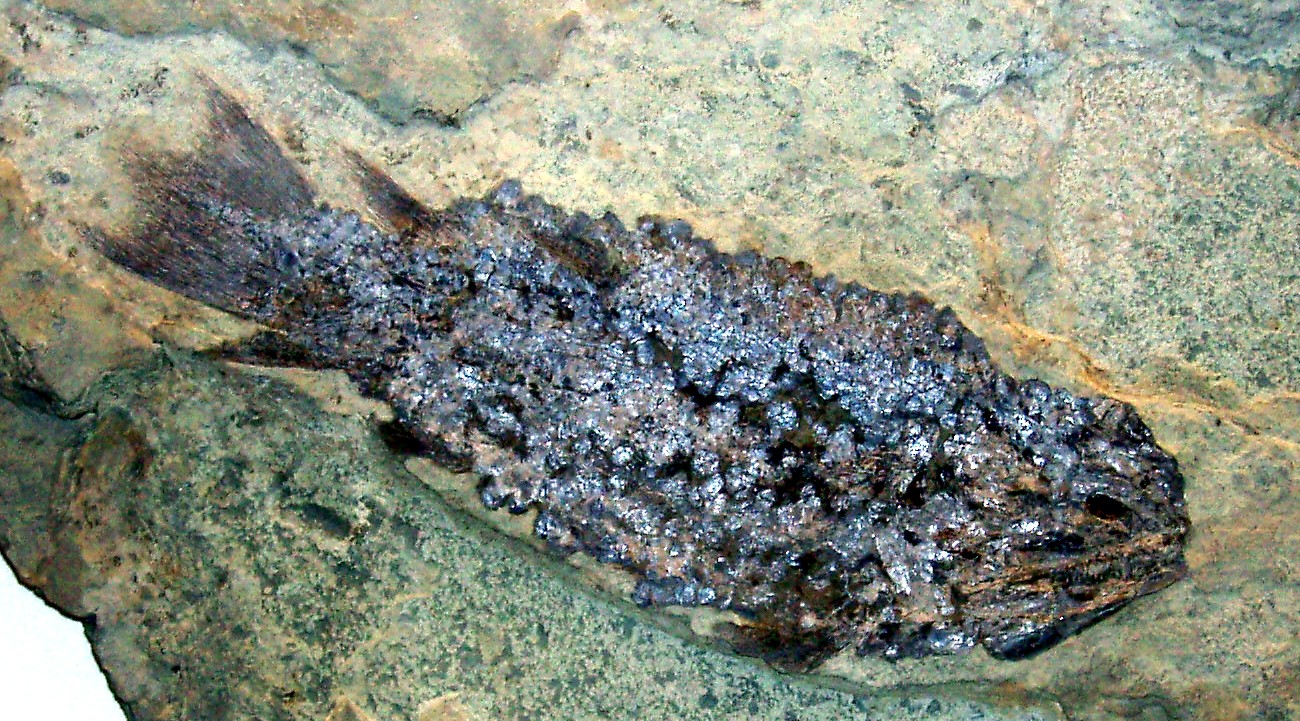
Picture a slender, elongated predator about a metre long, with a broad, flattened head, big eyes and a mouth full of sharp teeth. It carried two separate fins on its back and a narrow, three-lobed tail with a thin central blade running out of the middle. Its body was wrapped in cosmoid scales, heavy armour compared with the thin scales of a modern trout.
Instead of the thin, fan-shaped paddles of a salmon, Eusthenopteron had thick, muscular side fins that flared out from the body on a fleshy stalk. That stalk is the whole point. Inside it was bone, arranged in a pattern that no ordinary ray-finned fish possesses, and wrapped in muscle that let the fish push down against the sediment rather than simply paddle with it.
The Blueprint Inside the Fins
Take one of those pectoral fins apart and the order is unmistakable. First a single upper bone, the homologue of the humerus in your upper arm. Then two side by side, the radius and the ulna. Then a cluster of small chunky bones that stand in for the wrist, and beyond them a fan of slender rods.
The list stops there. There are no fingers, because fingers arrive later in the story. What Eusthenopteron has is the wrist and the elbow, already sorted out, waiting for a descendant to finish the job. Biologists call this pattern homology: the same underlying architecture, reused and reshaped, whether it ends as a hand, a wing, a flipper or a hoof.
Compare it with the animals that followed. Tiktaalik, described from Arctic Canada in 2006, pushed those fin bones into a working wrist with a real range of motion and added a neck the ancestors of fish never had. Ichthyostega went further, with a ribcage built for supporting weight on land and eight toes on each hind foot. Eusthenopteron sits just upstage of both, holding the script.
A Fish That Could Breathe Air
Its skull offers another hint. Two nostrils sat near the tip of the snout, and behind each eye yawned a wide tube called the spiracle. Work published in the early 1980s argued that this arrangement let Eusthenopteron draw in air at the surface and pass it into lungs that sat below the gut, which would have mattered in the warm, stagnant, oxygen-poor shallows it hunted in.
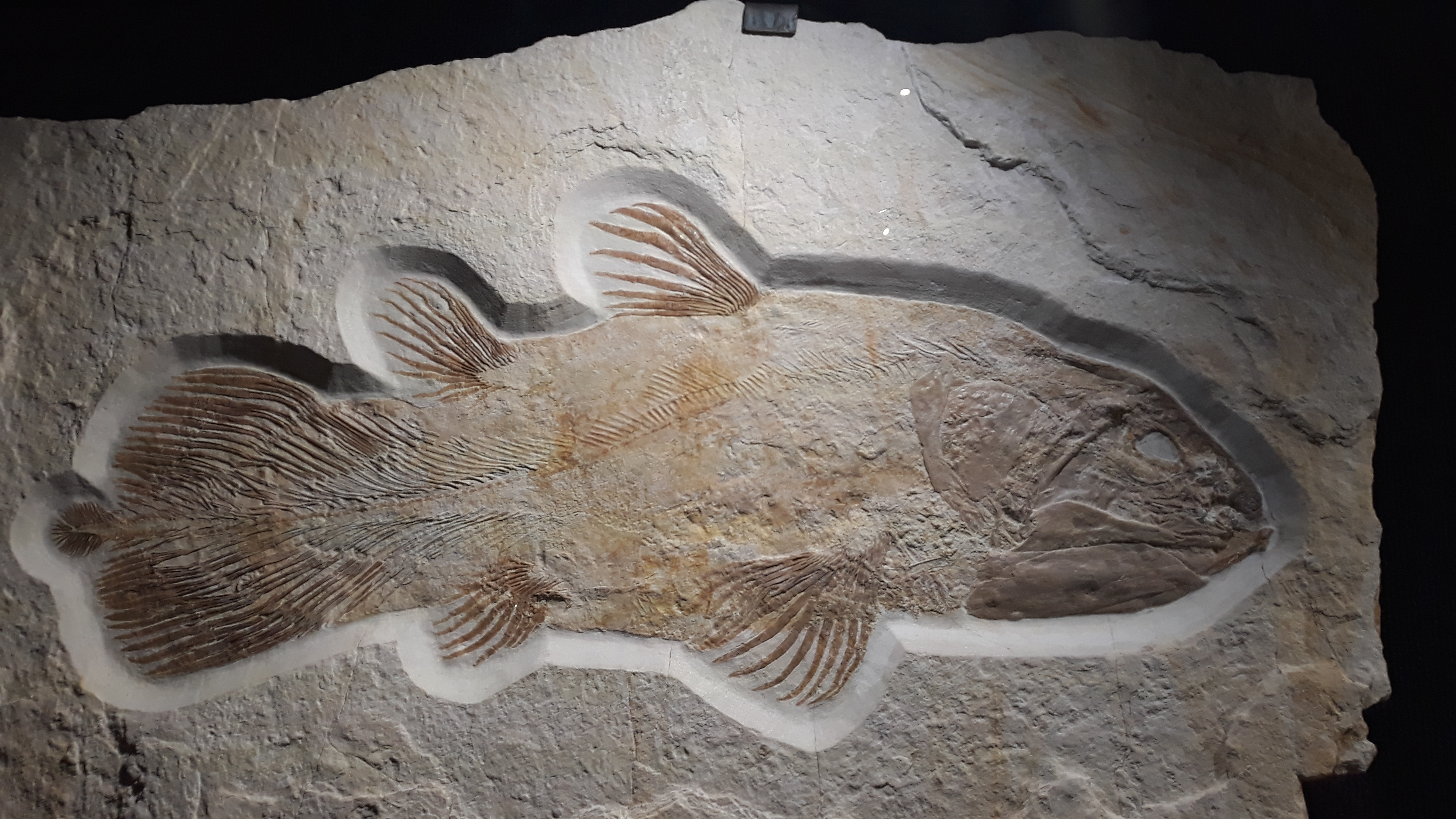
If so, it was using the same trick as its closest living relatives. Lungfish still haul themselves to the surface for a breath today, and the famous coelacanth is a cousin from the next branch along. Both are reminders that air-breathing began as a handy add-on for fish, not a revolution staged on dry land.
How It Lived and Why It Vanished
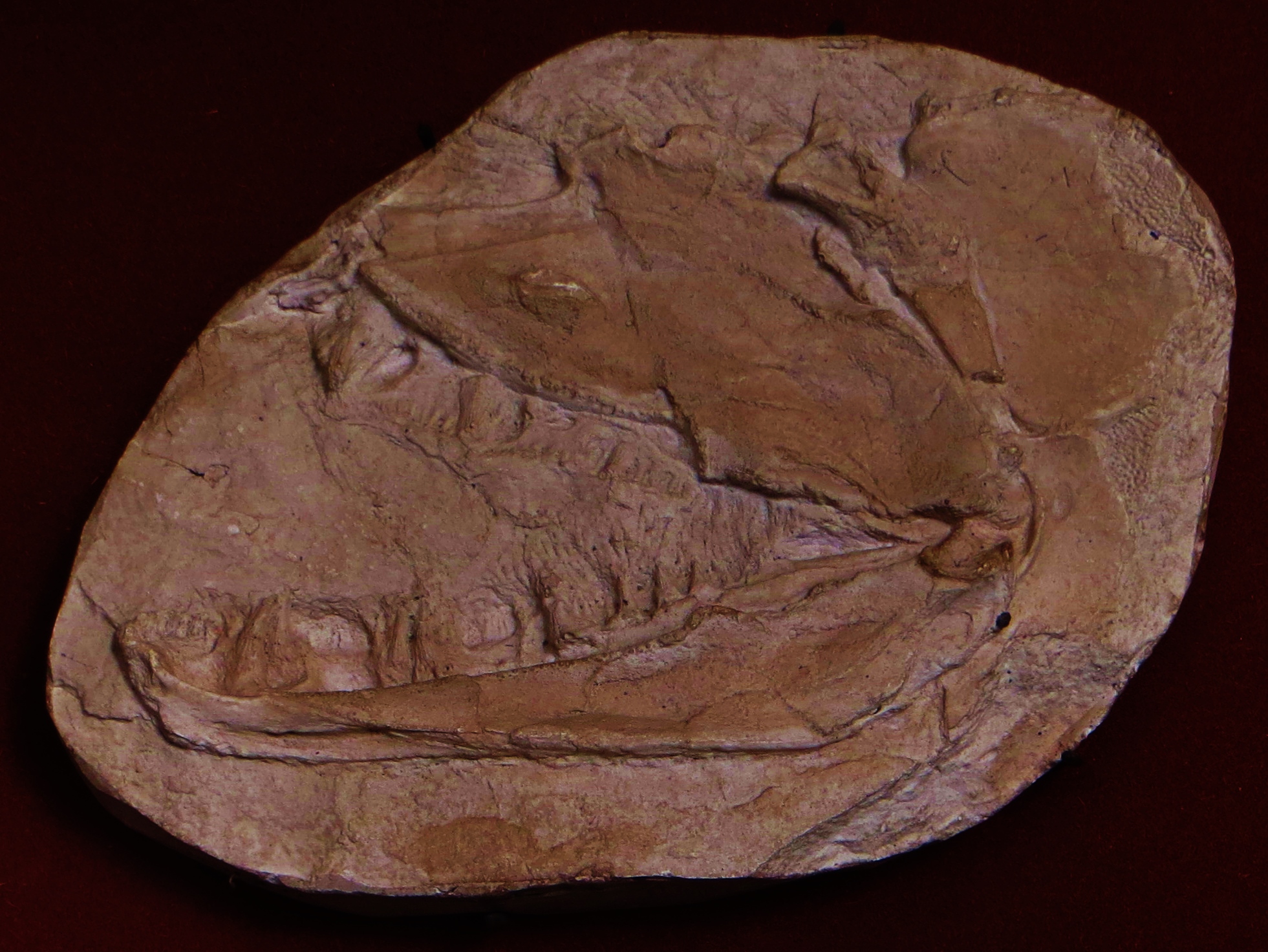
Eusthenopteron was a hunter of the pool floor. Its snout carried sensory canals, its bite was firm, and the roof of its mouth bore crushing plates that suggest hard-shelled prey alongside unlucky fish. In deltas crowded with armoured placoderms such as Dunkleosteus, keeping to the shallows and eating what you could crack was a reasonable career.
It did not outlast the Devonian. The mass extinction that closed the period about 372 million years ago stripped out the great armoured fishes, the reef builders and most of the lobe-finned experiments in shallow water. No Eusthenopteron has ever been found in rocks younger than that. By the time Triops and its relatives appear in Triassic ponds, more than a hundred million years later, this particular branch of the family tree was long cold.
Why It Still Matters
Few animals have done so much for so little glory. Eusthenopteron never walked, never crawled, never left a trackway in the mud. What it left instead was a set of bones, and the arrangement of those bones is still visible in your own forearm when you prop yourself up on a table. The whale's flipper, the bat's wing and the horse's leg are all restatements of the same Devonian sentence.
It is also a useful corrective to the cartoon version of evolution. There is no ladder with fish at the bottom and mammals at the top, only branches that keep the old parts and keep reworking them. Eusthenopteron is a branch that stopped, and because it stopped, it froze the blueprint in place for us to read.