Published 2026-09-19 · by the Triops.me Editorial Team · Back to Articles
Xiphactinus: The Fish That Died Eating Dinner
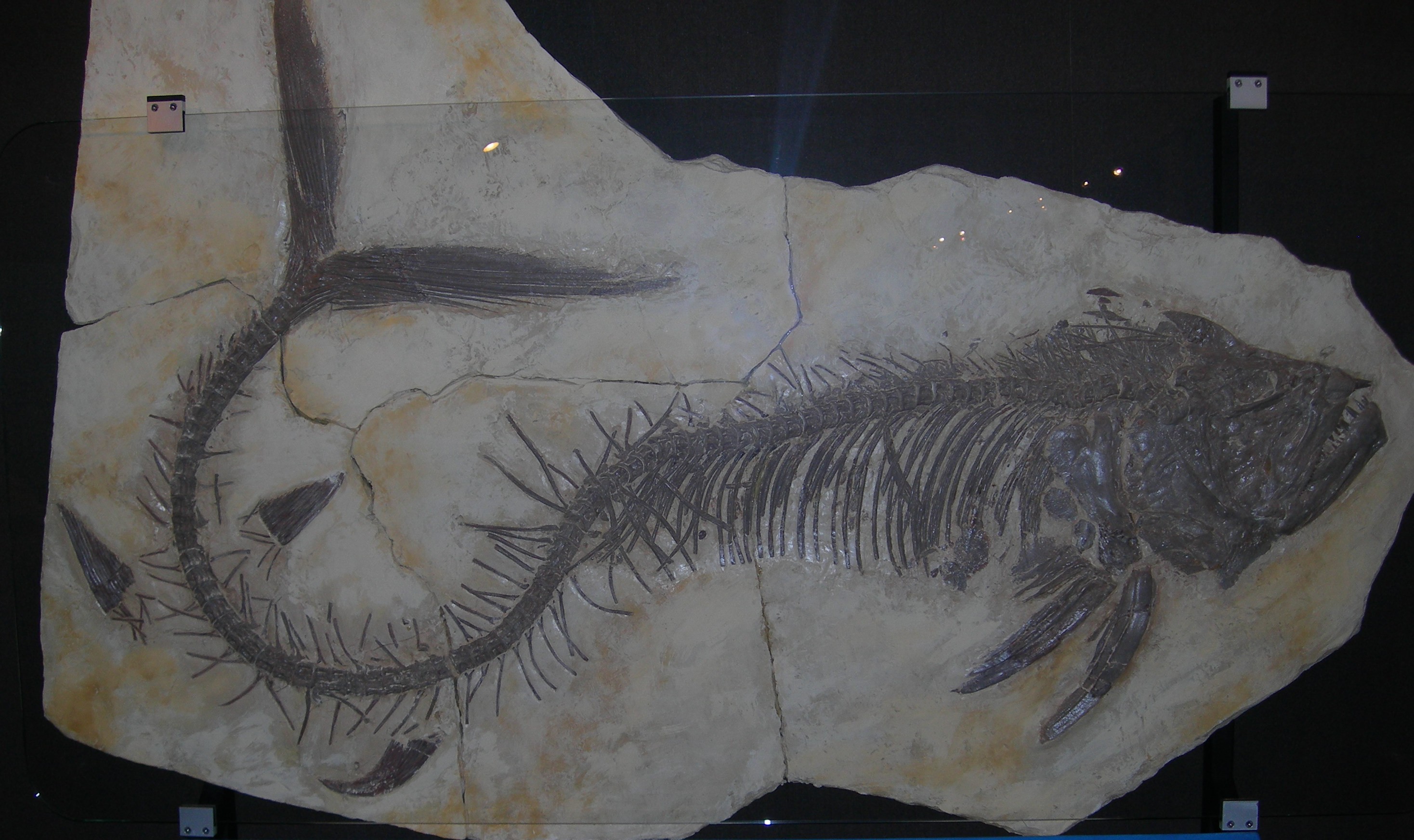
In the shallow seas that covered western North America during the Late Cretaceous, something enormous patrolled the water with its lower jaw jutting forward like a bulldog's underbite. It grew up to six meters long, swallowed fish half its own size in one gulp, and left behind one of the most famous fossils ever found: a giant fish that died with another giant fish still inside it. This was Xiphactinus audax, the largest bony fish of its time and a predator so ruthless that its greed may have killed it.
Paleontologist Edward Drinker Cope named the genus in 1870 from fragments found in Kansas. The name means "sword ray", a nod to the long, blade-like shape of its body. Since then, hundreds of specimens have surfaced from the Niobrara Chalk, a rock formation that preserves the life of the Western Interior Seaway, the great inland ocean that split North America in two during the age of the dinosaurs.
A Bulldog-Jawed Giant of the Seaway
Xiphactinus looked like nothing swimming today. Its body was long and muscular, built for ambush from below, and its upturned jaw was armed with curved fangs that pointed backward, so anything caught inside had only one direction to go: down. Adult specimens commonly reached four to five meters, and the largest estimates approach six meters with a weight of several hundred kilograms. That makes it a rival for the title of largest known bony fish of all time, alongside the filter-feeding giant Leedsichthys, which it dwarfed in appetite if not in length.
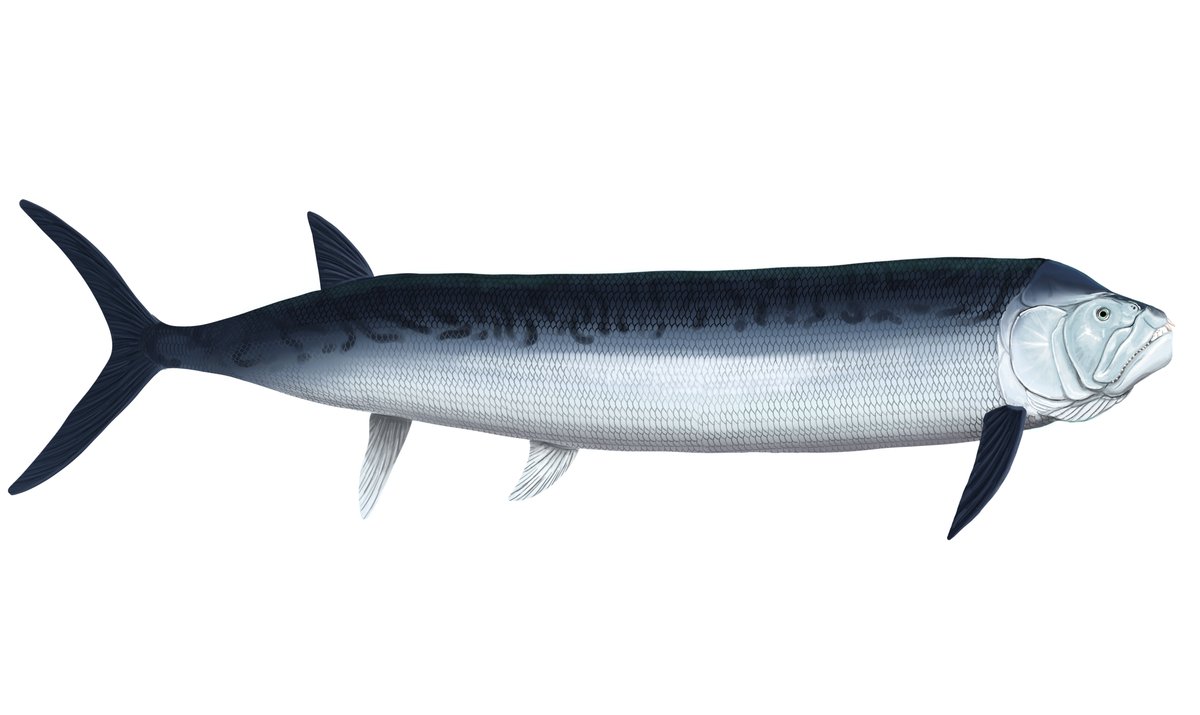
Despite its fierce appearance, Xiphactinus was a true bony fish, not a shark. It belonged to the ichthyodectids, a family of swift predatory fish that thrived from the Middle Jurassic to the end of the Cretaceous. Its closest living relatives are distant cousins among modern bony fish, which means this whole dynasty of ocean wolves has since vanished without a direct heir.
Life in the Western Interior Seaway was dangerous from every angle. Xiphactinus shared the water with mosasaurs, long-necked plesiosaurs, diving birds like Hesperornis, and sharks of every size. But for much of its reign it sat near the top of the food chain among fish, feeding on smaller fish, squid-like animals, and anything careless enough to cross its path.
The Fish Within a Fish
The most famous Xiphactinus fossil tells a story in a single glance. In 1952, fossil hunter George F. Sternberg unearthed a nearly complete specimen in Gove County, Kansas. Inside its ribcage, perfectly preserved, lay the skeleton of a nearly two-meter-long fish called Gillicus arcuatus. The smaller fish was swallowed whole, head first, and had not even begun to digest when its predator died.
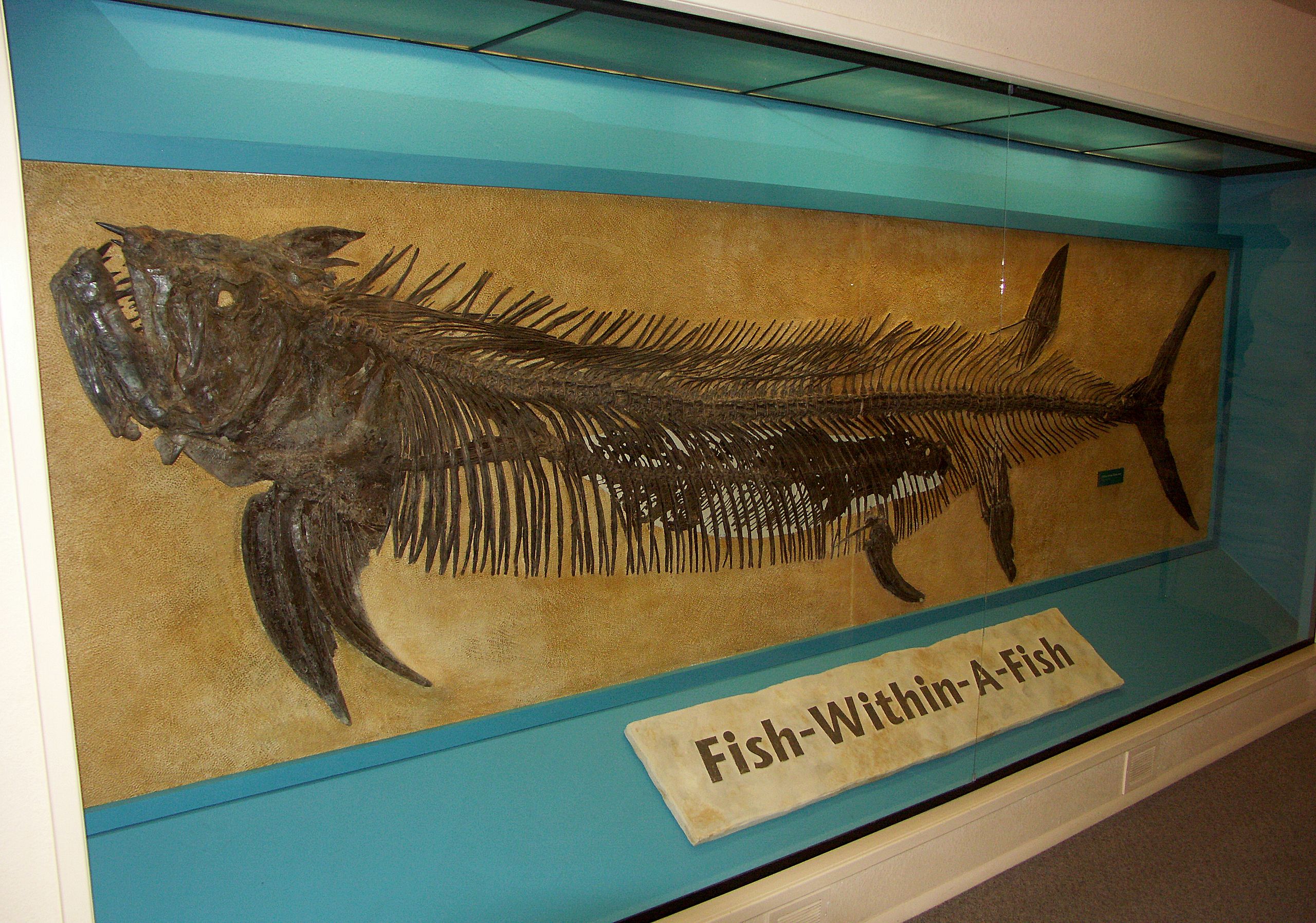
How did the hunter die? The best explanation is grim. The Gillicus, perhaps a meter and a half shorter than its attacker, likely thrashed and struggled on the way down. Paleontologists suspect it ruptured one or more of Xiphactinus's internal organs during its final moments. The predator's last meal became its last mistake. Today that specimen, cataloged as FHSM VP-333, hangs in the Sternberg Museum of Natural History in Hays, Kansas, one of the most iconic fossils of any era.
The "fish within a fish" is more than a curiosity. It captures something rare in the fossil record: a moment of behavior, not just anatomy. We know exactly what Xiphactinus ate, how big its prey could be, and that it swallowed meals whole. Fossils like this one, where an animal is preserved in the act of living, are what turn ancient bones into a story.
A Predator With a Global Passport
Kansas may be the fossil capital for Xiphactinus, but it was not the only hunting ground. Remains have turned up across North America, from Alabama to Canada, and as far away as South America, Europe, and Australia. The Western Interior Seaway connected to the wider world ocean, and Xiphactinus clearly made the most of it, becoming one of the most widespread large predatory fish of the Cretaceous.
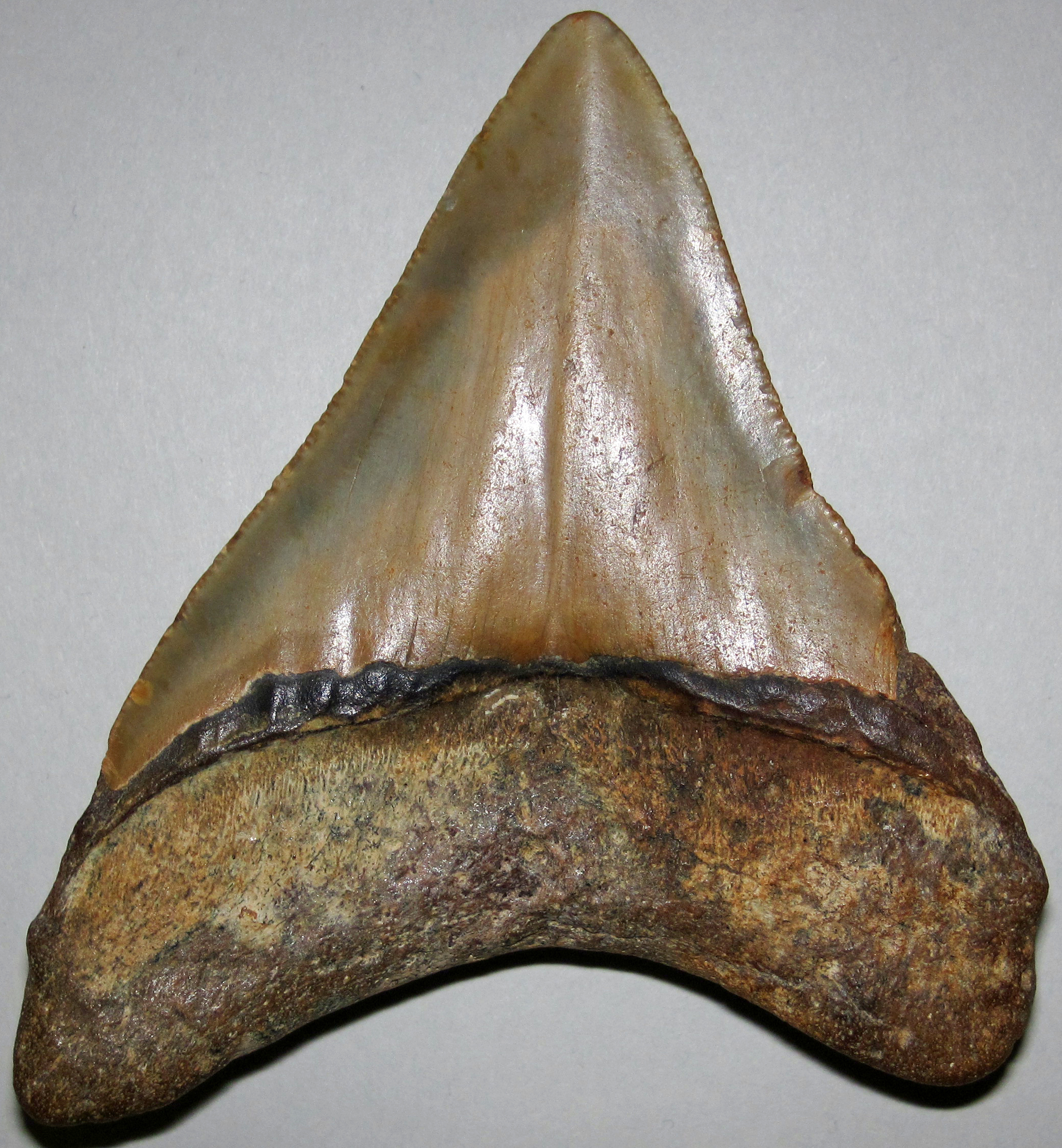
Its size also made it prey for bigger hunters. Bite marks and shed teeth of mosasaurs have been found on ichthyodectid remains, and a giant Xiphactinus would have been a worthy prize for the mosasaur Mosasaurus or the enormous shark Cretoxyrhina, often called the Ginsu shark. The seaway's food web had layers, and Xiphactinus occupied the middle of the stack: monster to most, meal to a few.
The End of the Line
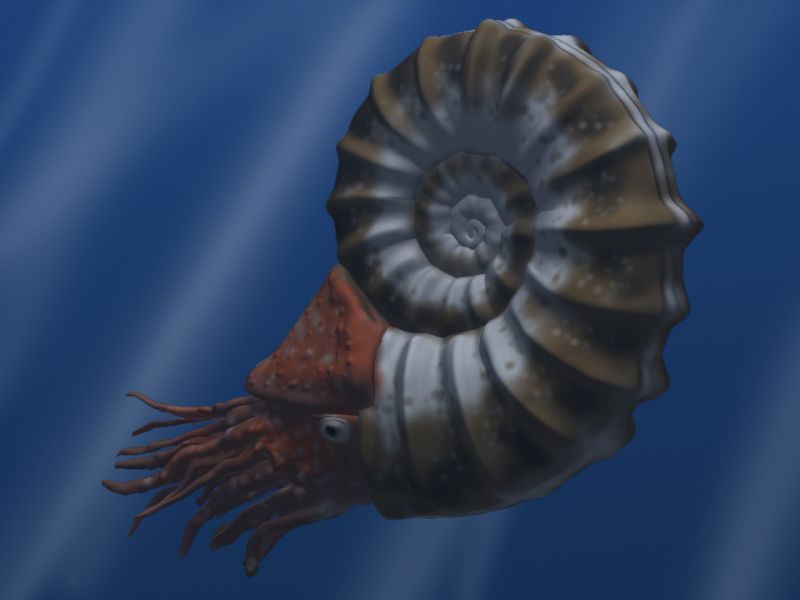
Xiphactinus disappeared at the end of the Cretaceous, about 66 million years ago, in the same catastrophe that eliminated the non-avian dinosaurs, the mosasaurs, the plesiosaurs, and the ammonites. The collapse of marine ecosystems in the wake of the asteroid impact erased the great predatory fish dynasty it belonged to. Smaller, hardier fish inherited the seas.
There is a certain symmetry in its story. Triops, the star of this site, has survived every mass extinction for hundreds of millions of years by staying small, fast-growing, and adaptable. Xiphactinus did the opposite: it became huge, powerful, and specialized, and when the world changed overnight, there was no way back. Both strategies are winners in their own way, but only one of them still swims in a temporary pool near you.
Next time you see a tarpon lunging at a school of baitfish, picture its distant Cretaceous cousin scaled up to five meters with fangs to match. The seaways of the dinosaur era were full of monsters, and Xiphactinus audax, the fish that died eating dinner, remains the most memorable of them all.