Published 2026-10-04 · by the Triops.me Editorial Team · Back to Articles
Pteranodon: The Toothless Giant of the Western Interior Seaway
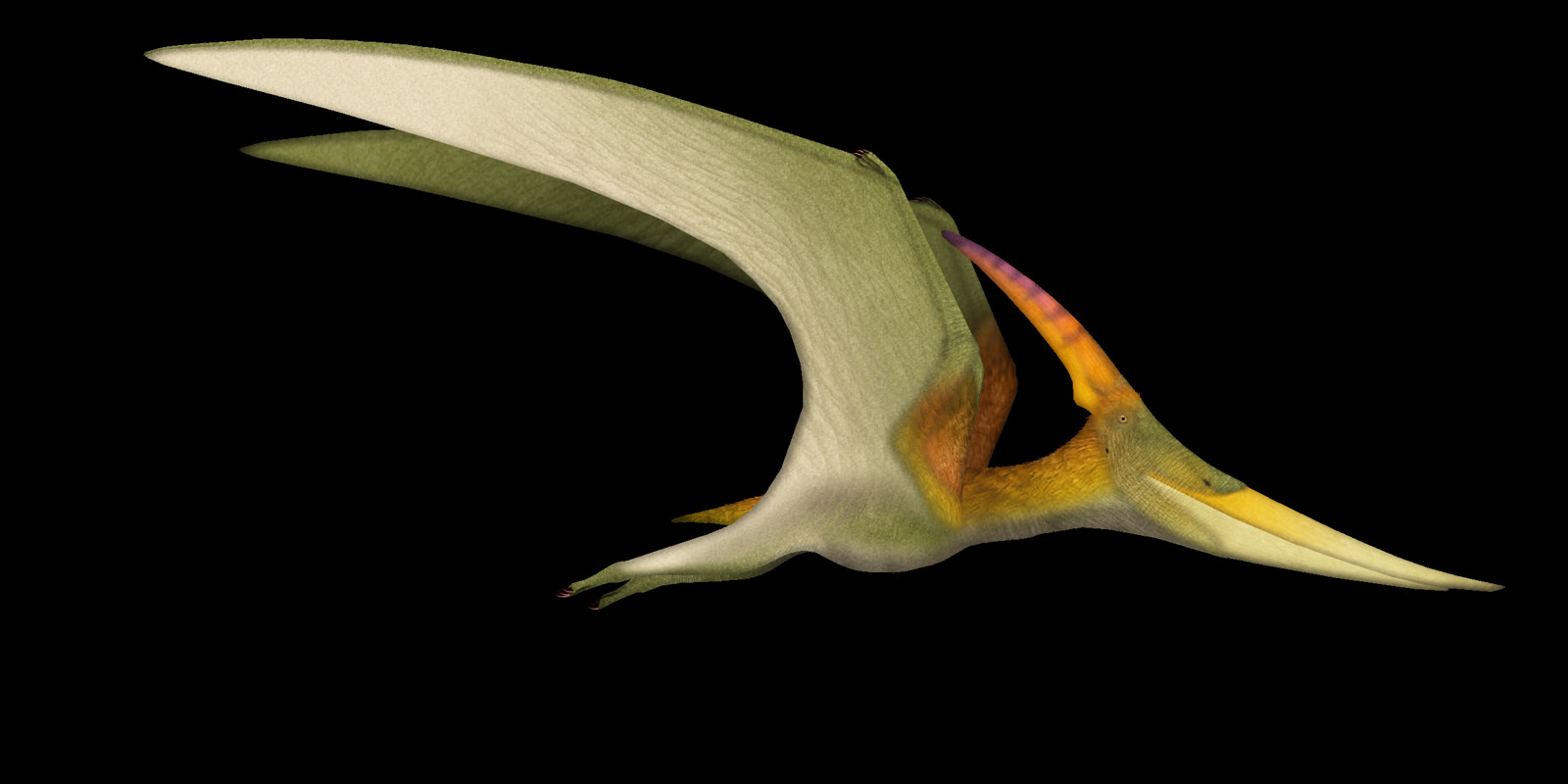
Roughly eighteen million years before the last Tyrannosaurus walked the plains, a shallow ocean split North America in half. From the Gulf of Mexico to the Arctic, seawater flooded the continent's middle, and above it something with a wingspan of six meters beat its way from horizon to horizon on wings of skin. It had no teeth, a beak like a spear point and a blade of bone growing backward from its skull. This was Pteranodon, the most abundant large flying reptile of the Late Cretaceous.
The name gives the game away: ptera for wing, anodon for toothless wing. Othniel Charles Marsh put it together in 1876 from fossils dug out of the chalk of western Kansas, and he had picked the one feature that separated it from every pterosaur named before. Earlier flying reptiles had mouths full of needle teeth. Pteranodon had a long, empty, pointed beak and caught its food at sea, where a set of teeth would only have slowed it down.
A Wing With No Teeth
Pteranodon was not a dinosaur, despite the museum halls it shares with them. Pterosaurs were a separate branch of the archosaur family tree, closer to crocodilians and dinosaurs than to anything alive today, but with a limb design all their own: the wing membrane stretched along one enormously elongated fourth finger, from the wrist to the hip. Fine stiffening fibers called actinofibrils ran through the membrane and let the animal change the shape of its wing in flight rather than just holding it rigid.
More than a thousand specimens have been dug out of the Niobrara Chalk of Kansas and neighboring states, which makes Pteranodon one of the best-known pterosaurs in the world. Two species are generally accepted: the type, Pteranodon longiceps, with a long low crest swept backward, and Pteranodon sternbergi, which carried a taller, more upright crest. For decades paleontologists named species on crest shape alone, until most of them turned out to be males and females of the same animal.
Built to Cross an Ocean
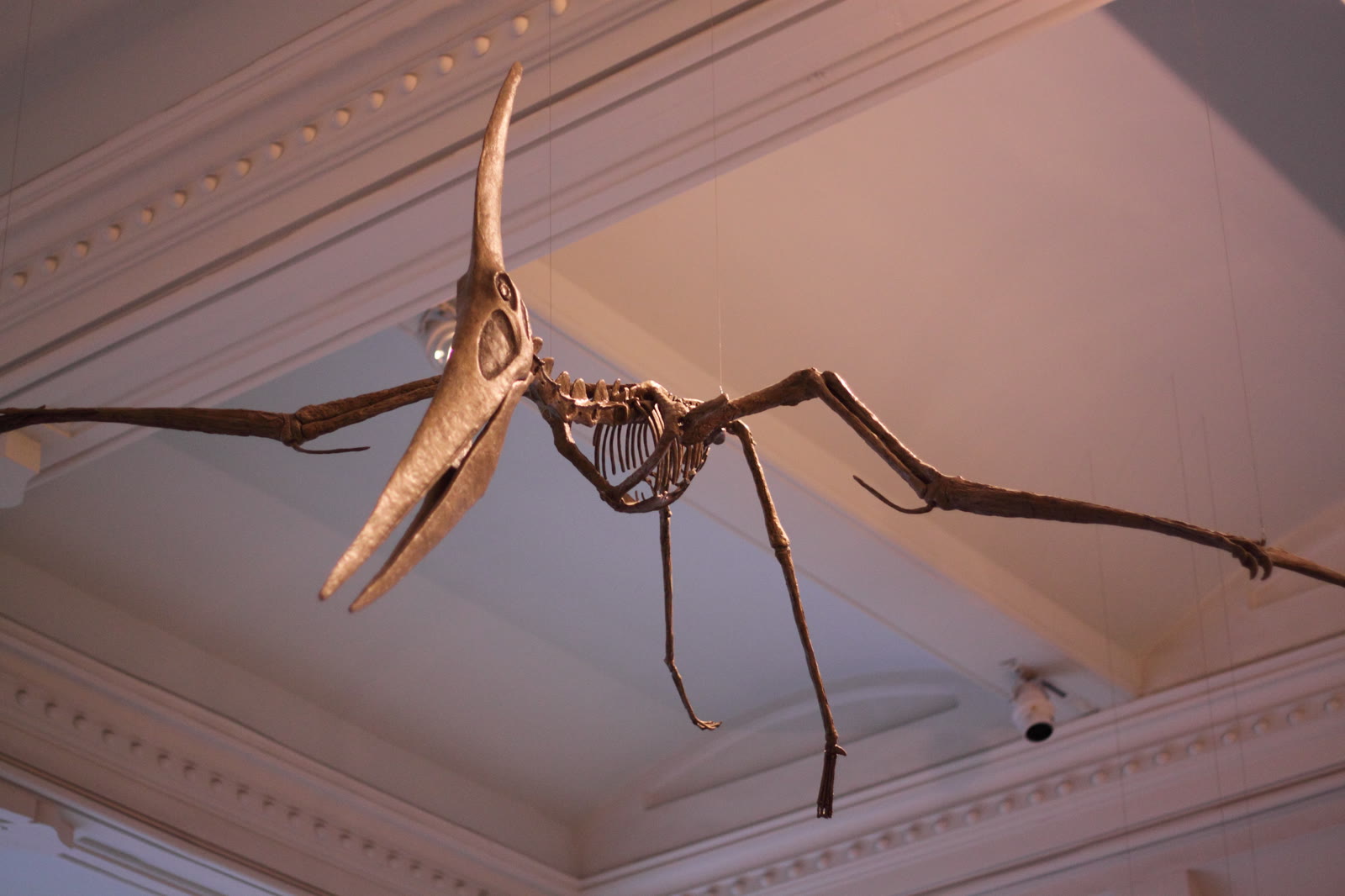
Bones tell you what an animal can do, and Pteranodon's bones are almost embarrassingly light. They are hollow, with walls thinner than a pencil, and filled with air sacs that plumbed through into the shoulder and chest. A large male probably weighed somewhere in the range of a big seabird, maybe 25 kilograms, carrying a body stretched over a wingspan of six meters. Small females and juveniles came in around four meters.
With wings that long and narrow, Pteranodon had an aspect ratio near twelve, the same proportions as a wandering albatross. That is the geometry of a static soarer: an animal built to ride the wind for hours over open water with barely a flap. Its fossils come from chalk, which is the compressed remains of plankton that rained down in a warm, clear, open sea, so Pteranodon was hunting far from land, over water deeper than its wings were wide.
Getting that much wing off the ground took a trick no bird uses. Analysis of the shoulder and chest muscles suggests Pteranodon launched on all four limbs, vaulting itself upward with a powerful push of the forearms rather than running into the air like a goose. A quadrupedal launch works from a rock, from mud, and from the surface of the water itself, which matters a great deal to an animal that spends its life at sea.
What Was the Crest For?
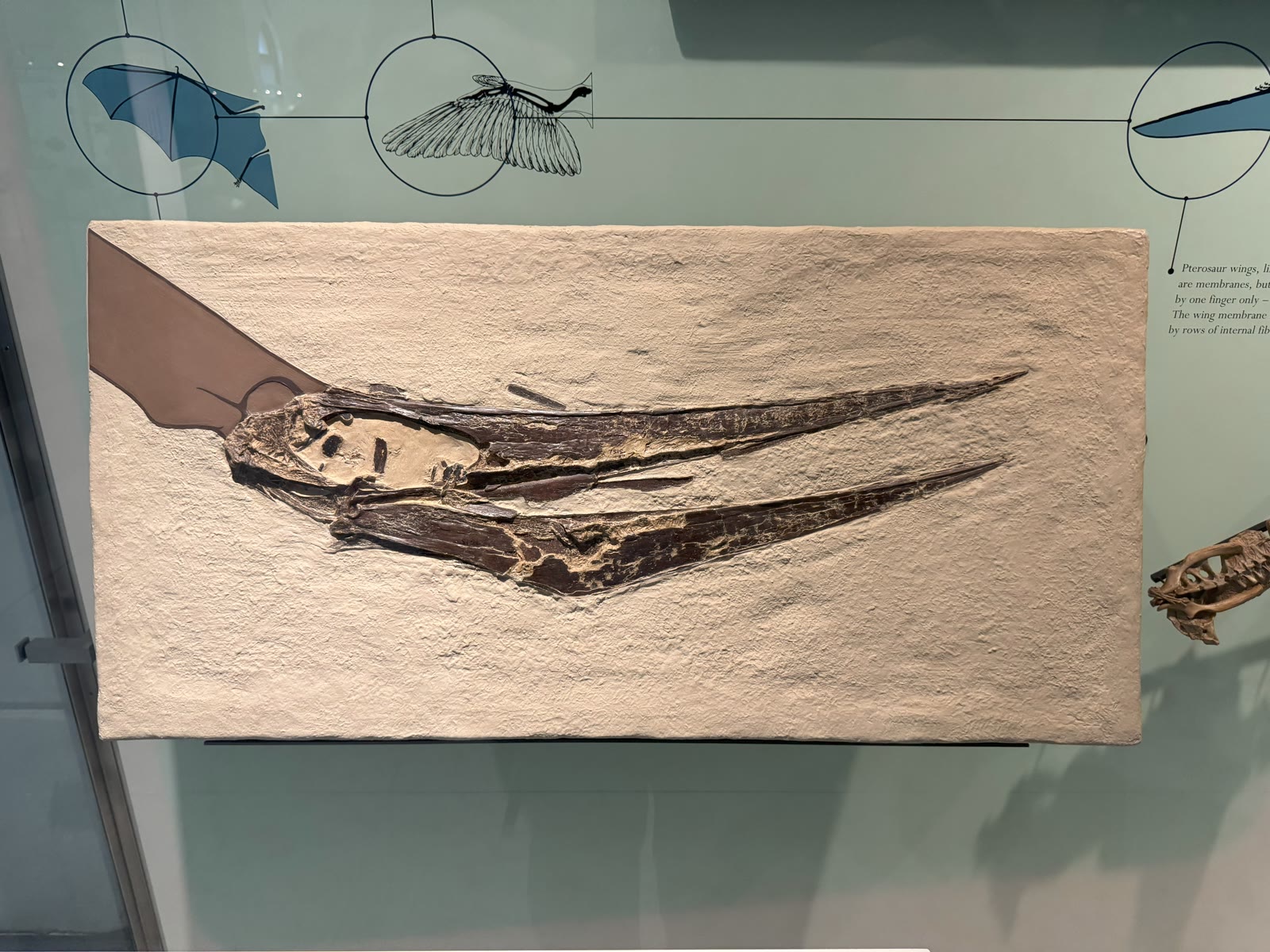
The crest was bone, thin as a plate and sometimes close to a meter long. The obvious answer is display: a flag visible from a kilometer away, announcing species, sex and condition to anything else in the sky. Chris Bennett's work on the Niobrara material in the early 1990s showed that the two crest forms belonged to one species, with the bigger, longer-crested animals almost certainly male. That is the classic signature of sexual selection, the same logic that produces a peacock's tail.
The aerodynamic answer has never quite died, though. The crest sits forward of the wing's center of lift, so early wind tunnel work suggested it should pitch the head down in level flight. Later models argue it acted more like a rudder, damping yaw during turns or steadying the skull against the muscular effort of lifting a beak full of fish. Nobody has settled it, and probably nobody will: the crest was covered in skin and soft tissue that almost never fossilize, so we are arguing about an outline.
Neighbours in the Seaway
Pteranodon shared the seaway with a cast of animals that are, individually, the subject of their own articles on this site. Fish like Xiphactinus, a bulldog-jawed predator two to four meters long, worked the same water column, and so did mosasaurs such as Tylosaurus and the short-necked plesiosaur Dolichorhynchus. Above the waves, the toothed diving bird Hesperornis and the gull-like Ichthyornis competed for the same fish, and the small, absurdly crested Nyctosaurus shared the same thermals.
What Pteranodon almost certainly did not do was dive. Its beak is long and narrow with no reinforcement for impact, and its wing bones are too delicate for a plunge from height. The reading that fits the anatomy is a surface hunter: cruising low, dipping the tip of the beak into the water and snatching fish, squid or anything small enough to swallow whole.
Gone Before the Asteroid
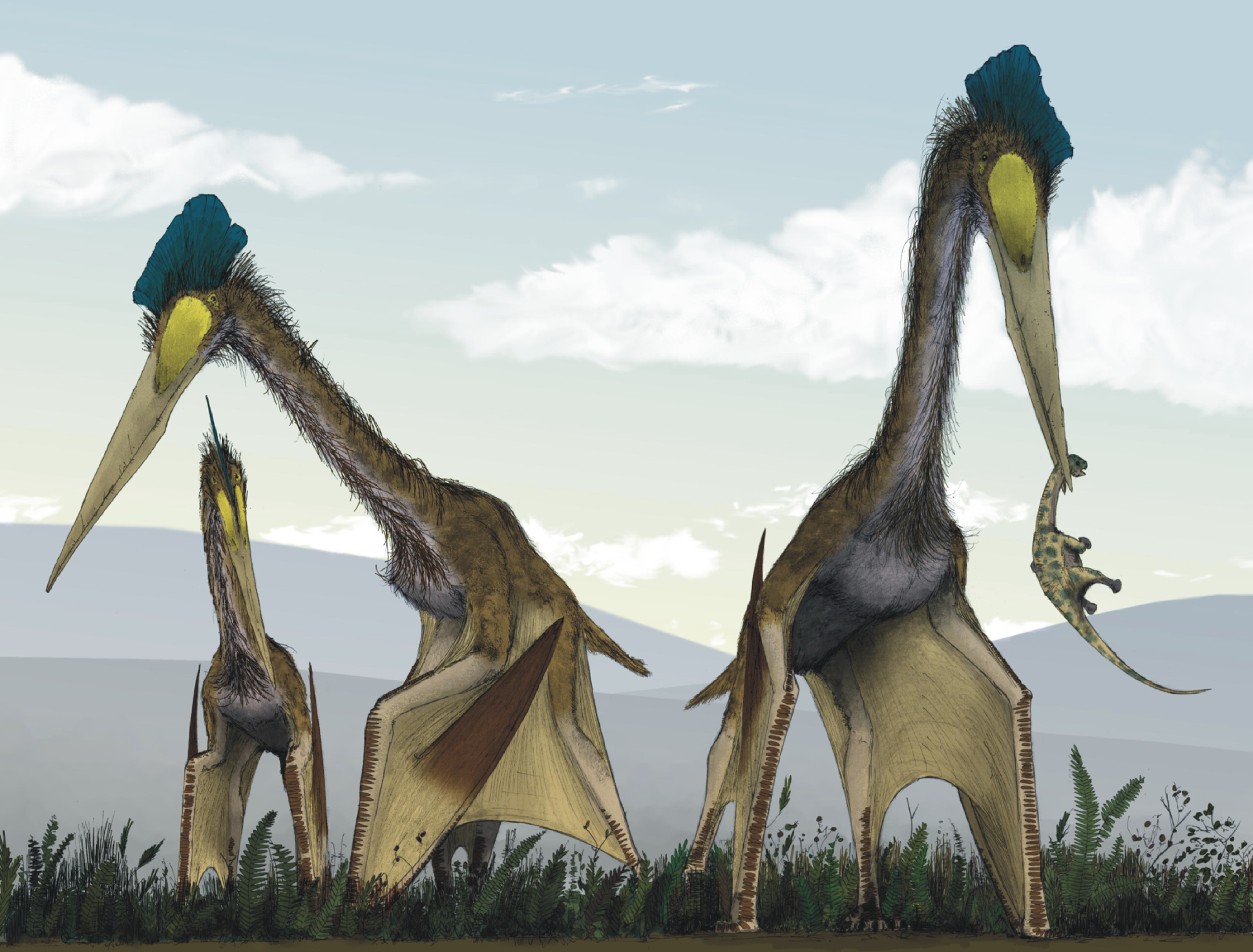
Here is the part that surprises people. Pteranodon did not go out with the dinosaurs. Its lineage disappears from the rock record around 84 million years ago, roughly eighteen million years before the impact that ended the Cretaceous-Paleogene extinction. Pterosaurs as a group were already thinning out through the Late Cretaceous, crowded by birds that had learned to do the same jobs with less energy. What survived to the very end were the oddballs: the azhdarchids like Quetzalcoatlus, a giraffe-sized walker that may have been the largest animal ever to fly, plus a couple of small toothed lineages.
Pteranodon belongs to the middle of that story rather than the end. It was the common, successful, wide-ranging answer to the question of how to eat fish in an open sea, and it vanished when the seaway itself began to shrink and deepen into the Western Interior's final retreat.
The Winner Is Three Centimeters Long
Pteranodon had everything we would bet on in an evolutionary contest: size, speed, a brain wired for navigation, an ocean of food, and a thousand specimens' worth of proof that it dominated its niche. Against that you can put a crustacean the length of a thumbnail, with three eyes and no wings at all. Triops was already ancient when Pteranodon evolved, and it outlasted Pteranodon, the asteroid, and every ocean that rose and fell afterwards. The trick, it turns out, was never to win the sky. It was to stay small, stay buried, and wait out whatever came next.