Published 2026-10-05 · by the Triops.me Editorial Team · Back to Articles
Coprolites: Ancient Dinners Preserved in Stone
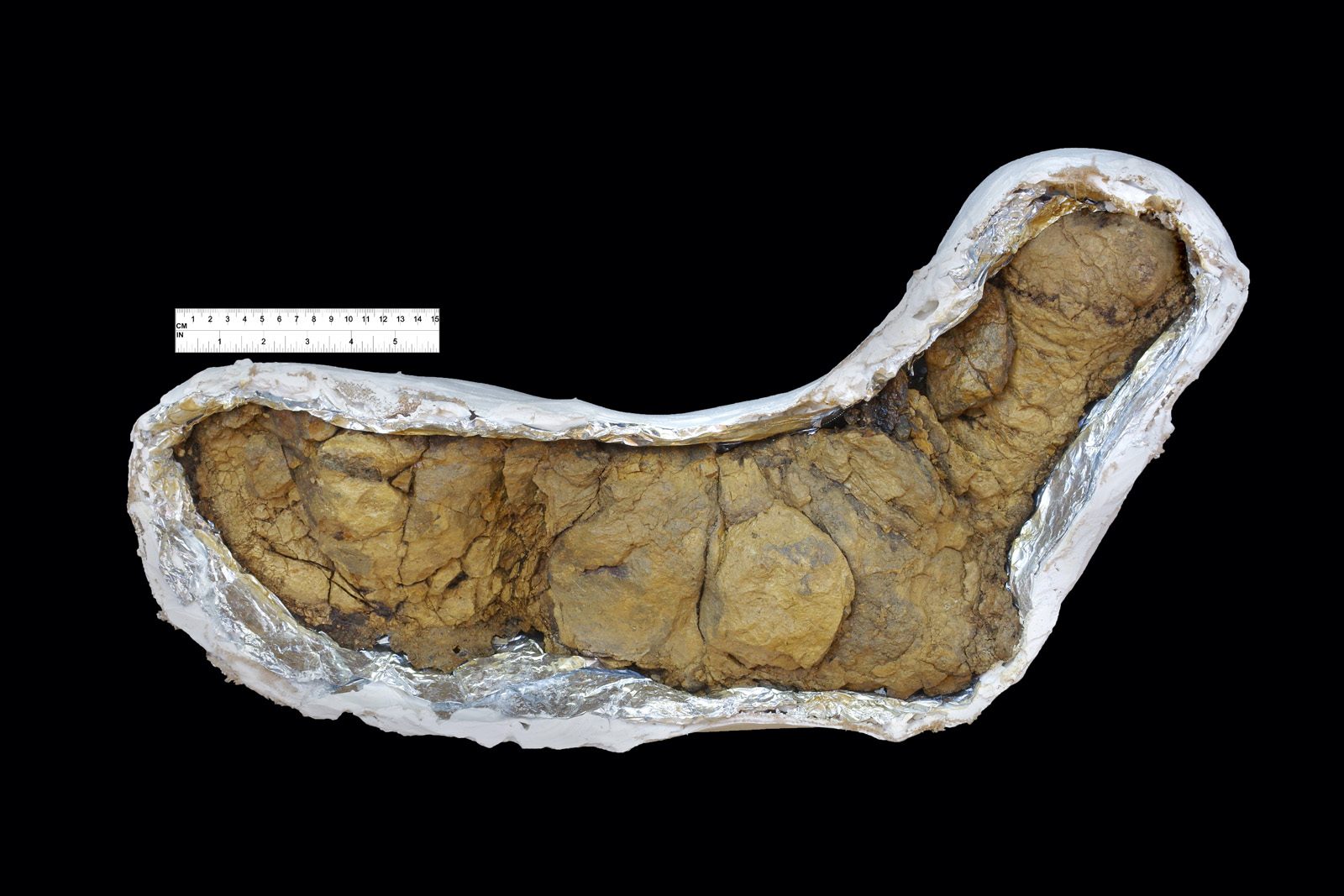
Fossil hunting has glamorous finds. Skulls go into glass cases, teeth end up in auction catalogues, and skeletons get lit from three sides for documentary cameras. Almost nobody travels to see a piece of fossilized dung, and yet some of the most direct evidence of prehistoric life ever recovered is exactly that: droppings turned to stone.
Coprolites are trace fossils, which means they record what an animal did instead of what it looked like. A jaw tells you how it bit. A coprolite tells you what it swallowed, what passed through it, and sometimes what was living inside it while it fed. That is why paleontologists treat a lump of ancient dung as seriously as a skeleton.
What Exactly Is a Coprolite?
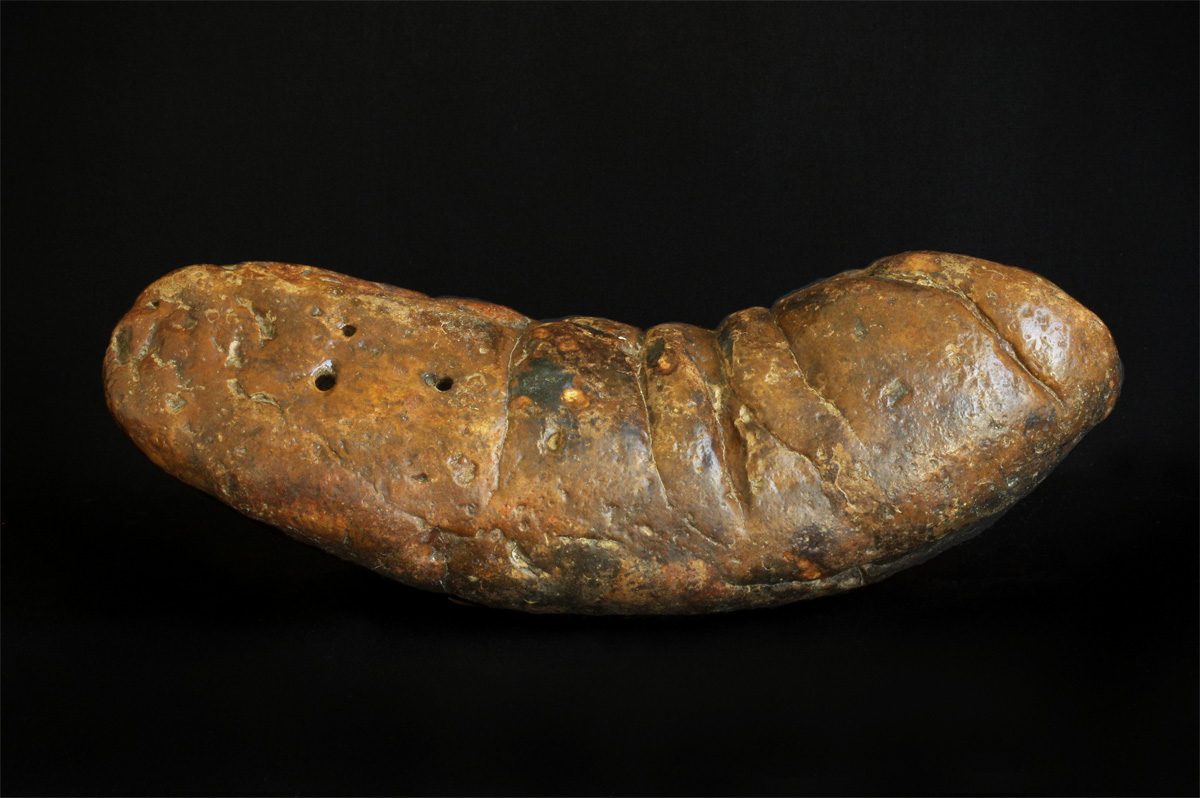
Almost none of the original material survives. Fresh dung is soft, wet and quickly taken by bacteria, so fossilization demands rapid burial in the right chemistry. What usually remains is a mineral replica: most coprolites are built chiefly of calcium phosphate, with silicates and calcium carbonates standing in for the organic matter that disappeared. That replacement is what lets a shape which would have rotted away within days persist for hundreds of millions of years.
Mary Anning's Bezoar Stones
Before anyone knew what they were, these stones were collected as curios. In the 1820s the fossil hunter Mary Anning noticed that bezoar stones often lay in the body cavities of ichthyosaur skeletons in the Lias cliffs around Lyme Regis, and that when such stones were broken open they held fossil fish bones and scales, sometimes with the bones of smaller ichthyosaurs.
Her observations led the geologist William Buckland to argue in 1829 that the stones were fossilized feces, and to give them their name. Buckland did more than label them. He spotted spiral markings on the outside and proposed that ichthyosaurs carried a spiral ridge through the intestine, much like a modern shark, which wound the waste into a coil as it passed. Some of the stones were stained black with ink from swallowed belemnites, a second and independent clue to the menu of an animal that has been dead for millions of years. The ink sac story lives in our page on belemnites, and the hunters themselves in our ichthyosaur article.
How Poop Becomes a Stone
Fossilization of dung needs two things: speed and chemistry. A layer of flood sand, lake mud or storm sediment has to cover the deposit before insects, scavengers and rain take it apart, and groundwater has to carry phosphate or carbonate into the mass before it collapses. The same slow exchange that turns wood into agate or shell into opal works here, one molecule at a time, usually in river deltas, shallow lakes or quiet seafloors.
Reading the Menu
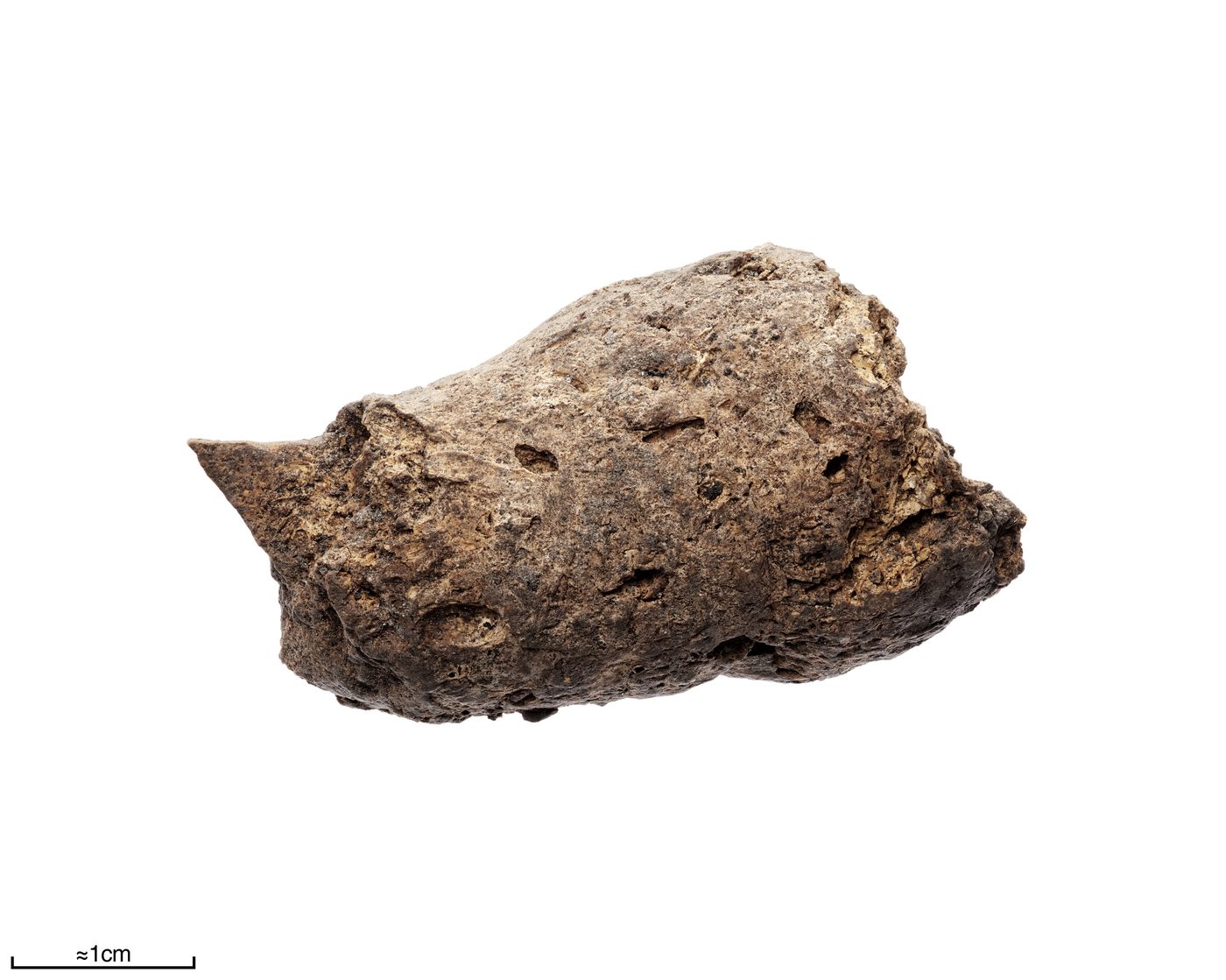
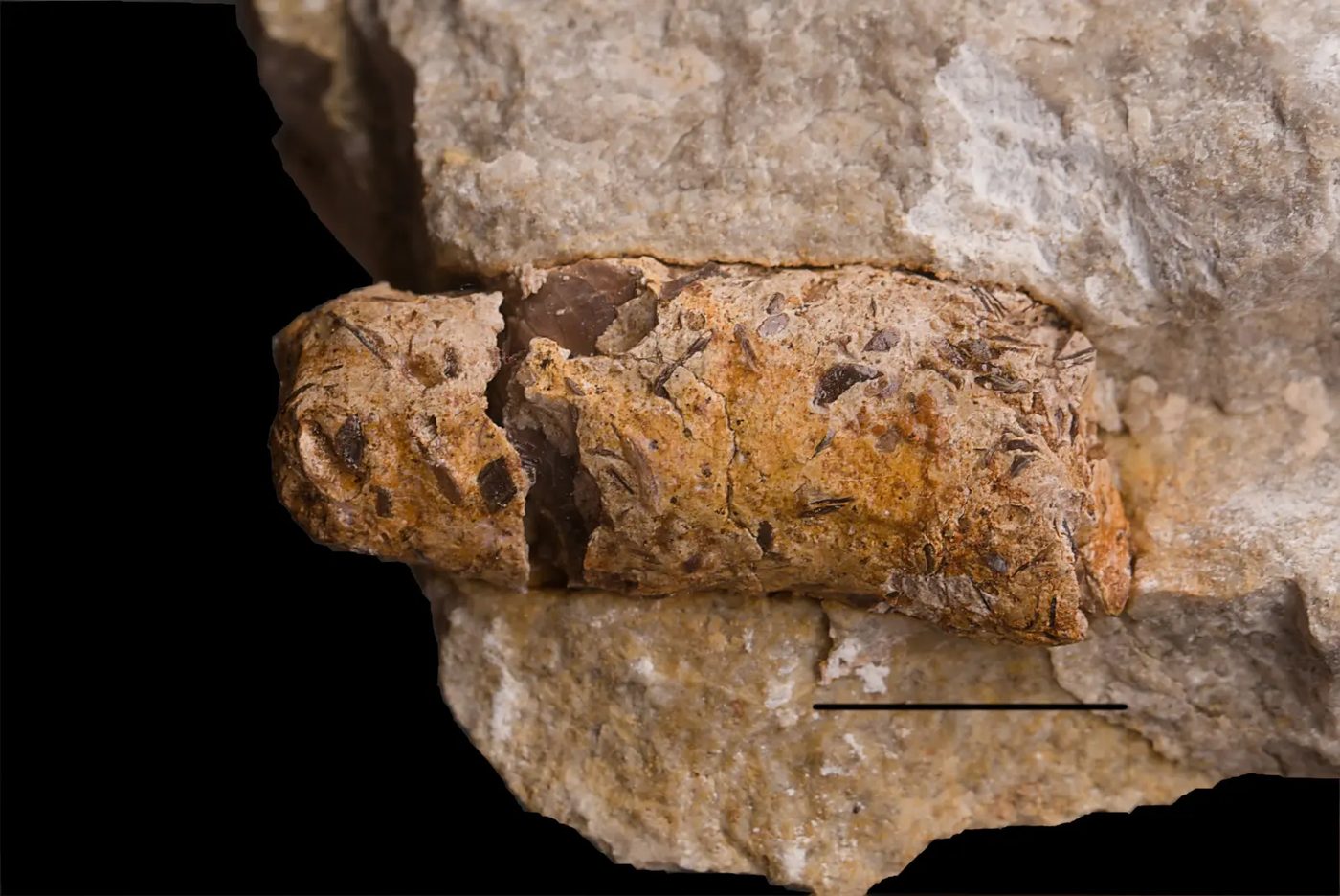
Content is where coprolites earn their keep. Bones, scales, shells, seeds, wood fragments and insect parts survive inside stone dung in a way that stomach contents rarely do, because a stomach dissolves things and a deposit does not. Cut a coprolite into a thin slice, or dissolve it in acid and sieve what is left, and the last meal reassembles itself.
Parasites Trapped in Stone
Dung also preserves the animals that lived off the animal that made it. Protozoan cysts and helminth eggs recovered from an Early Cretaceous coprolite from the Bernissart Iguanodon shaft in Belgium demonstrate intestinal parasites in dinosaurs, while tapeworm eggs have been reported from a Permian shark coprolite. In New Zealand, coprolites left by the extinct moa have been used to reconstruct the gastrointestinal parasites those birds carried, and the same method reaches back through Ice Age material to modern wildlife surveys.
It is the closest thing paleontology has to a medical record. The host and parasite relationships we see today were already running when the continents wore different shapes.
Hyena Dens and Fertilizer Mines
In 1821 workmen digging for marble at Kirkdale in Yorkshire uncovered a cave full of bones. Buckland studied the site and found, alongside gnawed teeth and limb bones, masses of the very stones he had named. He argued that the cave had been a hyena den, that the droppings accumulated by animals living there over long periods rather than being washed in by the single flood his contemporaries preferred, and he compared them with the dung of a live hyena kept for exactly that purpose. It was one of the early demonstrations that a cave can hold a long record instead of one catastrophe.
Two decades later the stones turned from scientific curiosity into an industry. In 1842 the botanist John Stevens Henslow found coprolites in the fields around Felixstowe in Suffolk, near Trimley St Martin, Falkenham and Kirton, and worked out that treated with sulfuric acid they release their phosphate. He patented the process, and coprolites were soon mined on an industrial scale for fertilizer, with the main workings across Cambridgeshire and the Isle of Ely and refining carried out by the Fisons company in Ipswich, where a street still carries the name. The trade declined in the 1880s and was briefly revived during the First World War, when phosphate was needed for munitions.
Tiny Pellets, Big Questions
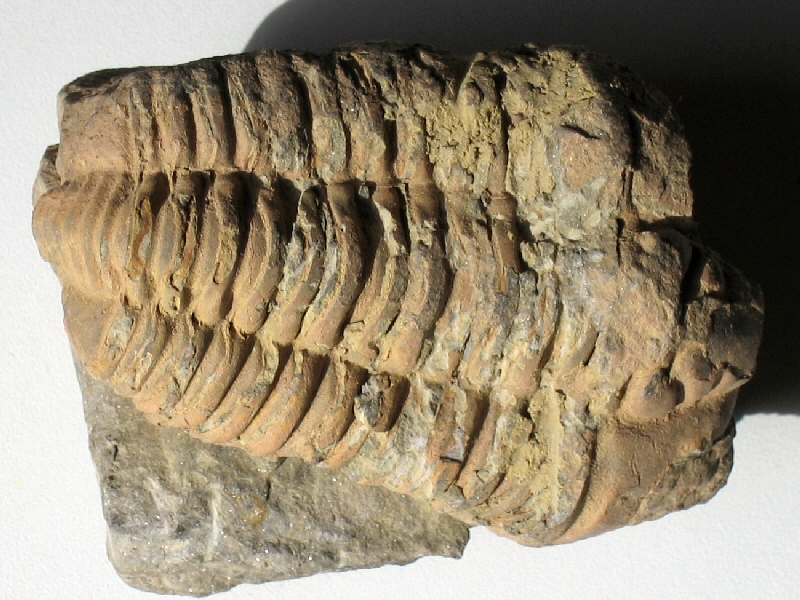
The producers of tiny pellets are still with us. Triops and its branchiopod relatives sift detritus in temporary pools and package it as pellets, one small service in the nutrient loop of a pond that dries up a few weeks later. What today sinks into mud becomes, in the right sediment, a data point readable hundreds of millions of years later, which is the same bargain every Triops has been making since the Triassic.
Stone dung is never the find a collector dreams of, but it may be the more honest one. Bodies show what an animal was capable of; coprolites record what it actually did. Browse the creature gallery for the animals behind these traces, then follow the trail into the Cambrian explosion, where the oldest coprolites and the strangest bodies were buried together.