Published October 14, 2026 · by the Triops.me Editorial Team · Back to Articles
The Late Devonian Extinction: When the Reefs Vanished
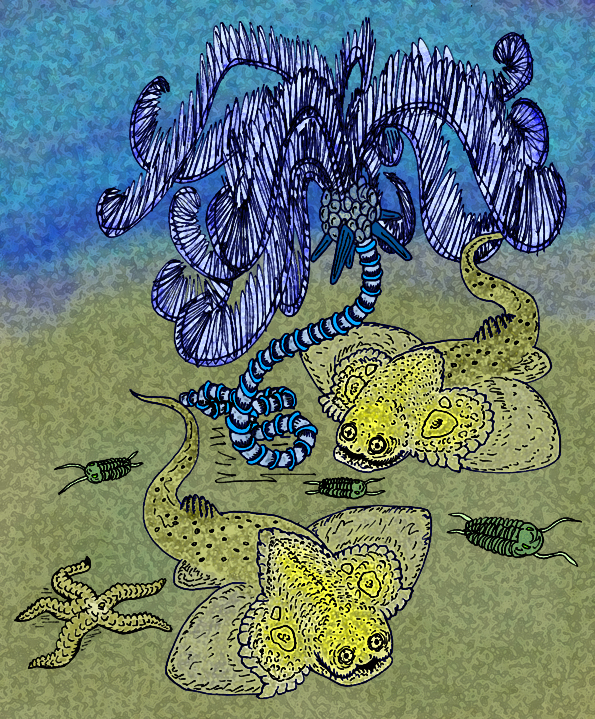
Most people can name the extinction that killed the dinosaurs. Fewer can name the one that emptied the seas a hundred million years earlier, and it is the strangest of the lot. About 372 million years ago, at the close of the Frasnian stage of the Devonian period, the richest marine ecosystems on the planet fell apart. Reef complexes that had grown across shallow tropical seas for tens of millions of years collapsed almost completely. Whole orders of trilobites vanished, and most of the world's marine species disappeared with them.
This is the Late Devonian mass extinction, one of the so-called Big Five crises in the history of complex life. Unlike the asteroid that ended the Cretaceous, it has no single dramatic culprit. Instead it unfolded as a stuttering series of pulses across roughly 20 to 25 million years, two of them far worse than the rest. It is the mass extinction that shows what happens when the foundation of an ecosystem breaks, rather than the animals standing on top of it.
The Quiet Member of the Big Five
The Big Five are the end-Ordovician, the Late Devonian, the end-Permian, the end-Triassic and the end-Cretaceous. The Late Devonian sits in an awkward middle ground: catastrophic by any measure, but spread over so much time that it never produced a single boundary layer you can point to in the field.
The classic tally comes from George McGhee's 1996 survey. Across the interval, 22 percent of all families of marine animals disappeared, along with 57 percent of genera and at least 75 percent of species. Those species-level numbers should be treated with some caution, since the Devonian fossil record is patchy and biased towards hard-shelled animals in shallow water. Other analyses put the loss closer to 40 percent of marine species. Either way, this was a deeper culling of ecosystem diversity than the famous end-Cretaceous event.
Two Pulses, Thirteen Million Years Apart
Geologists split the crisis into named episodes. The main one is the Kellwasser event, which struck at the Frasnian to Famennian boundary about 372 million years ago. It takes its name from the Kellwassertal, a valley in Lower Saxony, Germany, where the record was first worked out. Careful study of the rocks shows it was itself double-barrelled: two pulses separated by roughly 800,000 years, with the second the more devastating of the two. The layers that mark them are black shales, laid down in seawater starved of oxygen.
Thirteen million years later came the Hangenberg event, at the very end of the Devonian about 359 million years ago, on the doorstep of the Carboniferous. It was shorter and colder, and it finished what the Kellwasser had started. Between the two there were recoveries, each cut short before ecosystems could rebuild. Between 8 and 10 distinct extinction pulses have been counted in the last stretch of the Devonian; the Kellwasser and the Hangenberg simply bit hardest.
The Reefs That Vanished
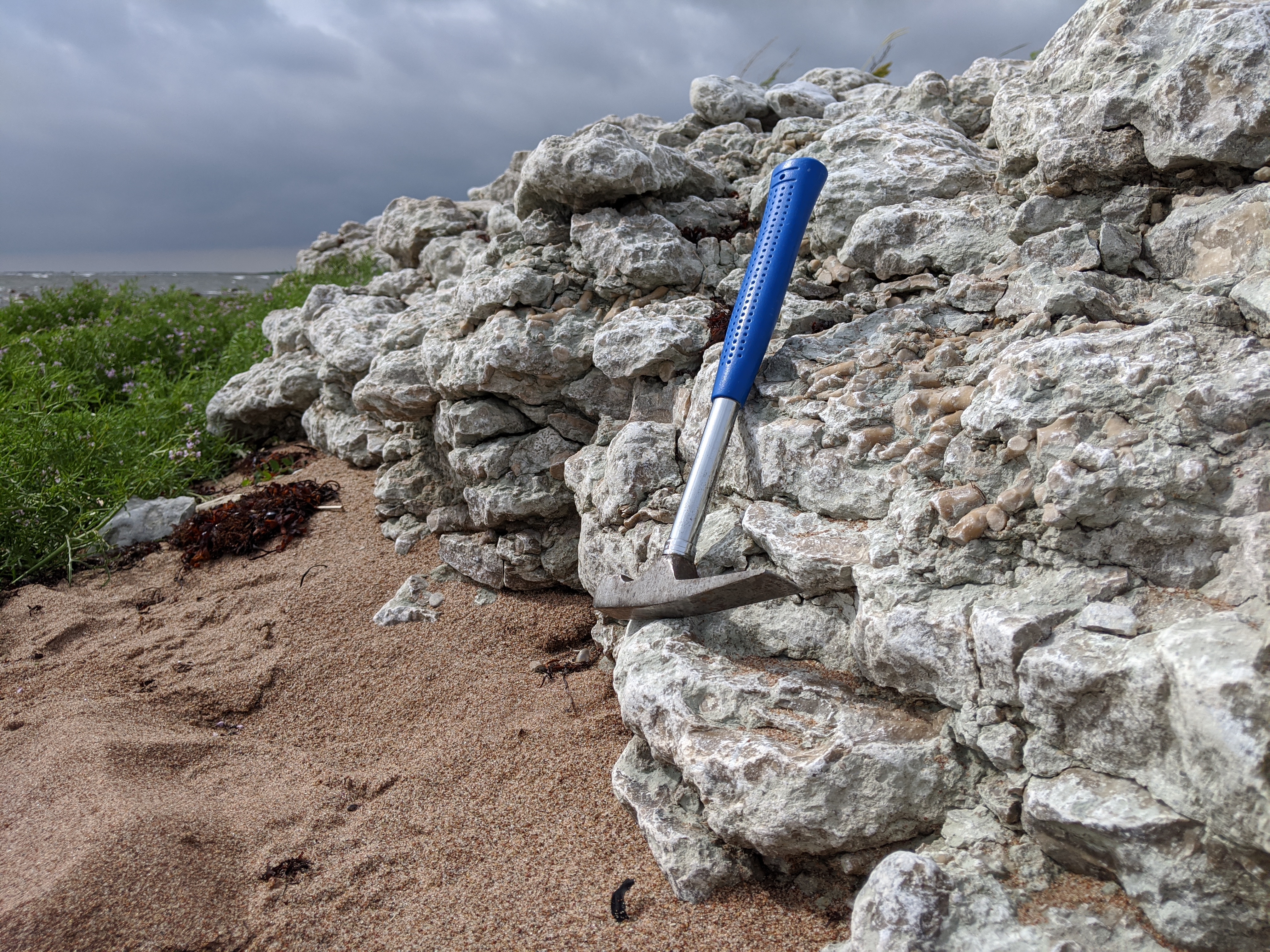
The hardest-hit group of all was the reef builders. The great Devonian reef systems were constructed mainly by stromatoporoids, reef-building sponges with calcite skeletons, together with rugose corals, the horn corals, and tabulate corals. Neither of those coral groups is alive today. They were the engineers of the shallow seas, and when they went, the cities went with them.
After the Kellwasser, the Famennian reefs look strange. Siliceous sponges and calcifying bacteria took over, building mounds of oncolites and stromatolites instead of the layered coral structures that had come before. Reefs did not recover anything like their Middle Devonian extent until the Mesozoic, hundreds of millions of years later. The stony corals that build today's reefs, the scleractinians, only appear in the Triassic. Stromatoporoids finally died out in the Hangenberg event, while rugose and tabulate corals limped on to the end-Permian extinction, where our article on the Great Dying picks up their story.
Who Died
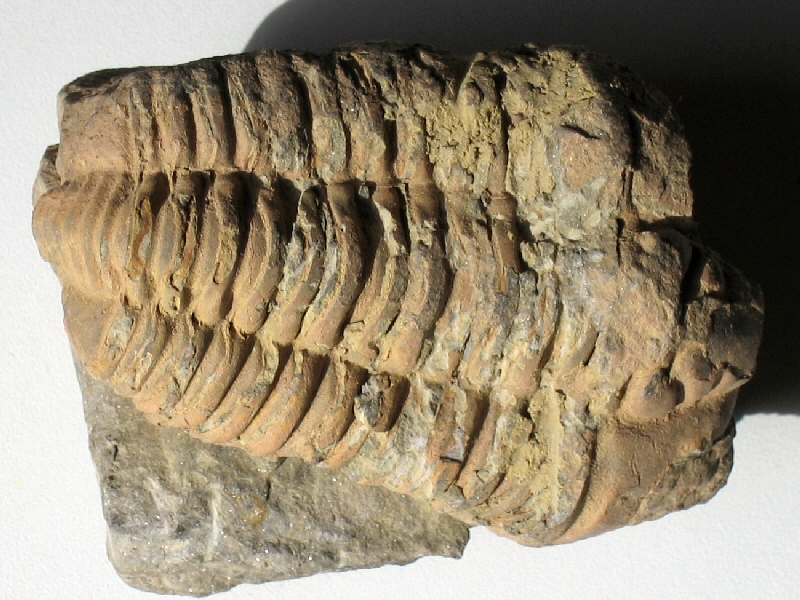
Trilobites were hammered. Three more orders, the Corynexochida, Harpetida and Odontopleurida, disappeared during the crisis, leaving only the Phacopida and Proetida standing. The survivors tell their own story: trilobites grew smaller eyes before the Kellwasser and larger ones afterwards, while the rims of their head shields expanded, a possible response to water holding less oxygen.
Ostracods, the seed shrimp, lost around 80 percent of their species worldwide, reaching 91 percent in Eastern Europe, though no family vanished outright. Brachiopods, conodonts, graptolites and cystoids were all badly hit. Warm-water specialists living in shallow seas did worst, while generalists and anything tolerant of low oxygen had an edge.
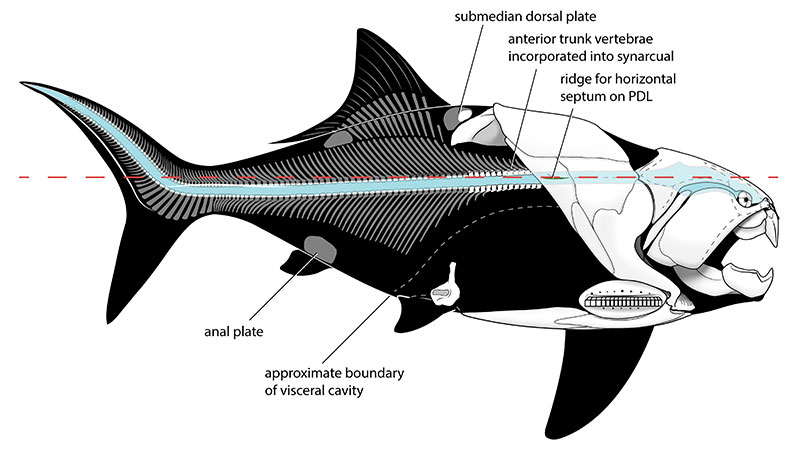
In the vertebrates, the armoured placoderms lost about half of their families in the Kellwasser, and the survivors were wiped out completely in the Hangenberg. That includes the famous Dunkleosteus, the largest predator of its day. Jawless fish such as the osteostracans and heterostracans were nearly finished off as well. The tetrapod-like lobe-finned fish, the group that includes Tiktaalik, disappeared at the boundary, while the first true four-limbed tetrapods survived and radiated into the space left behind.
Why Did It Happen?
No single bullet has ever been found, and researchers doubt there was one. The clearest geological signal is anoxia: the same interval is dominated by organic-rich black shale, and some shallow waters show euxinia, where toxic hydrogen sulphide builds up even in sunlit water. Sea level swung high and low, global temperatures cooled and warmed, and volcanism is implicated on both counts.
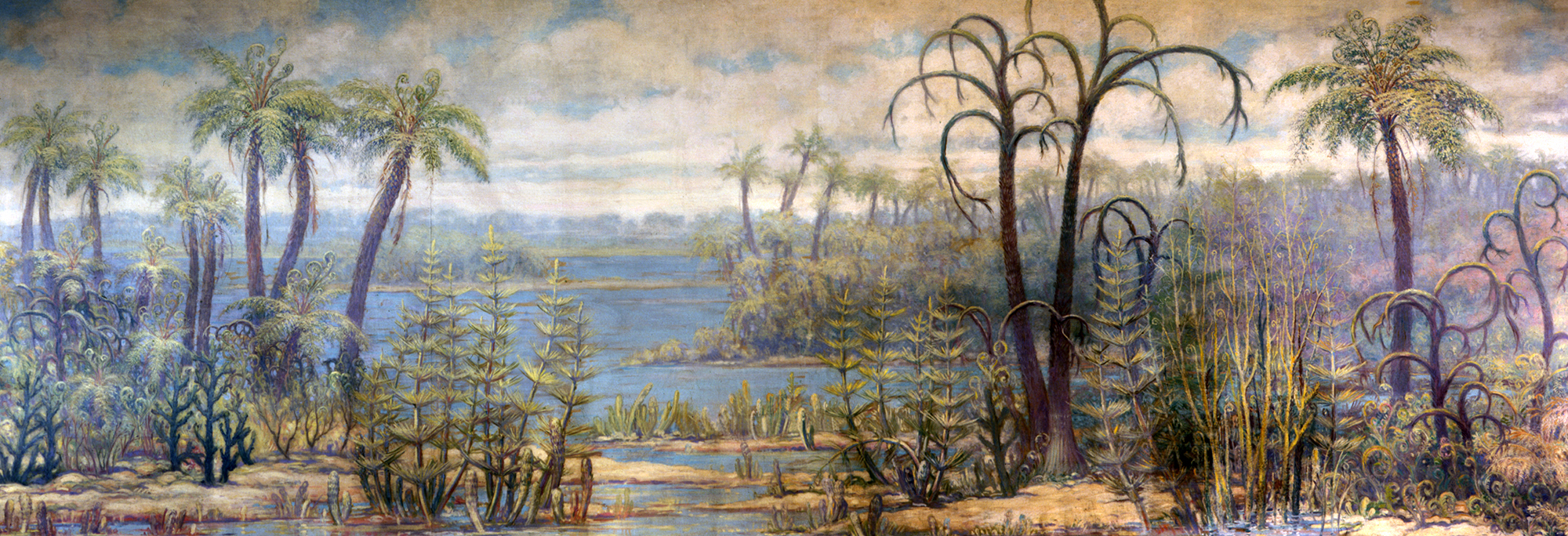
The most compelling suspect is also the least dramatic: plants. During the Devonian, land vegetation went from 30 centimetre scrambles to 30 metre trees such as Archaeopteris, with root systems that cracked bedrock and laid down metres of soil. Weathering released phosphates that rivers carried to the sea. Nutrients feeding algae, algae dying, decomposition burning the oxygen: the recipe for an ocean dead zone, repeated on a planetary scale. The reefs that collapsed were built by organisms that only thrive in low-nutrient water, so the flood of fertility was, for them, poison. Evidence from lake sediments in Greenland suggests the cycle of volcanism, warming, plant growth, cooling and anoxia ran twice, once for each Kellwasser pulse. An extraterrestrial trigger, such as the Siljan Ring impact structure in Sweden, has been proposed, but no confirmed crater has been tied to the event.
Those oxygen-starved Devonian muds also became major oil source rocks in Canada and the United States.
What the Devastation Means for Triops
The Late Devonian crisis was, as far as the record shows, essentially a marine event. That single fact explains a great deal about which animals made it through. On land and in fresh water, life carried on comparatively untouched, and in the oceans the winners were the small, unspecialised and oxygen-tolerant. The seed shrimp that could cope with stressed water repopulated the seabed. The bottom feeders and reef specialists did not get the chance.
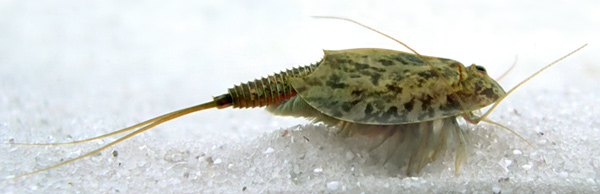
This is where our usual star makes its entrance. The order Notostraca, the group that contains Triops, first shows up in the fossil record in the Famennian, the stage that opens right after the Kellwasser collapse, and forms like the living genera have been around since the end of the Devonian, roughly 360 million years ago. The blueprint that emerged from all this is the one Triops still runs today: a small omnivore of temporary pools, built to breed fast and to stop. When a pool dries out, the eggs simply wait in the mud for the next rain, potentially for years. For a full tour of that survival strategy through all five great extinctions, see how Triops survived five mass extinctions and our piece on ephemeral pools.
That is the lesson the Late Devonian leaves behind. The crisis did not reward speed, size or specialization. It rewarded organisms that could tolerate conditions everyone else found unacceptable, and that could put life on hold until the world improved. The reef builders, for all their architectural skill, never came back. The unglamorous mud dwellers did.
Conclusion
The Late Devonian extinction reminds us that catastrophe does not always arrive as a single event. Sometimes it is a slow leak, a chain of dead zones, cooling spells and collapsing food webs that runs for millions of years until an ecosystem simply runs out of room. In the span of one crisis, Earth lost its great reefs, three orders of trilobites, every placoderm and a huge share of its marine species, and it took until the age of the dinosaurs for reefs to reach the same scale again.
It also shows, better than any other event, what kind of life survives. Not the specialists at the top of the food web, but the adaptable generalists with somewhere to hide and, in the case of Triops, a way to press pause. If you want to see that strategy in action, you can still hatch it from a pinch of dry soil.