Published 2026-10-20 · by the Triops.me Editorial Team · Back to Articles
Orthacanthus: The Freshwater Shark of the Coal Swamps
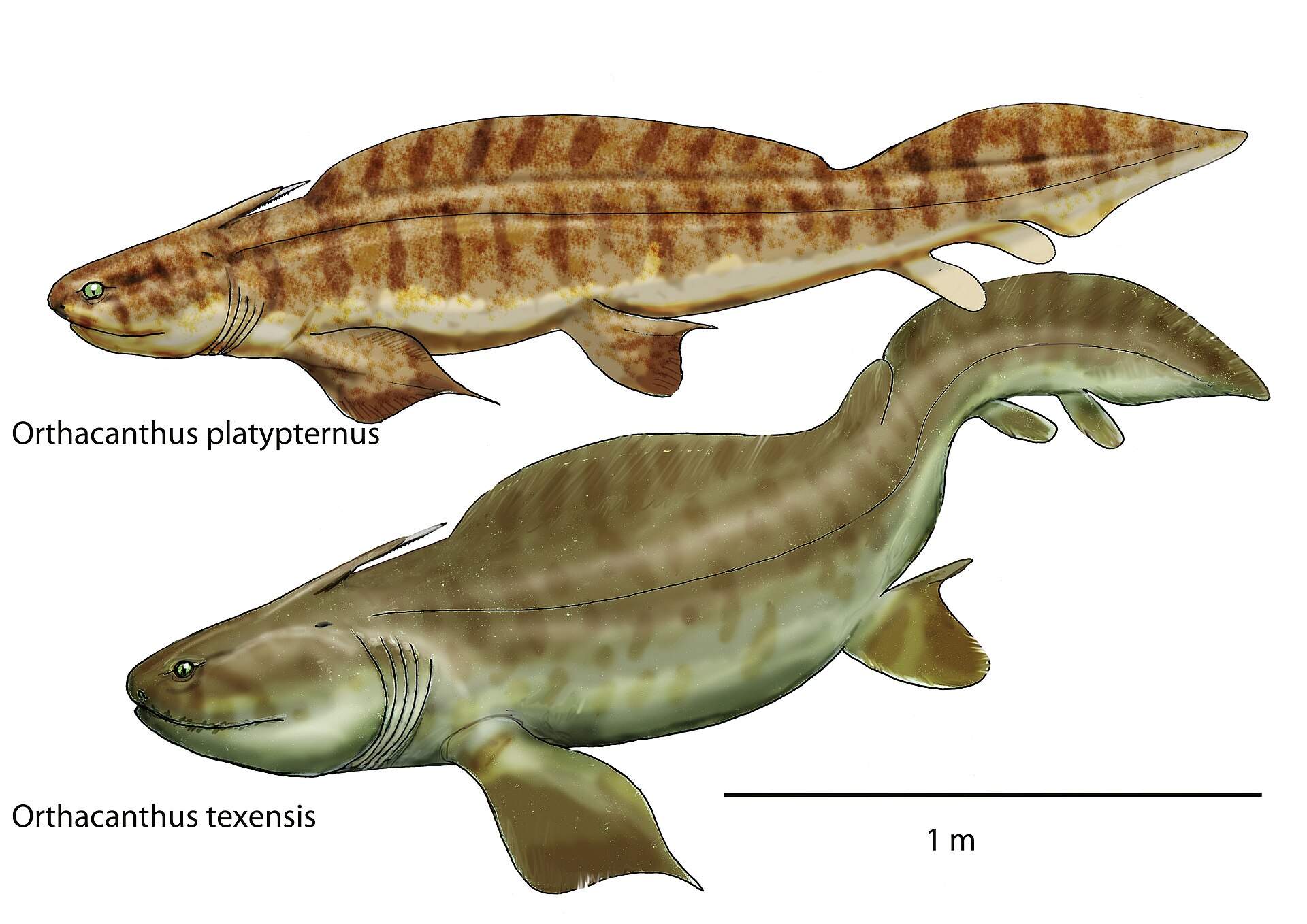
The word shark brings to mind blue water, a pointed dorsal fin and a silhouette cruising past a boat. Most of the sharks that ever lived would not fit that picture. During the Late Carboniferous and Early Permian, roughly 310 to 270 million years ago, the wetlands that later became the coal seams of Europe and North America were patrolled by a slender, eel-shaped predator up to three metres long that hunted in fresh and brackish water instead of the open ocean. Its name was Orthacanthus, and for tens of millions of years it was the animal that everything else watched out for at the water's edge.
Orthacanthus was a xenacanth, a group of cartilaginous fish closely tied to freshwater habitats. It lived in swamps, rivers and coastal lagoons from Texas to the Czech Republic, and it ate whatever the swamp put in front of it: ray-finned fish, lungfish, armoured acanthodians, early tetrapods, and, when food ran short, smaller members of its own species. Its teeth, dorsal spines and skull spines turn up in coal mines, river shales and museum drawers on two continents, and those hard parts carry details that the rest of the animal, built of cartilage, never had the chance to record.
A Shark Described From Broken Spines
The genus has a quiet start. In 1843 Louis Agassiz named Orthacanthus from isolated spines picked out of Carboniferous rocks in Britain, from Dudley to the Scottish coalfields. Those spines, once filed under the old name ichthyodorulites, were thought at the time to belong to skates, the flat rays that still glide over sandy sea floors. Agassiz had the group wrong and the name endured anyway. The American paleontologist John Strong Newberry added species from the coal deposits of Ohio in the 1850s, and the genus now lists more than a dozen.
Its range runs from the Late Carboniferous into the Early Permian, with an attributed specimen from New Brunswick in Canada pushed as far back as the Early Devonian, close to 400 million years ago. Fossils have since come out of the United States, Britain, Poland, France, Spain and Czechia. The spread shows this was no local curiosity, but a widespread group in the river systems of the tropical wetlands that edged the assembling supercontinent Pangaea.
Built for Life Without a Shoreline
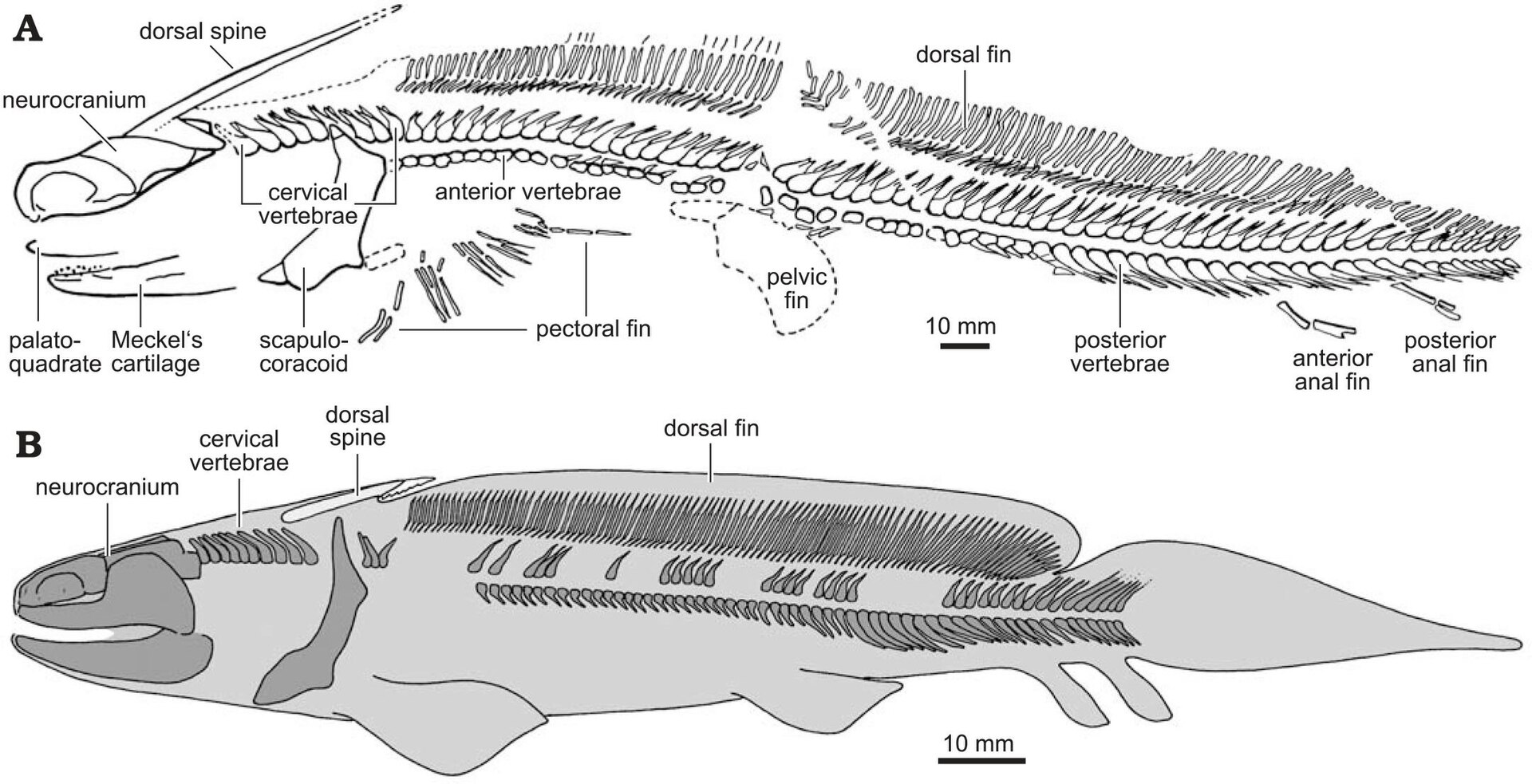
Cartilage preserves badly, so what survives of Orthacanthus is mostly hard tissue: teeth, spines and the calcified parts of the skull. Assemble those and a distinct animal appears. The body was long and slender, closer to an eel than to a great white, built for holding still among roots and then moving fast over the last stretch of a strike. A stout spine projected from the back of the skull, armed with tiny denticles, and the fins carried spines of their own. The teeth were three-cusped, two large points with a smaller one between them, some of them serrated, set in a mouth made to hold struggling prey rather than cut it into pieces.
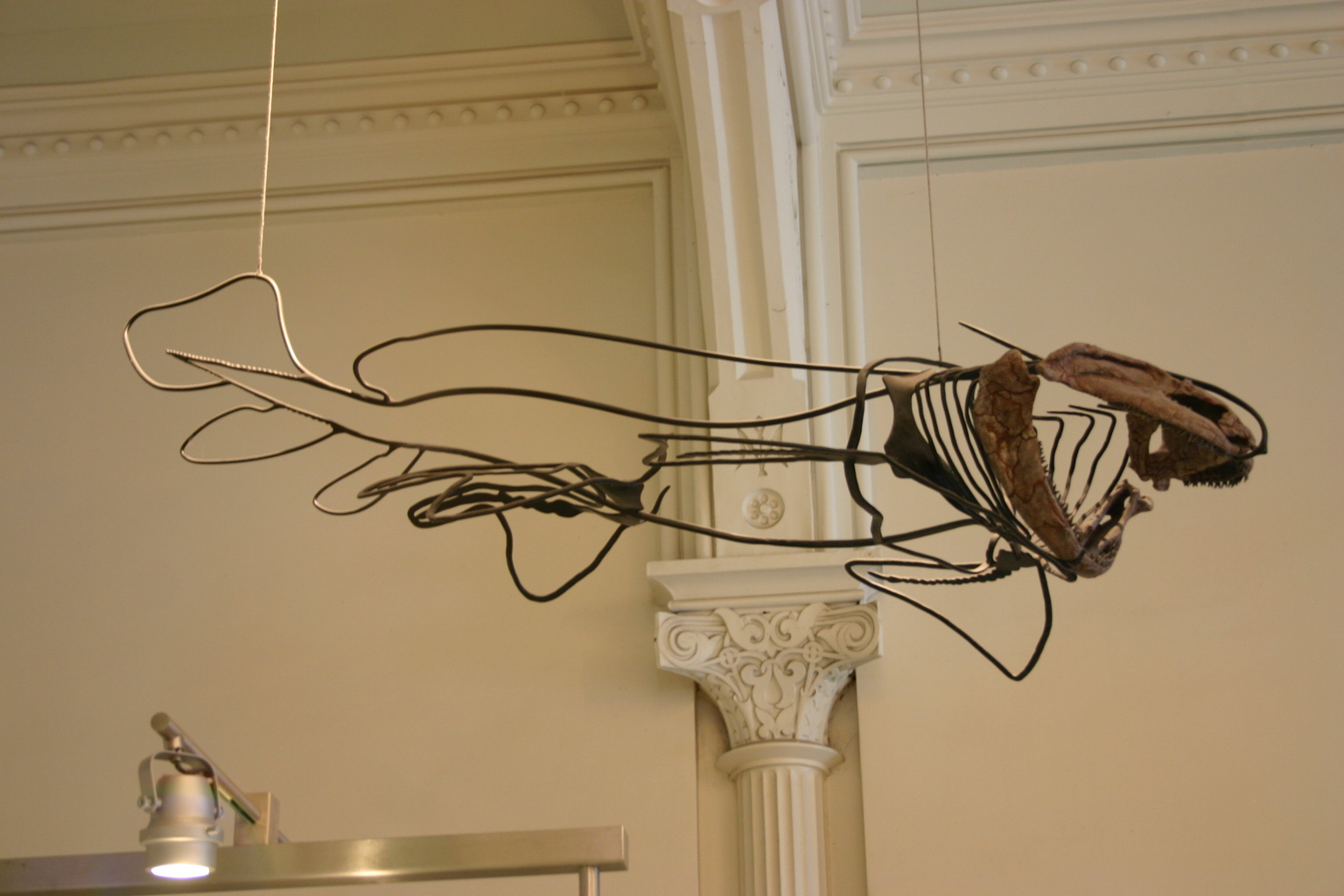
Reconstruction is fiddly work, because each specimen is a jigsaw with most of the pieces missing, and the older literature is full of disputes about which fragment belongs to which species. Work on tooth microstructure, spine histology and isotope chemistry has done more to settle the animal's biology in the last two decades than a century of shape matching managed before.
Growth Rings in a Dorsal Spine
One of the nicer things about Orthacanthus is that its spines act as archives. The wall of the dorsal spine is heavily vascularized and was laid down in successive layers of dentine, the mineral tissue that makes up most of a tooth. Those layers accumulated in cycles, plausibly tracking changes in water temperature and food supply, so a cross section of a spine reads something like a cross section of a tree. Season after season of growth is stacked inside an object the length of a finger.
The bands have been put to work. Counting them separates spines into size classes that line up with juvenile, subadult and adult stages, and the two adult classes have been read as males and females, with the larger spines belonging to females. The same tissue feeds a habitat argument that is still open. Isotope ratios point some populations at ordinary freshwater, while other interpretations have O. platypternus tolerating brackish water and moving between rivers and the coast in cycles governed by the seasonally dry climate of western Pangaea. Juveniles and adults may have split the map as well, with small individuals in shallow ponds and stream channels while the big ones took to deeper rivers and lakes.
The World It Hunted In
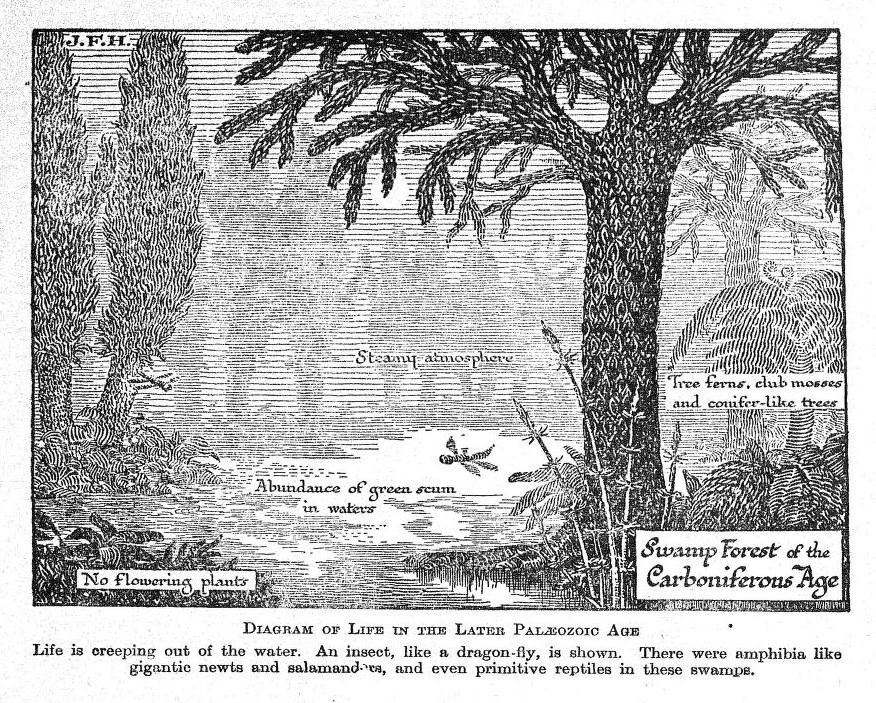
To picture the hunting ground, start with the coal swamps themselves. Forests of scale trees, giant horsetails and seed ferns grew in standing water, died and piled up into the seams that later powered the industrial revolution. The oxygen-rich air is part of the explanation for the giant arthropods of the period, including Meganeura, a dragonfly with a wingspan around 70 centimetres. In the water lived the big amphibians, the rhizodont Rhizodus at several metres, and the spiny acanthodians that also turned up among the shark's meals.
Orthacanthus sat at the top of that freshwater food web as the apex predator of swamps and bayous on both sides of the Atlantic. Its isotopes suggest a bottom-hunting life in and around vegetation, which fits the body plan. It shared the water with smaller xenacanth relatives such as Triodus, and the two did not get along. Specimens from the Puertollano basin in Spain preserve Triodus skull spines lodged in the mouth of an Orthacanthus, the kind of feeding injury modern sharks pick up when they eat stingrays and the barbs stay behind. See also the rhizodonts and the coal swamp amphibians for the neighbours.
Reading the Menu in Fossil Dung
Body fossils show what an animal was, coprolites show what it did. Fossil droppings attributed to Orthacanthus are common in some deposits, and they carry a spiral form read as evidence of a corkscrew-shaped rectum, a feature shared with some living sharks and rays.
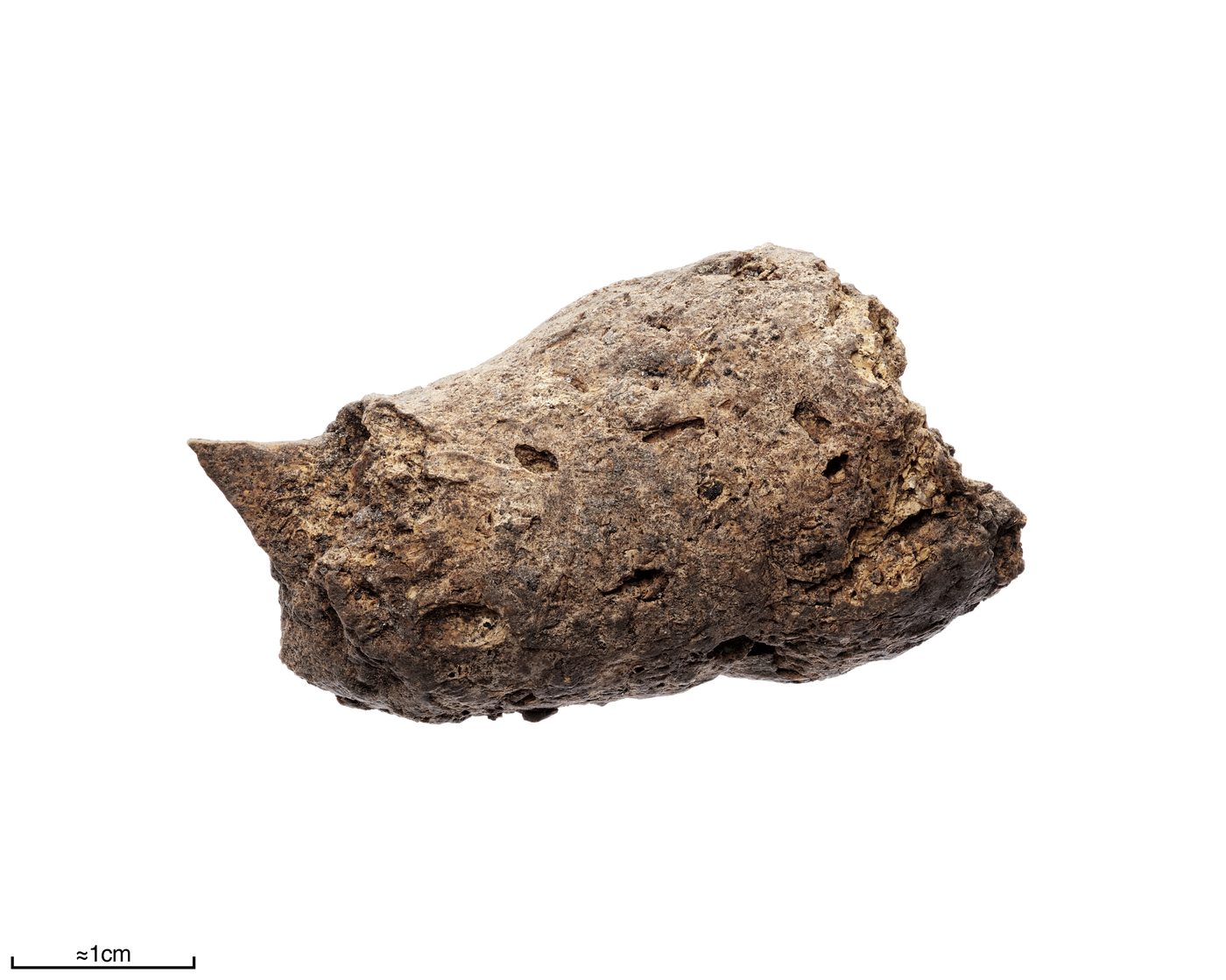
The contents fill in the menu: ray-finned fish, acanthodians, lungfish, other xenacanthids and tetrapods. The harder swallow comes from Canadian material examined by Aodhan O'Gogain and colleagues, where juvenile Orthacanthus teeth sat inside coprolites produced by adults, the signature of an animal eating its own offspring. Cannibalism is common in fish under pressure, but its fossil record is thin, so these specimens show how the swamp shark behaved when food ran out. The wider subject is covered in our piece on coprolites.
The End of the Swamp Sharks
Orthacanthus itself disappears in the Early Permian, and the reasons are not settled. Its wider order, the Xenacanthiformes, carried on from the Carboniferous into the Late Triassic, and most of it was wiped out at the end Permian crisis, with a few survivors limping into the Triassic before the group vanished for good. Compare that with the end Permian extinction and the pattern is familiar: the specialists of a specific habitat go first.
Which is where the animal this site is built around separates from the shark. Triops got through five mass extinctions in part because its eggs can lie dormant in dry sediment for years and hatch when the water returns, a strategy that pays off when habitats vanish and reappear. A three metre predator has no equivalent insurance. Orthacanthus needed permanent water, permanent prey and a steady climate, and when the wetlands of the Late Paleozoic stopped matching that description there was nowhere to wait out the bad stretch. The eggs held on, the sharks did not, a contrast that runs through how Triops survived five mass extinctions.
What Orthacanthus Leaves Behind
The Carboniferous is usually sold as a chapter about plants and insects, but the same beds that preserve dragonflies the size of a hand also preserve what hunted under them, one tooth and one spine at a time. In the seasonal wetlands of that world, Orthacanthus did the job that crocodiles and large predatory fish do in tropical rivers today. It is worth keeping in mind next to a shallow tub of Triops: the temporary pools and swamp margins at the edge of the big water have always been where the awkward survivors quietly wait.