Published 2026-10-22 · by the Triops.me Editorial Team · Back to Articles
Hylonomus: The First Reptile Found Inside a Tree
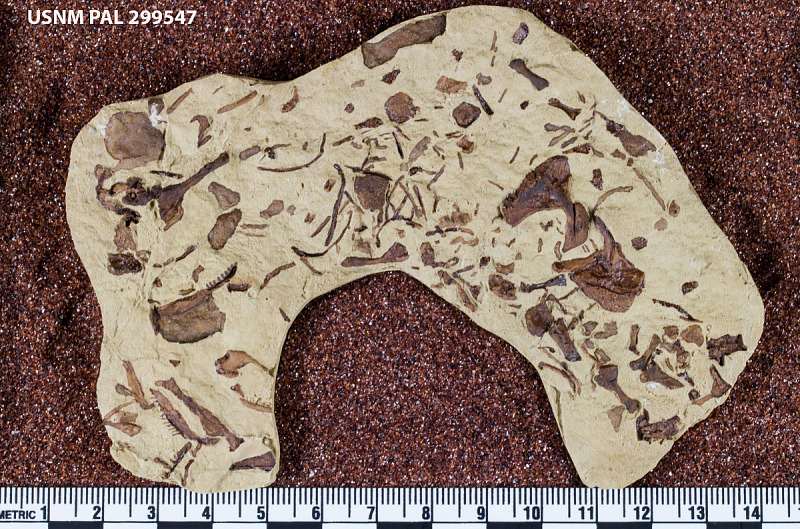
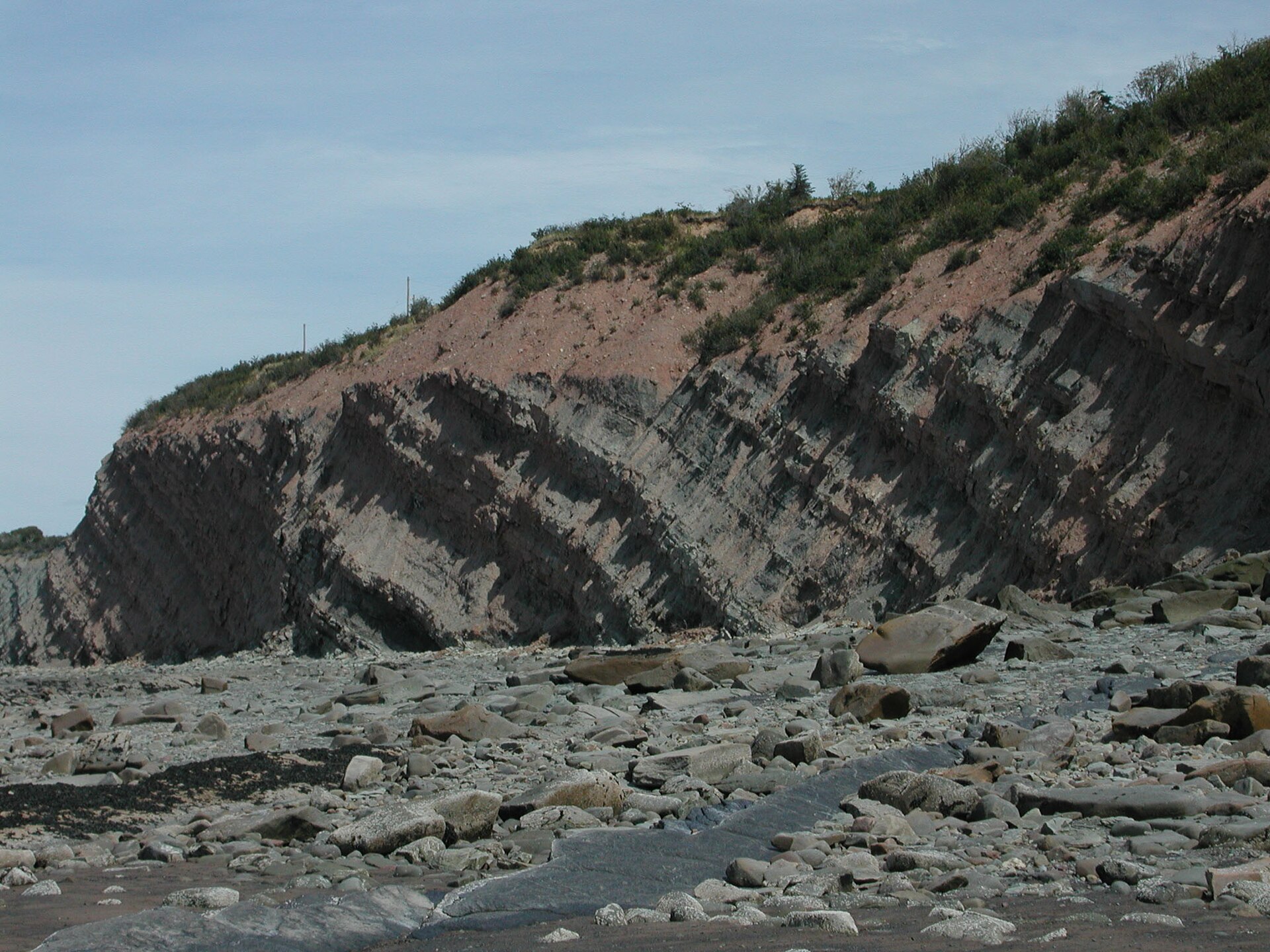
Twice a day the Bay of Fundy pulls back far enough to walk on the sea floor, and at Joggins, Nova Scotia, that retreat leaves pieces of a 310 million year old rainforest lying among the stones. The cliffs there hold coal seams, scale trees standing where they grew, and the animals that lived between their roots. In 1852, working that shore with his mentor Charles Lyell, the Nova Scotian geologist William Dawson broke into something better than a plant: an upright fossil tree with tetrapod bones sealed inside it. A few years later he named the animal Hylonomus lyelli, a 20 centimetre creature that paleontologists still treat, with some caveats, as the earliest known reptile.
"Earliest reptile" needs translation. It does not mean the first animal to walk, which happened tens of millions of years earlier, and it does not mean the first animal to live away from water, since arthropods managed that from the start. It means the earliest known member of the lineage that produces lizards, snakes, turtles, crocodiles and birds, the side of the family tree that split away from the line leading to mammals. What made that split possible was not legs or lungs, which tetrapods had borrowed long before, but a new answer to the old problem of water: an egg that carries its own pond inside the shell.
A Discovery Inside a Hollow Tree
Joggins has been known for its fossils since the early nineteenth century. What the cliffs preserve is a rainforest of the Pennsylvanian "Coal Age", built from seed ferns, giant horsetails and scale trees, plus early tetrapods and freshwater life. Lyell visited in 1842 and again in 1852, and later called the exposure "the finest example in the world" for rocks and fossils of the Coal Period. During the 1852 visit he and Dawson made a celebrated find of tetrapod fossils entombed within an upright tree at Coal Mine Point.
Dawson kept at it, and around 1860 he described Hylonomus lyelli from material collected in those stumps, naming it after Lyell. The genus name comes from the Greek for forest dweller, which turned out to be a literal description of the animal's habits. In 1863 he published The Air-Breathers of the Coal Period, a slim book that reconstructed the swamp and its animals for a public that had never imagined reptiles living among coal trees. Not all of his taxonomy survived: two species he filed under Hylonomus were later reassigned to the large amphibian Dendrerpeton acadianum that also turns up inside the stumps, and another became a microsaur genus of its own. Hylonomus lyelli stayed put. It was named the provincial fossil of Nova Scotia in 2002, and the 15 kilometre stretch of coast that produced it became a UNESCO World Heritage Site in 2008.
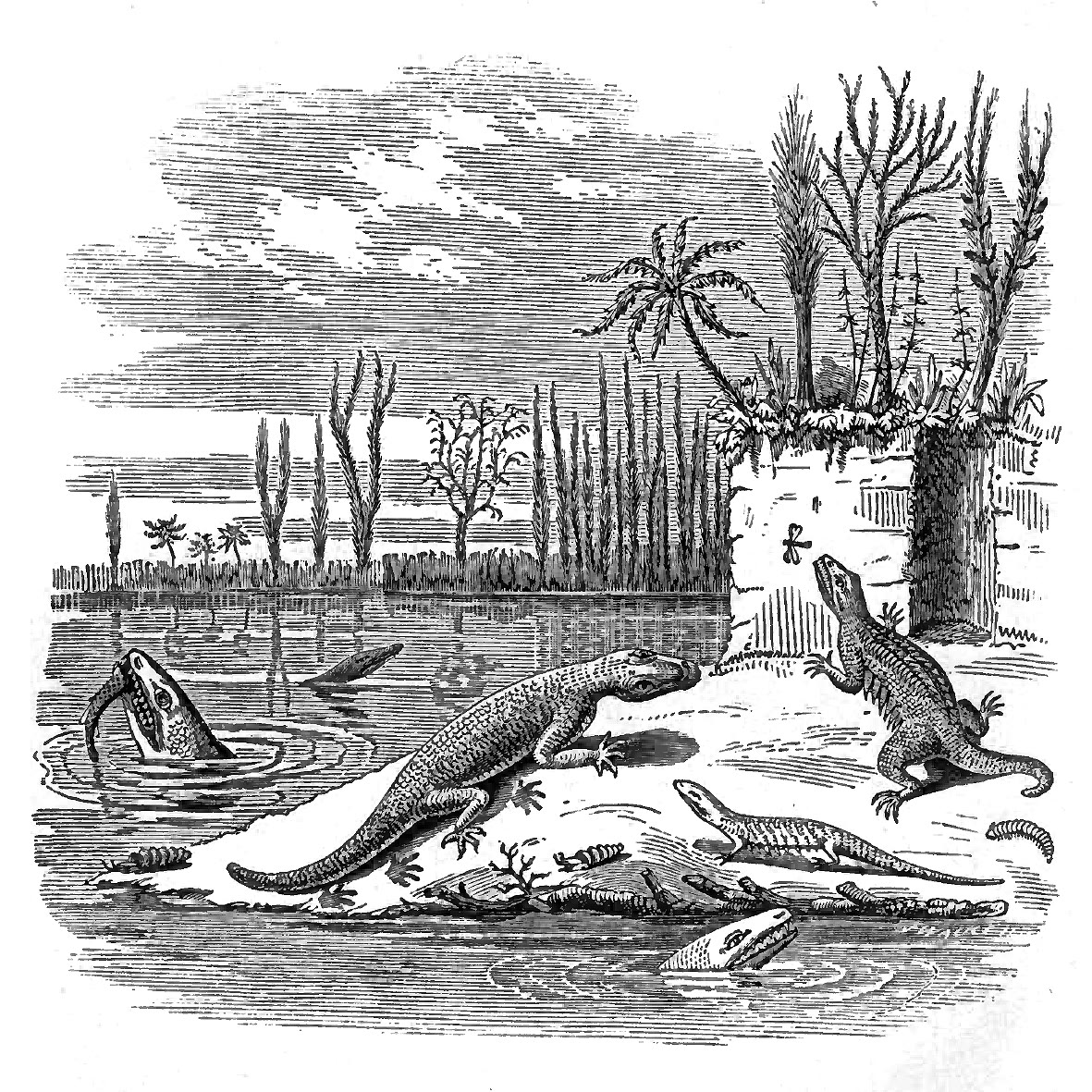
The site has the better claim on history than most fossil localities. The Joggins record figures in Darwin's On the Origin of Species, and the site played a role in the 1860 Oxford debate that followed the book's publication, the same year Dawson's reptile entered the literature.
A Lizard That Was Not Quite a Lizard
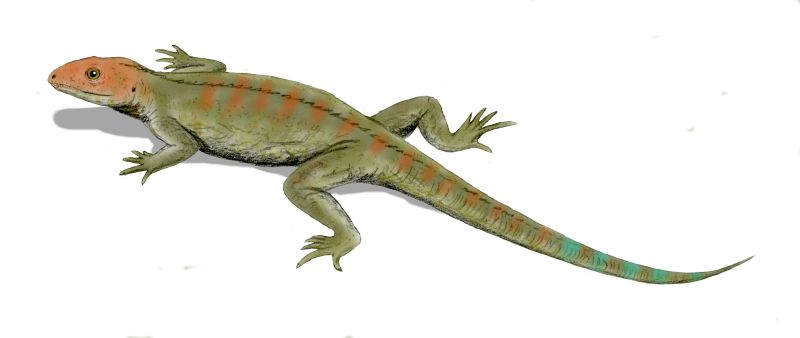
Size first, because it is the fastest way to lose the monster image: Hylonomus was 20 to 25 centimetres long including the tail, and most specimens sit at 20. It would have read as a small lizard scuttling over wet litter, with horny scales over the body, a long neck, slender lightweight limb bones with the arms and legs roughly equal in length, and a mouthful of small sharp teeth. Those teeth set the menu: millipedes and early insects, hunted among roots and fallen vegetation on the forest floor.
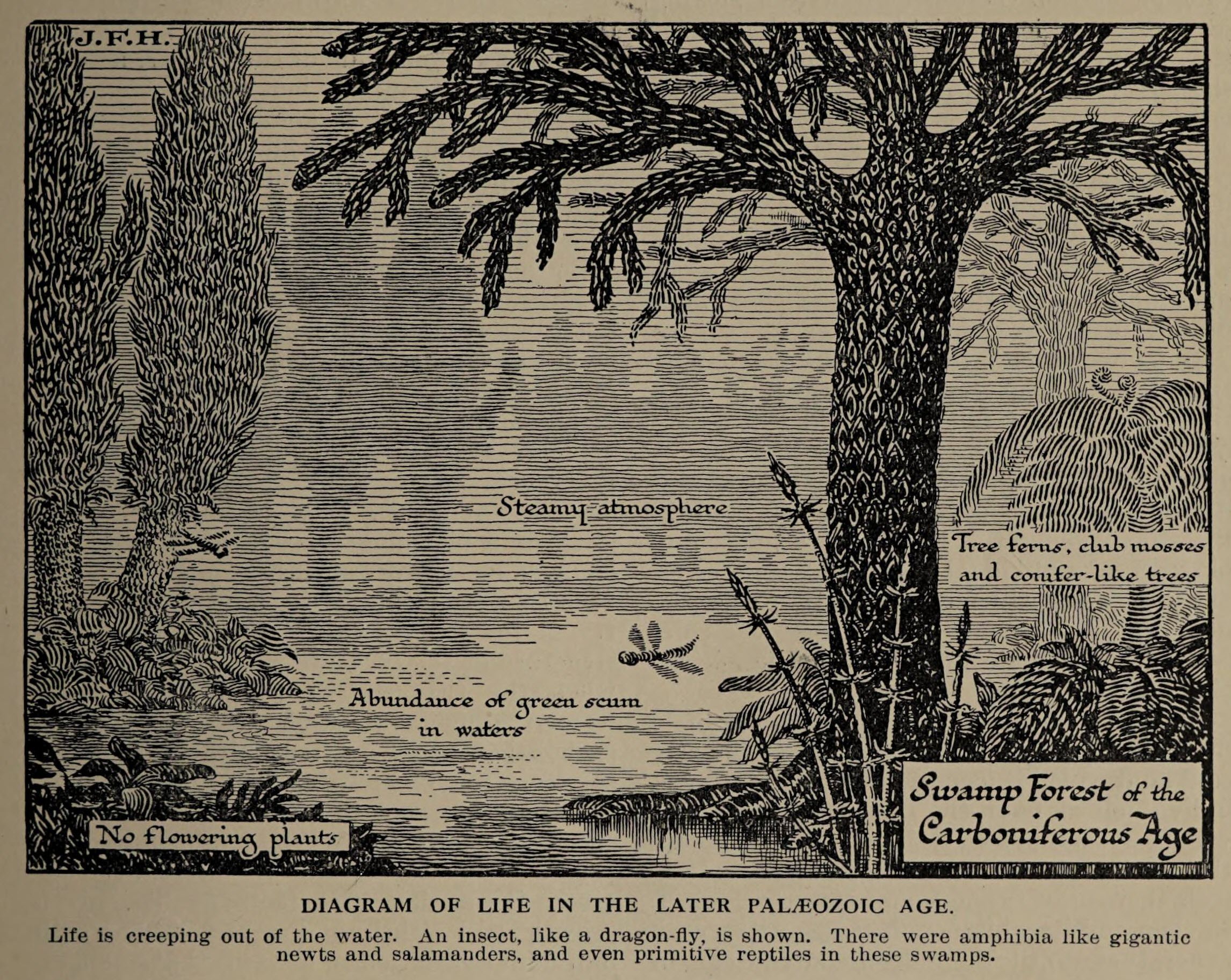
The world it hunted in was the coal swamp forest, with air richer in oxygen than today's, which is why the period produced Meganeura with a wingspan around 70 centimetres and the other giants of the Coal Age. Hylonomus sat at the small end of that food web, taking prey most animals its size would have walked past.
How a Forest Dweller Ends Up Inside a Tree
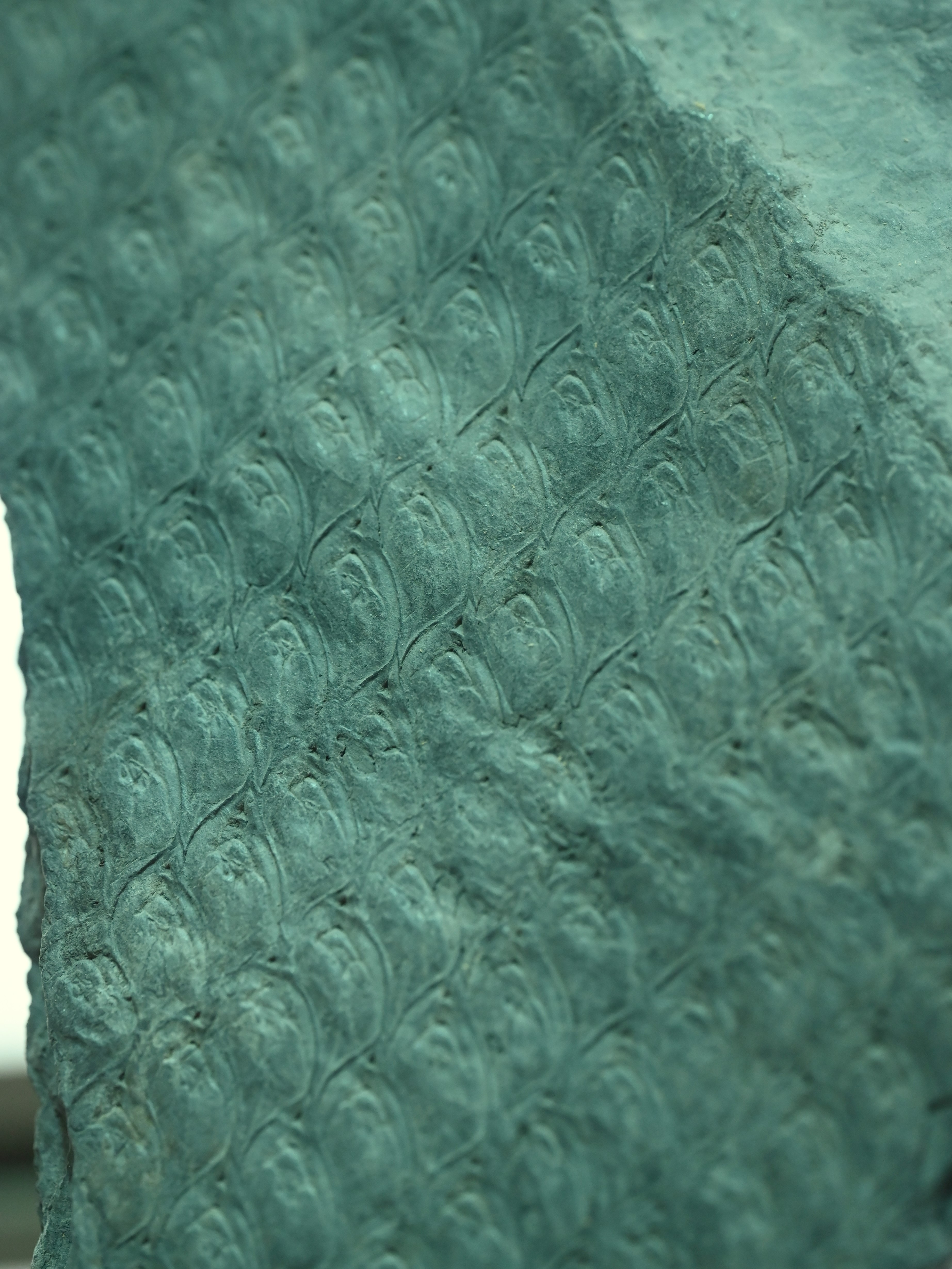
The swamp forests were built of scale trees such as Lepidodendron and Sigillaria, tree sized club mosses that grew fast, shed their leaves and died with their trunks still standing. When the soft inner tissue rotted away, the tough bark shell often remained as a hollow stump, open at the top and slowly filling with sediment. Those stumps are where the Hylonomus fossils come from, which is either an accident or a habit.
Two readings exist. In the trap reading, storm damaged stumps hollowed out and small animals climbed in for shelter or for nesting, then could not climb back and starved. In the nesting reading, the stumps were used deliberately as dens, which makes them the fossil equivalent of a burrow. What is not in doubt is the result. Stumps have yielded more than one skeleton at a time, mixed with the temnospondyl amphibian Dendrerpeton, and that jumble is exactly why Dawson's early species assignments came apart later.
The First Reptile, or Something Very Close
For much of the twentieth century the animal was filed among microsaurs and protorothyridids, categories that have since been dismantled. Cladistic analyses in the early 2000s recovered it as the earliest known reptile, a position it held in textbooks for two decades. A 2025 analysis then placed Hylonomus outside the crown group of amniotes altogether, which would make it less closely related to modern reptiles than mammals are. Either way it sits on the stem just outside the group, close enough to the origin to be informative and not guaranteed to be the origin itself.
It is not even the oldest air breather in the same cliffs. Joggins also produced Protoclepsydrops, the earliest known synapsid, which is slightly older and belongs to the line that eventually reaches mammals. A little later in the same region of Nova Scotia come Archaeothyris, a basal synapsid, and Petrolacosaurus, one of the earliest diapsids. Fossil trackways in New Brunswick, about 315 million years old, have been attributed to an animal like Hylonomus, so this was not a creature that only ever hid. Something small walked across the wet sediment and left the print behind.
The Pond You Carry With You
By the time Hylonomus appeared, tetrapods had been living on land for around 40 million years. The fish that walked onto land and the first land walkers had already handled the legs and lungs problem. What they never solved was reproduction, because their eggs still needed standing water. The amniote egg, covered in our piece on how the shelled egg evolved, wrapped the embryo in membranes that formed a self contained aquatic environment, so the animal could lay on dry ground and walk away.
In the same swamps, the branchiopod line that produced Triops was running the opposite strategy. Rain fills a depression, dormant eggs hatch, the animals mature fast and drop a new batch of eggs into the mud before the pool dries. Those eggs can lie in dry sediment for years and hatch when the water comes back, which is how the group cleared five mass extinctions while bigger animals went under. The reptile carried its pond inside a shell. The branchiopod carried its patience inside the mud. Both answers came out of the same hard fact: water is not reliably where you need it.
Walking the Cliffs Today
Joggins is still one of the easiest places in the world to find Coal Age plant fossils, because the Bay of Fundy tides, among the highest on earth, cut the cliffs daily and leave the new material on the shore at low tide. The Fossil Centre on the cliff top runs guided walks along the exposure in season, and the old mine workings in the rock face are part of the tour. Most visitors come for the trees and leave with a piece of bark.
The reptile found inside one of them is worth keeping in mind as a modest beginning. The first member of the lineage that produced dinosaurs, birds and snakes was a 20 centimetre insect eater living in swamp litter, and most of its kind probably died inside rotten trees they could not climb out of. Large transitions usually look like that from the middle: small animals, ordinary habits, one unlucky afternoon. The ones that got through were not the best hidden, they were the ones whose eggs waited out the bad stretch, whether that waiting happened in a shell or in the mud of a temporary pool.